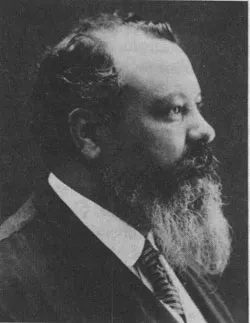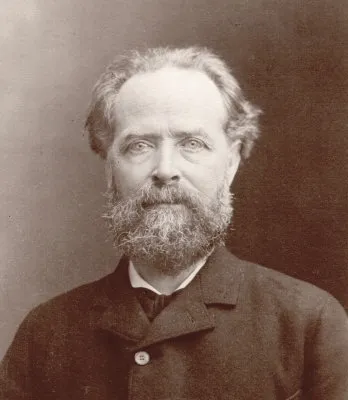
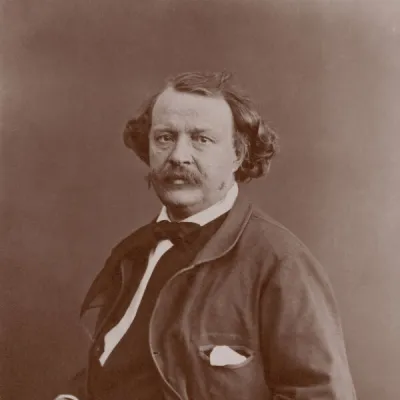
Élisée Reclus
Human Design Chart
Biography
His father, Jacques Reclus, who left the French Reformed Church and became the pastor of a "Free Church" was a major influence in his life. Reclus had one brother, Elie, and both were independent thinkers who later became active in various religious protests. He received his education at the Protestant College of Montauban and later studied geography with Carl Ritter in Berlin. Involved with the republicans in 1848, he was forced to leave France after the coup d' etat in 1851, relocating to the United States. By 1853, he was living in Louisiana where he worked as a tutor for a wealthy plantation family. He saw the inhumanity of slavery all around him and eventually had to leave, finding that he could not tolerate working for slaveholders. He became a fierce opponent of slavery and racism as well as any other forms of oppression and domination.
Returning to France, Reclus pursued his geography studies and published "The Earth: A Descriptive History of the Phenomena of the Life of the Globe" and "History of a Brook," 1869. While serving in the National Guard in defense of the Commune in April 1871, he was taken prisoner. In January 1872, he was banished from France, and eventually he settled in Clarens, Switzerland. In 1892, he became professor of comparative geography in Brussels.
In December 1858, he married Clarisse Brian, a mulatto woman, putting his anti-racist beliefs into practice in his own life. Unfortunately Clarisse died only a few years later. Reclus exchanged vows with an old family friend, Fanny L'Herminez. Their union, done without sanction of church or state, profoundly influenced him for the remainder of his life. Extremely concerned about nature and the treatment of other species, he was a practicing vegetarian during most of his life.
The Human Design of Élisée Reclus: Manifestor 3/5
Manifestor 3/5 — Design at a Glance
Elisée Reclus revealed himself as a visionary with the task of guiding the world towards a new future. His design marked him as a pioneer and leader, similar to an emperor in ancient Rome: He possessed the grand vision of an empire but did not personally wage the necessary wars. Instead, he delegated the execution to others who took over foreign lands for him. This superior way of thinking and the magnitude of his dreams inevitably led to misunderstandings and polarization. While some people loved his visions and followed him, he encountered rejection or hatred from others because they could not align with his ideas. This pain point of not being understood was central to his experiential world. To navigate this dynamic and attract the right followers, it was crucial for Elisée Reclus to inform others about his plans in a timely and precise manner. This strategy of information served to reduce resistance and foster understanding. When he followed this strategy and adhered to his inner authority, he was rewarded with a sense of internal peace. Conversely, if he lived against his design and neglected the necessary communication, it led to persistent deep anger. His path therefore involved reducing polarization through clear information and creating space for his leading role without getting lost in conflicts.
Emotional Authority
Elisée Reclus demonstrated a decision-making stance that required time and distance: He waited with important judgments until his feelings had clarified themselves. This resulted from his emotional authority, carried by the defined Emotional Center. In Human-Design terms, this means inner clarity is not immediately available but arises through the passage of a wave motion.
His mood was subject to constant ups and downs; the current emotional state was always just a snapshot colored by the respective wave. What appeared enthusiastic or decision-relevant in one moment could turn negative in the next. This fleeting emotional coloring did not yet represent his inner truth. Spontaneous decisions based on such temporary feelings often risked negative consequences, as they were based on incomplete internal information.
Instead, Elisée Reclus practiced conscious delay. He allowed decisions to mature, exercised patience, and slept through important questions multiple times. This process of “sleeping over” served to let intense feelings subside. Only when emotional distance was gained and calmness set in could he recognize what was truly harmonious long-term. This method was particularly crucial for long-term directional decisions with significant influence on his life course. Only through this temporal space did he achieve comprehensive, clear insight beyond the transient emotional wave motion.
The 3/5 Profile — Martyr / Heretic
Elisée Reclus showed himself to be someone who did not accept knowledge theoretically but only through personal experimentation and the resulting mistakes. His design inclined him towards initial skepticism towards prefabricated solutions and instead followed the path of trial and error. This attitude stemmed from Line 3 in his profile, which promoted adaptability through crises and rebuilding. Changes were understood by him not as an end but as a chance for new growth, where he had to learn to let go of guilt feelings to joyfully embrace change.
The accumulated experiences from these personal experiments Elisée Reclus transformed into philanthropic ideas for the general public. Line 5 of his profile drove him to act as a hero or advisor and offer practical solutions that others urgently sought. This role of helper made him attractive to his environment, which wanted to learn from his rich treasure trove of life experiences. Yet this public visibility also harbored a source of pain: If he failed in an experiment before the eyes of others, it deeply affected him. His design thus described a cycle where private learning through mistakes became the foundation for humanitarian contributions that were always subject to scrutiny in the public sphere.
Single Definition — Defined & Open Centers
Elisée Reclus was characterized by a design marked by constant inner structure and emotional depth. His defined G Center gave him a firm sense of self-identity and a clear sense of direction, while the also defined Solar Plexus Center required emotional authority: the ability to wait out waves to gain clarity. The defined Throat and Root Centers provided a foundation of reliable expression and steady pressure for handling stress.
At the same time, his design was marked by open centers that acted as mirrors reflecting the environment. His open Head and Ajna Centers indicated a lack of constant mental inspiration; he tended to get entangled in questions not truly his own or interpret concepts as personal truth. The open Heart Center warned against making promises or needing to prove value since there was no consistent willpower present. Especially, the open Sacral Center required pauses and boundaries because it lacked generative energy and was vulnerable to overexertion through borrowed energy from the environment. Also, the open Spleen Center made him sensitive to well-being or fear in his surroundings without offering a reliable intuitive source.
This configuration described a person who drew their identity and emotional truth from themselves but was mentally and energetically strongly influenced by their environment. The challenge lay in waiting for one's own emotional clarity while resisting the temptation to internalize mental confusion or pressure to perform. His design challenged him to set boundaries and not lose himself in others' energy, instead using his inner authority to distinguish between personal needs and conditioned reactions.
Channels for emotional depth, reflection and inner urges.
Elisée Reclus was characterized by a communicative presence that strictly depended on his internal emotional wave. His design suggested that expression and transformative impact only occurred when his mood allowed it. This resulted in natural selectivity in social interactions to protect his mutative potential.
This dynamic was primarily shaped by the Openness Channel 22-12, connecting the Solar Plexus Center with the Throat Center and expressing passion as well as romance but regulating this through the restraint of Gate 12. Elisée Reclus waited to feel social interaction; only then could he move others through his voice and create new awareness. When pushed into social situations against his emotional rhythm, frustration arose, limiting his ability to encourage others.
Alongside this dominant activation, additional channels worked as supportive mechanisms. The Lost Son Channel 13-33 connected the G Center with the Throat Center, promoting reflection and storing memories before passing them on, allowing for a patient consideration of experiences. Additionally, the Recognition Channel 30-41 linked Root pressure with emotional intensity, creating a strong desire for new experiences as well as the ability to perceive emotional nuances.
Additional Gates like Gate 11 (visual memory) or Gate 36 (crisis as development) rounded out the picture but stood behind the central necessity of waiting for emotional clarity before communication occurred. Elisée Reclus' impact thus relied on bringing his uniqueness in moments of true resonance rather than constantly adapting.
Collective Circuitry — Circuit Signature
Elisée Reclus was characterized by an interconnected energy structure that linked emotional wave movements with the articulation of individual identity. In simple terms, this power flowed as a continuous stream between Throat, Solar Plexus, Root, and Identity Centers. This shaped his essence: Emotions from the Solar Plexus drove expression in the Throat Center while identity in the G Center was partly determined by this connection.
The Knowledge Circuit worked here through the Openness Channel (12-22). It connected the Throat with the Solar Plexus Center, promoting the expression of individuality via emotional impulses. The goal was to transform new knowledge and carry it acoustically into the world through the emotional wave of the Solar Plexus. Energy pulsed in the present, driven by creativity and a desire to initiate change.
Parallel to this, the Meaning Circuit structured his experiential world. Two separate segments shaped this circuit: The Lost Son Channel (33-13) connected the Throat with the Identity Center while Recognition (30-41) linked Solar Plexus and Root Centers. These centers were not directly fused but formed parallel existing streams. Focus was on reflecting past events. Feelings and experiences from the past were cycled through – with a beginning, middle, and end. The aim was to find meaning behind occurrences and share these felt insights with the collective to learn together from them. Energy flowed in wave-like patterns, often crashing in intensity but always serving the purpose of finding meaning through emotional resonance.
Right Angle Cross of Eden 1
Élisée Reclus revealed himself as someone who sought hidden patterns behind the visible reality. His design featured the 'Right Cross of Eden 1', a configuration implying a profound, often unconscious search for meaning and connection in the cosmos. This structure shaped his inner orientation: he looked beyond surface-level to understand deeper connections.
It was not just intellectual analysis but a strong sense of the 'Greater Whole'. The mechanics of this cross promoted an integrative perception where spiritual dimensions and cosmic order were experienced as real. Élisée Reclus lived with the ability to recognize patterns that eluded others. This was not a choice, but an inherent trait driving him to see the world not just as it appeared, but how it connected at its deepest levels. The emphasis always lay on this inner alignment and the quest for unity beyond the mundane.
Saturn Return · Uranus Opposition · Chiron Return · 2nd Saturn Return — Life Cycles
Élisée Reclus showed a life path structured by clear planetary cycles: moments of anchoring alternated with breaks. In 1858, at age 28, he married Clarisse Brian, a woman of color. This marked his first Saturn Return, a time when inner maturity and outer responsibility often converge; here, his search for stability crystallized in a concrete life decision.
Decades later, the Uranus Opposition struck him in 1872 at age 42, leading to his exile from France and settling finally in Clarens, Switzerland. This configuration typically brings a deep break with the previous status quo; what was once secure shatters to make way for an often unexpected new existence form. For Élisée Reclus, this meant losing his homeland and being forced into a new beginning in exile.
His experience illustrates the dynamics of these cycles: The Saturn Return provided the foundation through commitment, while the Uranus Opposition shook the foundation and compelled him to reorient himself. This sequence shaped his path – from establishing an independent life to breaking free from old structures. The mechanics did not operate as a fate but as rhythmic alternation between building up and dissolving, which significantly determined his biographical development.
Manifestor · Emotional Authority — Synthesis
Élisée Reclus lived as a Manifestor with emotional authority, marked by the initiation of new ideas and their transformative communication (Centers: Throat & Solar Plexus). His Profile as an Innovator/Hero suggests that he generated knowledge through personal experience and then used this to solve others' problems – a dynamic interaction between personal experimentation and the desire to make a difference. The open channel of openness (22/12) amplified his ability to express emotional states and influence others through the quality of his voice, making him an influential mediator.
Central to his design was the tension field between the drive for knowledge circuit innovation and the emotional wave delaying his decisions temporally. He was destined to pioneer new paths and transform knowledge, yet this process required patience and the ability to let feelings mature before expressing them. Events – a relationship breaking societal norms and a resulting crisis through exile – reflect this inner conflict: pushing forward changes and the personal consequences that come with it.
3 Defined Channels
Incarnation Cross - Right Angle Cross of Eden 1
Solar Return
The Solar Return shows the moment when the sun returns to its exact birth position - your personal solar year.
Life Cycles
Discover the life cycles with a detailed triple view (birth chart, cycle chart, composite).
Human Design Profile
- Type
- Manifestor
- Strategy
- To inform others before acting
- Authority
- Emotional Authority
- Profile
- 3/5 - Martyr / Heretic
- Definition
- Single Definition
- Incarnation Cross
- Right Angle Cross of Eden 1
- Date of Birth
- 15.03.1830 16:30
- Place of Birth
- Ste.Foy la Grande, France
Frequently Asked Questions
What was the Human Design type of Élisée Reclus?
What Profile did Élisée Reclus have?
What Authority did Élisée Reclus have?
What incarnation cross did Élieş Reclus have?
When was Élieş Reclus born?
Discover your own Human Design
Are you also a Manifestor? Find out in a personal reading how to use your initiation power peacefully and dissolve resistance.
More Personalities
Back to overviewChristian-Jaque

Kesha

Lucebert
Masaccio
Nadar
Papus