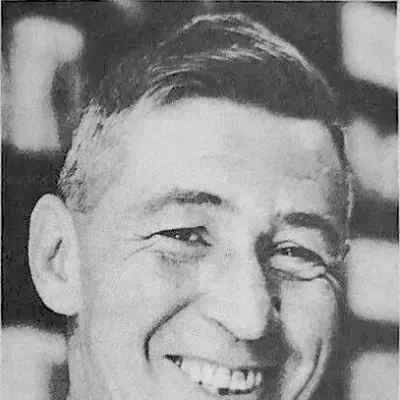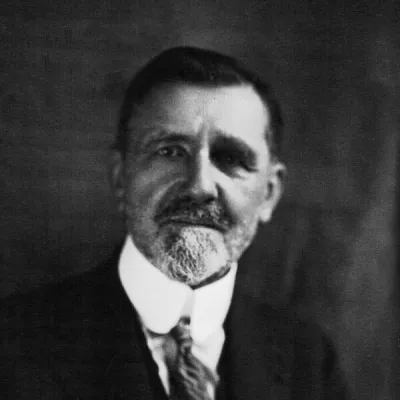
Emile Borel
Human Design Chart
Biography
Died on 3 February 1956, Paris.
The Human Design of Emile Borel: Projector 2/4
Projector 2/4 — Design at a Glance
Emile Borel's design inclined towards precise system analysis. As a projector, he had a dense, focused aura, comparable to a bright flashlight that immediately identifies flaws in others' structures. This ability to directly recognize weaknesses often led to conflicts when confronted head-on because the environment perceived such assessments as aggressive. Emile Borel's effective strategy therefore did not lie in active intervention but rather in passive illumination through his own harmonious example. By radiating integrity and clarity, he became attractive to others; people sought out his advice of their own accord, forming the basis for valuable, honest invitations. This dynamic replaced often conflict-ridden direct confrontation with an appealing influence.
Central was also his handling of energy. His undefined Sacral Center meant that he did not have a constant intrinsic life force available. Instead, he experienced phases of high productivity which had to be followed by rest periods to avoid burnout. The traditional work model demanding constant availability stood in opposition to this natural rhythm. When Emile Borel lived in harmony with the necessity for pauses and waited for invitations rather than recognition through coercion, he was rewarded with success. If he missed this path and tried to work against his energy flow, the non-self theme of bitterness emerged – a sign that his specific potential was not being lived.
Splenic Authority
Emile Borel exhibited an underlying disposition of immediate intuitive reaction to his environment. His design inclined towards spontaneity where long-term planning often gave way to short-term adjustments. This orientation stemmed from his inner authority in the defined Spleen Center. With his Emotional and Sacral Centers open – a prerequisite for this specific form of authority as projector or manifestor –, the Spleen Center served as his central health and alarm system.
This center endowed him with pronounced survival intelligence that manifested as spontaneous inner knowledge: an immediate sense whether a situation, environment, or society was right for him. For Emile Borel, the first impulse at the moment of occurrence was decisive; it directly served his physical well-being and enabled rigorous demarcation against harmful influences. Since this spleen impulse was very subtle and only occurred once, his perception required high vigilance to not be drowned out by other influences. A temporary retreat could help him perceive this fine voice more clearly.
As the right decision became apparent only in each moment, plans could become ineffective short-term. This made long-term commitments difficult. Instead, his life was characterized by a need for much space and flexibility; he oriented less towards rigid future plans than to the ability to spontaneously and flexibly adapt to current events.
The 2/4 Profile — Hermit / Opportunist
Emile Borel oscillated between a deep desire for withdrawal and the urge for social connection. His design created tension: on one hand, he sought the solitude of the 'hermit', while on the other, the web of community. This configuration required him to create a safe environment where he could clearly communicate when he needed company and when he wanted to be left alone.
During his solitary time, Emile Borel immersed in internal processes to find calm and clarity. Once this inner balance was restored, he emerged from his retreat to spend time with his trusted people. This rhythm allowed him to reflect on the knowledge of his network in silence, evaluate it, and develop new ideas.
The second line promoted restraint and discretion while also strengthening ambition and intelligence. It helped him learn from previous interactions and strategically leverage advantages. The fourth line anchored his survival in social relationships and networks. Here, a masterful handling of connections was evident that fostered harmony but also harbored the risk of authoritarian decisions when his own well-being was threatened. Emile Borel's challenge lay in actively steering these two poles – discreet restraint and relational network – transparently outward. Only then could he maintain both his inner integrity and harness the power of his social connections.
Split Definition — Defined & Open Centers
Emile Borel was characterized by a stable inner structure based on defined identity and mental clarity. His defined G Center provided him with a firm self-image and clear sense of direction, while his defined Ajna Center enabled persistent, independent conceptualization. These thoughts flowed through his defined Throat Center into reliable communication or action. This was complemented by the spontaneous intuition of his defined Spleen Center, which gave him secure body awareness in the present moment.
This stable foundation contrasted with his open centers, making him vulnerable to external influences. His open Heart Center lacked consistent willpower; Borel tended to prove himself through promises rather than trusting his inner authority. His open Sacral Center did not have constant generative energy, necessitating spurts of work and protection from exhaustion by foreign energies. Additionally, his open Solar Plexus absorbed emotional fields of the environment, putting him at risk of identifying with others' moods or avoiding confrontations out of fear of emotional burden. Moreover, his open Root Center absorbed external stress, making him vulnerable to adrenalized pressure that he could not recognize as his own. Finally, his open Head Center lacked consistent inspiration; Borel was exposed to situational mental pressure and tended to engage with questions that were not his own rather than relying on his defined mental source. This configuration required him to always distinguish between his own truth and the fields of the environment he had absorbed.
Channels for intuitive elegance and insatiable curiosity.
Emile Borel was characterized by a blend of intuitive self-love and curious storytelling. His design inclined towards spontaneous, survival-preserving presence manifesting in verbal translation of experiences.
The channel of perfect form 57-10 connected his Spleen Center with the G Center. Through Gate 57 of intuitive insight and Gate 10 of self-behavior a basis of self-acceptance was established. This mechanism allowed behavior guided by acoustic intuition – less through words than the quality of tones in the environment. It was an innate wisdom beyond thoughts, giving Emile Borel rare clarity to react spontaneously and appropriately to his surroundings. This ensured his survival in the here-and-now by appreciating his body and releasing unfounded future anxieties.
Parallel to this, the channel of curiosity 11-56 connected his Ajna Center with the Throat Center. Gate 11 of ideas drove a constant search for new perspectives, while Gate 56 of inspiration translated these impulses into narrative forms. Emile Borel acted as a storyteller, linking ideas and philosophical contemplations to instructive or entertaining parables. These stories served less for his own guidance than for stimulating others; they filled gaps in information and enlivened abstract concepts through imagination.
Additionally, Gates like 54 (Worldliness/Spirituality), 53 (Freedom/Pioneer Spirit) and 51 (Willpower/Adaptability) shaped his attitude, while Gates like 62 (Logic/Pattern Recognition) and 4 (Formulation/Future Security) supported the structure of his expression. The combination of intuitive presence and the need to share insights as stories characterized Emile Borel's human dynamics: he lived fully in the moment and shared this experience by magically linking ideas with his environment.
Individual Circuitry — Circuit Signature
Emile Borel's design was marked by a separate but parallel structure: two independent energetic blocks that did not merge. The first block connected Ajna to Throat Center through the Meaning-Finding Circuit. This involved emotions and experiences from the past, not cold logic. Energy flowed in waves – with beginning, peak, and end – serving to find meaning behind events, then sharing these insights with the collective. The second block linked Identity to Spleen Center via the Integration Circuit. This concerned securing survival through power derived from reacting to life, guided by proper behavior and intuitive knowledge, to act effectively in the present moment. As Emile Borel had a split definition, these two systems existed side-by-side without direct energetic flow between them. The Meaning-Finding Circuit shaped his ability to navigate past emotional waves and gain shareable insights, while the Integration Circuit provided individual self-empowerment here-and-now. This configuration described a life task: uncovering hidden connections from the past and passing them on to others, separate from the pure survival logic of the other block.
Right Angle Cross of Penetration 4
Emile Borel's Human Design profile carried the signature of the right cross of penetration 4. This configuration imparted a specific inner dynamic aimed at uncovering connections that initially seemed hidden. It was not about superficial analysis but rather a deep, often intuitive penetration of complex structures.
In Human Design mechanics, this cross describes an energy designed to establish connections and recognize patterns that remain hidden from others. The number four represents stability and structure, while the element of 'penetration' signals that these structures must be actively penetrated and understood, not just observed. It is a force that creates order out of the apparent chaos by identifying underlying principles.
For Emile Borel, this meant an innate tendency to unite seemingly disparate elements into a coherent whole. His design promoted a clear perspective on complex matters. He was programmed to distinguish the essential from the non-essential and thereby reveal the underlying logic. This energy acted as an inner compass driving him towards depth while always maintaining a connection to the real structure of things. It sought clarity through intense engagement with the core of issues and found it.
Saturn Return · Uranus Opposition · Chiron Return · 2nd Saturn Return — Life Cycles
Emile Borel's life was characterized by a clear, structural anchoring in scientific institutions. His design inclined him to experience milestones not as random events but as logical steps toward institutional integration. In 1896, at age 25 during his first Saturn return, he moved to the École Normale Supérieure. This cycle often marks the transition from individual exploration to a firm position within a system.
His professional ascent followed this structural logic further. In 1909, at age 38 during his Uranus opposition, he received a professorship for function theory at the Sorbonne. This phase typically brings necessary changes that break through the status quo and establish new authority.
The peak of this development was in 1921 when he entered the Académie des Sciences at age 50. This coincided with his Chiron return, a fulfillment cycle where one's inner purpose becomes visible and meaningful in external life if lived according to strategy. It was not a healing process but confirmation of his incarnation task.
The culmination of this structural anchoring came in 1926 during his second Saturn return: at age 55 he became the founding director of the Institut Henri Poincaré. Here, years of groundwork solidified into a robust institutional structure. Borel's path demonstrated how cyclic phases of Human Design mechanics underpin and stabilize concrete career steps.
Projector · Splenic Authority — Synthesis
Emile Borel lived a life marked by profound inner clarity and a need for authentic expression. His design as a projector, combined with the Spleen Authority and Profile of Natural Talent/Networker, points to someone destined to recognize patterns and shed light on others' darkness—yet only upon invitation. The defined connection between G Center, Throat Center, and Ajna Center enhances his intuitive insight and clear communication while oscillating between a desire for solitude (Line 2) and the longing for community (Line 4), shaping an ongoing struggle for balance. He was predisposed to recognize others' quality and inspire positive change through his presence, always in harmony with his inner compass.
Central to Emile Borel's essence was the paradox between his ability for deep analysis (Gate 11) and his need for authentic self-expression (Gate 46). He possessed the gift of grasping complex connections and translating them into understandable narratives. Yet, this creativity did not stem from an inner drive for self-presentation but from a desire to share knowledge and inspire others. This tension between intellectual sharpness and emotional depth led him to act both as a brilliant thinker and influential communicator of ideas.
2 Defined Channels
Incarnation Cross - Right Angle Cross of Penetration 4
Solar Return
The Solar Return shows the moment when the sun returns to its exact birth position - your personal solar year.
Life Cycles
Discover the life cycles with a detailed triple view (birth chart, cycle chart, composite).
Human Design Profile
- Type
- Projector
- Strategy
- Wait for the respectful invitation
- Authority
- Splenic Authority
- Profile
- 2/4 - Hermit / Opportunist
- Definition
- Split Definition
- Incarnation Cross
- Right Angle Cross of Penetration 4
- Date of Birth
- 07.01.1871 04:00
- Place of Birth
- St.Affrique, France
Frequently Asked Questions
What was Emile Borel's Human Design type?
What Profile did Emile Borel have in Human Design?
What Authority did Emile Borel have?
What incarnation cross did Emile Borel have?
When was Emile Borel born?
Discover your own Human Design
Are you also a Projector? Find out in a personal reading how to unfold your leadership qualities and recognize the right invitations.
More Personalities
Back to overviewSissy Spacek
Alain-Fournier
Anémone
Ann-Margret
Bourvil
Hergé