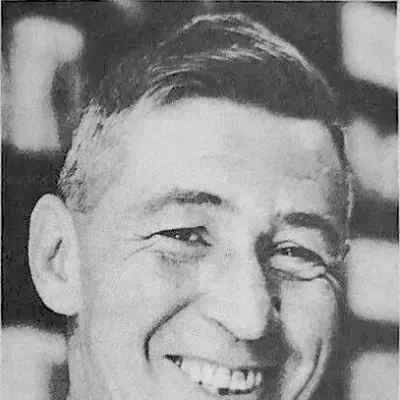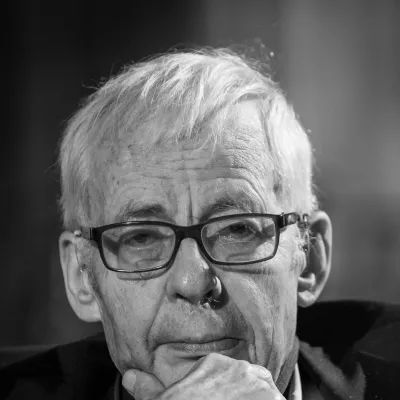
Emmanuel Le Roy Ladurie
Human Design Chart
Biography
Emmanuel Le Roy Ladurie died on 22 November 2023 at the age of 94 in Les Moutiers-en-Cinglais.
Human Design Analysis: Emmanuel Le Roy Ladurie as Projector 6/2
Projector 6/2 — Design at a Glance
Emmanuel Le Roy Ladurie had as a projector a dense, focused aura that acted like a bright flashlight. This radiance allowed him to immediately identify system errors and weaknesses in his environment. Instead of directly attacking these deficiencies – which often would have caused resistance – he presented himself as an attractive role model through a harmonious example. Others sought him out to benefit from his insights, drawn naturally by his presence.
Central to his work was the strategy of waiting for an honest and appreciative invitation before effectively using his magnetic influence without friction or unnecessary conflicts. Since Emmanuel Le Roy Ladurie did not have a defined Sacral Center, he lacked a constant source of intrinsic life energy. Instead, he moved in cycles of phases of high activity and necessary rest. These pauses were essential to avoid burning out, as modern work environments often ignored such needs.
By respecting this rhythm and waiting for others' invitations, he lived according to his design. This led to successful rewards. Had he tried to fight against this mechanism or use his energy uncontrollably, the non-self theme of bitterness would have emerged. His path was to bring light into darkness not by imposing but through the attractive power of a clearly structured yet patient presence.
No Inner Authority
Emmanuel Le Roy Ladurie did not possess an inner physical authority, a rare configuration that fundamentally shaped his decision-making process. As a mental projector, he had no defined centers below the throat. His answers to life's questions emerged only in exchange with other people. This dialogue activated latent potentials in his open centers through energetic interactions, allowing him to view and express issues from numerous perspectives.
This high resonance capability helped him find the appropriate environment and right conversation partners for this necessary exchange. However, evaluating the collected information was a complex process requiring time and withdrawal. Emmanuel Le Roy Ladurie needed phases of solitude to filter and structure the received data. Only then could he discern the thread, distinguish what made sense and belonged to him, and develop his specific intelligence. Filtering out the essential from a mass of information formed his capital for success.
A key element for him was choosing an environment where he felt comfortable. There he met people with whom he could confidently discuss decision-making processes. This continuous, trusting exchange deepened over time his sense of what was right for him. The combination of external dialogue to activate inner potentials and subsequent isolated reflection defined his path to clarity.
The 6/2 Profile — Role Model / Hermit
Emmanuel Le Roy Ladurie's design laid out a biphasic development course. In the first life phase, before the age of 30, the energy of Profile Line 2 dominated. This manifested as an unbound, mutating force paired with inner instability and some confusion. The focus here was on experimenting through trial and error; mistakes were accepted as necessary learning steps while external maturity was still lacking.
After turning 30, the energy of Line 6 of Profile 6/2 (Role Model/Natural Talent) activated. This shift marked the transition to the second phase: a withdrawal into a metaphorical 'cave'. There intensive reflection took place to heal earlier experiences and transform them into deep self-awareness. Through self-discipline, detailed work, and correct communication, the raw experience of youth was transformed into structured wisdom. Emmanuel Le Roy Ladurie thus became an authentic role model. Other people were drawn to this lived introspection to partake in his life wisdom and learn the ability for deep self-reflection. The distance from his own history enabled him to appear as a mentor who not only conveyed knowledge but also served as a living example of the path from immaturity to authentic authority.
Single Definition — Defined & Open Centers
Emmanuel Le Roy Ladurie was characterized by a persistent, unchanging mental structure and mode of expression. His design inclined towards constantly active conceptual thinking that directly discharged into language or action. This connection between his defined Ajna Center (mental consciousness) and the defined Throat Center (communication) formed the stable foundation of his personality: concepts were reliably generated and immediately articulated without being easily diverted by external influences. He possessed a stubborn, trustworthy way of thinking and speaking that did not fluctuate with changing situations.
At the same time, he was vulnerable to several open centers for conditioning. His open Head Center made him susceptible to external mental pressure; he tended to identify with questions or doubts from others rather than using them as personal inspiration. The open G Center meant a lack of firm identity and direction; he often sought borrowed security through environment or relationships instead of following an inner compass. Furthermore, his open Heart Center was not designed for consistent willpower, making him vulnerable to the pressure of proving his worth through promises or competition – a trap that he had to avoid to prevent self-worth loss.
Additional open centers like the Sacral (vital energy), Solar Plexus (emotions), and Spleen (health/intuition) as well as Root (stress) emphasized his role as a receiver and amplifier of foreign energies. He was not designed for spontaneous decisions from gut feelings or relying on fleeting emotional waves. Instead, his strength lay in the clear, conceptual penetration of topics and their precise communication while he had to learn not to internalize numerous external stimuli regarding identity, energy, and emotion as personal truth.
Channels for logical order, spontaneous insight and assimilation.
Emmanuel Le Roy Ladurie was someone whose mind was constantly engaged with mentally sorting information into a coherent worldview. This logical organization of details formed the absolute core identity of his design. The Accepting Channel 17-62 connected the Ajna Center to the Throat Center; Gate 17 visualized patterns, while Gate 62 translated and named these through words. Anything that did not fit into this internal system was dismissed as ununderstood. A constant pressure in the Throat Center urged him to communicate these organized opinions, with the gift being the ability to effectively translate detailed visual patterns into language.
Alongside this dominant structure, the Channel of Structuring 23-43 also played a role. It connected Gate 43 (Insight) in the Ajna Center to Gate 23 (Assimilation) in the Throat Center and allowed for clear expression of spontaneous breakthroughs and innovative perspectives. This knowledge often seemed light-years ahead; however, his recognition heavily depended on proper timing to avoid rejection.
Additionally, other Gates shaped his profile: Gate 61 generated a pressure for individual knowledge as a spontaneous mutation in the struggle for silence and self-recognition. Gate 3 promoted mutations to overcome confusion and create new orders. Gate 50 provided conservative protective reflexes for preserving values and traditions. In the personality area, Gate 35 stood for change through interaction, while Gate 16 fostered experimental mastery. Gate 11 supported situational assessment through visual memories before action.
Individual Circuitry — Circuit Signature
Emmanuel Le Roy Ladurie was marked by a double connection between Ajna and Throat Centers that united two complementary forms of expression. His design linked the impulsive, creative expression with logical structuring. The Knowledge Circuit worked through Channel 23-43 (Structuring). This channel promoted the need to shape personal identity and new insights through language. It was about transforming inner knowledge into external expression driven by a pulsing, creative energy. Parallel to this, the Understanding Circuit activated Channel 17-62 (Accepting). Here, rational, emotionless analysis took precedence. Emmanuel Le Roy Ladurie used this channel to recognize logical connections and pass them on in structured form. The goal was to show improvements for the future through focused intellect. Both circuits connected exactly the same centers: the Ajna Center (thinking) with the Throat Center (expression). This created a unique dynamic. On one hand, he could articulate creative, transformative impulses, while on the other, he could convey cold, rational facts. This synthesis of emotional creativity and clear logic shaped his way of communication. It was not about conflicting forces but two sides of the same coin: thinking was always made linguistically tangible, once through the filter of individual creative power, once through the lens of objective logic. This configuration allowed him to present complex content both inspiringly and rationally convincingly.
Left Angle Cross of Obscuration 1
Emmanuel Le Roy Ladurie was marked by an internal dynamism that rested on the tension between concealment and revelation. His design carried the left cross of veiling 1 within it. This configuration structured his personality not as a static state but as a continuous process of becoming visible and hidden. It was an archetypal mechanism where truths often seemed initially concealed behind veils, only to gradually come to light. For Emmanuel Le Roy Ladurie, this meant that his path was not one of linear revelation but rather a rhythmic alternation between what was held back and what could eventually be brought to the surface. The energy of this cross suggested that deeper connections were rarely immediately apparent; they required time and often a specific trigger to reveal themselves or come into view. This structure created a particular kind of intensity within, aimed at not only finding what was hidden but re-evaluating its significance in the context of the visible. It was less an act of conscious deception than a natural law of his design: things revealed themselves in layers, and full clarity emerged only through penetrating these various levels of veiling.
Saturn Return · Uranus Opposition · Chiron Return · 2nd Saturn Return — Life Cycles
Emmanuel Le Roy Ladurie showed a rhythmic dynamism in his career path where external professional shifts were intertwined with internal clarification processes within the realm of his historical work. In 1971, at age 42, he was appointed to the University of Paris VII. This step fell during a Uranus opposition period, an astrological aspect often associated with sudden changes and breaking away from established structures. For his design, this marked a moment of external change that opened new professional perspectives and freed him from previous constraints.
Eight years later, in 1979 at age 50, he published "The Territory of the Historian". This occurred during his Chiron return cycle between ages 49 and 51, understood in Human Design mechanics as a phase of fulfillment and flowering. During this time, one's incarnation cross increasingly unfolds in life if lived according to strategy and authority; meaning and purpose become experiential. The publication was thus not merely an academic act but the material expression form of this inner maturation process. It signalled that his specific historical perspective had now fully integrated into his consciousness and work. The Chiron return served here as confirmation of his life task: to enter his field not just to explore its boundaries and possibilities, but to define and occupy them.
Projector · No Inner Authority — Synthesis
Emmanuel Le Roy Ladurie was a projector whose ability to recognize patterns (Channel 17-62) and uncover underlying mechanisms had a profound impact on those around him. This gift, combined with a defined mental center, led him to process information in structured ways and develop concepts that inspired or challenged others. His profile as an exemplar suggests he entered a phase of wisdom after intense personal experiences from which he could impart his knowledge. The recurring professional peaks (1971, 1979) underscored the ability to initiate changes through innovative thinking and open new perspectives – always in harmony with the pulsating character of the knowledge circuit.
A central paradox in his design lay in the tension between his projection capability and a lack of inner authority. While he excelled at illuminating darkness for others and pointing out errors, this required exchange with others to validate his own decisions. This openness to external influences, combined with a tendency towards reflection and withdrawal (Line 6), indicates that he led a life marked by the search for wisdom – wisdom arising both from observation and interaction with the world around him.
2 Defined Channels
Incarnation Cross - Left Angle Cross of Obscuration 1
Solar Return
The Solar Return shows the moment when the sun returns to its exact birth position - your personal solar year.
Life Cycles
Discover the life cycles with a detailed triple view (birth chart, cycle chart, composite).
Human Design Profile
- Type
- Projector
- Strategy
- Wait for the respectful invitation
- Authority
- No inner authority - learn more
- Profile
- 6/2 - Role Model / Hermit
- Definition
- Single Definition
- Incarnation Cross
- Left Angle Cross of Obscuration 1
- Date of Birth
- 19.07.1929 11:00
- Place of Birth
- Les Moutiers-en-Cinglais, France
Frequently Asked Questions
What was Emmanuel Le Roy Ladurie's Human Design type?
Which Profile did Emmanuel Le Roy Ladurie have?
What authority did Emmanuel Le Roy Ladurie possess?
What incarnation cross did Emmanuel Le Roy Ladurie have?
When was Emmanuel Le Roy Ladurie born?
Discover your own Human Design
Are you also a Projector? Find out in a personal reading how to unfold your leadership qualities and recognize the right invitations.
More Personalities
Back to overviewSissy Spacek

Alain-Fournier

Anémone

Ann-Margret

Bourvil
Hergé