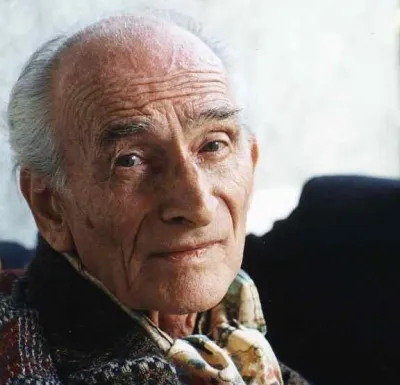
Erich Fromm
Human Design Chart
Biography
Erich Fromm as a Manifesting Generator 5/1 in Human Design
Manifesting Generator 5/1 — Design at a Glance
Erich Fromm revealed himself as someone who possessed hybrid energy: the constant power of a Generator paired with the lightning-fast effect of a Manifestor. His design suggested that he could draw things into his life by skipping steps and pursuing multiple projects simultaneously. However, this speed was a double-edged sword. If he acted too quickly or initiated without inner confirmation, it often led to important phases being overlooked. The result was frustration as he then had to backtrack to make up for what was missing. His non-self theme manifested precisely in this friction between the desire for immediate action and the necessity of respecting the process.
The strategy for his design involved not initiating himself but reacting to impulses from his environment. Only when his sacral center – his inner energy source – clearly signaled a "yes" should he act. Only then could his creative power lead to deep satisfaction. Without this inner authority, initial enthusiasm quickly turned into exhaustion. With correct application, that is in harmony with his inner resonance, he benefited from variety and the "play mode". Then it was no obstacle but rather a source of strength for him to work on different things simultaneously, as long as each individual project received his inner approval.
Emotional Authority
Erich Fromm's inner authority was emotionally influenced. His defined Emotional Center significantly shaped his decision-making: He was constantly swept up in waves of emotional ups and downs that colored his perception of the world according to his current mood. What appeared inspiring at one moment could seem negative the next. These fleeting impressions were not ultimate truths but merely initial reactions. Spontaneous decisions made in this emotional heat often proved problematic. Instead, his configuration required patience and time. He let decisions mature, slept on them multiple times, and sought an emotional distance until the intense feelings subsided. Only then did clarity and calmness set in – the moment when he had gone through the process. This strategy of waiting was especially important for long-term, life-defining decisions.
Important: The emotional authority always took precedence over all other defined centers in his design, regardless of additional configurations. It dictated the pace and nature of his inner orientation.
The 5/1 Profile — Heretic / Investigator
Erich Fromm's Human Design profile set a tendency towards a dual role: he was both the withdrawn researcher and the publicly accessible problem solver. As a person with Profile 5/1, he sought deeper understanding and new insights, driven by a fundamental zest for life and the willingness to correct himself through experiments and mindfulness. This Line 1 described his inner process of learning and self-reflection, where the love of life was crucial for his development. Without this inner dedication, frustration would have arisen; instead, he used cyclic patterns to sharpen his authority and perception.
At the same time, he appeared outwardly as someone who provided knowledge. Line 5 functioned as a projection line: others saw him as a source of healing or solutions. This gave him a magnetic presence that led many to seek his advice. However, this profile also carried the risk of overloading. Since he was often perceived as an expert who answered questions, there was a danger that his energy would be drained by constant inquiries – similar to how an expert might feel exhausted after long conferences and face a flood of further requests.
The challenge lay in setting clear boundaries. Only by learning to say no could he maintain the balance between his private research (Line 1) and serving others (Line 5). His path revealed itself as a process of self-perception, enabling him to become independent from external conditioning and allow healing to arise from his own essence rather than seeking it only through projections of others.
Split Definition — Defined & Open Centers
Erich Fromm's design inclined him towards clear, identity-driven communication that was nonetheless marked by emotional depth and inner reflection. His defined G Center endowed him with a firm sense of self-awareness and direction; he knew who he was and could carry this constancy outward. This inner security flowed into his defined Throat Center, which served as a pivot point to direct messages from the entire system. Fromm did not speak impulsively but articulated his truth with honesty and clarity, supported by the vital energy of his defined Sacral Center. As a Generator, he had a constant power source that propelled him to actively engage – provided he responded to invitations rather than initiating them. His emotional authority in the Solar Plexus Center demanded patience: Fromm needed to wait out the waves of his emotions to gain clarity before acting or judging. This waiting was not a weakness but a process of emotional maturation, which helped him cultivate deeper insights and filter impulses.
At the same time, his design revealed specific vulnerabilities. His open Head Center made him receptive to mental inspirations from the environment, yet he did not mistake these for his own truth. He tended to take up others' questions without needing to solve them immediately, thereby opening himself to the mystery of the unknown rather than sinking into mental confusion. His open Ajna Center allowed a flexible mind that used classrooms as a means to gather ideas – he could collect concepts and theories without dogmatically holding onto them. The open Heart Center meant Fromm was not consistently willfully strong in a competitive sense; he had to learn not to put himself in impossible situations through promises or the pressure of proving his worth. Instead, he could perceive the vibrations of others' egos and recognize who was reliable. Finally, his open Spleen Center acted as a mirror for health and well-being; he was sensitive to discomfort in his surroundings and had to learn to avoid spontaneous decisions driven by conditioned fears. Through the combination of defined identity, reactive energy, and emotional patience along with the handling of open mental and existential fields, Fromm emerged as someone who conveyed his inner direction with profound, time-bound wisdom.
Channels for resources, focus and emotional openness.
Erich Fromm's design inclined him towards deep, focused analysis paired with the ability to initiate new directions through authentic emotional resonance. This configuration created a specific kind of perception and impact.
The Channel of Concentration 52-9 connected the Root Center with the Sacral Center via the Gate of Non-action (52) and the Gate of Focusing (9). This channel generated a calm, passive pressure to remain still and ward off distractions in order to maintain focus on details and facts. It allowed for meticulous examination, correction, and perfection of patterns by channelling the design's energy precisely. Fromm was able to work long hours on one thing without being distracted by external disturbances, allowing him deep logical penetration into his subjects.
Simultaneously, the Channel of the Beat 14-2 shaped his orientation towards innovation and mutation. It connected the Sacral Center with the G Center via the Gate of Skillful Handling of Power (14) and the Gate of Higher Knowledge (2). This combination provided resources to transform material realities and chart new directions. Fromm could introduce innovative perspectives as a Keyholder, trusting in his reaction from the Sacral even when outcomes were unclear. This gave him the strength to encourage others through his own authentic orientation and further develop collective structures with mutative impulses.
The Channel of Openness 22-12 linked the Solar Plexus Center with the Throat Center via the Gate of Openness (22) and the Gate of Caution (12). It enabled him to creatively express emotional waves and moods, where articulation depended on mood. Fromm used the quality of his voice and words to generate transformative awareness in listeners only when he felt compelled to do so. This mechanism ensured that his communication was not compulsive but based on a deep, authentic resonance that could touch or move others without overwhelming them.
Additionally, Gates like 25 (Innocence, Individualization) and 46 (Devotion, Presence) contributed to Fromm's mystical stance of self-love and full engagement in the process. Gate 58 in the Root Center supported recognition and correction of patterns through experiments, while Gate 45 in the Throat Center expressed willpower and tribal hierarchy. These elements formed a design that united analytical depth with emotional authenticity.
Individual Circuitry — Circuit Signature
Erich Fromm's design inclined him towards separate, parallel operating energy streams. Through 'Split Definition', there were two independent groups: one connected Identity to Sacral as well as Throat to Solar Plexus; the other linked Sacral and Root Centers. These centers from different groups were not directly connected but operated as separate fields alongside each other.
In the Knowledge Circuit, this separation was evident: Erich Fromm had the Channel 'Openness' (Throat/Solar Plexus) and 'The Beat' (Identity/Sacral). This enabled a flow between emotional wave and verbal expression as well as individual identity and rhythmic life energy. The circuit thus fostered the search for one's unique path and the expression of new insights through authentic voice, with creativity and melancholy serving as impulses.
Parallel to this, the Understanding Circuit operated via the Channel 'Concentration' (Sacral/Root). Here it was about logical thinking, strategy, and sharing rational insights for societal improvement. Since this center was not connected to Solar Plexus, it involved emotionless ratio focused on visual clarity and future-oriented structures. Both circuits shaped his essence as separate yet coexisting aspects: one emotional and individual expression, the other strategic and analytical approach to social contexts.
Left Angle Cross of Healing 1
Erich Fromm's Human Design profile indicated a tendency towards profound and often painful introspection. The 'left healing cross' did not describe an easy path but rather one marked by intense internal conflicts that needed to be resolved. This configuration acted as a driving force, compelling reflection on wounds that could be both personal and collective or archetypal in nature. Healing came through radical honesty with one's shadow aspects rather than superficial adaptation.
For Erich Fromm, this meant his intellectual and emotional work was always shaped by an internal pressure to confront these conflicts. The healing cross demanded a constant integration of opposites—between pain and growth, isolation and connection. This mechanism manifested in an attitude that rejected avoidance; instead, difficulties were accepted as necessary steps towards personal maturity. The energy of this design focused on recognizing hidden patterns through conscious action and dissolving them. It was a process of continuous self-correction where mistakes were understood not as failures but as indispensable learning moments. This structure influenced his worldview: always looking at what needed to be healed to enable an authentic existence.
Saturn Return · Uranus Opposition · Chiron Return · 2nd Saturn Return — Life Cycles
Erich Fromm's Human Design profile indicated a tendency towards deep, structural life changes often marked by external milestones. In 1926, at the age of 26, he married psychoanalyst Frieda Reichmann. For his system, this was a typical moment of the first Saturn Return: during this phase, years of internal groundwork and searching often crystallized into a stable, binding result. The marriage marked the transition from individual development to shared partnership, a process frequently experienced in this cycle as stabilization.
Later, in 1940 at the age of 40, Fromm received American citizenship. This coincided with his Uranus opposition, a time when the design often requires a radical break from the known and a new beginning on an individual basis. Joining a new national community was less a mere bureaucratic act than an external confirmation of an inner necessity for autonomy and protection of personal integrity against old structures. Both events illustrate how Fromm's chart linked specific life phases with clear, tangible changes: first binding as anchoring, later distancing as liberation.
Manifesting Generator · Emotional Authority — Synthesis
Erich Fromm lived a life marked by a deep connection to sacral energy and the need for authentic expression. As an Expressing Generator (MG), he possessed the ability to quickly bring things into his life—a trait amplified by his active link between Sacral and Throat Centers. However, this rapid implementation of impulses often came at the cost of skipping important steps, forcing him back repeatedly for refinement. His profile as Hero/Researcher (5/1) underscored this dynamic: he sought deep knowledge to offer solutions, yet constant demand could overwhelm him. The definition of his Communication Center indicates that his voice was always fed by inner sources and transformed messages.
Central to Erich Fromm was a paradox between the drive for quick manifestation and the need for emotional maturity. His emotional authority required time to reflect on decisions while his MG design tended towards immediate action. This tension showed in documented events: marriage (Saturn Return) as a step into connection, and citizenship (Uranus Opposition) as an expression of change and individuality. The Knowledge Circuit amplified the need for transformation, yet the process always required integrating emotions and heeding one's inner compass.
3 Defined Channels
Incarnation Cross - Left Angle Cross of Healing 1
Solar Return
The Solar Return shows the moment when the sun returns to its exact birth position - your personal solar year.
Life Cycles
Discover the life cycles with a detailed triple view (birth chart, cycle chart, composite).
Human Design Profile
- Strategy
- To respond - wait for something to respond to
- Authority
- Emotional Authority
- Profile
- 5/1 - Heretic / Investigator
- Definition
- Split Definition
- Incarnation Cross
- Left Angle Cross of Healing 1
- Date of Birth
- 23.03.1900 19:30
- Place of Birth
- Frankfurt, Germany
Frequently Asked Questions
What was Erich Fromm's Human Design type?
What Profiles did Erich Fromm have in Human Design?
What Authority did Erich Fromm have?
What incarnation cross did Erich Fromm have?
When was Erich Fromm born?
Discover your own Human Design
Are you also a Manifesting Generator? Find out in a personal reading how to unfold your multi-talents and direct your energy wisely.
More Personalities
Back to overviewAldair

Alizée

Angeli

Arletty
Artus

Balthus