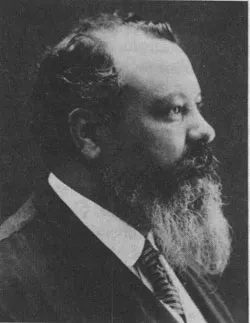
Erling Lorentzen
Human Design Chart
Biography
During World War II he was part of Kompani Linge of the Norwegian resistance movement. After the war he worked as a bodyguard for the royal family, which is how he met Princess Ragnhild.
Lorentzen died after a short illness on 9 March 2021 in Oslo, Norway, aged 98.
Erling Lorentzen — Manifestor with Profile 6/2
Manifestor 6/2 — Design at a Glance
Erling Lorentzen's design laid the foundation for a role as a pioneer and visionary. He was a Manifestor, a type designed to set the world in motion through his own impulses and dictate new directions. This profile was characterized by strong inner strength, which often met resistance because his perspectives and goals did not always align with those of his environment.
The mechanics of this type compare Erling Lorentzen to a strategic leader who carries the vision of the whole but does not need to personally lead every battle. Instead, he influenced others through his impact; they either embraced or rejected his ideas. This polarization was a natural part of his design: while some people were drawn to his clarity and followed him, others misunderstood or even rejected him because he thought beyond the average.
To master this dynamic, Erling Lorentzen's key strategy lay in informing. By clearly communicating his intentions and visions before acting, he could minimize unnecessary friction and find those ready to support him. Living by this strategy led to a deep sense of inner peace for him. Acting against this principle without preparing his environment often resulted in prolonged anger and frustration. His design therefore demanded not only leadership but also the discipline of communication to walk his path peacefully.
Splenic Authority
Erling Lorentzen's internal compass was spleen authority, a fine, instinctive intelligence that immediately informed him whether a situation or environment was healthy for him. This system functioned as his personal alarm system; it provided an instant clear impulse prioritizing his physical well-being and survival capabilities. For Erling Lorentzen, this meant decisions were not made through prolonged deliberation or external advice but solely in the moment they arose. The first spontaneous impulse was the right path; any hesitation risked overriding these subtle signals and losing correct orientation.
This mechanism required him to be highly vigilant about his own internal state. Since the spleen center only responded in the present moment, long-term plans were often difficult or even counterproductive for him. His design promoted flexibility and freedom; setting himself rigidly before the concrete moment arrived contradicted his nature. Instead, he demonstrated a strict ability to delineate against harmful influences guided by this immediate health instinct. He lived according to what felt right in every moment and trusted that this spontaneous path would always protect him from danger and preserve his resources. This authority demanded ease of action and avoided rigid structures in favor of reactive, intuitive living.
The 6/2 Profile — Role Model / Hermit
Erling Lorentzen's design was marked by a clear developmental line: In the early years, experimentation and learning through trial and error dominated. This phase of active life experience laid the foundation for his later stance. Only after the age of 30, with the activation of the sixth line, did his approach fundamentally change. He increasingly withdrew to reflect deeply on his earlier experiences from a great distance. This period of intense reflection fostered deep self-awareness and healing.
This transformation aligned with the profile 'Role Model / Natural Talent'. The mechanics described a process where early uncertainties evolved into mature wisdom. Later in life, Erling Lorentzen showed himself to be someone who did not just keep these introspective insights for himself but made them accessible to others. His ability for deep self-reflection became an example for his environment.
Additionally, the dynamics between people orientation and goal orientation shaped his work. While many leaders focused solely on results, his design valued integrating all participants. He recognized qualitative success through acknowledging 'lower forces' within a structure. This alignment helped him go beyond mere quantity to create more sustainable quality. The secrecy of certain advantages served to protect these deep processes before they were disseminated as trend-setting knowledge.
Single Definition — Defined & Open Centers
Erling Lorentzen's design was characterized by a clear, reliable presence that stemmed from a fixed inner identity and strong will. His defined G Center gave him a deep sense of direction and likability; he intuitively knew where his place was without seeking external validation. This self-assurance was supported by the also defined Heart Center, which provided permanent access to willpower and ego. He could make promises and keep them, strengthening his self-esteem and enabling him to take responsibility for his resources and life path. This structure was complemented by a defined Spleen Center, granting him spontaneous, intuitive intelligence in the present moment. He reacted based on immediate bodily knowledge about health and safety without having to rationalize extensively.
In contrast, his design revealed sensitive areas of conditioning. His open Head Center made him vulnerable to mental pressure; he tended to engage with questions that weren't his own or desperately seek inspiration to fill inner emptiness. The open Ajna Center amplified this: He could easily get pulled into others' opinions and felt compelled to have answers where curiosity was appropriate. Emotionally, the open Solar Plexus Center made him vulnerable; he absorbed the moods of his environment and risked personalizing foreign moods as reality or avoiding conflicts out of fear of rejection. His open Sacral Center also meant that his energy wasn't constant. He relied on aligning with other energies, making him susceptible to overloading if he didn't pause. Finally, his open Root Center absorbed general world stress, causing him to suffer under a pressure not of his own creation and only escapable through distance or conscious use.
Channels for leadership, pioneering spirit and instinctive devotion.
Erling Lorentzen was marked by a combination of collective leadership and entrepreneurial instinct. His design characterized him as someone who combined logical structures with an intuition for the market. The Alpha Animal Channel 7-31 connected the G Center to the Throat Center, giving him the ability to gain trust and lead through proven patterns. He did not seek absolute authority but influence within his own 'pack', where his voice became effective when invited as a collective leader.
Parallelly, the channel of Devotion 26-44 between Heart and Spleen Centers worked. Here, the ego strength of Gate 26 combined with the instinctive alertness of Gate 44. Erling Lorentzen had the talent to intuitively recognize what others needed – whether a product or ideology – and convincingly convey it. He acted as an entrepreneur generating resources and strengthening his community, always waiting for recognition of his value.
The Initiation Channel 51-25 connected the Heart Center with Shock Gate (51) and Self Spirit (25). This created natural competitiveness aimed at crossing boundaries and promoting individualization. He awakened in others a desire to prove themselves, which could be understood as a mystical initiation that only worked through invitation.
Additionally, prioritized gates contributed to his imprint: Gate 41 drove evolutionary changes while Gate 24 promoted mental renewal in the rhythm of the pulse. On the personality side, Gates 35 (change through interaction), 1 (creative uniqueness), and 57 (intuitive clarity) were active. In his design, Gates 46 (devotion here-and-now), 32 (material success), 50 (value protection), and 48 (pattern recognition) supported his ability to act. This configuration formed a person who united leadership, salesmanship, and transformative energy in a complex web.
Individual Circuitry — Circuit Signature
Erling Lorentzen's design was marked by a clear, coherent energetic structure. As someone with simple definition, he had a continuous flow between Heart, Spleen, Throat, and Identity Centers. This created a stable foundation for his actions and communication.
The Centering Circuit worked through him via the Initiation Channel (25-51). This connected the Identity Center directly to the Heart. This connection fostered strong self-esteem and firm individual convictions. Erling Lorentzen was shown as someone with inner strength, living his own individuality clearly. However, without a connection to the Throat Center, these deep convictions often remained unspoken or hard to put into words.
In the Understanding Circuit, he activated the Alpha Animal Channel (31-7). This connected the Throat Center to the Identity Center. Here, his ability to articulate logical and strategic insights clearly was evident. It involved conveying rational knowledge free of emotional coloring to create structures for the future. His communication was focused and goal-oriented.
The Ego Circuit worked through the Devotion Channel (26-44), which connected Heart and Spleen. This concerned the theme of giving and taking as well as creating resources through cooperation. Erling Lorentzen supported others and sought essentials to create value together. Since his chart had no connection to the Sacral Center, it was essential for him to take sufficient rest breaks to replenish his energy and act sustainably.
Left Angle Cross of the Alpha 2
Erling Lorentzen's Human Design indicated a tendency towards profound inner transformation that manifested not through external actions but through the metamorphosis of his self. The left cross of Alpha 2 described a path of constant renewal through letting go of old identities and patterns. This energetic configuration compelled Erling Lorentzen to repeatedly break down and reconstruct himself from fragments into a more authentic version. This process was often painful and required courage, as it relinquished the security of known roles.
The mechanics of this cross acted as an inner compass for growth through crisis. Erling Lorentzen appeared less as someone seeking external fame than as one who invested his energy in deepening his own essence. Each life phase revealed a new layer of personality while old shells were shed, imprinting his experience as a continuous journey of self-discovery where the value did not lie in possession or status but in the purity and authenticity of his existence. The constant change was thus not chaos but an orderly evolution towards greater integrity and clarity about his essence.
Saturn Return · Uranus Opposition · Chiron Return · 2nd Saturn Return — Life Cycles
Erling Lorentzen's Human Design indicated a tendency towards strategic turning points marked by clear life decisions. In 1953, at age 30, he married Princess Ragnhild of Norway. This fell within the period of his first Saturn Return, a phase where years of internal structuring often condense into a solid external outcome and fundamental commitments are made.
Later, his path showed another characteristic development. In 1972, at age 49, he sold Supergasbrás and invested in Aracruz Celulose. This step corresponded to the Chiron Return, an unfolding cycle between ages 49 and 51. During this phase, one's incarnation cross increasingly manifests in life; if the person has followed their strategy and authority, their purpose becomes tangible. It was not about healing old wounds but a blooming period where deeper life tasks became concrete. Lorentzen's transition from one company to another illustrated this process of increasing manifestation and anchoring in his core essence.
Manifestor · Splenic Authority — Synthesis
Erling Lorentzen was a Manifestor who throughout his life exhibited profound inner wisdom and a strong drive for leadership. His design points to someone destined to pioneer new paths and guide others (Channel 31/7), always relying on his intuitive Spleen Authority to ensure the health and well-being of all involved. This ability for spontaneous assessment, combined with natural authority, shaped his path and allowed him to make clear decisions even in complex situations. The experience of Saturn Return at age 30 (Significant Event: Marriage) marked a transition from an experimental life phase to one of reflection and wisdom – a time when he internalized accumulated experiences and served as an example for others.
A central paradox in his design lay in the tension between the desire for leadership and the need for boundaries. As a Manifestor, he was destined to initiate and set direction, yet his Spleen Authority required careful perception of his own limits and needs. This duality led to an inner dynamic where he was both the Alpha Animal (Channel 31/7) and a wise loner – someone who changed the world while maintaining his own internal balance. The transition in middle age (Significant Event: Sale and Investment) suggests that this boundary setting and focusing on core values played a crucial role in his life development.
3 Defined Channels
Incarnation Cross - Left Angle Cross of the Alpha 2
Solar Return
The Solar Return shows the moment when the sun returns to its exact birth position - your personal solar year.
Life Cycles
Discover the life cycles with a detailed triple view (birth chart, cycle chart, composite).
Human Design Profile
- Type
- Manifestor
- Strategy
- To inform others before acting
- Authority
- Splenic Authority
- Profile
- 6/2 - Role Model / Hermit
- Definition
- Single Definition
- Incarnation Cross
- Left Angle Cross of the Alpha 2
- Date of Birth
- 28.01.1923 10:10
- Place of Birth
- Oslo, Norway
Frequently Asked Questions
What was Erling Lorentzen's Human Design type?
What profile did Erling Lorentzen have in Human Design?
What authority did Erling Lorentzen have?
What incarnation cross did Erling Lorentzen have?
When was Erling Lorentzen born?
Discover your own Human Design
Are you also a Manifestor? Find out in a personal reading how to use your initiation power peacefully and dissolve resistance.
More Personalities
Back to overviewChristian-Jaque
Kesha

Lucebert
Marilyn

Masaccio

Papus