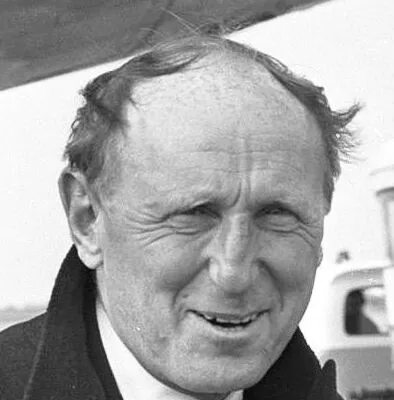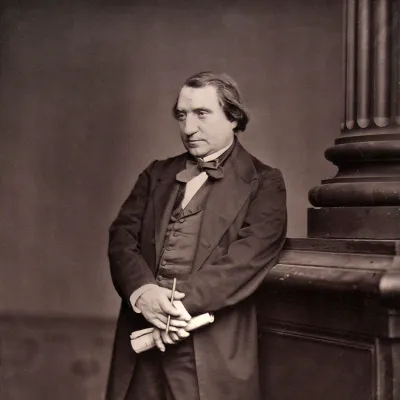
Ernest Renan
Human Design Chart
Biography
Died on 2 October 1892, Paris.
Human Design Analysis: Ernest Renan as Projector 4/6
Projector 4/6 — Design at a Glance
Ernest Renan was distinguished by his specific ability to immediately recognize systematic weaknesses in his environment. As a Projector, he had a dense, focused aura that worked like a bright flashlight: It illuminated areas that were still dark or not functioning optimally for others. This configuration allowed him to identify errors in the system instantly.
However, without a defined Sacral Center, Ernest Renan lacked a constant intrinsic source of life energy. Instead, his energy level moved in waves; phases of high productivity and faster work speed alternated with necessary rest periods to prevent burnout. The conventional school system and most professional structures of his time often did not accommodate this rhythmic need for recovery, which could lead to friction.
The appropriate strategy for his design was to wait for appreciative and sincere invitations from others rather than imposing his insights uninvited. When he accepted such an invitation and illuminated his path – perhaps through the example of harmonious relationships or clear structures – he became strongly attractive to those around him. Others came to him voluntarily seeking advice. If Ernest Renan lived according to this principle, he was rewarded with success. Ignoring this dynamic and imposing his perspective uninvited risked developing bitterness as an expression of his non-self.
Emotional Authority
Ernest Renans design showed a tendency towards emotional wave movements that made his perception of the world strongly dependent on his current mood. He appeared as someone whose inner authority lay in the defined Emotional Center. In Human Design, the Emotional Center is always the leading instance for decisions when it is defined – regardless of which other centers are also active. This priority rule means that his feelings always took precedence over other internal impulses.
His emotional landscape was marked by a permanent up and down. Ernest Renan saw the world colored through his current mood: In one moment, he could be completely inspired by an idea, in the next, he would negatively evaluate the same thing. His immediate feeling was only a snapshot, not a final judgment. Quick, spontaneous decisions made from this emotional heat often proved problematic because they were based on incomplete information.
The mechanics of his design required patience and time. Ernest Renan had to let decisions mature in order to arrive at his true truth. This meant taking the time to properly consider important questions multiple times. Only when intense feelings subsided and an emotional distance was gained, clarity would set in for him. This process of 'sleeping on' decisions was essential for long-term life decisions with a significant impact on his life course to gain calmness and well-founded insight.
The 4/6 Profile — Opportunist / Role Model
Ernest Renan's design showed a tendency to distinguish himself through intensive experimentation with relationships and friendships during the first decades of his life. As a 4/6, the sixth profile line before the Saturn return initially appeared as a third line, which shaped this early phase of testing. Later, he exhibited a characteristic inner conflict: The Heart (line 4) yearned for belonging and community, while the Head (line 6) longed to isolate itself on a mountain to reflect on meaning. This contradiction between connection and distance defined his internal stance. In his later years, it was expected of him to take on the role of a wise role model through cooperation with others. His large heart always acted cautiously to avoid opening up to false people and getting hurt. The mechanics of his lines emphasized leadership through exemplary behavior and providing resources for the environment. At the same time, they placed value on gratitude, persistence, and joy in small steps in the process. For Ernest Renan, the path itself was often more important than the final goal; he trusted that details and consistent action would lead to success, even if the process never seemed truly complete.
Split Definition — Defined & Open Centers
Ernest Renan's design inclined towards clear, willful communication that drew from a firm inner identity and emotional depth. His defined Throat Center served as the focal point for this expressive style, transmuted from the energy of his also defined Heart (Willpower) and G (Identity) centers. This resulted in a consistent way of articulating himself: He spoke from an 'I' that knew what it wanted and who it was. This combination endowed his words with a magnetic quality as he not only conveyed information but shared his own direction and values.
Additionally, his defined Solar Plexus Center shaped his emotional authority. He was designed to avoid making decisions in impulsive 'now', instead waiting for the emotional wave to reach clarity. This patience allowed him to recognize deeper truths before acting or speaking. His defined Spleen Center supported this through intuitive, momentary warning signals and a focus on well-being and health in the present moment. The also defined Root Center provided constant pressure towards movement and survival, which was channeled by his other centers.
In contrast, Ernest Renan showed himself vulnerable to conditioning in his open centers. His open Head and Ajna Centers meant he did not possess a consistent mental truth. He tended to identify with foreign questions or intellectual mysteries that were not his own, sometimes desperately seeking answers in the mind where they did not lie. His open Sacral Center made him sensitive to the energy of his environment; he could easily become exhausted when taking on 'borrowed' energy from others and trying to keep up against his natural rhythm rather than resting and setting boundaries.
Channels for community, logical leadership, synthesis and intuition.
Ernest Renan was someone who combined logical guidance with intuitive truth. His design inclined towards collective influence based on recognized patterns. The Alpha Animal Channel 7-31 linked the G Center to the Throat Center; Gate 7 provided the rational role for societal guidance, while Gate 31 spoke as a collective leader. This configuration required trust and invitations to lead, as Renan had to understand trends to safely guide others into the future.
Simultaneously, he possessed a deep intuitive voice. The Brain Wave Channel 57-20 channeled insight from the Spleen Center directly to the Throat Center. Gate 57 offered spontaneous self-awareness that was articulated in the present moment through Gate 20. This allowed him to communicate existential knowledge clearly and encourage others in their inner survival intelligence without having to logically argue.
Emotionally, Renan sought belonging and balance. The Synthesis Channel 19-49 connected the Root Center with the Solar Plexus Center. Gate 19 urged tribal connection through touch, while Gate 49 set principles that secured cohesion. This energy functioned as an emotional glue for loyalty and mutual support within his community.
Furthermore, he understood the dynamics of exchange. The Community Channel 37-40 linked Solar Plexus to Heart Center. Gate 37 sought recognition through affection, while Gate 40 demanded work for reward and breaks. This created a foundation for fair agreements and the feeling of an honorable place in the group.
Additionally, individual gates were at play: Gate 9 promoted detail work and perfectionism in the Sacral Center, while Gate 16 aimed for experimental mastery in the collective. On the personality side, Gate 41 advanced evolutionary changes accompanied by the crisis experience of Gate 36. Gate 8 sought an individual contribution to the group, and Gate 38 set boundaries to protect integrity. In his design, Gate 33 actively reflected experiences to recognize patterns.
Tribal Circuitry — Circuit Signature
Ernest Renan's design inclined towards impulsive, creative insights that flowed directly into communication. The Knowledge Circuit linked his Throat Center with the Spleen. This generated a channel of mental lightning: sudden intuitive insights were immediately expressed verbally or through action without much maturation.
Parallel to this was a clear strategic orientation. The Understanding Circuit connected his Throat Center with the Identity Center via the Alpha Animal Channel. Here it was about sharing logical, rational insights – free from emotional coloring – to improve structures and guide society towards a better future. This connection ensured that his statements were not only spontaneous but also purposeful and identity-forming.
A third area concerned cooperation and resources. The Ego Circuit linked Heart, Solar Plexus, and the Root Center. Through the Community Channel (Giving and Taking) as well as Synthesis, a dynamic interaction between willpower, emotional reaction, and drive emerged. As there was no connection to the Sacral Center, rest pauses were necessary to process these intense interactions.
As a person with split definition, Ernest Renan had two energetically separate groups: one uniting Spleen, Throat, and Identity (via various circuits), the other Heart, Solar Plexus, and Root. These blocks worked parallel alongside each other, not as a continuous flow. He needed to consciously integrate these different forces rather than automatically connecting them.
Right Angle Cross of Planning 1
Ernest Renan's design inclines towards structured, long-term life planning. His chart contains the Planning Right Cross, a configuration that promotes strategic thinking and the ability to pursue complex goals over extended periods of time. This mechanism did not manifest as spontaneous impulsiveness but rather as a well-thought-out approach: Ernest Renan demonstrated an ability to carefully weigh steps and align actions with an overarching framework. The Planning Right Cross typically connects the energy of strategic overview with the endurance to consistently implement plans. For Ernest Renan, this meant that his actions were often guided by an inner logic seeking stability and predictability. He did not live according to short-term whims but oriented himself towards goals he deemed meaningful and sustainable. This structure helped him minimize uncertainties and make decisions based on experience and reflection. The energy of this cross shaped how he dealt with challenges: not through improvised reactions, but through prepared strategies. Ernest Renan utilized this inner order to shape his path by focusing on what was enduring. His design thus supported a stance of patience and clear focus, enabling him to maintain a firm point even in unclear situations. This trait was no coincidence but an integral part of his energetic constellation, which inclined him to view life as something that can be planned and designed.
Saturn Return · Uranus Opposition · Chiron Return · 2nd Saturn Return — Life Cycles
Ernest Renan's design indicated a tendency towards deep, cyclical transformation processes that crystallized into distinct phases of life. This structure showed him as someone who shaped his life through external events and internal steps of maturation. In 1863, at the age of 40, he published his major work "Histoire des origines du christianisme" under the title "Vie de Jésus". For his design, this was a typical moment: The Uranus opposition marked a point of radical change and opened new horizons, which here manifested as great success.
Later, in 1870 at the age of 47, he was rehabilitated. This fell during the Chiron Return cycle (approximately 49–51 years), which in Human Design mechanics is seen as a fulfillment phase. Provided one lives according to strategy and authority, the incarnation cross unfolds increasingly; meaning and purpose become experiential. The rehabilitation was not mere coincidence but part of this blooming period when his life's task became concrete.
Another milestone occurred in 1879 when Ernest Renan, at the age of 56, was elected a member of the Académie française. This coincided with his second Saturn Return. This cycle often brings a second phase of consolidation and recognition of earlier achievements. The election crowned this long-term development where years of groundwork condensed into a solid result. These three events illustrate how Renan's chart specified particular time windows for transformation, fulfillment, and confirmation.
Projector · Emotional Authority — Synthesis
Ernest Renan was a Projector whose life was marked by a profound ability to recognize the potential and weaknesses of others (Throat Center, Gate 7/31). This gift came hand in hand with the necessity to wait for emotional clarity before making decisions for himself – a process that required time and patience (Emotional Authority). His Profile as Networker/Roles indicated an increasing sense throughout his life of being called upon to serve as a wise advisor, always striving to connect with the community (Line 4) while also desiring independent thought (Line 6).
A central paradox in his design lay in the tension between the need to express his observations – a natural impulse of the defined Throat Center – and the emotional authority that required a maturing period for decisions. He could recognize patterns and take on leadership roles (Channel 31/7), yet success depended on whether he shared his insights at the right moment, so as not to be perceived as intrusive. The documented successes in his cycles – the publication of a work, rehabilitation, and election to an academy – speak to his ability to coordinate timing and expression.
4 Defined Channels
Incarnation Cross - Right Angle Cross of Planning 1
Solar Return
The Solar Return shows the moment when the sun returns to its exact birth position - your personal solar year.
Life Cycles
Discover the life cycles with a detailed triple view (birth chart, cycle chart, composite).
Human Design Profile
- Type
- Projector
- Strategy
- Wait for the respectful invitation
- Authority
- Emotional Authority
- Profile
- 4/6 - Opportunist / Role Model
- Definition
- Split Definition
- Incarnation Cross
- Right Angle Cross of Planning 1
- Date of Birth
- 28.02.1823 06:00
- Place of Birth
- Tréguier, France
Frequently Asked Questions
What was Ernest Renan's Human Design type?
Which Profile did Ernest Renan have in Human Design?
What Authority did Ernest Renan possess?
What incarnation cross did Ernest Renan have?
When was Ernest Renan born?
Discover your own Human Design
Are you also a Projector? Find out in a personal reading how to unfold your leadership qualities and recognize the right invitations.
More Personalities
Back to overviewSissy Spacek

Alain-Fournier

Anémone

Angeli

Ann-Margret

Bourvil