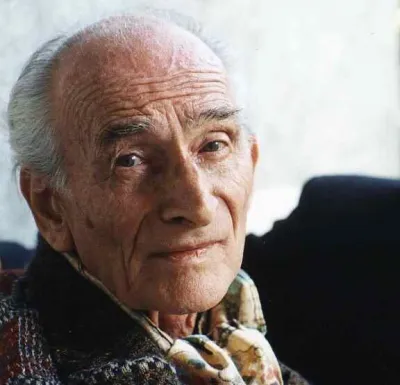
Photo: Wikimedia Commons
Ernesto Schiaparelli
Human Design Chart
Biography
Schiaparelli found Queen Nefertari's tomb in Deir el-Medina in theValley of the Queens (1904) and excavated the TT8 tomb of the royal architect Kha (1906), found intact and displayed in toto in Turin. He was appointed director of the Egyptian Museum in Florence, where he professionally reorganized the collection in new quarters in 1880, then at the peak of his career was made director of the Museo Egizio di Torino, which became with him and his many seasons of excavating, the second biggest Egyptian museum in the world. He was the author of famous scholarly works and a Senator of the Kingdom of Italy. At the same time, he was deeply involved, from his first stay with Franciscan missionaries at Luxor in 1884, with relieving the poverty he saw among the missionaries of Upper Egypt, for whom he founded the Association to Succour Italian Missionaries (ANSMI), which expanded its work to care for Italian emigrants throughout the Near East.
Between 1903 and 1920 Schiaparelli undertook twelve archaeological campaigns, opening sites in Heliopolis, the cemeteries of Giza, Hermopolis, Assiut, Qau el-Kebir, Gebelein and Aswan (the tomb of Harkhuf).
He died 14 February 1928.
The Human Design of Ernesto Schiaparelli: Manifesting Generator 6/2
Manifesting Generator 6/2 — Design at a Glance
Ernesto Schiaparelli was a person with hybrid energy: the constant power of a Generator combined with the lightning-fast radiance of a Manifestor. His design suggested that he didn't just react but could draw things into his life by skipping steps. This speed was a double-edged sword. Often, he acted too quickly, overlooked important intermediate steps, and found himself having to backtrack to fill in gaps. This led to frustration, his specific non-self-experience. Additionally, he tended to pursue multiple projects simultaneously rather than focusing on one thing.
The mechanics of his manifesting Generator required a clear strategy: he had to react to impulses from his environment rather than initiating on his own. Only when his Sacral Center – his energy source – gave a clear “yes” should he act. With this inner consent, he could feel deep satisfaction despite the many parallel activities. His creativity flourished best in a playful mode, where variety and fun were at the forefront. The pressure to complete a task before starting the next one stood in opposition to his natural way of working. Instead, he drew his strength from the diversity and the ability to quickly switch between different interests, as long as he listened to his inner authority and did not work against the flow of his own energy.
Emotional Authority
Ernesto Schiaparelli lived with emotional authority, meaning his defined Emotional Center was the sole source of his inner decisions. This mechanism held true regardless of all other defined centers in his chart; emotional truth always took precedence. His perception of the world was marked by constant emotional waves, a permanent up and down of feelings. In one moment, he could be enthusiastic about something, in the next, he could negatively evaluate the same situation. His immediate feeling was, however, just a snapshot, not yet the final truth. Quick, spontaneous decisions that directly stemmed from this first emotional reaction often proved problematic or negative for him.
The mechanics of his inner authority required time. To gain clarity and calm, he had to let decisions mature. This meant that he should hesitate, practice patience, and re-evaluate important matters multiple times, often by sleeping on decisions. Only when the intense feelings subsided and he gained emotional distance did true clarity emerge. This process was especially crucial for long-term, life-defining decisions. Ernesto Schiaparelli thus showed himself to be someone who did not react to the first impulse but needed depth and calm to distinguish his emotional truth from fleeting moods. His strength lay in the ability to go through the emotional wave until clarity arrived.
The 6/2 Profile — Role Model / Hermit
Ernesto Schiaparelli's design indicated a tendency towards a two-phase development, characterized by early experimentation and later, deep reflection. Before the age of 30, the sixth line acted as the third line. This meant that his life was determined by trial and error. He gathered numerous personal experiences, learned through mistakes, and withdrew after failures to process them. This process served the practical acquisition of knowledge through direct experience.
After the age of 30, the sixth line fully activated. Ernesto Schiaparelli then showed a need for distance and withdrawal, metaphorically into a “cave on the mountain.” This phase was marked by intense self-reflection. He looked back on his earlier experiments to gain wisdom and self-awareness from them. This withdrawal was not isolation but a time of healing and deeper understanding of his own processes.
The second line of his profile promoted independence and selectivity in relationships. It often projected the ability to conclude processes even though uncertainty remained. There was a dilemma between the necessary depth for true growth and resistance to change. When trends shifted, he sought ascetic withdrawal.
At the end of this long reflective phase, Ernesto Schiaparelli emerged as a wise person from his withdrawal. Others recognized his life wisdom and came to him to learn from his ability for deep introspection. His path was one of slow but profound transformation through experience and subsequent, distanced observation.
Split Definition — Defined & Open Centers
Ernesto Schiaparelli's Human Design profile suggests a tendency towards a constant, vital expression of strength, accompanied by a profound emotional reflection. His defined Sacral Center generated a continuous source of life energy, driving him to engage with life through reaction rather than initiation. This energy flowed directly into his defined Throat Center, making his communication and actions reliable and clear; he spoke and acted from an inner truth, not from impulsive urges.
At the same time, his defined Solar Plexus Center shaped his inner authority. He made decisions not in the moment but waited for the emotional wave to clear, ensuring clarity before taking action. This combination of sacral energy and emotional depth allowed him to demonstrate persistence as he navigated the highs and lows of his emotions. His defined Spleen Center supported this through spontaneous, intuitive security in the present, while his defined Root Center provided a constant, physical pressure that propelled and stabilized him in the material world.
In contrast, his open Head Center revealed a vulnerability to mental confusion. He tended to engage with questions that were not his own, seeking inspiration to relieve internal pressure rather than trusting his emotional clarity. His open Ajna Center amplified this, as he absorbed concepts and opinions from his environment rather than holding firm theories of his own.
Especially defining was his open G Center. It meant he did not have a fixed identity or direction but collected these through interaction with his environment and relationships. He reflected the identities of others, making him flexible but also vulnerable. His open Heart Center further indicated that he was not designed to prove willpower or give promises. He tended to seek his worth through performance, leading to frustration when he realized he did not have the energy to constantly prove himself. His correctness lay in listening to his sacral response and emotional clarity, rather than following mental pressure or the desire for recognition.
Channels for emotional depth, ambition and maturation.
Ernesto Schiaparelli showed himself to be someone whose social presence and professional ambition were closely linked to his emotional rhythm and the support of his environment. His design suggested a tendency towards a deep, cyclical experience-seeking process, characterized by patience and reflection.
The Channel of Openness 22-12 connected his Solar Plexus to his Throat Center. This meant that his ability to express himself and influence others depended on his emotional wave. He was most effective when he waited for the right moment rather than acting impulsively. His voice and way of listening could touch and transform others if he was in the right mood. Forced action here led to misunderstandings and withdrawal.
Parallel to this, the Channel of Transformation 54-32 propelled him forward. This channel connected his Root Center to his Spleen and created an ambition driven by persistent effort and the desire for recognition. Ernesto sought ways to improve his position and support his tribe. His success depended on his talents being recognized and his efforts rewarded. He worked hard to prove his worth and sought a healthy, mutual dependency that offered him security and progress.
The Channel of Maturation 42-53 connected his Sacral Center to his Root Center and emphasized the necessity of fully experiencing situations. Ernesto learned best by starting new cycles, completing them, and then reflecting. This process of maturation through experience was central to his wisdom. He had to learn to go into new situations without rigid expectations to avoid frustration and integrate the deep lessons of each phase.
Additionally, Gates like Intuitive Clarity (57) and Alertness (44) influenced his consciousness. Gate 57 promoted clear intuition in the here and now, while Gate 44 supported alertness and responsiveness in relationships. This combination helped him recognize and store transformations through proper interactions. The Gate of Self-imposed Pause (52) also contributed to him taking time for concentration and pattern correction before acting.
Individual Circuitry — Circuit Signature
Ernesto Schiaparelli's design suggests a tendency towards emotional authenticity and the search for deeper life meaning. His chart showed a Split Definition, indicating two parallel existing, not directly connected energy blocks. The first block connected the Throat to the Solar Plexus Center. This allowed him to directly translate inner emotional waves into words. The Knowledge Circuit worked here through the Channel of Openness (Gates 12-22), promoting a pulsating, acoustic creativity. He could thus transform and express new insights from his individual identity without filtering through other centers.
The second, separate block included Sacral, Spleen, and Root Centers. These were interconnected among themselves but did not form a bridge to the first block. Here, the Meaning and Ego Circuits were at work. The Channel of Maturation (Gates 42-53) in the Meaning Circuit connected Sacral and Root, promoting a cyclical, often wave-like emotional processing from the past. Parallel to this, the Channel of Transformation (Gates 32-54) in the Ego Circuit connected the Spleen to the Root Center. This supported an intuitive, exploratory approach to resources and cooperation based on a conservative, traditional stance. As there was no connection to the Throat Center, this work happened more internally or through silent support, separate from the direct verbal expression of the first block. Both systems ran alongside each other without forming a common energetic flow.
Left Angle Cross of Cycles 1
Ernesto Schiaparelli's Human Design configuration established a tendency towards cyclical, repetitive patterns characterized by a specific internal structure. This manifested as a way of living where processes did not follow a linear path but rather flowed in waves or cycles. The underlying mechanics, the left cross of cycles 1, describe a configuration where energy circulates in closed loops. Instead of reaching a goal and concluding, the system tended to revisit similar themes, deepen them, and run through them again in slightly altered form.
This structure meant that Ernesto Schiaparelli likely did not seek a final conclusion but rather mastery in handling the recurrence of similar situations. The energy of this configuration acts stabilizing, preventing one from getting lost in unknown, chaotic directions. Instead, it offered a familiar framework in which insights could solidify through repetition. It was a dynamic of deepening: each cycle brought a new nuance, a finer tuning, or a deeper understanding of the same fundamental theme.
For Ernesto Schiaparelli, this was not a limitation but a specific form of development. The world appeared to him not as a straight line with a clear end but as a spiral that repeatedly returned to similar points, however, on a different level. This required patience and the ability to accept the recurrence of patterns not as failure but as a necessary step in refinement. His inner logic followed this rhythmic pulse, creating order through repetition.
Saturn Return · Uranus Opposition · Chiron Return · 2nd Saturn Return — Life Cycles
Ernesto Schiaparelli's Human Design configuration shaped an attitude of structural anchoring and gradual authority achieved through discipline. His life path followed a pattern where external validation and inner maturity were closely intertwined. In 1881, at the age of 25, he became the director of the Egyptian Museum in Florence. This marked his first Saturn Return, a cycle often initiating the condensation of years of groundwork into a stable position. Here, the ability to take responsibility for existing structures was evident.
The development continued with the Uranus Opposition. In 1894, at the age of 38, he was appointed director of the Museo Egizio in Turin. This planetary position often brings sudden but necessary changes that break the previous framework and open new horizons. Schiaparelli used this impulse to expand his role and gain a broader platform.
The peak of this development was marked by the Chiron Return. In 1904, at the age of 48, he discovered the tomb of Nefertari. This cycle, between the ages of 49 and 51, is a fulfillment cycle where one's incarnation cross unfolds and meaning becomes tangible. The discovery was not coincidental but the bloom of his life's purpose, in which his specific contribution to the world became visible.
Finally, the second Saturn Return in 1910, at the age of 54, solidified his position through representing the chair of Egyptology at the University of Turin. This cycle cemented the authority previously achieved and anchored his knowledge in academic tradition. Schiaparelli lived these cycles consistently by creating structure, embracing change, and ultimately realizing his destiny in research.
Manifesting Generator · Emotional Authority — Synthesis
Ernesto Schiaparelli lived a life path deeply influenced by an inner dynamic. Through the combination of a manifesting Generator strategy and emotional authority, a person emerged who had the ability to quickly initiate and shape things but also surrendered to the necessity of allowing decisions to mature over longer periods. This tension between the impulse for swift action and the need for emotional clarity ran through his entire life and shaped his approach to tasks and relationships. The defined sacral motor, coupled with the Throat Center, points to a strong energy source that was channeled through communication and expression – an expression of creativity modulated by the emotional wave.
A central paradox in his design lay in the connection between openness and caution (Channel 22-12). On one hand, there was a willingness to expose oneself to new experiences and influences, on the other hand, a natural reticence and the need to weigh the consequences of one's actions. This tension between the desire for innovation and the necessity to maintain one's boundaries shaped his development, especially in the early years marked by a spirit of experimentation followed by reflection. The recurring professional successes that accompanied the cycles speak of a capacity to learn from experiences and transform them into new paths.
3 Defined Channels
Incarnation Cross - Left Angle Cross of Cycles 1
Solar Return
The Solar Return shows the moment when the sun returns to its exact birth position - your personal solar year.
Life Cycles
Discover the life cycles with a detailed triple view (birth chart, cycle chart, composite).
Human Design Profile
- Strategy
- To respond - wait for something to respond to
- Authority
- Emotional Authority
- Profile
- 6/2 - Role Model / Hermit
- Definition
- Split Definition
- Incarnation Cross
- Left Angle Cross of Cycles 1
- Date of Birth
- 12.07.1856 10:00
- Place of Birth
- Occhieppo Inferiore, Italy
Frequently Asked Questions
What was Ernesto Schiaparelli's Human Design type?
What Profile did Ernesto Schiaparelli have in Human Design?
What Authority did Ernesto Schiaparelli have?
What incarnation cross did Ernesto Schiaparelli have?
When was Ernesto Schiaparelli born?
Discover your own Human Design
Are you also a Manifesting Generator? Find out in a personal reading how to unfold your multi-talents and direct your energy wisely.
More Personalities
Back to overviewAldair
Alizée

Angeli
Arletty
Artus

Balthus