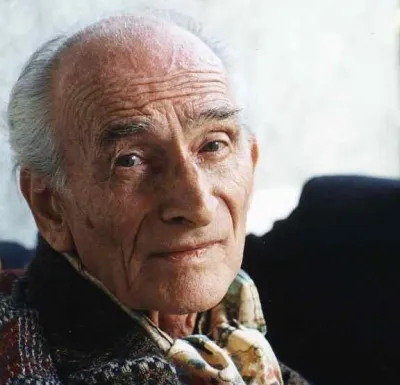
Ernst Otto Fischer
Human Design Chart
Biography
What does Manifesting Generator 4/6 mean for Ernst Otto Fischer?
Manifesting Generator 4/6 — Design at a Glance
Ernst Otto Fischers design showed a tendency towards hybrid work: He had the constant energy of a Generator but also the ability to accelerate processes and skip steps. This manifested as a strong inner drive that allowed him to quickly draw results into his life when responding to impulses.
As an Manifesting Generator, his basic strategy was not initiating from the outside but reacting to internal signals from the sacral center. Only if this center gave a clear „yes“ could he effectively use his speed without falling into frustration. The danger lay in this quickness leading to overlooking important intermediate steps or starting multiple projects simultaneously. If inner authority did not participate, initial creativity quickly turned into dissatisfaction.
Fischer drew his deepest satisfaction from a state that one can call the „play mode“. In this mode, variety was no obstacle but fuel. As long as he responded to impulses and regularly checked if there was still energy for an undertaking, he could work on different tasks simultaneously without getting distracted. His design challenged him to maintain this balance between rapid implementation and patient reaction to sustain his creative power.
Sacral Authority
Ernst Otto Fischers design inclined towards intuitive, body-based decision-making. As a Generator, he had sacral authority, which simplified his process as strategy and inner guidance were identical. This mechanism worked through reactions to external incentives: A „gut feeling“ or an energy surge signaled the right path. Fischers design was evident in vital states when his sacral motor kicked in; he then felt alive with inexhaustible energy for his activities, driven by enthusiasm rather than purposefulness.
Central was the precondition of an open emotional center. This protected the sacral reaction from emotional waves that could otherwise distort decisions. Fischers inner voice manifested itself in bodily sounds like grunting or humming – a clear „mmh“ for yes, a negative groan for no. His design enabled him to go through life with joy and satisfaction, fully immersed in what energized him.
The active spleen center function further supported this authority. It gave him the ability to react especially quickly and spontaneously. Fischers design offered direct access to instinctive perception and physical well-being. He could reliably use these inner signals to make decisions without long deliberation. This configuration shaped a lifestyle based on direct resonance with the environment, where the quick spleen reaction served as a reliable filter for what actually moved him forward.
The 4/6 Profile — Opportunist / Role Model
Ernst Otto Fischers design was characterized by a dual nature that shaped his life. In the first three decades, he experimented intensively with relationships and friendships, driven by Line 4 in Profile 4/6. This phase was marked by a need for connection and testing various roles within his environment.
With maturity, signaled by Saturns return, Line 6 activated. This triggered an inner conflict: between the deep desire for belonging to a community (Heart) and the urge to withdraw to think about the meaning of life (Head). Ernst Otto Fischer had to learn to integrate these tensions.
His task was to distribute power justly and delegate rather than exercise it himself. Line 6 conveyed the insight that everyone has their own role; leadership here meant enabling others. Simultaneously, his creativity required solitude (Gate 1) to find new paths unswayed by external interference. Only in isolation could he develop innovative mutations.
In later years, he was expected to act as a wise role model. His large heart remained cautious not to open up to the wrong people and get hurt. His strength lay in cooperation with others while seeking balance internally between social interaction and necessary distance for deep reflection. This dynamic determined his way of exerting influence: not through dominance but by creating spaces where others could find their roles, while he secured structural harmony from behind.
Single Definition — Defined & Open Centers
Ernst Otto Fischer's design inclined towards a consistent, clear capacity for expression, supported by a deep inner direction. His defined G Center provided him with a reliable self-image and a sense of his life mission; he knew who he was and where he was going without needing to force others to follow him. This identity flowed into his defined Throat Center, serving as a pivot point to translate messages from the inside out into the world. His voice spoke not from fleeting moods but from this firm center – honestly and directly.
The energy for this capacity of expression came from his defined Sacral Center. As a Generator, he had an enormous vital energy source that was only activated through reaction. He tended to wait on offers or questions before acting to ensure his sacral energy was truly available. Initiating actions without this confirmation often led to frustration and exhaustion, while reactive engagement satisfied him and made it sustainable. This was complemented by his defined Spleen Center, which gave him spontaneous, intuitive body awareness. He relied on momentary warning signals and an instinct for health and well-being rather than forcing rational analyses.
At the same time, Ernst Otto Fischer showed openness in areas that made him vulnerable to conditioning. His open Head Center meant he did not have a constant mental pressure; questions or inspirations came and went unpredictably. He tended to wonder if he needed to find an answer when there was no inner impulse, and could be absorbed by others' doubts. Similarly, his open Ajna Center: His mind was flexible and open to foreign concepts, yet lacked a consistent personal thought structure. He risked adopting the opinions of others as his own truth or appearing uncertain to seem intelligent.
His open Heart Center made him vulnerable to the pressure to prove his worth. Without constant willpower, he tended to make promises he could not keep in hopes of gaining recognition. This often led into a cycle of self-doubt and overcompensation. Additionally, his open Solar Plexus absorbed the emotions of his environment. He felt others' moods and conflicts intensely, which could lead him to avoid confrontation or feel emotionally overwhelmed as he lacked his own emotional wave to sort these waves out. Finally, his open Root Center took on external stress. He felt the adrenal rush of others and tended to become hectic in an attempt to escape this unpleasant feeling, even though it did not originate from him. These opennesses challenged him to always retreat to his inner authority – Sacral and Spleen – rather than reacting to outer mental or emotional stimuli.
Channels for authentic presence, leadership and intuitive survival.
Ernst Otto Fischer's design was characterized by a deeply rooted intuition for survival in the here and now, paired with the ability to create logical structures that were recognized by others. This configuration did not manifest as impulsive action but as a calm, reactive presence based on inner confirmation.
Central was Channel of Power 34-57, connecting his Sacral Center with his Spleen Center. This gave him an acute perception for dangers and opportunities in his environment, guided by spontaneous, intuitive impulses. This energy primarily served his individual protection and vitality by making him selectively responsive to external influences and reacting only to what was resonant. Complementing this was Channel of Discovery 34-10, linking this sacral power with the G Center. Here it was about perfecting one's behavior: Ernst Otto Fischer learned to accept himself and live his convictions from deepest inner truth without imposing them on others. His influence arose through authentic reaction, not pressure.
Parallel to this, Channel of Alpha 7-31 between G Center and Throat Center worked. This was not a lone ruler type but a collective leader who understood logical patterns and articulated them clearly. His authority rested in being invited by his environment to lead because he understood the trends and needs of the community. He showed the way through rational argumentation and trustworthy behavior, not through coercion.
Channel of Lost Son 13-33 rounded out the picture: As a listener, he gathered experiences and secrets, then withdrew to reflect on them, sharing his insights only when wisdom was ripe. This process of patience and integration gave weight and continuity to his statements. Together with Channel of Perfect Form 57-10, which translated intuitive insight into aesthetically appropriate behavior, emerged the profile of a person who acted through quiet observation, inner security, and logical clarity – always when he was addressed from outside and his reaction was authentic.
Individual Circuitry — Circuit Signature
Ernst Otto Fischer's design showed deep individual anchoring. The Centering Circuit connected his Identity with the Sacral Center (Channel 10-34). This created an internal stability and firm convictions about self, which were often hard to put into words as there was no connection to Throat Center. Parallel to this worked the Understanding Circuit: Here Channel 7-31 linked Identity with Throat Center. This allowed him to communicate logical, rational insights strategically and emotionally detached – a clear focus on the future. In contrast stood the Meaning-Finding Circuit. Again, the Identity Center was involved, this time through Channel 13-33 connected with Throat Center. This directed expression towards the past: Emotional waves and experiences were reflected upon to learn collectively from them. These two modes of expression – cool logic for the future and emotional reflection on the past – existed as separate streams. Another element was integration. Through Channels 10-57 and 34-57, Identity, Sacral, and Spleen Centers connected into a group. This strengthened his individual power through intuitive perception (Spleen) and reaction to life (Sacral), guided by proper behavior (Identity). Overall, this configuration shaped a personality that was internally fortified, oscillating between rational strategy and emotional meaning-finding, using intuition to act in the present.
Right Angle Cross of the Sphinx 4
Ernst Otto Fisher's design indicated a tendency towards a deep, often unconscious connection between spiritual or existential questions and the material everyday life. This configuration, known as the right Sphinx cross 4, did not describe an active search for answers but rather a passive reception of impulses from both worlds. For him, the distinction between 'sacred' and 'profane' was less relevant; instead, his inner state directly influenced his external circumstances without him always consciously controlling it.
The mechanics of this cross implied that Ernst Otto Fisher received impulses affecting both his emotional depth and practical action space. He often perceived unexpected practical solutions or opportunities during moments of inner clarity or emotional balance. Conversely, external crises or material difficulties could trigger deep internal processes he did not immediately understand. It was a life task of integration: learning that his inner state did not remain private but directly shaped his reality. This dynamic characterized him as someone who oscillated between the poles of spirituality and materiality without necessarily reconciling them but by learning to live with the tension of both realms.
Saturn Return · Uranus Opposition · Chiron Return · 2nd Saturn Return — Life Cycles
Ernst Otto Fisher's design was marked by high resistance and the ability to create structural clarity under pressure. His life path showed moments where inner discipline met external demands, often leading to lasting achievements.
In 1957, at age 39, he received the Chemistry Prize of the Academy of Sciences in Göttingen as its first recipient. This fell during his Uranus opposition period. During this time, established structures often clashed with the urge for individual freedom or new perspectives. For Fisher, it was a period of upheaval where he asserted himself against resistance and maintained his scientific identity independently. The award marked the peak of this struggle, proving that his path was viable.
Later, in 1964 at age 46, he became an ordinary member of the mathematical-natural sciences class of the Bavarian Academy of Sciences. This corresponded to his Chiron return, a fulfillment cycle. Here, the bloom of his life task was evident: His long-term work found its confirmation and purpose. It was not a moment of healing but the full realization of his mission within an acknowledged community.
In 1975 at age 57, he received an honorary doctorate from the University of Strathclyde in Glasgow. This occurred during his second Saturn return. This cycle often demands a redefinition of responsibility and boundaries. The honor from Scotland underscored that Fisher had solidified his role on an international level through years of consequence rather than striving for it. His design thus promoted development based on stability and the ability to offer support in critical phases.
Manifesting Generator · Sacral Authority — Synthesis
Ernst Otto Fisher lived a life marked by profound inner dynamics. His design as a Manifesting Generator (with defined sacral authority) points to someone who both possessed the ability to quickly initiate things and had a constant source of life energy. This combination allowed him to take initiatives and push projects forward, always relying on his internal impulse – an intuition guiding him in the right direction (Sacral Center). The profile as a Networker/Role Model underscores this tendency towards connection with others, paired with a deep need for authenticity and expression of his own, established beliefs (Centering Circuit), which was shown through recognition via awards.
A central paradox in his design lay in the tension between the desire for community (Line 4) and the inclination to independent thinking and reflection (Line 6). He sought connection with others to achieve something together while also needing space for his own inner world and living out his individual truth. This duality may have led to an internal conflict between the need for belonging and the longing for autonomy – a tension that drove him both to work as part of a larger whole and to walk a unique path (Alpha Animal Channel).
5 Defined Channels
Incarnation Cross - Right Angle Cross of the Sphinx 4
Solar Return
The Solar Return shows the moment when the sun returns to its exact birth position - your personal solar year.
Life Cycles
Discover the life cycles with a detailed triple view (birth chart, cycle chart, composite).
Human Design Profile
- Strategy
- To respond - wait for something to respond to
- Authority
- Sacral Authority
- Profile
- 4/6 - Opportunist / Role Model
- Definition
- Single Definition
- Incarnation Cross
- Right Angle Cross of the Sphinx 4
- Date of Birth
- 10.11.1918 01:30
- Place of Birth
- Harlaching, Germany
Frequently Asked Questions
What was Ernst Otto Fischer's Human Design type?
What profile did Ernst Otto Fischer have?
What authority did Ernst Otto Fischer have?
What incarnation cross was assigned to Ernst Otto Fischer?
When was Ernst Otto Fischer born?
Discover your own Human Design
Are you also a Manifesting Generator? Find out in a personal reading how to unfold your multi-talents and direct your energy wisely.
More Personalities
Back to overviewAldair

Alizée

Angeli

Arletty

Artus

Balthus