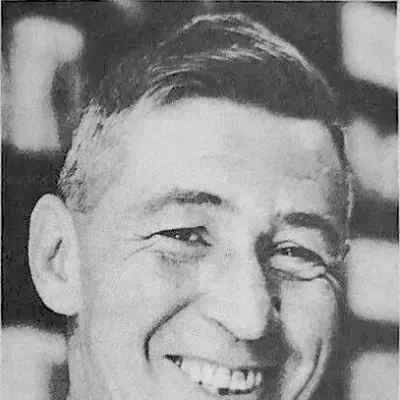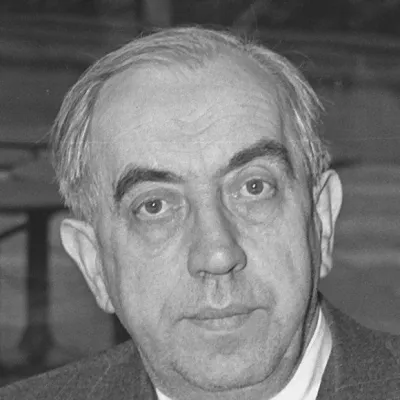
Ernst Reuter
Human Design Chart
Biography
During the Soviet-imposed Berlin Blockade (1948-1949), the western part of city was sustained by the Berlin airlift that was established by the American Military Governor, Lucius D. Clay. In response to the threat, the citizens in the western sectors had to come together. Ernst Reuter became their spokesman and leader, a symbolic figure of the Free Berlin. Memorable is Reuter's speech in front of the burned-out Reichstag building on 9 September 1948, facing a crowd of 300,000 where he appealed to the world not to abandon Berlin. In the election that was conducted in the western part of Berlin two months later, his popularity gave the SPD the highest win ever achieved by any party in a free election in Germany, with 64.5% of the vote. As mayor he formed a grand coalition government with the next two largest parties to demonstrate West Berlin's unity. Reuter's appeal to the West did not go unheard. The airlift saved the city from starvation.
Reuter was a younger half brother of Otto Sigfrid Reuter, a völkisch-religious ideologue. Ernst Reuter spent his childhood days in Leer. He attended the universities of Münster and Marburg where he completed his studies in 1912 and passed the examinations as a teacher. The same year he became a member of the Social Democratic Party of Germany (SPD).
Reuter opposed Kaiser Wilhelm's regime at the start of the First World War. After being drafted, Reuter was sent to the Eastern front where he was wounded and captured by the Russians. During the 1917 October Revolution Reuter joined the Bolsheviks and organized his fellow prisoners into a soviet.
What does Projector 6/2 mean for Ernst Reuter?
Projector 6/2 — Design at a Glance
Ernst Reuters design leans towards precise system analysis, coupled with the ability to instantly identify weaknesses in structures. As a projector, he did not have a constant, intrinsic energy source but rather acted like a focused flashlight, casting light into dark corners. This mechanism meant that he intuitively identified errors in the system. However, directly addressing these flaws often provoked resistance, akin to bright light shining directly into someone's face.
Instead, his influence was most effective when he radiated through his own harmony and clarity. This aura was attractive and invited others to seek his advice. The strategy involved waiting for a respectful and honest invitation before sharing his insights. Through this approach, he avoided conflicts and enabled his environment to accept his leadership.
Without adapting to his nature, he risked burning out, as his undefined Sacral Center alternated between phases of high activity and necessary rest periods. Living by this pattern rewarded him with success. Ignoring this dynamic and acting without invitation or breaks led to his non-self theme: bitterness. His design thus required patience and restraint to use his projecting energy effectively and without friction.
Splenic Authority
Ernst Reuters design leans towards spontaneous, instinct-driven decision-making. His inner authority lay in his defined Spleen Center, implying a pronounced survival intelligence. With the Emotional and Sacral Centers open, this configuration is found only in projectors or manifestors. The Spleen Center functioned as a health and alarm system; it provided spontaneous inner knowledge about whether a situation or environment was right. This impulse appeared as a fine signal that occurred only once in the moment and served immediate health. Ernst Reuter was thus enabled to rigorously distance himself from harmful influences and take very good care of himself. The challenge lay in the fleeting nature of this signal: it could easily be ignored or drowned out by other influences. This required high vigilance and sometimes a withdrawal to perceive his own voice. Since the right decision was only known in the moment, long-term plans were difficult to implement and subject to short-term changes. The design thus promoted much space and flexibility rather than being bound. The first, spontaneous impulse was the reliable indicator of the right action, while thinking or weighing often disturbed the signal. This mechanism shaped a lifestyle that responded to immediate physical and intuitive resonance to be in the right company and situation.
The 6/2 Profile — Role Model / Hermit
Ernst Reuters design leans towards deep introspection and later wisdom. In his younger years, before the age of 30, his profile 6/2 showed as experimental, marked by trial and error. This phase was characterized by withdrawal after failures, as absolute certainty for the future was lacking. Without this certainty, the sixth line withdrew and refused leadership, which could be interpreted as superficiality or energy deficiency.
Around the age of 30, the sixth line fully activated. Ernst Reuter metaphorically retreated into a 'cave' to look back at his earlier experiments with distance. This period served for healing and the realization that action and speech must align to ensure success. From this reflection emerged deep self-awareness.
Later, he emerged as a wise person sharing life experiences. Others sought him out to partake in this wisdom. At the same time, his design included projecting newness without internal reflection (line 2). This led to spontaneous adaptation to new forms, but could also breed vanity if this adaptation was seen as personal achievement. Conflicts arose when projections remained without internal comparability. His path was thus a process from uncertain experimenting to confident, broad leadership based on genuine alignment of word and deed.
Single Definition — Defined & Open Centers
Ernst Reuters Human Design profile points towards a tendency for clear, identity-strong communication that arises from deep inner security and spontaneous intuition. His defined G-Center provided him with a reliable sense of self-identity and direction, while his defined Spleen Center allowed him to trust intuitive signals in the present moment. This combination flowed into his defined Throat Center, making his words and actions an expression of his true identity and bodily awareness, rather than impulsive reactions. He spoke from a source that combined honesty and clarity without being driven by external expectations.
At the same time, Ernst Reuters profile showed him to be vulnerable to external influences in areas marked by open centers. His open Head Center meant he lacked a consistent source of mental inspiration; he tended to engage with questions and doubts that did not belong to him, seeking answers to relieve mental pressure. His open Ajna Center amplified this, as he absorbed concepts and opinions from others without always identifying them as his own truth. His open Heart Center led him to often strive to prove his worth through promises or performance, rather than trusting an inner willpower he did not possess. Additionally, his open Sacral Center absorbed the energy and work drive of his environment, which could lead to overexertion as he did not have a constant life force of his own. His open Solar Plexus made him sensitive to the emotions of others, which he could amplify and sometimes take personally, while his open Root Center absorbed external stress and adrenaline surges that he did not generate himself. This mechanism shaped a life based on inner intuition and identity, but always faced the challenge of not identifying external mental, emotional, and energetic streams as his own.
Channels for intuitive leadership, presence and authentic expression.
Ernst Reuters Human Design profile points towards a tendency for logical, collective leadership based on trust and understanding of existing patterns. This attitude was reflected in the Alpha Animal Channel 7-31, which connects the G-Center with the Throat Center. Gate 7 provided the logical role of the manager or general, while Gate 31 represented the voice of the collective leader. This configuration required that leadership skills be perfected and demonstrated to the satisfaction of society. Success came when the majority invited him to take on the responsibility; he acted more as an influential guiding figure than as an absolute authority claim.
Parallel to this, the Awakening Channel 10-20, which also connects the G-Center with the Throat Center, expressed a clear self-affirmation through Gate 10 of Presence and Gate 20 of Now. His survival and reinforcement resulted from accepting himself in every moment and living as himself. This inspired others to find their own authenticity without him actively pursuing it.
The connection of intuitive insight and self-referential behavior was found in the Perfected Form Channel 57-10. Gate 57 from the Spleen Center brought acute sensitivity to the quality of the environment, which merged with Gate 10 to create behavior guided by intuitive awareness. This allowed him to act spontaneously and appropriately to secure his own well-being and that of his environment, free from unfounded future anxieties.
Additionally, the Brain Wave Channel 57-20 gave his intuition a clear voice in the present moment. The connection of Gate 57 with Gate 20 allowed him to articulate inner truths and existential knowledge directly. This ability helped him reduce misunderstandings and encourage others to awaken their own inner survival intelligence by verbalizing his spontaneous insights.
Individual Circuitry — Circuit Signature
Ernst Reuters Human Design profile points towards a tendency for impulsive, creative communication that flows directly from intuition. His simple definition connects the Throat Center, the Spleen, and the G-Center into a single, continuous energetic flow. This meant that his forms of verbal expression (Throat) were inseparable from his spontaneous intuition (Spleen) and his sense of identity and direction (G).
In the Knowledge Circuit, he activated the Channel 20-57 ("Flash of Insight"). This channel connects his Throat Center directly with his Spleen. The energy of this channel promotes innovative, creative flashes of insight that are immediately put into words. It is a pulsating, acoustic energy that acts in the "Now" and generates new insights through spontaneous inspiration.
Parallel to this, the Understanding Circuit operates through the Channel 31-7 ("The Alpha Animal"). This channel also connects the Throat Center, but with the Identity Center (G). Here it is about sharing logical, rational insights, free from conditioning, to lead society towards a better future. This energy is focused and visual.
The Integration Circuit completes this picture. Through the Channels 20-10 ("Awakening") and 10-57 ("Perfected Form"), Ernst Reuters Human Design connects his Throat Center, his Spleen, and his Identity Center again. This serves to secure survival through self-reinforcement. Power from the reaction to life (Gate 34, implicitly in the context of integration) is guided by correct behavior (Gate 10) and intuitive knowledge (Gate 57) to be effective in the Now (Gate 20). All these circuits use the Throat Center as a common expression channel, so his identity, intuition, and rational structure converged into a single, coherent voice.
Left Angle Cross of the Alpha 1
Ernst Reuters Human-Design profile indicated a tendency towards profound inner transformation driven by the left Alpha 1 Cross. This configuration described a life task that did not exhaust itself in external, visible achievements but rather in a continuous, often painful reshaping of one's identity and perception. It was a process of constant dying and being reborn, where old structures had to be dismantled to make way for new, more authentic forms.
This mechanism acted as an inner compass, prompting Ernst Reuter to repeatedly question himself radically and abandon existing habits or beliefs as soon as they no longer aligned with current truth. It was not a passive development but an active, often challenging path of self-discovery that came with the readiness to reinvent oneself constantly. The energy of this cross promoted deep introspection and the ability to emerge strengthened and clearer from personal crises or turning points. It shaped a stance of resilience and open search for the essential, far from superficial conventions. Ernst Reuter lived this dynamic by facing changes and accepting them as a necessary part of his growth, which allowed him to trust himself and not be guided by external expectations.
Saturn Return · Uranus Opposition · Chiron Return · 2nd Saturn Return — Life Cycles
Ernst Reuters Human-Design profile indicated a tendency towards profound structural breaks that acted as catalysts for new life phases. This mechanism was concretely visible in his first Saturn Return in 1917. At 28 years old, he was taken to Moscow and later interned in a camp near Sawinka. This interim event marked the transition from youth to a phase of forced stabilization, where external circumstances radically corrected his inner orientation.
The Uranus Opposition around the 39th year promoted a dynamic of expansion and new beginnings. In 1928, his second marriage produced a son, Edzard Reuter. This event underscored the typical function of this cycle: the creation of new familial structures that served as stabilizing anchors in a shifting identity.
The Chiron Return, a fulfillment cycle of personal bloom, occurred in 1935. At 46 years old, Reuter moved to England. This step was not merely a geographical change but the realization of an inner developmental step, where his life purpose could unfold in a new environment.
The second Saturn Return in 1946 completed this developmental line. At 57 years old, he received news from the British Embassy in Ankara that he could enter the British occupation zone. This was the moment of final integration and return to a position of responsibility, after the preceding cycles had created the necessary internal and external prerequisites.
Projector · Splenic Authority — Synthesis
Ernst Reuter lived a life marked by the ability to recognize patterns and transform them into communication (defined Throat Center). This was evident in a deep, intuitive perception of systems and their functioning (Spleen Center as authority), coupled with a natural ability to guide others (Channel of the Alpha Animal). He recognized where improvements were necessary and could communicate these logically and purposefully, always keeping the impact on the collective in mind. This ability to act as a role model and pass on wisdom (Profile 6/2) shaped his interactions and influence on others.
A central paradox in his design lay in the tension between the Projector type, who waits for an invitation, and the ability to act as a logical leader (Channel 31/7) to initiate. While he instinctively knew what needed to be done, his inner authority required waiting for the right environment and the appropriate opportunity. The cycles showed that he combined phases of intense self-reflection (6/2 line) with phases of active engagement and influence, where the balance between withdrawal and involvement seemed to be a lifelong theme.
4 Defined Channels
Incarnation Cross - Left Angle Cross of the Alpha 1
Solar Return
The Solar Return shows the moment when the sun returns to its exact birth position - your personal solar year.
Life Cycles
Discover the life cycles with a detailed triple view (birth chart, cycle chart, composite).
Human Design Profile
- Type
- Projector
- Strategy
- Wait for the respectful invitation
- Authority
- Splenic Authority
- Profile
- 6/2 - Role Model / Hermit
- Definition
- Single Definition
- Incarnation Cross
- Left Angle Cross of the Alpha 1
- Date of Birth
- 29.07.1889 22:00
- Place of Birth
- Åbenrå, DEN
Frequently Asked Questions
What was Ernst Reuter's Human Design type?
What profile did Ernst Reuter have?
Which authority guided Ernst Reuter?
What incarnation cross did Ernst Reuter have?
When was Ernst Reuter born?
Discover your own Human Design
Are you also a Projector? Find out in a personal reading how to unfold your leadership qualities and recognize the right invitations.
More Personalities
Back to overviewSissy Spacek

Alain-Fournier

Anémone

Ann-Margret

Bourvil
Hergé