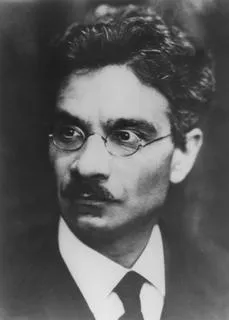
Erwin Finlay-Freundlich
Human Design Chart
Biography
Freundlich researched the deflection of light rays passing close to the Sun. He proposed an experiment, during an eclipse, to verify the validity of Einstein's theory of general relativity. Freundlich's demonstration would have proven Newton's theories incorrect. He did conduct inconclusive tests on the prediction by Einstein's theory of gravitation-induced red shift of spectral lines in the Sun, using the solar observatories he had constructed in Potsdam and Istanbul. In 1953, he proposed with Max Born an alternative explanation of the red shifts observed in galaxies by a tired light model.
Freundlich died in Wiesbaden on 24 July 1964, aged 79.
Erwin Finlay-Freundlich as a Generator 3/5 in Human Design
Generator 3/5 — Design at a Glance
Erwin Finlay-Freundlich revealed himself as someone with immense endurance who did not unleash his strength through self-willed pushing forward but rather through reactive action. As a Generator, he had a large sacral energy source that made him robust and steadfast like an workhorse – provided he acted in harmony with his inner compass. His design challenged him to refrain from initiating actions but instead wait for signals from the outside world and react accordingly. When his Sacral Center gave a clear “yes,” he could experience deep satisfaction and fulfillment through consistent action.
This mechanism was crucial for his energy balance. If Erwin Finlay-Freundlich tried to go against this natural flow – such as by doing things that did not resonate internally or if he was prevented from pursuing his heart’s project – frustration and exhaustion threatened him. The risk lay in wasting energy in inappropriate directions, which could lead to burnout over time. His strength therefore did not lie in constantly initiating new processes but rather in the ability to respond to impulses from the gut. If he lived according to this strategy of waiting and reacting, his energy was used efficiently and no one could stop him. The deep satisfaction was the direct reward for this harmonious interplay between inner signals and outer actions.
Emotional Authority
Erwin Finlay-Freundlich lived with emotional authority, meaning that his defined Emotional Center determined his internal decision-making ability. This configuration followed a wave dynamic: His feelings permanently oscillated between enthusiasm and rejection, thus perceiving the world through the filter of his current mood. A first emotional impression was only a snapshot, not necessarily the deeper truth. Quick, spontaneous decisions made from such an emotional state could therefore have negative consequences since emotional clarity had not yet been fully achieved.
The mechanics of this authority required patience and time. Erwin Finlay-Freundlich needed to let decisions mature often through multiple nights’ reflection to even out intense feelings. Only with this emotional distance did true clarity and calm set in. This process was particularly crucial for long-term life decisions. Regardless of which other centers were defined in his design, this emotional authority always took precedence in decision-making. It required him to properly “dither” and ask himself multiple times until the inner wave subsided and a well-founded answer emerged from the Emotional Center. This strategy protected against impulsive misjudgments and enabled decisions on a deeper, more comprehensive level.
The 3/5 Profile — Martyr / Heretic
Erwin Finlay-Freundlich revealed himself as an experimenter whose life path was marked by the necessity to try things out for himself before believing them. This profile of the Hero and Rescuer conveyed him a rich treasure trove of practical experiences that he presented to others. Line 3 in his design challenged him to be independent and wait for the right timing for his talents rather than being dependent on external expectations. At the same time, he sought validation from others, which could be painful when failures occurred in public.
The connection to line five brought the role of the Hero: He used his self-acquired knowledge to solve other people’s problems. This attractiveness was based on his authenticity and willingness to learn from mistakes. In interpersonal relationships, a natural devotion emerged often linked with family ties or the desire for harmony. Yet this emotional wave movement carried the risk of projections that could collapse when they met real dependencies. Instead of lasting security, he sought exchange where misunderstandings in emotional perception could lead to conflicts. His character was thus a tension field between the independent urge to explore and the need to be recognized as a competent helper, making him both attractive and vulnerable for his environment.
Split Definition — Defined & Open Centers
Erwin Finlay-Freundlich was characterized by a design featuring four defined centers: G, Heart, Sacral, and Solar Plexus. This configuration provided him with a stable identity and clear direction (G Center), coupled with an independent willpower for resource control (Heart Center). As a Generator, he had a powerful internal motor for vital energy (Sacral Center) that was steered by his emotional authority. His decisions were not made in the moment but after running through his emotional wave (Solar Plexus Center), which allowed him deep insights but required patience.
In contrast, five open centers shaped his vulnerabilities. The open Head and Ajna Centers meant a lack of consistent mental inspiration; he tended to engage with foreign questions or concepts rather than relying on inner clarity. This could lead to confusion when trying to find answers that were not his own. His open Throat Center made him susceptible to the pressure of forcing attention through unconsidered speech, instead of waiting for invitations to express himself. Furthermore, his open Root Center absorbed external stress, which could result in a feeling of chaos or overburdening if he did not learn to recognize and release this foreign pressure as such. Lastly, his Spleen Center was open, making spontaneous decisions risky; he had to learn not to impulsively act out fears regarding health or safety but rather observe them consciously to avoid false conditioning by others. The wisdom of his design lay in utilizing his stable energy and emotional depth while acknowledging mental and stress-induced stimuli from the environment as non-self.
Channels for inner endurance and genuine connection.
Erwin Finlay-Freundlich was someone who delved deeply into processes without expecting immediate results. His design inclined him towards persistent discovery: Channel 29-46 connected the endurance of the Sacral Center with the orientation of the G Center. Through Gate 29 (Yes), he responded positively to impulses, then committed himself unwaveringly through Gate 46 (Self-Determination). This mechanism required letting go of expectations and trusting the cycle until the significance of an experience became clear at the end. Success occurred when he correctly applied his life force without trying to control the process.
Parallel to this, Channel 37-40 between Solar Plexus and Heart facilitated a search for his place in the whole (Gate 37) and working on serving others (Gate 40), but required emotional clarity and time. Connections did not arise spontaneously but through carefully coordinated agreements based on mutual benefit and respect. This created a foundation for long-term loyalty within groups where everyone contributed without hierarchical constraints.
Additionally, other gates shaped his approach: Gate 16 drove him towards experimental mastery, while Gate 9 offered the ability to achieve meticulous perfection. Gate 25 promoted mystical innocence and centeredness, supported by the rhythmic energy build-up of Gate 5. The receptivity for new directions (Gate 2) combined with the emotional depth of feeling recognition (Gate 30) and principled transformation in the collective (Gate 49). This configuration allowed him to penetrate complex connections and structure them in a way that was both personally satisfying and communally sustainable.
Collective Circuitry — Circuit Signature
Erwin Finlay-Freundlich's design showed two separate, parallel functioning energy blocks. One area linked Identity with Sacral Center via Channel 'Discovery'. This shaped a cyclical form of meaning-making: emotions and experiences from the past were processed in wave-like patterns to then be shared with others. It was not cold logic but felt insights that became clear after their internal cycle.
The second block connected Heart and Solar Plexus Centers via 'Community'. Here, it was about cooperation and mutual giving within a group. Since this connection did not lead to the Sacral Center, there was no constant life force; instead, this system required necessary rest pauses for resource building for the tribe.
These two systems – emotional meaning-making with the collective on one hand and cooperative support in the circle of others on the other – were energetically not directly connected. They existed as separate forces alongside each other: one transformed past into shared insight, the other ensured cohesion through exchange and pauses.
Right Angle Cross of Planning 2
Erwin Finlay-Freundlichs design carried the signature of the right cross of planning. This configuration established a specific inner dynamics that was less about impulsive actions and more about a deep, structural alignment. In Human Design, this cross marks a point where the energy of reflection meets the energy of action. It wasn't merely a tendency towards thinking but rather a force that wanted to bring inner clarity into outer form – yet only when the internal conditions were right.
For Erwin Finlay-Freundlich, this meant his effectiveness depended on how well he could integrate these two poles. The right cross of planning requires a certain mental discipline to translate chaotic impulses into orderly structures. It is a pattern often associated with building systems or theories that go beyond the individual. His energy worked to order complex connections and make them understandable. This did not happen through external compulsion but as a natural consequence of his inner architecture. The challenge was always to not leave this planning force in the Head Center, but to bring it into the world once the internal resonance was present. Thus, reflection and structuring shaped his essence profoundly.
Saturn Return · Uranus Opposition · Chiron Return · 2nd Saturn Return — Life Cycles
Erwin Finlay-Freundlich turned out to be someone whose life path was strongly marked by the cyclical turning points that structure and internal maturity signify. His first Saturn return occurred in 1913, when he was 28 years old. During this period, years of personal development condensed into a solid foundation for his future: He married Käte Hirschberg. For his design, this was not a random moment but rather the typical phase where internal values stabilize externally and long-term commitments are entered into, providing support.
Decades later came his Chiron return around 1933 when he was 48 years old. This cycle marks in Human Design the transition to full realization of one's incarnation purpose – a period of blossoming and finding meaning, if one follows their strategy. For Erwin Finlay-Freundlich, however, this profound change coincided with an existential crisis: Due to his paternal Jewish grandmother, he was subject to § 3 of the "Civil Service Law" and had to leave Germany. What was mechanically a time for fulfillment clashed here with external constraints. The contrast between the inner drive towards self-realization and the forced flight marked this era. It was not a healing process in a mythological sense but rather a harsh test of resilience, showing how much his design relied on preserving his essence under extreme pressure.
Generator · Emotional Authority — Synthesis
Erwin Finlay-Freundlich lived deeply within the experience of his sacral energy (Generator Type, Discovery Channel), always driven by the need to learn through action and experimentation (Profile 3/5) and share this knowledge. The connection between his Sacral Center and G-Center pointed towards a deep inner direction that could only be revealed through fully immersing himself in experiences – a process that continually realigned him. His defined G-Center also gave him a reliable sense of self-identity and direction, enhancing his ability to inspire others and show new paths.
A central paradox lay in his emotional authority (defined Emotional Center) and the accompanying wave-like experience. While he tended towards immediate reaction and experimentation through his Sacral Center, his emotional wave required time and maturity for decisions. This led to an internal tension between the urge to act (Sacral) and the necessity of fully experiencing emotions first (Emotional Center), which was evident in turning points in his life – both in relationships (1913) as well as during crisis times (1933).
2 Defined Channels
Incarnation Cross - Right Angle Cross of Planning 2
Solar Return
The Solar Return shows the moment when the sun returns to its exact birth position - your personal solar year.
Life Cycles
Discover the life cycles with a detailed triple view (birth chart, cycle chart, composite).
Human Design Profile
- Type
- Generator
- Strategy
- To respond - wait for something to respond to
- Authority
- Emotional Authority
- Profile
- 3/5 - Martyr / Heretic
- Definition
- Split Definition
- Incarnation Cross
- Right Angle Cross of Planning 2
- Date of Birth
- 29.05.1885 05:00
- Place of Birth
- Wiesbaden, Germany
Frequently Asked Questions
What was Erwin Finlay-Freundlich's Human Design type?
What Profile did Erwin Finlay-Freundlich have in Human Design?
Which Authority guided Erwin Finlay-Freundlich?
What incarnation cross did Erwin Finlay-Freundlich have?
When was Erwin Finlay-Freundlich born?
Discover your own Human Design
Are you also a Generator? Find out in a personal reading how to use your sacral energy correctly and discover deep satisfaction.
More Personalities
Back to overviewAaliyah

Alexia

Angèle

Anne-Marie

Arcángel

Arno