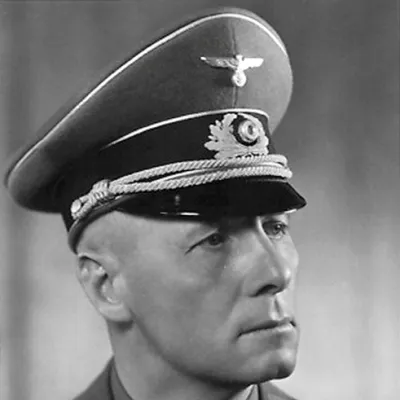
Erwin Rommel
Human Design Chart
Biography
Rommel grew up in Heidenheim, Germany. He studied at Tubingen and joined the German army in 1910 at 19. He received his commission in 1912. After his WW I service, he became a Company Commander in Stuttgart. In 1929, he was appointed into a teaching post at the War Academy in Dresden. He was soon promoted to lieutenant colonel in the German army. In 1935, Rommel received his post at the War Academy in Potsdam. He wrote his textbook on military tactics, published in 1937. In 1938, he became commander of the War Academy in Weiner Neustadt. During the invasion of France in 1940, Rommel led the German 7th Panzer division, achieving major war victories. He was stationed on the North African front in Libya in February 1941. His success earned him his rank of Field Marshall. In 1942, he pressed close to Alexandria, Egypt but the British forces put up fierce resistance.
What does Manifesting Generator 5/1 mean for Erwin Rommel?
Manifesting Generator 5/1 — Design at a Glance
Erwin Rommel's design featured a tendency towards rapid implementation paired with a constant source of sacral energy. As an Manifesting Generator, he combined the endurance of a Generator with the ability to skip steps and quickly pull things into his life. However, this mechanism carried specific risks: The inclination to miss important stages often led to having to catch up later, which caused frustration – the central non-self theme of this type. Additionally, there was a preference for working on multiple projects simultaneously rather than focusing on one task at a time.
Deep satisfaction and creative power emerged in Erwin Rommel only through the strategy of reacting instead of initiating. This meant waiting for inner impulses before acting, ensuring that the sacral center agreed first. In this state, the Manifesting Generator falls into a "play mode," where variety feeds energy. Under these conditions, working on several projects simultaneously was no obstacle but rather a source of satisfaction. Speed then became an advantage if guided by inner authority and not driven by impulsive haste.
Sacral Authority
Erwin Rommel did not seek his answers in the head but in the physical reaction of his body to external stimuli. His design as a Generator determined this approach: Strategy and inner authority aligned here, simplifying the decision-making process. Crucial was the open emotional center; it required a pause for clarity.
His sacral authority manifested through a noticeable gut feeling or sudden surge of energy. Erwin Rommel learned to pay attention to bodily signals like grunting, humming, or an affirming "Mhm." These sounds marked the moment when his sacral motor kicked in. Once this resonance occurred, he felt vital and alive. An almost inexhaustible energy potential was available to him, infusing his work with great enthusiasm.
This design allowed him to act with joy and satisfaction, fully immersed in his tasks without rigid purposefulness. The distinction between this genuine sacral activation and impulsive reactions was central. When the spleen center was additionally activated, it supported the sacral authority through quick, instinctive perception. Erwin Rommel could then immediately access his physical well-being and reliably guide himself from this deep resonance rather than acting out of impulsive urgency.
The 5/1 Profile — Heretic / Investigator
Erwin Rommel's design featured a tendency towards synthesis combining deep personal knowledge with the ability to provide problem-solving in crisis times. As a 5/1, the "Hero/Researcher," he was marked by the tension between the need for withdrawal to accumulate knowledge (Line 1) and the external pressure to function as a hero (Line 5). Line 1 conveyed him the stance of a recruit: a commitment to endure in the process of learning and growth. This required time to collect experiences and adapt to challenges – not as a permanent state, but as a necessary phase of development.
Simultaneously, Line 5 projected authority and expertise. Others often sought solutions for their problems from him, exerting a magnetic effect. However, this expectation could lead to exhaustion if clear boundaries were not set. Success depended on mastering the timing: Knowledge was shared when it was expected as a last resort in a crisis, not continuously. New insights often carried conflict potential and had to be effectively communicated. Without the art of saying "no," overloading threatened; with it, he could maintain balance between research for himself and help for others. His energy focused on purposefully conveying individual insights once the situation deemed it necessary.
Single Definition — Defined & Open Centers
Erwin Rommel's design inclined towards constant, independent thinking paired with a reliable ability to communicate and manifest. His defined Ajna Center ensured continuous conceptualization; he thought constantly and was mentally hard to influence. This mental stability flowed directly into his defined Throat Center, serving as a pivot point to reliably translate thoughts into speech or action. Thus, he had a clear voice that spoke from his mind.
Additionally, his defined G Center shaped a firm identity and inner direction. Rommel knew who he was and radiated a magnetic presence that offered orientation to others. This self-assurance was supported by his enormous vital energy in the defined Sacral Center. As a Generator, he possessed a constant energy tank, but it could only be used efficiently through correct reactions to external stimuli; initiating without questioning led to frustration and exhaustion. His defined Spleen Center also gave him spontaneous intuition in the present moment, a sensitive warning system for health and well-being.
In contrast, he suffered from absorbing external states through his open centers. His open Head Center did not receive constant mental pressure but tended to engage with foreign questions or seek inspiration when uncertainty prevailed. The open Heart Center meant lacking consistent willpower; he was vulnerable to the urge to prove his worth through promises, which led into spirals of self-doubt if these could not be kept.
Emotionally, he was vulnerable through the open Solar Plexus Center. He absorbed the moods of his environment and had difficulty distinguishing between his own and foreign feelings, leading to emotional instability when he identified with them. Finally, his open Root Center took on external stress and adrenaline. Rommel was a target for other people's pressure and often tried in vain to get rid of it through hyperactivity, making him vulnerable to burnout as this pressure did not come from himself.
Channels for intuitive power, structure and manifesting presence.
Erwin Rommel's design inclined towards innovative thinking that was often perceived as too forward-looking. This trait originated from the Channel of Structuring 2-43 in his personality. This channel connected the Ajna Center with the Throat Center and allowed him to formulate and express unique perspectives. However, since his knowledge was often 'light-years ahead', this led to feeling like an outsider or being misunderstood when the right time for communicating insights had not arrived.
Additionally, juxtaposed channels influenced him situationally. The Channel of Charisma 34-20 connected the Sacral Center with the Throat Center and prepared impulsive action as well as a powerful expression in the present moment without this being his constant trait. Parallel to this stood the Channel of Flash of Insight 57-20, which translated intuitive insight from the Spleen Center directly into communication, thus enabling spontaneous, profound truths here and now. The Channel of Power 34-57 finally connected the Sacral Center with the Spleen Center and provided survival instincts as well as defensive alertness that protected him in critical moments.
This constellation showed a person who had the potential for charismatic leadership and intuitive clarity but whose primary challenge was to structure his innovative knowledge so it could be accepted by the environment without losing sight of his own inner direction.
Individual Circuitry — Circuit Signature
Erwin Rommel's design inclined towards innovative, independent action. As a person with simple definition, he possessed a continuous energetic flow between Head, Ajna, Throat, Sacral and Spleen Centers. This created a coherent structure in which intuition and expressive ability were directly linked.
The Knowledge Circuit strongly shaped his essence. He had the Channel of Flash of Insight (20-57), which channeled creative impulses from the Ajna Center directly into the Throat Center, enabling quick, innovative decisions in the present moment. Additionally, he was connected through Structuring (43-23) between Ajna and Spleen, combining analytical sharpness with intuitive perception. The Beat (2-14) linked identity and Sacral Center, thereby determining his emotional energy's unique path. These channels promoted the creation of new knowledge and its emotionally colored expression.
Parallel to this, the Integration Circuit worked. Through Charisma (20-34), it connected Throat and Spleen Centers, enhancing his influence on others. Power (34-57) between Spleen and Sacral Center ensured that he drew strength from reacting to his environment and directed it through intuitive knowledge. This connection secured his survival through adaptive behavior in the here and now.
Overall, Erwin Rommel showed a profile that went new ways: innovative flashes of insight were immediately articulated, supported by deep emotional identity and the ability to draw energy from every situation. His mechanics drove him to initiate change through individual expression, where intuition and logical structuring went hand in hand.
Left Angle Cross of Dedication 2
Erwin Rommels Design verriet eine grundlegende Einstellung, die sich durch tiefes Engagement und bewusstes Loslassen der Kontrolle auszeichnete. Sein energetischer Fokus lag darauf, sich einem höheren Zweck oder einer Beziehung vollständig zu ergeben, ohne den Ausgang der Dinge versuchen zu müssen, zu steuern. Diese Ausrichtung prägte seine innere Verfassung: Statt Situationen durch reine Willenskraft zu dominieren, zeigte er eine Bereitschaft, sich in Gegebenheiten hinzugeben und auf das Ergebnis zu vertrauen.
Diese Dynamik entsprang dem Einfluss des Linken Kreuzes der Hingabe (Kreuz 2). Diese Konfiguration beschreibt eine Energie, die nicht im Zwang zur Herrschaft liegt, sondern in der Fähigkeit, sich bedingungslos einem größeren Ganzen oder einer tiefen Bindung zu widmen. Der Kern dieser Mechanik ist das Vertrauen in den Prozess selbst, verbunden mit der Erkenntnis, dass wahre Wirksamkeit oft erst entsteht, wenn man die Illusion der absoluten Kontrolle aufgibt. Für Erwin Rommel bedeutete dies, dass seine Stärke nicht im ständigen Lenken aller Umstände lag, sondern in der Kapazität, sich einer Aufgabe oder einem Weg so vollständig zu verschreiben, dass das Ergebnis aus dieser Hingabe selbst hervorging. Es war eine Energie des Sich-Ergebens, die durch Loslassen wirkte und ihm ermöglichte, sich auf das Wesentliche zu konzentrieren, anstatt gegen den Widerstand der Kontrolle anzukämpfen.
Saturn Return · Uranus Opposition · Chiron Return — Life Cycles
Erwin Rommels Design zeigte eine klare Strukturierung durch drei zentrale astrologische Zyklen, die Phasen der Validierung und strukturellen Verankerung markierten. Der erste Saturn-Return bestätigte seine Position durch äußere Auszeichnung: 1917, im Alter von 26 Jahren, wurde Rommel mit dem Eisernen Kreuz ausgezeichnet. Dieser Zyklus verdichtete jahrelange Vorarbeit zu einem tragfähigen Ergebnis und verankerte sein Ansehen institutionell.
Die Uranus-Opposition führte dann zum notwendigen Umbruch in Kommando und Standort. 1933, mit 42 Jahren, erfolgte die Versetzung als Kommandeur des III. Bataillons („Goslarer Jäger“) des 17. Infanterieregiments nach Goslar. Diese Phase brach alte Strukturen auf, um neue Führungsaufgaben zu ermöglichen und seine Rolle neu zu definieren.
Der Chiron-Return schließlich brachte die Erfüllung des Inkarnationszwecks als Blütephase. 1940, im Alter von 49 Jahren, gelang Rommel der erfolgreiche Durchbruch der Maginot-Linie beim Westfeldzug in Frankreich. Noch im selben Jahr wurde dieser Erfolg verfilmt, was seine Handlungen öffentlich sichtbar machte und Sinn erfahrbar werden ließ. Dieser Zyklus zeigte sich nicht als Heilung alter Wunden, sondern als Entfaltung des eigenen Zwecks durch öffentlichen Triumph und mediale Verarbeitung. Die Mechanik dieser Zyklen prägte Rommels Laufbahn als Abfolge von Bestätigung, strukturellem Wandel und sichtbarer Wirkungsentfaltung.
Manifesting Generator · Sacral Authority — Synthesis
Er war ein Generator, dessen Handeln tief aus dem Sakralzentrum gespeist wurde – eine konstante Quelle energetischer Bereitschaft (Sakrale Autorität). Dieses fundamentale Prinzip prägte seine Entscheidungsfindung und trieb ihn zu schnellem, intuitiv gesteuertem Vorgehen an. Das Profil als Held/Forscher (5/1) verstärkte diese Dynamik noch, indem es den Drang zum Wissenserwerb mit der Fähigkeit verband, dieses Wissen anderen zur Verfügung zu stellen – ein stetiger Kreislauf aus Lernen und Lehren, der ihn durch sein Leben begleitete. Der definierte mentale Bewusstsein erlaubte ihm, Konzepte zu entwickeln und andere damit zu inspirieren, was seine Rolle als strategischer Denker unterstrich.
Ein zentrales Paradox lag in der Kombination seiner generativen Energie mit manifestierenden Eigenschaften (Manifestierender Generator). Er besaß die Ausdauer, Dinge anzugehen, sobald der sakrale Impuls kam, konnte aber auch Schritte überspringen und blitzschnell handeln. Dies führte zu einem Spannungsfeld zwischen dem Bedürfnis nach gründlicher Vorbereitung – belegt durch das Kreuz der Hingabe 2 – und der Tendenz, sich von der eigenen Energie mitreißen zu lassen (Kanal des Beats). Erfolge in bestimmten Zyklen (Saturn-Return, Uranus-Opposition, Chiron-Return) zeigten die Kraft dieser Kombination, ebenso wie die Notwendigkeit, gelegentlich wieder „zurückzugehen“ und fehlende Schritte nachzuholen.
5 Defined Channels
Incarnation Cross - Left Angle Cross of Dedication 2
Solar Return
The Solar Return shows the moment when the sun returns to its exact birth position - your personal solar year.
Life Cycles
Discover the life cycles with a detailed triple view (birth chart, cycle chart, composite).
Human Design Profile
- Strategy
- To respond - wait for something to respond to
- Authority
- Sacral Authority
- Profile
- 5/1 - Heretic / Investigator
- Definition
- Single Definition
- Incarnation Cross
- Left Angle Cross of Dedication 2
- Date of Birth
- 15.11.1891 12:00
- Place of Birth
- Heidenheim an der Brenz (Baden-Württemberg), GER
Frequently Asked Questions
What was Erwin Rommel's Human Design type?
What profile did Erwin Rommel have in Human Design?
What authority did Erwin Rommel have?
What incarnation cross did Erwin Rommel have?
When was Erwin Rommel born?
Discover your own Human Design
Are you also a Manifesting Generator? Find out in a personal reading how to unfold your multi-talents and direct your energy wisely.
More Personalities
Back to overviewAldair

Alizée

Angeli

Arletty

Artus

Balthus