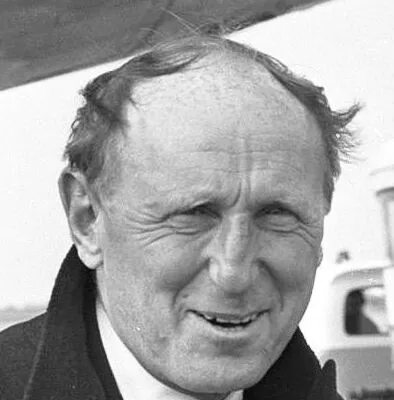
Eugenio Montale
Human Design Chart
Biography
Montale was the youngest of six sons. He was a self-taught man.
Montale wrote a relatively small number of works. Alongside his imaginative work he was a constant contributor to Italy's most important newspaper, the Corriere della Sera.
He was influenced by Dante.
He won many literary prizes and much critical acclaim.
He died 12 September 1981, Milan, Italy.
The Human Design of Eugenio Montale: Projector 6/2
Projector 6/2 — Design at a Glance
Eugenio Montale was someone who immediately recognized weaknesses in systems and interpersonal dynamics. His Projector design gave him a dense, focused aura, comparable to a bright flashlight that targeted dark spots around others. This ability to identify flaws instantly was, however, a double-edged sword: direct confrontation often led to defensive reactions as the bright light shone directly into people's faces and was perceived as unpleasant.
Instead, Montale worked most effectively through his own harmonious existence. By living an intact structure himself, he became attractive; others sought him out for advice rather than him imposing it on them. His strategy involved waiting for respectful and honest invitations from the environment before sharing insights. Since Projectors do not have a constant intrinsic energy source, Montale needed regular rest periods to regenerate and prevent exhaustion. Living by this principle of waiting and shining earned him success. If he deviated from this strategy and tried to push against the resistance of his surroundings, the non-self theme of bitterness would come to light. His influence thus did not rely on constant drive but rather on precise, inviting projections of clarity where it was sought.
No Inner Authority
Eugenio Montale lacked an inner, physical authority – a rare trait that fundamentally shaped his decision-making process. As a Mental Projector, he had no defined centers below the Throat Center. This specific configuration meant that he did not generate answers from within himself but received them through exchanges with other people. In dialogue, energetic interactions in his open centers activated latent potentials and provided him information. Thus, he could view issues from many perspectives and express them differently. His high resonance ability helped him find the right environment and suitable conversation partners.
Evaluating these diverse impressions was a complex process that required time and solitude. Eugenio Montale needed distance from the noise of exchange to discern the red thread and distinguish what made sense and truly belonged to him. Over time, he developed a specific intelligence: filtering out the essential from a mass of information, organizing it meaningfully, and structuring it. This formed his capital as a Projector. A key for him was being in an environment where he felt comfortable. There, he met people with whom he could confidently discuss decision-making processes. Over the years, this deep exchange deepened his sense of what was right for him.
The 6/2 Profile — Role Model / Hermit
Eugenio Montale's design laid out a tendency towards a bifurcated life phase: initially characterized by experimental action and withdrawal after failures, later by detached reflection and wise empathy. Before the age of 30, the sixth line of his profile (Role Model/Natural Talent) acted like a third-line. This meant that in his youth, he experimented much and gathered personal experiences. Trial and error were driving principles; after setbacks, he withdrew to learn.
Around thirty years later, the sixth line was fully activated. Eugenio Montale then showed a need for intense detachment, similar to retreating into a cave on a mountain. From there, he looked back with great clarity at his earlier experiments. This phase of deep introspection served healing and self-awareness. The mechanics of Line 6 describe this process as a necessary step towards maturity: only through withdrawal and analysis of past mistakes does true wisdom arise.
His natural talents (Line 2 from Gate 62) often remained hidden until external circumstances demanded them. This line brings discipline but can also cause restlessness if one feels unsure or fears being a 'paper tiger' – promising more than they can deliver. Eugenio Montale learned to master these limitations through detailed work. When he finally emerged from his phase of reflection, he had become a source of life wisdom for others. People sought him out to partake in this deeper insight and learn the ability of self-reflection. His intuition had limits, yet in survival situations, he focused on the best possible outcome, even if no perfect solution existed.
Single Definition — Defined & Open Centers
Eugenio Montales Human-Design suggests a tendency towards constant mental pressure to question and understand connections. This configuration between the Head Center and Ajna Center created a trustworthy, specific mental function: he was always thinking, processing data and creativity continuously. However, since these centers did not have their own energy for implementation, attempts to directly convert thoughts into action often led to frustration. His strength lay in pressuring others with inspiring questions, encouraging independent thought – a skill that only 30% of the population with defined Head Center possess.
At the same time, Eugenio Montale was vulnerable through several open centers for conditioning. His open G Center meant no fixed identity; he tended to lose himself in relationships or seek direction not coming from within him. The mantra “If you’re in the wrong place, you’ll meet the wrong people” applied to him: He had to wait for his environment to initiate him rather than actively seeking love or meaning. His open Heart Center made him sensitive to the need to prove his worth – a trap that ended in spirals of promises and self-doubt if he did not trust his inner authority.
Moreover, his open Solar Plexus absorbed the emotions of his surroundings. He risked personalizing foreign moods as his own and feeling emotionally unstable, though he was merely a barometer for the climate around him. His open Sacral Center lacked consistent generative energy; he had to learn to distinguish between borrowed vitality and his own strength to prevent exhaustion. Finally, his open Root Center took on external stress, which could lead him to become overactive just to escape this pressure. His wisdom lay in not seeing these open areas as deficiencies but rather as spaces for reflection and correct initiation by the world.
Channels for inspired inner truth.
Eugenio Montales Human-Design suggests a tendency towards sudden, intuitive insights that did not arise through logical deduction. His mind was designed to receive inspirations from the subconscious and transform them into clear, rational answers. This configuration created an individual thinker who received knowledge rather than sought it – often as a moment of “Satori,” where understanding simply appeared.
This process was marked by the Awareness Channel 61-24. It connected the inspiration of the Head Center (Gate 61) with the rationalizing in the Ajna Center (Gate 24). Montale could not control his thinking; he had to wait for inner truth to reveal itself. His mind was constantly busy, processing the “white noise” of inspiration and seeking silence to allow breakthroughs. The challenge lay in distinguishing what was worth knowing from what wasn’t, as well as communicating these sudden insights to others.
Additionally, further energies impacted his survival. Gate 57 promoted intuitive clarity in the present moment while Gate 51 provided strong willpower without social bonds that reacted to shocks. Gate 62 brought patience and attention to detail for pattern recognition. On a personality level, Gate 4 supported logical formulas for future security, and Gate 43 enabled individual insights through spontaneous realization but also carried the fear of rejection. Montale lived in this tension between mystical inspiration and the necessity of translating it into understandable communication.
Individual Circuitry — Circuit Signature
Eugenio Montales Human-Design suggests a tendency towards innovative, creative flashes of insight. His simple definition focused this energy clearly and without internal contradictions into one continuous stream. This stream flowed through the Knowledge Circuit, which dealt with his unique path, new knowledge, and individual identity.
In Eugenio Montale’s case, within this circuit was specifically active Channel 24-61 known as “Awareness.” This channel directly connected the Head Center to the Ajna Center. That meant intuitive inspirations from the Head Center – often spontaneous insights – immediately reached the Ajna Center where they were processed into concrete thoughts and ideas. This connection promoted a pulsating, acoustic energy of creativity and individuality.
As it was a simple definition, only this one group of connected centers existed: Head and Ajna. There were no further energetic connections within this circuit to other areas like the Solar Plexus or Throat mentioned in the general description of the Knowledge Circuit. Eugenio Montale thus showed himself as someone whose creative process heavily relied on this direct line from inspiration to thought formation, driven by the impulse to recognize and consciously shape new things without emotional waves or vocal expression directly entering this specific mechanical chain.
Left Angle Cross of the Clarion 2
Eugenio Montales Human-Design profile revealed a tendency towards profound, almost painful perception. He was someone who did not just observe the world but deeply felt its hidden qualities and suffering. This disposition stemmed from what is known as the 'left cross of the fanfare'. In Human Design mechanics, this configuration describes a specific sensitivity to the unseen, the hidden, and often the sad or tragic aspects of human existence. It was not superficial melancholy but rather a structural ability to grasp the deeper layers of reality. Montale lived with an inner antenna that led him to prioritize authenticity over convention. The mechanics of this cross encouraged a quest for truth, even if it was bitter. It was about penetrating the facade of everyday life and recognizing the true essence of things. This inclination shaped his entire way of engaging with his environment. He did not seek easy validation but rather a resonant connection to reality as it truly was – raw, complex, and full of unsaid meanings. His design challenged him to accept this perception and use it as a source of his own integrity instead of shielding himself from it.
Saturn Return · Uranus Opposition · Chiron Return · 2nd Saturn Return — Life Cycles
Eugenio Montales life journey followed the classical structural milestones of Human Design that mark personal maturation and inner order. His first Saturn Return established an initial phase of self-responsibility; here, early experiences cohered into a solid foundation for his further development. The subsequent Uranus Opposition then brought about a necessary break with this established structure to enable new perspectives and freedoms – a process of letting go the old in favor of growth.
Between the ages of 49 and 51, he experienced the Chiron Return. This cycle did not signify healing in a medical sense but rather the blossoming of his incarnation purpose. If he had followed his strategy up to that point, his deeper meaning became experiential; his existence found its true unfolding and significance. The second Saturn Return then solidified this achieved maturity. It was a phase of confirmation where the previously discovered truths became a stable foundation. Montales design thus shows a clear path: from initial structuring through necessary change towards full realization of life purpose and its final anchoring in later life. This sequence shaped his journey not as a random string of events but as a coherent development line of his inner architecture.
Projector · No Inner Authority — Synthesis
Eugenio Montale lived a path of deep observation and recognition of hidden patterns. His design as a projector, paired with a defined mental center (Head-Ajna Channel), points to a natural ability to identify the potential and flaws in systems – shining a 'bright light' on imperfections. This gift was not underpinned by inner authority; instead, he sought orientation through exchange with others, resonating with their energy and thus finding clarity (Authority: No Inner Authority). The profile as role model/natural talent pointed to a life path initially marked by experiments, followed by an intense phase of reflection, and finally the transmission of deeply felt wisdom.
A central paradox in his design lay in the interplay between the need for recognition – projectors seek invitation – and the ability to uncover unvarnished truths through sharp intellect (Channel of Awareness). This combination created a tension between the desire to be seen and valued and the tendency to view things from a unique perspective that might not be immediately welcomed. The Knowledge Circuit amplified this drive towards individuality and transformation, while the left cross of the fanfare 2 hinted at a certain melancholy or longing that accompanied his creative processes.
1 Defined Channel
Incarnation Cross - Left Angle Cross of the Clarion 2
Solar Return
The Solar Return shows the moment when the sun returns to its exact birth position - your personal solar year.
Life Cycles
Discover the life cycles with a detailed triple view (birth chart, cycle chart, composite).
Human Design Profile
- Type
- Projector
- Strategy
- Wait for the respectful invitation
- Authority
- No inner authority - learn more
- Profile
- 6/2 - Role Model / Hermit
- Definition
- Single Definition
- Incarnation Cross
- Left Angle Cross of the Clarion 2
- Date of Birth
- 12.10.1896 23:00
- Place of Birth
- Genoa, Italy
Frequently Asked Questions
What was Eugenio Montale's Human Design type?
What profile did Eugenio Montale have?
What authority did Eugenio Montale have?
What was Eugenio Montale's incarnation cross?
When was Eugenio Montale born?
Discover your own Human Design
Are you also a Projector? Find out in a personal reading how to unfold your leadership qualities and recognize the right invitations.
More Personalities
Back to overviewSissy Spacek
Alain-Fournier

Anémone
Angeli

Ann-Margret
Bourvil