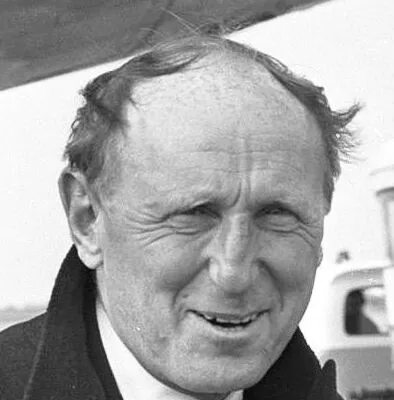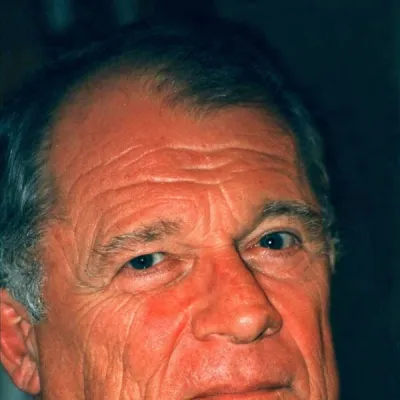
F. Lee Bailey
Human Design Chart
Biography
Bailey was a Harvard drop-out who joined the Marines to be a jet pilot. Later, at Boston University, he earned one of the highest academic averages in law school history to commence his flamboyant practice. In 1979, Bailey authored a mystery novel entitled "Secrets."
He served on O.J. Simpson's notorious defense "dream team" in 1996. His courtroom theatrics seemed more the condescending and pompous charade of one caught up in his own celebrity than an exhibition of intelligence and dignity.
He was ordered jailed in March 1996 for six months on contempt charges because he refused to turn over $3 million cash and $18 million in stock that he got from a former client, a drug trafficker, to authorities. Bailey claimed that the money and stock was paid to him as fees. The government said that the money was theirs as confiscated illegal funds. He spent 44 days in jail and was released on 19 April 1996 at Tallahassee, Florida when he agreed to surrender $16 million in stock and his yacht. As of June 1999, Bailey faced new contempt charges for refusing to turn over $2 million in disputed legal fees.
The State Supreme Court of Florida barred him from practice on 21 November 2001 for the manner in which he handled the disputed 1994 drug smuggling case, giving him 30 days to conclude his affairs in Florida.
As of 11 April 2003, Bailey was no longer able to practice law in either of the two states in which he was licensed. On that day, the Massachusetts Supreme Judicial Court agreed with the ruling by the Florida Supreme Court to disbar him for having misused nearly $6 million worth of stock belonging to a former client. Since he no longer had a state bar admission, he could no longer practice in federal courts.
F. Lee Bailey — Projector with Profile 3/5
Projector 3/5 — Design at a Glance
F. Lee Baileys design points to a tendency towards a focused and dense aura that acts like a flashlight, immediately identifying system errors. As a projector, he did not have a constant intrinsic energy source due to an undefined sacral center; instead, he experienced phases of high activity followed by mandatory rest periods to avoid burnout. His design showed him as someone who intuitively recognized what was not working in systems or relationships.
However, the mechanics of being a projector warn against direct confrontation with these errors. Immediate addressing would often provoke resistance, similar to shining bright light directly into someone's face. The effective strategy involved attracting others through his own harmony and waiting for an honest invitation. By walking his own path, he became attractive to those who then sought his insights.
Living according to this design rewarded F. Lee Bailey with success. Deviations from this strategy—such as ignoring the need for a pause or imposing corrections without invitation—led to his non-self theme: bitterness. His path involved exercising leadership through role modeling and patience rather than direct intervention, thus protecting his limited energy and ensuring the effectiveness of his unique perspective on complex connections.
Emotional Authority
F. Lee Baileys design points to an emotional wave movement that often misleads spontaneous judgments. He showed himself as someone who did not make decisions based on first impulses but consciously delayed them until clarity set in. This stance resulted from his Emotional Authority. With a defined Emotional Center, it always functioned as an internal guiding force—regardless of other defined centers in his chart. Any type except the Reflector can carry this authority; it subjects the carrier to constant emotional ups and downs. F. Lee Bailey saw the world colored by his current mood: at one moment totally excited, the next moment the same thing negatively evaluated. His immediate feeling was only a snapshot, not yet necessarily his truth. Quick, spontaneous decisions based on such emotion often had negative consequences. The more time he took, the deeper he could see. This required patience and repeatedly “sleeping over” decisions. He let himself be properly dressed down and constantly re-evaluated himself. Over time, intense feelings subsided, emotional distance gained strength, and calmness set in. Only then was he through the process. This mechanism primarily shaped long-term decisions that significantly influenced his life course. By waiting for the emotional wave to subside, he secured a solid basis for his actions rather than relying on fleeting mood reactions.
The 3/5 Profile — Martyr / Heretic
F. Lee Baileys design is characterized by a charismatic hero aura, yet closely tied to the danger of public humiliation. As Profile 3/5, the experimenter and hero, he initially learned only through personal experimentation. Line 3 of the adventurer dictated that he did not blindly believe anything but had to practically test everything—including failures. This self-acquired knowledge he then presented as an attractive solution for others (Line 5), making him a cool storyteller and rebel.
This dynamic was deepened by specific lines. Line 3, influenced by Gate 45, brought a strong need for inclusion in the tribe. If this belonging was threatened, he often reacted aggressively, driven by the fear of humiliation (Neptune case). At the same time, Line 5, especially through Gate 22, allowed direct and rule-breaking crisis management. He could set aside established norms at certain moments, which was perceived as a mutative action and could trigger negative projections in others. His appeal lay in his ability to apply unconventional and direct knowledge learned from personal mistakes to solve other people's problems—always within the tension field between the desire for recognition and the willingness to take risks.
Split Definition — Defined & Open Centers
F. Lee Bailey's Human Design profile created a deep tension field between defined willpower and undefined identity. He had a constant source of ego strength, promise, and resource control through his defined Heart Center. This contrasted with his open G Center, which did not have a fixed internal direction but rather took it from the environment situationally. His willpower was often used to assert himself in situations that were externally attractive but not chosen from an inner identity.
His defined Head and Ajna Centers generated constant mental pressure to question and form concepts. Since these centers do not offer direct energy flow for implementation, it was important for him to wait for the right moment to delegate ideas to others who could actualize them. His defined Throat Center allowed for a consistent mode of communication where the source of expressions varied – often through intellect or emotions rather than direct generative response.
His defined Solar Plexus Center served as his inner authority: decisions had to mature through an emotional cycle before clarity emerged. Impulsive reactions to emotional peaks led to chaos; patience brought deep insights and seductive negotiation power.
His open Sacral Center meant no constant energy flow for work. Energy came in spurts and depended on the context, making him vulnerable to exhaustion when following “borrowed” energy. His open Spleen Center predisposed him to absorb uncertainty and fear from his environment, while his open Root Center amplified external stress he did not generate himself. These opennesses challenged him to not identify with conditioned patterns but rather use his own strategy and authority to set healthy boundaries and find the right places and people for his development.
Channels for mental order, community and abstract comprehension.
F. Lee Bailey's Human Design profile indicated a tendency towards precise verbal articulation, necessitated by the need to force complex details into logical patterns. This resulted from Channel 17-62, connecting Ajna Center with Throat Center. Gate 17 visualized patterns while Gate 62 translated them through language; only what fit this internal system was accepted as understood. This channel created a permanent pressure to communicate this order, often under the risk of encountering unasked resistance.
Parallel to this, there was a need for stable, mutually beneficial agreements within communities. Channel Community 37-40 connected emotional clarity (Solar Plexus) with willpower (Heart). Gate 37 sought recognition in the whole while Gate 40 asked for rewards and breaks. This configuration required personal invitation and time to build trust; spontaneous deals were not possible here as the binding had to be secured through emotional maturity.
A third aspect was an active, experience-based mind constantly seeking underlying meaning. Channel Abstraction 64-47 connected Head Center with Ajna Center. Gate 64 brought mental confusion through endless possibilities while Gate 47 waited for sudden comprehension. This process often led to inner unrest until a coherent picture or “story” emerged that could then be shared.
The combination of these channels shaped a mind that not only processed information but translated it into understandable narratives to anchor them within a community. Energy flowed from the internal logical structuring over emotional bonding with the collective to abstract interpretation of life’s meaning. Additional influences like Gate 45 (Tribe level) and Gate 26 (Innovation in Ego) supported this ability to lead the tribe through clear will expressions and introduce new ideas.
Collective Circuitry — Circuit Signature
F. Lee Bailey's Human Design profile indicated a tendency towards rational clarification and strategic communication, separate from emotional wave movements. This structure appeared as Split Definition with two independent energetic clusters. The first cluster connected Ajna and Throat Centers via Channel 17-62 (Accepting) in the Understanding Circuit. Here an “emotionless ratio” aimed to share logical insights free of conditioning, thereby structurally improving the future. This energy was visually focused and served for passing on clear strategies.
Parallel existed a second, unconnected part within the Meaning-Finding Circuit: Channel 64-47 (Abstraction) connected Head with Ajna Center. This generated a cyclical, visual energy for reflecting past events and searching for their deeper meaning. Although both parts touched Ajna Center, they were not energetically fused but formed separate functional areas – one future-oriented logic, the other past-focused abstraction.
A third, completely separate area lay in the Ego Circuit. Channel 37-40 (Community) connected Heart with Solar Plexus Center. This promoted dynamic giving and taking as well as mutual support within a group or “tribe.” Since no connection to Sacral Center existed, this resource-oriented cooperation required necessary pauses for regeneration. F. Lee Bailey thus moved between cool strategic analysis, abstract meaning-finding, and cooperative resource-building, each as independent, non-interfusing forces.
Right Angle Cross of Rulership 2
F. Lee Baileys Design indicated a tendency towards strategic authority that manifested less through open confrontation and more through the clever setting of conditions. He did not primarily assert power directly but rather influenced circumstances and social dynamics in such a way that others would voluntarily or involuntarily follow his desired direction. This mechanism of the right cross of Governing 2 focuses on how control is achieved through indirect influence and negotiation skills. It was about strategic thinking and the ability to use complex interactions to achieve results without having to be at the center of action himself. F. Lee Bailey lived this preference for indirect rule by creating conditions under which situations developed according to his intentions. The energy of this cross supports a behind-the-scenes approach that achieves results through an understanding of power structures, without constant conflict being necessary. This characterized his way of exercising authority: not as a dominant commander but as an architect of the circumstances in which others act. The mechanism points to a deep competence in recognizing and manipulating social levers to gain control over processes without endangering one's own position through direct aggression. F. Lee Bailey used this ability to exert power by determining the context in which decisions were made.
Saturn Return · Uranus Opposition · Chiron Return · 2nd Saturn Return — Life Cycles
F. Lee Baileys Design indicated cyclical turning points where inner clarity unfolded outwardly. This was concretely evident in 1979, at age 46, when he wrote a criminal novel. For his Human-Design, this marked the Chiron Return, an achievement cycle that often begins around age 50 and marks the peak of one's incarnation purpose. During this phase, life meaning becomes more intense; if strategy and authority were respected, the actual life task unfolds increasingly in everyday life. The Chiron Return is not a healing process for old wounds but a period of realization where inner structures become outwardly effective. Baileys literary work at this time illustrated this mechanism: the creation of a novel stood for the concrete formulation of internal insights and the translation of personal dynamics into tangible work. This cycle marked a time when his design was confirmed not just theoretically, but through active implementation in career-relevant areas. Writing the novel was thus no isolated event, but an expression of the profound development that accompanies the Chiron Return – a phase where the individual clearly and confidently makes their specific contribution to the world.
Projector · Emotional Authority — Synthesis
F. Lee Bailey moved through life with a pronounced ability to recognize patterns and uncover errors (Gate 17/62), combined with a deep understanding of others' emotional landscapes (Gate 37/40). This combination led him to logically analyze complex situations while also considering human needs in the tribe – a talent that manifested in his ability to develop legal strategies that were both precise and compelling. He was designed to gather information, mentally organize it, and then make these insights accessible to others, making him a natural teacher and mediator.
A central paradox in his design lay in the interplay of rational thinking and emotional sensitivity. While his defined Head Center and Ajna Center pushed for logical clarity, he was equipped with the ability through the emotional center to grasp the subtle currents of human relationships. This led to a tension between the need for objective analysis and the desire to connect emotionally with others' truth – a field of tension that made him act both as an analytical thinker and an empathetic observer.
3 Defined Channels
Incarnation Cross - Right Angle Cross of Rulership 2
Solar Return
The Solar Return shows the moment when the sun returns to its exact birth position - your personal solar year.
Life Cycles
Discover the life cycles with a detailed triple view (birth chart, cycle chart, composite).
Human Design Profile
- Type
- Projector
- Strategy
- Wait for the respectful invitation
- Authority
- Emotional Authority
- Profile
- 3/5 - Martyr / Heretic
- Definition
- Split Definition
- Incarnation Cross
- Right Angle Cross of Rulership 2
- Date of Birth
- 10.06.1933 02:00
- Place of Birth
- Waltham, MA, United States
Frequently Asked Questions
What was F. Lee Bailey's Human Design type?
What profile did F. Lee Bailey have?
What authority did F. Lee Bailey have?
What incarnation cross did F. Lee Bailey have?
When was F. Lee Bailey born?
Discover your own Human Design
Are you also a Projector? Find out in a personal reading how to unfold your leadership qualities and recognize the right invitations.
More Personalities
Back to overviewSissy Spacek

Alain-Fournier

Anémone

Angeli
Ann-Margret

Bourvil