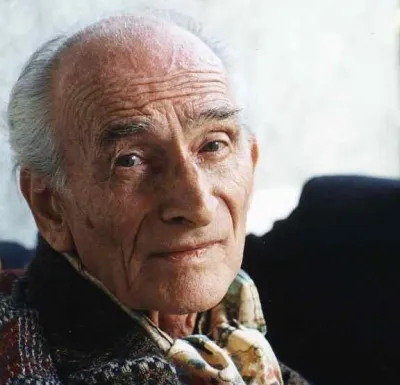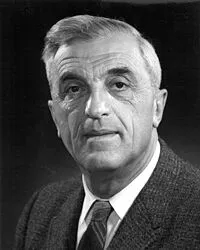
Felix Bloch
Human Design Chart
Biography
Died on 10 September 1983, Zurich, Switzerland.
Human Design Analysis: Felix Bloch as Manifesting Generator 3/6
Manifesting Generator 3/6 — Design at a Glance
Felix Bloch's design revealed a hybrid nature: the speed of a manifestor paired with the constant energy of a generator. He was someone who could skip steps and achieve quick results. This configuration described a type that, while belonging to the Generator family and thus reacting to impulses, also had additional connections in the chart allowing for initiative.
This duality carried specific risks. Felix Bloch tended to act too quickly, skipping important intermediate steps, often leading him back later to fill gaps—a potential source of frustration. Additionally, he frequently responded to multiple impulses simultaneously, creating multitasking. Without inner consent, this creative drive could quickly turn into overload.
The solution lay in the 'Play Mode'. This state occurred when he correctly answered life's impulses and continuously checked his sacral satisfaction. Only when his inner center clearly signaled a 'yes' did his speed become beneficial rather than destructive. Under these conditions, Felix Bloch found deep fulfillment in his work. Parallel projects were then no obstacle but a source of energy, as variety and fun determined his rhythm. His design thus required not linear task completion but dynamic responsiveness to what truly fulfilled him at the moment.
Emotional Authority
Felix Bloch showed a fundamental attitude of patient waiting: he did not trust the first emotional impulse but let feelings subside before acting. His design carried Emotional Authority, meaning that his defined Emotional Center was his inner decision-making instance—regardless of all other defined centers in his chart. This configuration subjected him to a constant wave of moods; the world appeared colored by enthusiasm or skepticism at different moments. Yet these immediate feelings were only snapshots, not ultimate truth. Spontaneous reactions to such transient states would often steer him in false directions. Instead, his inner logic required time and cycle observation. He had to let decisions mature, be patient, and think through questions multiple times. Only when the intense waves subsided and emotional distance arose did clarity and calmness emerge. This process was crucial for long-term life decisions as they could shape his entire life course. By waiting out emotional highs and lows, he gained deeper, comprehensive insight beyond the current mood state. His strength thus lay not in quick reaction but in respecting his own inner rhythm and deciding only when the emotional waters were clear.
The 3/6 Profile — Martyr / Role Model
Felix Bloch's design set an evolution in two clearly distinct phases. In the first three decades of his life, he primarily acted through Line 3 of Profile 3/6 (Explorer/Role Model). This phase was marked by adaptability and a strong need for support; Felix Bloch learned through direct experimentation and dependence on external structures. Gate 50 in this line showed that he sometimes had to break laws or constraints to further develop, often involving mental restrictions.
After his Saturn return at around age 30, his inner dynamics fundamentally changed. Line 6 (Gate 56) became active, bringing gentleness and a desire for reflection. Felix Bloch tended to withdraw to organize accumulated experiences and gain an overarching perspective. This often led to a feeling of internal conflict: the earlier need for playful experimentation now clashed with the later urge for cautious analysis and trust in the process.
Only after his 50th year did Felix Bloch integrate these two poles. The wisdom of Line 6 guided the experimental energy of Line 3, enabling him through charm and calm insight to become a role model for others. His design thus described a path from reckless experimentation to reflective trust, which he ultimately passed on to his environment.
Single Definition — Defined & Open Centers
Felix Bloch revealed himself as a Generator with a deeply rooted inner structure. His defined G Center gave him a reliable identity and direction, while the connection between Sacral and Root Centers generated a constant pressure towards material existence. This energy source required reaction rather than initiation; only by waiting for external questions could he healthily utilize his vital force. His communication flowed authentically from this interior as his defined Throat Center was directly connected to these sources. Additionally, the defined Spleen Center provided spontaneous intuitive security in the present moment.
As an Authority, the Solar Plexus served him. Felix Bloch had to wait out emotional waves to gain clarity; impulsive decisions during emotional highs or lows would otherwise lead to chaos. His open Head and Ajna Centers did not mean a constant mental focus. He was susceptible to external inspirations and tended to be distracted by doubts or the search for answers that were not his own theme. Instead of getting caught in the mental whirlpool, it was important to use these thoughts as mirrors.
Especially defining was the open Heart Center. Felix Bloch did not have consistent willpower and was under pressure to prove himself or make promises to demonstrate his worth. This non-self pattern drew him into a cycle of self-disapproval when he tried to meet expectations that overtaxed his energy. The solution lay in not making promises and not needing to prove himself. His defined G Center protected him from this trap, provided he trusted his inner identity rather than the open mind or the desire for recognition. Thus, he could use his endurance without falling into the proof compulsion of the open heart.
Channels for meaning, change, values, resolve and emotion.
Felix Bloch showed a basic attitude that fluctuated between the urge for evolutionary change and the duty to preserve values. This tension shaped his design: The channel of Mutation 60-3 connected the Root Center with the Sacral Center through the Gate of Limitation (60) and the Gate of Order (3). This generated a pulsating, melancholic energy that required patience until new impulses prevailed. Felix Bloch had to learn to accept limitations and move beyond the confusion of starting anew without rationalizing these moods.
At the same time, the channel of Preservation 27-50 was strong, with Gate 50 as Sun Gate (~70% energy share) focusing on traditional values and care. This channel connected the Sacral Center with the Spleen Center through the Gate of Care (27) and the Gate of Values (50). Here lay the power to nourish others and maintain structures; Felix Bloch's aura automatically attracted trust as he took responsibility for the collective.
The channel of Life Struggle 38-28 drove him towards seeking individual integrity. Through the Gate of Fighter (38) and the Gate of Player (28), he connected Root with Spleen Center to find meaning in resistance against external expectations. This was supported by the channel of Awakening 10-20 (Gate of Appearance 10, Gate of Now 20), which offered self-love and clarity, as well as the channel of Discovery 29-46 (Gate of Saying Yes 29, Gate of Resolve 46), which promoted persistent experience without control. The emotional waves of the channel Feelings Released 39-55 (Gate of Provocation 39, Gate of Spirit 55) demanded authenticity in dealing with moods.
Individual Circuitry — Circuit Signature
Felix Bloch's design showed a tendency towards developing a unique identity marked by mutation and new knowledge. This orientation resulted from the Knowledge Circuit, which connected Sacral, Root, Solar Plexus, and Spleen Centers in him. The channels of this group promoted innovative flashes of insight and the expression of individuality, with energy pulsing.
Parallel to this, he processed past emotions for meaning in the Meaning Circuit. Here, Identity and Sacral Center were connected. This circuit allowed reflecting on past experiences and deriving insights for the collective; the energy flowed cyclically-abruptly here.
Another aspect was the protection of survival and family in the Guardian Circuit. In Felix Bloch, this circuit linked Sacral and Spleen Centers. This involved instinctive energies, food, and preservation, representing a primal force to defend one's genetics.
Lastly, integration occurred through the channel between Throat and Identity Center. This area strengthened self-awareness and enabled manifesting strength from reactions to life in the present moment. As Felix Bloch had a simple definition, all these centers – Sacral, Root, Spleen, Solar Plexus, Identity, and Throat – formed a coherent energetic flow. The mechanics thus showed a connection of impulsive creativity, emotional reflection on past experiences, familial protective instinct, and self-assertive presence in the current moment as an integrated whole.
Right Angle Cross of Laws 3
Felix Bloch's design carried the structure of the right cross of Laws 3. This configuration was characterized by a deep, often unconscious commitment to the Law of Attraction. It wasn't about arbitrary decisions but rather an inner compass guiding him towards where his essence resonated most strongly.
In Human Design mechanics, this cross describes a specific kind of authority: the ability to attract what is right simply through presence and authenticity. Felix Bloch lived in a system aimed at creating harmony by aligning with the currents of his own design rather than fighting against them. His path was marked by seeking alignment between inner truth and outer expression.
The right cross of Laws 3 also implies a connection to the intuition of the Solar Plexus Center, which should not be misunderstood as an emotional reaction. Instead, it served as a fine-tuning mechanism for what truly resonated with him. Felix Bloch was most oriented when he allowed this intuitive resonance and acted upon it. His design challenged him to trust in this inner magnetism. It was a path of integration where every experience sharpened his frequency, leading to more sustainable connections. This dynamic shaped his entire experience as an ongoing process of finding and holding onto what was authentic.
Saturn Return · Uranus Opposition · Chiron Return · 2nd Saturn Return — Life Cycles
Felix Bloch's design laid out a clear cyclical structure marked by two crucial phases: professional anchoring and the peak of recognition. These patterns were evident in his life. In 1934, at age 29, he was appointed Professor at Stanford University. This marked his first Saturn Return, a time when years of groundwork often crystallize into authoritative stability and career security. Felix Bloch used this moment to firmly establish himself.
Later came the second phase: the Chiron Return. In Human Design mechanics, this is not a healing process but an achievement cycle where one's incarnation cross unfolds and meaning becomes tangible – if lived according to strategy and authority. For Felix Bloch, this peak culminated in 1952 with the Nobel Prize for Physics. At age 47, he received this highest recognition, marking the pinnacle of his personal value and validation of his life purpose. Both events underscore how his inner mechanics manifested outwardly: first through structural anchoring, then full realization and societal appreciation of his contribution.
Manifesting Generator · Emotional Authority — Synthesis
Felix Bloch lived a life marked by the dynamic tension between internal reaction and external action. His design as an Manifesting Generator with defined sacral energy points to a constant source of vital force that only becomes active when responding to impulses. This responsiveness was complemented by his emotional authority, which compelled him not to rush decisions but to wait in the depth of his feelings for clarity. The interplay between the quick, initiating drive of the Manifesting and the patient, maturing strategy of the Generator created an inner dynamic that propelled him both to act swiftly and reflect deeply. This was evident in his ability to tackle complex scientific problems while also grasping the subtle nuances underlying principles.
The central paradox in Felix Bloch lies in the interplay between individuality and collective responsibility. His defined G Center, connected with the Throat Center, gave him a strong sense of self-identity and the urge to express his unique perspective. At the same time, his channels – particularly those of protection and discovery – were geared towards mobilizing energy for others' benefit and sharing knowledge for the good of society. This tension between expressing his individual self and fulfilling a greater collective duty created a life where personal exploration and societal contribution were inseparable.
6 Defined Channels
Incarnation Cross - Right Angle Cross of Laws 3
Solar Return
The Solar Return shows the moment when the sun returns to its exact birth position - your personal solar year.
Life Cycles
Discover the life cycles with a detailed triple view (birth chart, cycle chart, composite).
Human Design Profile
- Strategy
- To respond - wait for something to respond to
- Authority
- Emotional Authority
- Profile
- 3/6 - Martyr / Role Model
- Definition
- Single Definition
- Incarnation Cross
- Right Angle Cross of Laws 3
- Date of Birth
- 23.10.1905 06:30
- Place of Birth
- Zürich, Switzerland
Frequently Asked Questions
What was Felix Bloch's Human Design type?
What Profile did Felix Bloch have in Human Design?
What Authority did Felix Bloch have?
What incarnation cross did Felix Bloch have?
When was Felix Bloch born?
Discover your own Human Design
Are you also a Manifesting Generator? Find out in a personal reading how to unfold your multi-talents and direct your energy wisely.
More Personalities
Back to overviewAldair

Alizée

Angeli

Arletty

Artus

Balthus