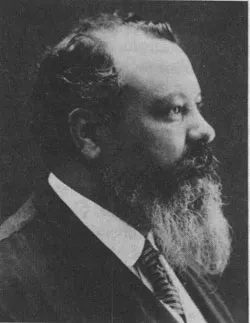
Félix Rodríguez de la Fuente
Human Design Chart
Biography
He died in Alaska on 14 March 1980 the day he turned 52, while shooting a documentary about the Iditarod Trail Sled Dog Race, when the Cessna 185 aircraft carrying him along with two Spanish cameramen and the American pilot crashed, killing all on board.
What does Manifestor 2/4 mean for Félix Rodríguez de la Fuente?
Manifestor 2/4 — Design at a Glance
Félix Rodríguez de la Fuente was a Manifestor, a type designed to lead as a pioneer and visionary, guiding the world into a new future. His design was characterized by an imperial stance: he had the vision of a grand whole, but instead of leading the necessary battles himself, he sent others to conquer foreign lands for him. This structure led to polarization. His great dreams were loved and followed by some, but misunderstood or even hated by others due to their grandeur. This pain point of not being understood was a central aspect of his experience. To find the right followers, it was crucial for him to inform others about his visions in a timely and precise manner. This strategy of informing was the key to his effectiveness. When he lived by this strategy and followed his inner authority, he was rewarded with a sense of inner peace. However, when he acted against his design, he felt a persistent, deep anger. His life was thus marked by the tension between his leading vision and the need to communicate it clearly to reduce resistance and find peace.
Emotional Authority
Félix Rodríguez de la Fuente always decided with a characteristic delay, as his inner authority lay in the defined Solar Plexus Center. This emotional authority was subject to a permanent wave of emotional ups and downs, coloring his perception of the world through the current mood. What seemed totally inspiring in one moment could be perceived negatively in the next. His immediate feeling was only a snapshot, a first impression that did not necessarily represent his truth. Quick, spontaneous decisions made in this emotional heat could therefore have negative consequences.
The mechanics of his authority required patience and conscious delay. Félix Rodríguez de la Fuente let decisions mature, often through multiple nights of reflection, to give the intense emotions time to subside. Only when emotional distance was gained did clarity and calm set in. This process was particularly crucial for long-term, life-defining decisions. Emotional authority always took precedence over other defined centers, regardless of their configuration. Félix Rodríguez de la Fuente thus showed himself to be someone who used the depth of his emotional resonance to reach a more comprehensive understanding, rather than reacting to the first impulse. This ability to let the emotional wave subside shaped his decision-making style and ensured the quality of his long-term orientation.
The 2/4 Profile — Hermit / Opportunist
Félix Rodríguez de la Fuente lived in a constant tension between the deep need for withdrawal and the urge towards community. His design as Profile 2/4 marked him as someone who oscillated between the role of hermit and networker. This dynamic required clear communication of his boundaries: he had to know when to seek company and when to remain undisturbed.
In his isolated 'Me-Time', he immersed himself in internal processes to gain clarity. Only after the need of Line 2 was satisfied did he emerge from his 'cave' to spend time with his trusted people. This cycle was crucial for his creativity. In the stillness, he reflected the knowledge of his network, evaluated it, and developed brilliant ideas from it.
Line 2 gave him the ability to help emotional energies in times of crisis, often without being aware of it. He was selective and supported only those who asked for help. At the same time, Line 4 enabled him to share transpersonal perspectives and inspire others. His design showed that he often made valuable knowledge accessible only to a small circle consciously, to preserve its depth. This balance between introspection and social connection formed the foundation of his actions.
Single Definition — Defined & Open Centers
Félix Rodríguez de la Fuente revealed himself as someone who articulated his truth with consistent clarity, driven by a strong will and deep emotional intelligence. His defined Throat Center served as a reliable anchor for communication and action; he did not speak impulsively but from a clear inner source. This ability to express himself was fueled by his defined Heart Center, which gave him the energy to keep his promises and actively shape his own life. He enjoyed control over his resources and used his willpower to achieve his goals, ensuring that he only made commitments he could fulfill.
At the same time, his actions were shaped by his defined Solar Plexus Center, which served as his inner authority. Félix Rodríguez de la Fuente learned to trust the emotional wave and make decisions only when emotional clarity had set in. This patience allowed him to gain deeper insights and make decisions on a stable basis, rather than being guided by fleeting moods. His defined Spleen Center supported this through spontaneous intuition and a strong body awareness, helping him to act in the present moment and maintain healthy boundaries.
In contrast, his design revealed a vulnerability to external influences in the areas of identity and energy. His open G Center meant that he did not have a fixed, unchanging identity but rather formed himself through interaction with his environment and other people. He tended to orient himself towards what was considered right in his surroundings and sought the right direction through reflection on others. His open Sacral Center made him sensitive to the energy of others; he could easily become exhausted if he took in too much from his environment without adequately protecting himself. Additionally, he was open to inspiration through his open Head and Ajna Centers, but could also become entangled in mental pressure and confusion if he did not listen to his emotional authority. His open Root Center absorbed stress from the environment, making him vulnerable to external pressure that he did not generate himself.
Channels for ego, devotion and emotional transformation.
Félix Rodríguez de la Fuente showed himself to be someone who actively mastered the material plane, driven by a strong will to maintain control over his resources and rhythm. This attitude was rooted in the Money Line 21-45, which connected the Heart with the Throat Center. Here, Gate 21 acted as a Hunter, linking service with the necessity of control, while Gate 45 as a Collector represented the authoritative voice of the tribe that decided on resources. Félix Rodríguez de la Fuente had to learn to reconcile these two forces: the urge to serve and the need for independence, to avoid stress for the Heart.
Parallel to this, he possessed the gift of instinctively assessing others and making appropriate offers, which was marked by the Channel of Devotion 26-44. This channel connected the Spleen with the Heart Center. Gate 26, the Gate of Egotists, used willpower to move the tribe to his advantage, while Gate 44 contributed vigilance and a fine sense for threats or improvements. Félix Rodríguez de la Fuente was an entrepreneur who sold his product or message before the market explicitly demanded it, trusting his inner intuition.
Emotionally, he was driven by the search for new experiences, which was caused by the Channel of Transience 35-36 between the Solar Plexus and Throat Centers. Gate 35 demanded change and the new, while Gate 36 used the emotional crisis as a motor for movement. Félix Rodríguez de la Fuente learned through this restless longing to gain wisdom by accepting the transience of his feelings and fully immersing himself in every experience.
Additionally, individual gates were at work: Gate 6 contributed to emotional friction and biological boundaries, Gate 12 brought poetic creativity and individual mutation into communication, Gate 11 enabled visual assessment before action, Gate 30 connected longing with the recognition of feelings, and Gate 32 ensured continuity and material success by testing current situations against past failures.
Tribal Circuitry — Circuit Signature
Félix Rodríguez de la Fuente revealed himself as someone who used emotional waves from the past to share insights with others. His design connected the Throat Center with the Solar Plexus through the Channel of Transience. This created a cyclical energy: feelings and experiences from the past were processed and then verbally communicated. It was not about cold logic but about finding meaning in past events to learn from them together. This connection shaped his way of experiencing emotions in a wave-like manner - with a beginning, middle, and end - and then passing them on to the collective.
Parallel to this, a second, separate force was at work. The Ego Circuit connected his Throat, Heart, and Spleen Centers. Through the Channels Devotion and The Money Line, it was about cooperation and the joint creation of resources. Here, a principle of reciprocity applied: giving and taking, support in the tribe. Since there was no connection to the Sacral Center, there was no constant life force. Therefore, rest periods were necessary to generate new energy for these social and material tasks. These two circuits did not form a cohesive unit but existed as separate areas: one for emotional reflection and communication, the other for traditional cooperation and resource building. Félix Rodríguez de la Fuente lived these dual demands by oscillating between sharing inner experiences and building communal structures, always mindful of the necessary pauses for regeneration.
Right Angle Cross of Eden 1
Félix Rodríguez de la Fuente carried the right cross of Eden 1. This configuration shaped his essence through a profound, often painful sensitivity to injustice and suffering, coupled with the drive to transform these experiences into something meaningful. It was not a passive stance but an active, though arduous, work of transformation.
The right cross of Eden 1 describes the path that leads through the suffering of the world to gain wisdom and deep empathy. Félix Rodríguez de la Fuente was someone who did not ignore the harshness of life but used it as raw material for his understanding of humanity and nature. His energy was directed towards healing and understanding, often suffering himself under the weight of what he perceived.
This mechanism meant that his path was not always easy. He had to learn to carry his own vulnerability without being overwhelmed by it. The challenge was to turn personal pain into a universal message of connection. Félix Rodríguez de la Fuente lived this tension between experiencing pain and creating healing. His design suggested that his greatest strength lay in acknowledging the dark sides of existence and integrating them into a comprehensive picture of unity that could touch and comfort others.
Saturn Return · Uranus Opposition · Chiron Return — Life Cycles
Félix Rodríguez de la Fuente was characterized by a deep, practical connection to the natural world that manifested in concrete protective measures. His design tended to translate abstract values into tangible, physical structures.
In 1968, at the age of 40, he took over the leadership of the TV program “Fauna”. This step fell into the phase of the Uranus opposition, a time when internal tensions between established roles and the urge for individual expression often lead to a clear career change or new responsibility. Here, his desire to convey knowledge solidified into a firm position.
Later, in 1975 at the age of 47, he established a rehabilitation station for birds of prey in Montejo de la Vega. This occurred during his Chiron return. In Human-Design mechanics, this cycle does not mark the healing of injuries but the peak of personal fulfillment. It is the time when the incarnation cross, if followed according to one's design, unfolds fully and the deepest sense of life is experienced. The establishment of the station was not an act of compensation but the concrete realization of his purpose: direct, protective care for the beings that shaped his life.
Manifestor · Emotional Authority — Synthesis
He was a Manifestor who, through the connection of Heart and Throat (Channel of the Money Line), naturally exercised authority and had a need to take responsibility. However, this ability to set direction and gather others was modulated by a deep emotional wave (Emotional Authority) that forced him to let decisions mature over longer periods. Thus, a life emerged that was marked by the drive to lead and shape, always in harmony with an inner, cyclical process of feeling and reflecting.
A central paradox lay in the tension field between his need for solitude (Line 2) and the desire for community (Line 4). He lived this duality by seeking clarity in phases of inner retreat, only to emerge from this “inner cave” and connect with others. A documented event (1975) showed how he established a rehabilitation station from a need for inner clarity, which gave him the opportunity to network with like-minded individuals and realize his vision.
3 Defined Channels
Incarnation Cross - Right Angle Cross of Eden 1
Solar Return
The Solar Return shows the moment when the sun returns to its exact birth position - your personal solar year.
Life Cycles
Discover the life cycles with a detailed triple view (birth chart, cycle chart, composite).
Human Design Profile
- Type
- Manifestor
- Strategy
- To inform others before acting
- Authority
- Emotional Authority
- Profile
- 2/4 - Hermit / Opportunist
- Definition
- Single Definition
- Incarnation Cross
- Right Angle Cross of Eden 1
- Date of Birth
- 14.03.1928 13:00
- Place of Birth
- Poza de la Sal, Spain
Frequently Asked Questions
What was Félix Rodríguez de la Fuente's Human Design type?
What Profile did Félix Rodríguez de la Fuente have?
What Authority did Félix Rodríguez de la Fuente have?
What incarnation cross was Félix Rodríguez de la Fuente assigned to?
When was Félix Rodríguez de la Fuente born?
Discover your own Human Design
Are you also a Manifestor? Find out in a personal reading how to use your initiation power peacefully and dissolve resistance.
More Personalities
Back to overviewChristian-Jaque
Kesha

Lucebert
Masaccio

Nadar
Papus