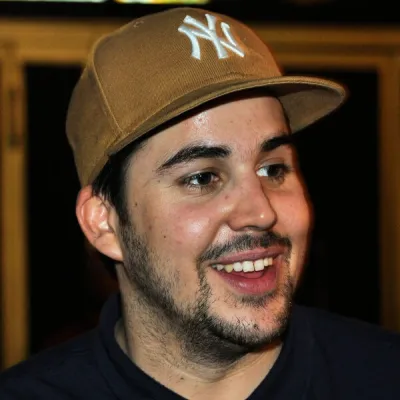
François-Marie Banier
Human Design Chart
Biography
Despite his modest background, from an early age he was a precocious and hyperactive talent, who was able to develop friendships with some of Paris’ wealthiest arts patrons and artists. At the age of 16, he met Salvador Dalí, who would send his car to bring Mr Banier to his suite at the Hotel Meurice to discuss art. At the age of 19, he befriended the wealthy heiress and patron of the arts Marie-Laure de Noailles who was then 64.
He published his first novel, Les Résidences secondaires ou la Vie distraite (Second Homes or Distracted Life), at the age of 22. Around the same time, a well-known Parisian designer and antique dealer Madeleine Castaing (who was 75 at the time) helped him launch a career in photography by purchasing a dozen of his photographs for 70,000 francs.
Over the years, Mr Banier befriended many well-known public figures and celebrities, including Pablo Picasso, Yves Saint Laurent, Pierre Cardin, Françoise Sagan, Samuel Beckett, Vladimir Horowitz, Louis Aragon, François Mitterrand, Kate Moss, Mick Jagger and Princess Caroline of Monaco. He is also a good friend of Johnny Depp and his wife Vanessa Paradis, who met at his home in the south of France. Mr Banier is godfather of their daughter, Lily-Rose.
In the 1970s, Mr Banier shared a studio with designer Jacques Grange on rue Servandoni near Luxembourg Gardens. Over the years, he acquired his own studio on rue Servandoni and gradually combined it with adjacent apartments until he was able to open a second entrance on rue de Vaugirard. He now shares these quarters with actor Pascal Greggory and his nephew Martin d’Orgeval. Mr Banier also owns a home in Sommières, France.
Human Design Analysis: François-Marie Banier as Manifesting Generator 1/3
Manifesting Generator 1/3 — Design at a Glance
François-Marie Banier showed himself to be someone with a hybrid energy configuration: He possessed the constant, vital power of a Generator but was also capable of rapid implementation through his Motor Centers' connection to the Throat Center. This allowed him to skip steps and quickly bring things into his life. However, this speed carried risks: He tended to overlook important stages or take on too many projects at once, which without inner alignment quickly led to frustration – the specific non-self theme of this type.
The mechanics of his design therefore required a clear strategy: Instead of initiating himself, François-Marie Banier had to react to impulses from his environment. Only when his Sacral Center or Inner Authority signaled a clear "yes" should he act. Regular checks to see if ongoing paths still aligned were crucial. If these conditions were met and he found himself in a playful mode with constant variety, his speed could be beneficial. Then he drew deep satisfaction from his work, even while pursuing several things at once. The necessity of maintaining responsiveness despite high dynamics shaped his path toward true fulfillment and prevented natural urgency from turning into overextension.
Emotional Authority
François-Marie Banier exhibited a fundamental approach where decisions were never made impulsively. His design indicated that his defined Solar Plexus Center carried his inner authority – the emotional authority. This mechanism held precedence regardless of all other defined centers in his chart; it always took priority.
Banier was subject to constant emotional waves, a rise and fall of feelings. The world appeared colored by his current mood: one moment total enthusiasm for something, the next deep rejection of the same. However, his immediate feeling was merely a snapshot, an initial impression, not necessarily the truth yet. Quick, spontaneous decisions made in this emotional heat could have had negative consequences.
Instead, his nature required patience and conscious waiting. He took time to let decisions mature, often by sleeping on them multiple times. This process served to calm intense emotions. Only when he gained emotional distance did clarity and composure set in. It was only then that he had completed the decision-making process. This strategy of waiting was crucial for long-term direction setting, which significantly influenced his life course.
The 1/3 Profile — Investigator / Martyr
François-Marie Banier revealed himself as someone who attained authority not through mere theory but through tested experience. His design suggests a tendency to view life as an ongoing process of trial and error, in which theoretical knowledge (Line 1) must always be linked with practical application (Line 3).
This profile of the researcher and experimenter creates a tension: On one hand, there is a drive to focus intensely and plan thoroughly to avoid mistakes. On the other hand, Line 3 compels him to forgo shortcuts and instead gain understanding through detailed work and personal experience. When François-Marie Banier made a judgment, it was the result of double scrutiny – both intellectually and practically.
The mechanics here describe the path from silent preparation to active adaptability. Only by experiencing the consequences of his own actions and learning from concrete mistakes could he gain trustworthy insights. His authority thus rested on the fact that he did not just understand things but had personally tested them thoroughly. This created a special credibility: anyone giving an opinion had gone through the complete cycle from planning to real consequence.
Split Definition — Defined & Open Centers
François-Marie Banier revealed himself through immense inner substance and consistent communication ability. His defined Throat Center gave him the capacity to reliably carry messages into the world, while his defined G Center ensured a clear identity and direction. This combination allowed him to act from a deep sense of connection and self-love without being dependent on others.
The energy source came from his defined Sacral Center, which functioned as a constant motor. Banier possessed the vital force to react to offers rather than initiate them himself. However, his decisions were not driven solely by this motor but followed the emotional wave of his defined Solar Plexus Center. As an inner authority, this required patience: He had to wait out the ups and downs of his feelings to gain clarity before acting. Additionally, his defined Spleen Center supported him through spontaneous intuition in the present moment, while his defined Root Center provided a steady stress pressure that propelled him forward.
In contrast, Head and Ajna were open. This meant no constant mental focus; instead, he took situational inspirations. An open Heart Center lacked consistent willpower in terms of ego competition. Instead, it reflected the egos of others. The challenge lay in not initiating massive energy from defined centers through mental pressure (open head) or the need to prove oneself (open heart). Rather, it was about waiting for sacral reaction and emotional clarity to avoid resistance and frustration. This mechanism shaped his way of moving in the world: powerful but only effective when he did not act against his own rhythm.
Channels for inspired presence, emotional depth, logic and charisma.
François-Marie Banier acted as someone who inspired through authentic presence and individual example. The channel of inspiration 1-8 connected the G Center with the Throat Center via the Gates of Self-expression (1) and Contribution (8). This configuration allowed him to attract attention by living his unique identity rather than just explaining it. His impact rested on standing as an individual and encouraging others through this example.
At the same time, his social openness strongly depended on emotional mood. The channel of openness 22-12 connected the Solar Plexus Center with the Throat Center via the Gates of Openness (22) and Caution (12). Here, the emotional wave determined when he showed himself socially or withdrew. When in the right mood, he could deeply touch others through his voice and warmth; at an emotional low point, however, he tended to be harsh or retreat due to unmet resonance needs.
With inner resonance, François-Marie Banier exhibited a high drive for immediate action. The channel of charisma 34-20 connected the Sacral Center with the Throat Center through the Gates of Power (34) and Now (20). This gave him a charismatic, action-strong presence when reacting to external stimuli. The energy was quick and direct, making him effective in the moment but also requiring high self-reinforcement not to be carried away by his own momentum.
In the background, a logical correction process worked. The channel of judgment 58-18 connected the Root Center with the Spleen Center via the Gates of Liveliness (58) and Correction (18). This served as an internal quality assurance that questioned and perfected patterns. However, this process was only activated when explicitly asked or a correction seemed necessary, which protected him from unnecessary conflicts and focused his logical insights.
Individual Circuitry — Circuit Signature
François-Marie Banier's design tended towards an energetic split: two parallel existing power fields not directly merging. The Split Definition created this separation. One group connected Throat, Solar Plexus, and Identity Center; here pulsating creativity and emotional waves worked. The other group included Spleen and Root Center, meaning focused rational strategy and survival instinct.
The Knowledge Circuit shaped the first side. François-Marie Banier had the channel of inspiration (1-8) as well as openness (22-12). This connected identity, emotions, and expression directly in him. New insights emerged through inspiring flashes of insight, were emotionally transformed, and then expressed acoustically or visually. It was about the unique path and individuality.
Parallel to this, the Understanding Circuit worked. The channel of judgment (18-58) connected Spleen and Root Center. This stood for 'emotionless ratio', logical structuring, and strategic future vision, free from emotional conditioning.
The Integration Circuit added itself. The channel of charisma (20-34) connected Throat and Sacral Center. This allowed drawing strength from reacting to life and expressing it in the present moment.
Right Angle Cross of Service 2
François-Marie Banier revealed himself through a profound and often unconscious motivation to support and serve others. This attitude was not a conscious moral act but rather a central life principle of his design. His archetypal role was to work as a helper or supporter in the background. He focused on ensuring the smooth functioning of systems or relationships, frequently without stepping into the spotlight.
This configuration corresponds to the Human Design pattern 'Serving Cross 2'. It describes an energetic alignment where one's identity and satisfaction are closely tied to the ability to serve others or stabilize systems. The impulse is fundamental and shapes action on a level that is often not rationally thought through. François-Marie Banier was programmed to take responsibility for the well-being of others or the cohesion of structures out of an inner necessity, not external pressure. The energy of this cross ensures that service is experienced as a natural expression of self, which also carries the risk of neglecting one's own needs in favor of supporting others. His design suggested that he found his strength in this quiet, sustaining function.
Saturn Return · Uranus Opposition · Chiron Return · 2nd Saturn Return — Life Cycles
François-Marie Banier's life path followed the classical rhythm of planetary cycles marking structural turning points. His design shows no deviating configurations in these areas; instead, the four standard phases shaped the framework of his development: consolidation, rebellion, and inner clarification.
The first Saturn return ushered in the transition from youth to established identity. In this phase, early experiences coalesced into a sustainable life structure. The subsequent Uranus opposition brought the typical crisis of self-determination, a confrontation with external structures and authorities to define individual freedom.
Then, the Chiron return marked the point of inner maturation. In Human Design, this is not a process of healing old wounds in a mythological sense but rather a fulfillment cycle. Here, his own incarnation task became more apparent; if strategy and authority were observed, personal meaning was experienced. It was a phase of bloom where the essence increasingly unfolded.
Finally, the second Saturn return solidified these experiences. The life experience and resulting inner authority were ultimately anchored. Thus, François-Marie Banier went through the archetypal path from formation to testing until stable integration of his identity without specific chart features modifying or distracting this natural process.
Manifesting Generator · Emotional Authority — Synthesis
François-Marie Banier embodies a dynamic tension between inner clarity and the urge to bring it into the world. His design reveals a deeply rooted desire for authenticity (G Center), which is strengthened by an acute ability for quick reaction and manifestation (Manifesting Generator). This combination leads to a personality that is both introspective and effective – a seeker (Profile 1/3) who not only gathers insights but also immediately puts them into action. The defined emotional authority underscores the necessity of letting decisions mature, while sacral energy provides the drive for creative processes.
The central paradox lies in the interplay between emotional depth and impulsive manifestation. Banier seems torn between the need for inner reflection (Solar Plexus) and the ability to quickly move things forward (Sacral-Throat connection). This tension requires careful weighing of impulses and conscious use of his energy to avoid frustration or aimless action. The openness of certain centers also points to a high adaptability and the ability to be inspired by external influences, further fueling his creative power.
4 Defined Channels
Incarnation Cross - Right Angle Cross of Service 2
Solar Return
The Solar Return shows the moment when the sun returns to its exact birth position - your personal solar year.
Life Cycles
Discover the life cycles with a detailed triple view (birth chart, cycle chart, composite).
Human Design Profile
- Strategy
- To respond - wait for something to respond to
- Authority
- Emotional Authority
- Profile
- 1/3 - Investigator / Martyr
- Definition
- Split Definition
- Incarnation Cross
- Right Angle Cross of Service 2
- Date of Birth
- 27.06.1947 01:10
- Place of Birth
- Paris, France
Frequently Asked Questions
What is the Human Design type of François-Marie Banier?
What Profile does François-Marie Banier have in Human Design?
Which Authority guides François-Marie Banier?
Which incarnation cross is assigned to François-Marie Banier?
When was François-Marie Banier born?
Discover your own Human Design
Are you also a Manifesting Generator? Find out in a personal reading how to unfold your multi-talents and direct your energy wisely.
More Personalities
Back to overviewAlain-Fournier

Aldair

Alizée

Angeli

Arletty
Artus