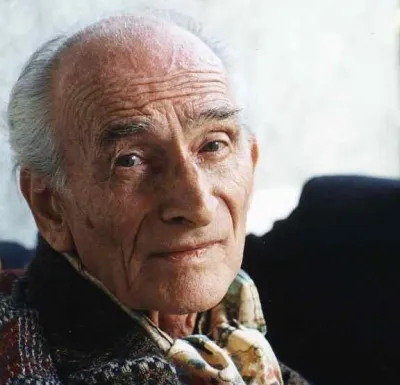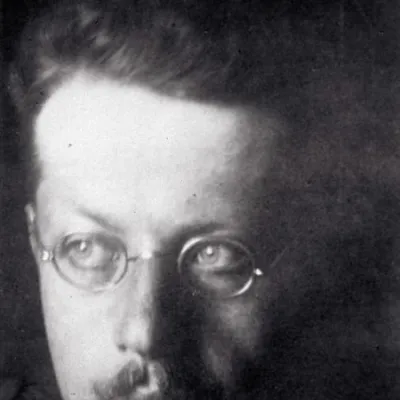
Franz Rosenzweig
Human Design Chart
Biography
Rosenzweig, unimpressed with the impersonal learning of the academy, founded the House of Jewish Learning in Frankfurt in 1920, which sought to engage in dialogue with human beings rather than merely accumulate knowledge. The Lehrhaus, as it was known in Germany, produced many prominent Jewish intellectuals.
Rosenzweig suffered from the muscular degenerative disease Amyotrophic Lateral Sclerosis (also known as Lou Gehrig's Disease). He died on the night of 10 December 1929, in Frankfurt, aged 42.
Franz Rosenzweig — Manifesting Generator with Profile 6/2
Manifesting Generator 6/2 — Design at a Glance
Franz Rosenzweig lived as an Manifesting Generator, a hybrid configuration of Generator and Manifestor traits. His design featured a defined Sacral Center, providing him with constant energy and dictating the strategy not to initiate himself but to respond to external impulses. At the same time, he had an active connection from a Motor Center to the Throat Center, giving him Manifestor aspects: the ability to skip steps and quickly pull things into his life.
This speed carried risks, however. Franz Rosenzweig tended to juggle multiple projects simultaneously because he responded to many different impulses. Without strict adherence to the strategy—waiting for the clear "yes" impulse from the Sacral Center and gaining approval from his inner authority—his creative enthusiasm quickly turned to frustration, especially when important steps were overlooked or he became overwhelmed by multitasking.
With proper application of this mechanism, Franz Rosenzweig derived deep satisfaction from his work. He needed variety and a playful mode to maintain his energy. The advice to finish one thing before starting another did not suit his nature; instead, he flourished in simultaneously working on various tasks as long as each project passed the inner resonance test and was continuously affirmed by his Sacral Center.
Emotional Authority
Franz Rosenzweig's inner authority was emotional, carried by the defined Solar Plexus Center. This configuration meant that his perception and decision-making were always influenced by his current emotional wave. The world appeared to him not statically but colored by his momentary state: what seemed inspiring in one moment could appear negative in the next. However, this up-and-down of emotions did not mean that the initial impulse was the truth. Rather, it was a snapshot, an unripe first impression. Quick, spontaneous decisions based on these immediate emotions often turned out to be problematic or had negative consequences.
The mechanics of his emotional authority required time. Franz Rosenzweig needed to practice patience and sleep on decisions multiple times to gain clarity. Only when the intense feelings subsided and he created emotional distance did calmness set in. This process was essential for long-term life decisions with significant influence on his career path. A central mechanism of his configuration was the absolute priority of this authority: whenever the Solar Plexus Center was activated, it exercised inner guidance regardless of which other centers were also defined in his design. This prioritization rule ensured that he did not act against his deeper emotional truth but waited for its ripening before taking a step.
The 6/2 Profile — Role Model / Hermit
Franz Rosenzweig showed a clear developmental line: In his youth he experimented intensively, learned through trial and error, and withdrew after setbacks. This behavior matched the 6/2 Line, which before the age of thirty acts as a 3rd Line – characterized by an active search for experience and adaptation to external circumstances.
After about thirty years, his focus fundamentally shifted. He metaphorically retreated into a "cave" to look back on his previous experiences with distance. This phase of intense reflection served for healing and deep self-knowledge. The sixth line allowed him an overview of the entire circuit board; it integrated earlier patterns and paved the way for authenticity that would become fully effective later.
At the same time, Gate 18 on the second Line shaped his inner life. Here was a need for correction and the painful realization of the uncorrectability of certain situations. Instead of fighting against the wind, he sought acceptance as a form of spiritual renewal. This attitude allowed him to come to terms with the unchangeable while still continuing to live. From this period of retreat and reflection, Franz Rosenzweig emerged as a wise person whose introspection attracted others who wanted to partake in his life wisdom.
Split Definition — Defined & Open Centers
Franz Rosenzweig was marked by a design characterized by constant internal structure and clear expressive ability. His defined Ajna Center gave him a trustworthy, independent mental function; he thought conceptually stable and was not easily influenced by others. This mental clarity flowed directly into his defined Throat Center, allowing him to communicate his thoughts reliably. His voice was not impulsive noise but a reliable instrument for conveying what his mind had processed.
In addition to this cognitive precision, Franz Rosenzweig possessed a firm identity (defined G Center) and had willpower as well as personal resources (defined Heart Center). He knew who he was and could keep promises, which strengthened his self-esteem. His vital energy came from the defined Sacral Center; as a Generator, he reacted to life rather than initiating it and found satisfaction in action when he followed his inner response. Emotional depth (defined Solar Plexus) and intuitive security (defined Spleen Center) rounded out his system: He waited patiently for emotional clarity and trusted his momentary instinct for health and well-being. The constant pressure of his defined Root Center propelled him forward without him being at the mercy of this stress.
In contrast, his open Head Center was lacking in consistent inspiration; instead, he tended to absorb mental pressure from the environment and deal with questions that were not his own. This center made him vulnerable to confusion when trying to find answers for others or getting entangled in foreign problems. The challenge lay in not interpreting this mental noise as his own task but letting it go and instead trusting his defined centers – his clear mind, his willpower, and his sacral response. Thus, he avoided the trap of getting lost in endless doubts and used his open capacity to remain open to new insights from the world without being overwhelmed by them.
Channels for rhythm, presence, intuition, logic and community.
Franz Rosenzweig was marked by a deep biological trust in the natural flow of life. His design tended not to be swayed by reason or emotional waves but guided by an inner rhythm that kept him vital and closely connected with life. This attitude stemmed from Channel of Rhythm 5-15: Gate 5 held fast to fixed habits, while Gate 15 integrated the diversity of society into this flow of life. Thus, he appeared to others as someone with a unique timing that ordered and propelled the energy flow of his environment without him actively steering it.
Alongside this rhythmic base tone, he was marked by an ability for intuitive self-awareness in the present moment. Channel of Brainwave 57-20 connected the intuitive insight from the Spleen Center (Gate 57) directly with the expressive power of the Throat Center (Gate 20). This allowed him to speak spontaneous truths based on ancient survival instincts. He knew what to do in the moment and spoke it clearly, thereby encouraging others to awaken their own inner survival intelligence.
This intuition also flowed into his social behavior. Channel of Perfect Form 57-10 connected the intuitive wisdom (Gate 57) with the Gate of Appearance (Gate 10). His demeanor was marked by deep self-love and acceptance, which allowed him to move through the world existentially unburdened. By simply being himself, he inspired his surroundings to live authentically without this being his conscious intention.
In communication, he organized complex information logically. Channel of Acceptance 17-62 connected Gate of Opinions (Gate 17) with Gate of Details (Gate 62). His mind was constantly engaged in translating visual patterns into language and structuring details so they fit into his worldview. This gave him the gift to clearly present theories or hypotheses as soon as he was invited to share his perspective.
Additionally, he questioned existing patterns with a strong corrective drive. Channel of Judgment 58-18 connected Gate of Liveliness (Gate 58) with Gate of Correcting (Gate 18). This urge to perfect things and check their health for the collective kept him motivated. He sought solutions that were practically applicable to restore peace and satisfaction, especially when explicitly asked for his opinion.
His design also contained an emotional component of community building. Channel of Community 37-40 connected Gate of Friendship (Gate 37) with Gate of Solitude (Gate 40). He searched for his place in the whole and built bridges between individuals to create harmonious relationships based on mutual support and loyal agreements.
Further gates such as Gate 29 (Saying Yes), Gate 30 (Recognizing Feelings), or Gate 53 (Freedom for New Cycles) complemented this picture with aspects of persistence, dealing with fate and illusion, and the spirit of a pioneer.
Collective Circuitry — Circuit Signature
Franz Rosenzweig's design tended towards impulsive, creative intuition. The Knowledge Circuit in him connected Throat Center with Spleen. This generated spontaneous mental sparks (Channel 20-57), which were immediately put into words – acoustically and in the present moment.
Parallel to this, three separate segments of the Understanding Circuit worked. The first group connected Ajna with the Throat Center (Channels 17-62, 15-5, 18-58). Here logical structuring took place, free from emotions and focused on visual future perspectives. The second group connected Identity Center with Sacral Center; this provided a focused, strategic endurance for long-term goals. The third group connected Spleen with the Root Center (Channels 17-62 etc., specifically the connection through the mentioned gates), which translated intuitive warning signals directly into action impulses.
Another aspect was the Ego Circuit, connecting Heart and Solar Plexus (Channel 37-40). This promoted cooperation through clear giving and taking. Since there was no connection to the Sacral Center, regular rest pauses were necessary to regenerate resources for these interpersonal dynamics.
Finally, integration showed as a coherent flow between Throat, Identity, and Spleen Centers (Channels 20-10, 10-57). Here intuitive perception of the Spleen merged with deep confirmation of self to find in the present moment a 'perfect form' of expression. This configuration marked Franz Rosenzweig as someone who brought inner truth into the world through logical clarity and spontaneous creativity, while emotional resonance (Heart/Solar Plexus) was always in dialogue with others.
Left Angle Cross of Prevention 2
Franz Rosenzweig exhibited a fundamental attitude characterized by the drive to solve problems before they even arise. His design indicated a tendency towards proactive action and structuring things in such a way that conflicts or errors were excluded from the outset. This aligned with the mechanics of the left cross of prevention: it was not about reacting to crises already underway, but rather creating security proactively through targeted intervention in the formation process. Franz Rosenzweig lived with an internal logic that allowed him to recognize potential obstacles early on and mitigate them through clear preventive measures. This configuration described a life task where order and stability were established as a foundation for any further action, not as a result of chaos. He sought ways to minimize uncertainties by setting up conditions such that negative developments had little room to grow. This attitude shaped his way of interacting with his environment: not through constant repair of damage but through the careful building of systems that promoted resilience and clarity. Franz Rosenzweig saw himself as someone who took responsibility for ensuring that things rested on a solid foundation long before others even noticed where weaknesses might lie.
Saturn Return · Uranus Opposition — Life Cycles
Franz Rosenzweig was shown to be someone whose intellectual depth and creative expression received their strongest impulses in specific planetary cycles. His design indicated a tendency towards intensive phases of condensation, followed by moments of radical renewal.
In 1914, at the age of 28, he completed his study on the oldest system program of German idealism and identified an unknown manuscript in Hegel's handwriting. This corresponded to his first Saturn return, a cycle that often compresses years of groundwork into a stable structural result. Here, the mechanics of consolidation became effective: the foundation of his thinking was made visible and tangible.
Later, in 1926 at the age of 40, he published 'Two Ninety-Two Hymns and Poems'. This fell during the Uranus opposition, a phase often marked by unexpected breaks or new forms of expression. Instead of mere continuity, there was now a need for freer, less bound expression. The mechanics of this opposition not only promoted intellectual analysis but also poetic openness. Both events illustrate how cosmic cycles shaped his work: Saturn created the stable foundation of research, Uranus enabled the creative breakthrough into lyricism. His life followed thus a rhythm of consolidation and liberation, with each cycle producing a specific form of his mental creation.
Manifesting Generator · Emotional Authority — Synthesis
Franz Rosenzweig lived a life marked by profound inner dynamics. The interplay between sacral energy (defined Sacral Center) and the ability for quick action (Manifesting Generator Type) points to someone driven by a constant flow of life force, yet capable of seizing opportunities immediately. This combination led to an intense engagement with concepts and ideas (defined Ajna Center), structured through rhythmic patterns (Channel Rhythm) that allowed continuous transformation of knowledge. The deep reflection arising from the profile as Role Model/Natural Talent pointed towards a process of inner maturation and wisdom-seeking, characterized by phases of intensive experience followed by distancing.
A central paradox in his design lay in the tension between the impulse for quick initiation and the necessity of emotional clarification (Emotional Authority). While the manifesting component tended to overlap steps, the emotional center required time for a thorough engagement with feelings. This likely led to an internal conflict between the urge for immediate implementation and the realization that true wisdom lies in patient maturation of decisions – a dynamic illustrated by events such as completing a study (Saturn Return) and publishing a work (Uranus Opposition).
7 Defined Channels
Incarnation Cross - Left Angle Cross of Prevention 2
Solar Return
The Solar Return shows the moment when the sun returns to its exact birth position - your personal solar year.
Life Cycles
Discover the life cycles with a detailed triple view (birth chart, cycle chart, composite).
Human Design Profile
- Strategy
- To respond - wait for something to respond to
- Authority
- Emotional Authority
- Profile
- 6/2 - Role Model / Hermit
- Definition
- Split Definition
- Incarnation Cross
- Left Angle Cross of Prevention 2
- Date of Birth
- 25.12.1886 06:15
- Place of Birth
- Kassel, GER
Frequently Asked Questions
What was Franz Rosenzweig's Human Design type?
What Profile did Franz Rosenzweig have in Human Design?
Which Authority guided Franz Rosenzweig?
What incarnation cross did Franz Rosenzweig carry?
When was Franz Rosenzweig born?
Discover your own Human Design
Are you also a Manifesting Generator? Find out in a personal reading how to unfold your multi-talents and direct your energy wisely.
More Personalities
Back to overviewAldair

Alizée

Angeli

Arletty

Artus
Balthus