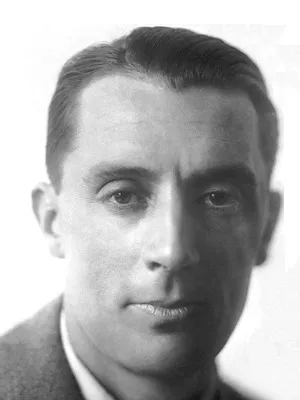
Frédéric Joliot-Curie
Human Design Chart
Biography
He was a leader with the French Resistance after the Nazi occupation of 1940, and cognizant of the dangers of nuclear chain reactions he and his wife ceased their nuclear research and had their papers sealed and smuggled to England until after the war. He was a co-founder of the French Atomic Energy Commission (FAEC) in 1946, and oversaw construction of France's first nuclear reactor on 15 December 1948. He served as the FAEC's High Commissioner until 1950, when he was forced out because of his peace and socialist activism, including his 1949 co-founding of the World Peace Council.
In 1944 he was elected to the French Academy of Sciences.
He died on 14 August, 1958, as a result of complications of surgery.
Human Design Analysis: Frédéric Joliot-Curie as Generator 1/3
Generator 1/3 — Design at a Glance
Frédéric Joliot-Curie's design revealed a tendency towards great endurance and inner strength. As a Generator, he had abundant sacral energy that made him extremely strong and resilient – provided this energy was used for tasks he truly enjoyed. His life force did not unfold through spontaneous initiation of actions but rather when responding to impulses from his environment. Thus, the motto of his design was: Not initiate, but react.
This mechanism meant that Frédéric Joliot-Curie had to rely on waiting for signals from life and only then act once his sacral center gave a clear “yes.” This inner gut feeling impulse was the key to effectively using his energy. If he followed this strategy and responded to real resonance, nothing could stop him; he would be rewarded with deep satisfaction and fulfillment.
Conversely, two specific pitfalls threatened: Either he wasted his strength on things that did not interest him, leading to burnout, or he was held back from his heart project despite still wanting to continue working full of power. If he did not live by the principle of reacting from the gut but constantly tried to initiate himself, sooner or later he would encounter persistent frustration and a lack of energy. His success therefore depended on whether he learned to listen to the inner signal before taking action.
Sacral Authority
Frédéric Joliot-Curie was someone whose decision-making process was characterized by direct physical resonance. As a Generator, he had sacral authority, meaning his strategy and internal leadership level were identical: He reacted to external stimuli with an immediate gut feeling or surge of energy. This mechanism simplified his process as he did not need to think but trusted his instant physical feedback – a grunt, hum, or enthusiastic “mm-hm” signaled whether something was energizing or depleting.
A prerequisite for this clear leadership was his open emotional center; he did not let fleeting moods guide him but waited for the stable, vital response of his sacral center. When his engine started up, he felt alive and acted with great enthusiasm, completely without compulsion or purposefulness.
Additionally, his activated spleen functioned as supportive authority. This connection gave him the ability to react particularly quickly and spontaneously. He had immediate access to his instinctive perception and physical well-being, enabling him to make decisions in an instant and reliably follow this deep instinct. Thus, he went through life driven by an inexhaustible energy source that immersed him in his activities.
The 1/3 Profile — Investigator / Martyr
Frédéric Joliot-Curie was someone who not only collected knowledge theoretically but validated it through active experimentation and learning from mistakes. His design inclined towards understanding research as a process of trial and error, where self-earned insights had the highest credibility. This attitude stemmed from his Profile 1/3: Line 1 drove him to constant learning and theoretical grounding while line 3 promoted a desire for practical experimentation. Often he faced the challenge of mediating between the feeling of not knowing enough (line 1) and the need to just get started (line 3). His judgments were trustworthy as they had been rigorously tested both theoretically and practically. Gate 25 in his configuration encouraged an unadorned, spontaneous action without hidden motives, coupled with a certain selflessness in communication. At the same time, line three brought aspects of the “martyr”: The necessity to adapt and under certain circumstances attract attention to advance mutations or profound changes. A single life often was not enough to fully bring about such transformations; it was a lengthy process where one’s essence could serve the cause of knowledge. Frédéric Joliot-Curie lived this dynamic by seeking balance between careful planning and bold experimentation, accepting errors as indispensable teachers.
Split Definition — Defined & Open Centers
Frédéric Joliot-Curie showed himself to be someone driven by a constant inner urge to understand connections and answer questions. His defined Head and Ajna Centers created a lasting mental activity: He did not just think occasionally but was in a permanent process of conceptualizing. This configuration, however, meant that inspiration primarily appeared as a question or uncertainty that still lacked a concrete answer. Since the Head and Ajna do not have their own energy to directly realize ideas, it would have been frustrating for him to fight against this mental resistance or rush into action before the solution was ripe. His strength lay in enduring these questions and making them available to others rather than forcing himself to solve them.
At the same time, he possessed a firm inner identity through his defined G Center. This gave him a clear sense of direction and the confidence to be loved without having to make others dependent on him. He intuitively knew which path was correct for him, even if it did not always seem logical.
His open Throat Center revealed another side: He tended to feel unsure whether his words were heard or if he received attention. Without the constant ability to manifest through speech, he could suffer under the pressure of having to say something to be noticed, which often led to unpredictable or unsustainable statements. His open Heart Center made him vulnerable to trying to prove his worth through performance or promises – a trap that he had to avoid since he did not have consistent willpower at hand. Additionally, his open Solar Plexus absorbed foreign emotions, leading him to feel emotionally unstable, although these fluctuations often only mirrored the climate of his environment. His open Spleen and open Root Centers also made him sensitive to stress and fears from the environment, which he amplified rather than generated.
Channels for rhythm, mental clarity and persistent discovery.
Frédéric Joliot-Curie revealed himself as someone whose life was marked by a deep inner pulse and the ability to unravel complex connections through persistent experience. His design tended to move forward not through arbitrary decisions, but by following a natural flow.
The Rhythm Channel 5-15 connected his Sacral Center with the G Center. Gate 5 held fast to fixed habits while Gate 15 integrated the diversity of society into his life stream. This gave him intuitive timing; he magnetically drew others into his energy flow and thus set the course for his environment without being subject to emotional fluctuations. Parallel to this, the Discovery Channel 29-46 was at work. Through saying "yes" from the Sacral Center (Gate 29) and connecting with the direction of Higher Self in the G Center (Gate 46), he became fully immersed in his processes. Only at the end of long cycles did the meaning of his work reveal itself, requiring immense patience and letting go of expectations.
Mentally, the Awareness Channel 61-24 between Head and Ajna Centers shaped him. Here, inspiration from Gate 61 transformed into rational answers through Gate 24. His thinking sought not logical predictions but sudden insights (Satori). He had to accept that knowledge happens in its own time, driven by inner truth breaking through the "white noise" of inspiration.
Additionally, individual Gates contributed to his structure: Gate 25 promoted a mystical stance of innocence and centring, while Gate 10 in the G Center supported genetic behavioural rules for integration. In the Personality part, Gate 17 with its focus on logical teaching and succession as well as Gate 63, which through doubt propelled mental processes to safety, were at work. In his design, Gate 14 with its adept handling of power and direction complemented Gate 11, which used visual memories for situational assessment. Finally, Gate 9 in the Sacral Center provided necessary detail work and perfection through repeated experiments.
Collective Circuitry — Circuit Signature
Frédéric Joliot-Curies Design established a tendency towards separated, parallel operating energy fields. Through the Split Definition, two independent energetic streams existed side by side without direct connection to each other. The first stream connected the Sacral Center with the Identity Center. Here, the Understanding Circuit through the Rhythm Channel and the Purpose Finding Circuit through the Discovery Channel were active. This created a stable, rhythmic life energy that linked logical strategies for the future with emotional reflection on the past. Both aspects flowed directly into self-esteem, thus experiencing rational planning and felt experience as an integral unit.
The second, completely separate stream united the Head Center and Ajna Center in the Knowledge Circuit. Activated by the Awareness Channel, this area generated innovative flashes of insight and new knowledge. However, this intellectual energy did not engage in any direct exchange with physical action capability or self-esteem from the first stream. Thus, Frédéric Joliot-Curie carried two distinct modes of operation: on one hand, a coherent connection between deed and meaning in the body, and on the other hand, an isolated, pulsating mind that produced new knowledge. This separation meant that intellectual innovations did not automatically integrate into personal identity or life rhythms but existed as separate, purely cognitive processes.
Right Angle Cross of the Vessel of Love 1
Frédéric Joliot-Curie carried the right cross of the Love Vessel in his design. This configuration shaped his inner stance through a deep, often quiet connection with life itself and the people around him. In Human Design, this cross marks a specific energetic alignment that aims less at intellectual analysis or strategic planning and more at the direct experience of intimacy and emotional resonance. It is not about romantic love in the narrow sense but rather about fundamental empathy and the ability to understand others' emotional states.
For Frédéric Joliot-Curie, this meant that his actions and reactions were strongly guided by this inner compass of connection. He was someone who did not just use relationships functionally but experienced them as a vital part of his existence. The energy of this cross often works subtly yet sustainably: it creates spaces of trust and openness. Those close to him could feel this quiet warmth – a quality that can defuse conflicts and foster cohesion. His way of loving and being connected was thus not a conscious strategy but a natural expression of his design, enabling him to build deep emotional bridges without losing his own identity. This ability for empathetic engagement formed a central aspect of his human presence.
Saturn Return · Uranus Opposition · Chiron Return · 2nd Saturn Return — Life Cycles
Frédéric Joliot-Curie's design laid out a tendency towards profound structural upheavals that condensed into life phases of crisis and transition. This configuration did not describe static stability but rather a path defined by letting go of old positions. In 1940, at the age of 40, he joined the Resistance – a moment corresponding to his Uranus Return, where old orders often break down and new, more radical stances must emerge. This cycle marked the beginning of an intense confrontation with existing structures.
Ten years later in 1950, he had to relinquish his position as High Commissioner. This fell during the time of his Chiron Return, a fulfillment cycle understood not as healing but as a test of one's life purpose. Here it was shown whether one lived in alignment with their strategy; losing the position was part of this deep clarification and unfolding of purpose. His second Saturn Return around 1958, when he died at Hospital Saint-Antoine, concluded this arc. This cycle often condenses the results of a lifetime's work into a final, definitive form. For Frédéric Joliot-Curie, death was not just a biological end but the conclusion of a long phase of structural condensation and letting go as prescribed by his design.
Generator · Sacral Authority — Synthesis
He lived deeply in his sacral center (Generator), driven by an unstoppable energy ignited by external stimuli. This reaction manifested as a vital surge of power that enabled him to work with endurance on his projects – so long as they aligned with his inner voice. The Research-Experimentor (Profile 1/3) always sought new insights, tested ideas both theoretically and practically, and shared his well-founded judgment with others. This process of learning and experimenting was not just an intellectual exercise but a fundamental part of his way of life. The defined mental pressure (Head Center) intensified this drive for understanding and inspiration, while the Rhythm Channel (Gate 5/15) helped him stay in the flow of life.
A central paradox lay in the tension between his need for continuous exploration and the pressure to produce results. Profile Line 3 challenged him to experiment, while Line 1 had a fear of incomplete knowledge. This inner conflict was evident during crisis phases (Uranus Opposition, Chiron Return), when he confronted obstacles and ultimately found his path – up to the final transition (Saturn Return). He was a Generator who transformed through knowledge.
3 Defined Channels
Incarnation Cross - Right Angle Cross of the Vessel of Love 1
Solar Return
The Solar Return shows the moment when the sun returns to its exact birth position - your personal solar year.
Life Cycles
Discover the life cycles with a detailed triple view (birth chart, cycle chart, composite).
Human Design Profile
- Type
- Generator
- Strategy
- To respond - wait for something to respond to
- Authority
- Sacral Authority
- Profile
- 1/3 - Investigator / Martyr
- Definition
- Split Definition
- Incarnation Cross
- Right Angle Cross of the Vessel of Love 1
- Date of Birth
- 19.03.1900 09:00
- Place of Birth
- Paris, France
Frequently Asked Questions
What Human Design type was Frédéric Joliot-Curie?
What Profile did Frédéric Joliot-Curie have in Human Design?
What Authority guided Frédéric Joliot-Curie?
What incarnation cross was assigned to Frédéric Joliot-Curie?
When was Frédéric Joliot-Curie born?
Discover your own Human Design
Are you also a Generator? Find out in a personal reading how to use your sacral energy correctly and discover deep satisfaction.
More Personalities
Back to overviewAaliyah

Alexia

Angèle

Anne-Marie

Arcángel

Arno