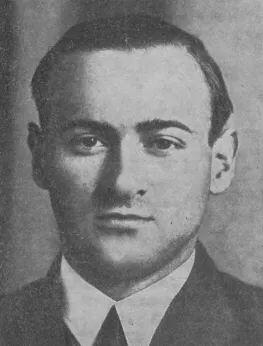
Friedrich Sämisch
Human Design Chart
Biography
Sämisch was a bookbinder before taking up chess full-time. As a player, he had a reputation for getting into time trouble though somewhat inconsistently he was a fine player of lightning chess. He was also said to be a fine player of blindfold chess, with world champion Alexander Alekhine observing: 'Of all the modern masters that I have had occasion to observe playing blindfold chess, it is Sämisch who interests me the most; his great technique, his speed and precision have always made a profound impression on me'.
Sämisch died on 16 August 1975 at age 78 in Berlin, West Germany.
Human Design Analysis: Friedrich Sämisch as Manifestor 6/2
Manifestor 6/2 — Design at a Glance
Friedrich Sämisch revealed himself as a pioneer and visionary whose design predisposed him to lead the world in new directions. Similar to an emperor in ancient Rome, he had great plans but did not wage the necessary wars himself; instead, he used others to achieve his goals. This stance made him polarizing: Because he often thought further ahead than those around him, he was loved and followed by some while being misunderstood or even hated by others. His greatest pain point lay in this constant misinterpretation of his visions. To find the right followers, it was crucial for him to inform others about his intentions early and precisely – this formed his ideal strategy. Living according to this guideline and following his inner authority rewarded him with a sense of internal peace. Acting against his design, however, he felt instead a persistent, deep anger within himself. His nature was thus characterized by the tension field between visionary leadership and the necessity for clear communication, where alignment with his strategy determined the difference between inner balance and frustration.
Emotional Authority
Friedrich Sämisch's design inclined towards emotional depth and wave-like feeling. His inner authority was defined through the Emotions Center, meaning that this center always took precedence over all other defined areas – a central mechanism independent of any chart characteristics. He was subject to a permanent emotional wave; his perception of the world was always colored by the current mood. What appeared inspiring in one moment could seem negative in the next. These feelings were only snapshots and not necessarily the final truth. Quick, spontaneous decisions from such an emotional state carried the risk of turning out unfavorably.
Therefore, it was essential for Friedrich Sämisch to take time for decisions. The process required patience and conscious suspension of judgment. By repeatedly reflecting on a situation, intense emotions gradually subsided. Only then did he gain emotional distance, leading to clarity and calmness. This path through the emotional wave was particularly important for long-term life decisions. Only when this maturation process was completed could he recognize his true answers and act without being misled by transient moods.
The 6/2 Profile — Role Model / Hermit
Friedrich Sämisch's design established a clear developmental arc: The early years were marked by experimentation and the principle of
Split Definition — Defined & Open Centers
Friedrich Sämisch's design was characterized by a reliable inner identity and clear self-awareness, supported by his defined G Center. This gave him a firm compass for his life direction and the ability to lead others without needing their consent. His communication was equally steady: The defined Throat Center ensured that he always expressed himself in the same way—clearly, honestly, and from a trustworthy source.
This stability contrasted with the depth of his emotional processing. His defined Solar Plexus acted as an inner authority; Friedrich Sämisch needed time to wait out the waves of his feelings before making decisions. Emotional clarity was not an immediate result for him but a process that required patience. Simultaneously, his defined Spleen Center functioned as an intuitive instance in the present moment. It provided spontaneous warning signals or confirmations about well-being that he could not rationalize but had to trust to stay healthy.
At the same time, Friedrich Sämisch was open to external influences in several areas. His open Head Center made him vulnerable to mental pressure and the need to find answers for others' questions. Often, he tended to engage with problems that were not his own business, driven by the fear of appearing confused or uninspired. Similarly, his open Ajna Center caused him to absorb concepts and opinions from his surroundings, making him flexible but also vulnerable to conditioned ways of thinking.
His open Heart Center lacked consistent willpower. Friedrich Sämisch was not designed to make promises or prove his worth through performance. Instead, he risked getting caught in a cycle of self-doubt and excessive commitments to gain recognition. His open Sacral Center also meant that he did not have a constant vital energy source. He absorbed the generative power of his environment, which could easily lead him to overexertion if he was not mindful of his energy balance and took breaks. Finally, his open Root Center reflected environmental stress, amplifying adrenalized pressure without producing it himself—a dynamic that could lead to burnout if ignored.
Channels for intuitive elegance and emotional transformation.
Friedrich Sämisch exhibited a rare ability to react spontaneously and appropriately to his environment without being guided by unfounded future anxieties. This attitude was rooted in the channel of Perfect Form 57-10, which connected his Spleen Center with his G Center. Through Gate 57, he had acute sensitivity to the quality of tones and moods; he listened less to words than to the intuitive wisdom behind them. This enabled him to behave in a way that perfected his physical well-being and carried him through life unburdened. His survival did not depend on strategic planning but on this momentary, intuitive integration of self-love and adaptability.
At the same time, he was driven by the channel of Transience 36-35 to constantly seek new experiences. This emotional manifesting channel connected his Solar Plexus Center with his Throat Center. Gate 76 perceived unfamiliarity as inadequacy and often generated internal crises to force movement. Gate 35 demanded change with the attitude: “I was there already, what's new?” Friedrich Sämisch learned through this restless desire for emotional depth. He had to accept his emotional wave and make decisions only when the vibrations were clear. His wisdom emerged from fully living these experiences, not from logical caution.
Additionally, gates like 6 (Friction), 15 (collective rhythm), and 49 (overturning/sacrifice) shaped his profile. Gate 37 promoted organic community structures while Gate 32 sought continuity. In his design, gates like 30 (feeling recognition), 50 (protective reflex/values), and 12 (restraint/poetry) were active. This configuration described a person who survived through intuitive adaptation but grew through emotional adventures. He often left his environment healthier not by intention but as a natural consequence of his authentic, unique expression.
Individual Circuitry — Circuit Signature
Friedrich Sämisch's design inclined towards emotional reflection that unfolded in waves. The Meaning-Finding Circuit connected his Throat Center with his Solar Plexus through the channel of Transience (Gates 35/36). This configuration ensured that inner feelings and experiences from the past did not remain private but were articulated as shared knowledge in words. Energy flowed cyclically: emotions rose, peaked, and subsided again, allowing Friedrich Sämisch to draw collectively useful insights from past events. Simultaneously, there was a separate, non-connected power structure. Through Shared Definition, these two systems existed side by side without directly overlapping. The second group connected the Identity Center with the Spleen (Gates 10/57, channel Perfect Form). This created a direct flow between the core of self and the intuitive instinct for survival. Here it was about securing one's existence through correct behavior and inner truth in the present moment. Since these two groups were energetically separate, Friedrich Sämisch experienced emotional processing of the past and intuitive self-preservation as distinct, parallel processes. One power served the sharing of meaning, the other individual strengthening through intuition. Both aspects shaped his essence without merging into a single, cohesive experience.
Left Angle Cross of the Plane 2
Friedrich Sämisch's design inclines towards clear, structured communication. The left cross of Level 2 describes a specific way of expression: thoughts were not experienced as diffuse streams but rather broken down into precise, logically sequential units. This configuration promoted the ability to organize complex relationships in such a way that they became comprehensible and applicable for others. It was a mechanism of clarity where information was not just passed on but presented in a manner that enhanced understanding and actionability for the recipient. Friedrich Sämisch demonstrated himself as someone who utilized this structured approach to reduce uncertainties and provide orientation. Level 2 emphasized the aspect of direct, unadulterated transmission of insights without unnecessary embellishment or abstraction. This shaped his interactions: he sought ways to present things so that their core was immediately recognizable. Such designs often support roles where mediation and didactic clarity are paramount, as the inner logic of the world is rendered tangible and understandable through this cross.
Saturn Return · Uranus Opposition · Chiron Return · 2nd Saturn Return — Life Cycles
Friedrich Sämisch's design indicated a tendency towards structural rigidity that intensified during his Saturn returns. In 1923, at the age of 27, he lost a game against Aaron Nimzowitsch, which became known as the "Immortal Zugzwang Game" in chess history. For his design, this first Saturn return marked a moment of testing where years of groundwork coalesced into a viable but painful result.
The phase around his Chiron return in 1944 (age 48) should have been a period of blooming, during which the meaning and purpose of his incarnation would unfold. Instead, Sämisch fell under the scrutiny of Nazi justice and was held in investigative custody for more than four months. This crisis interrupted the natural unfolding of his purpose and revealed the obstacles that his inner structure encountered in the outer world.
With his second Saturn return in 1950 (age 54), structural affirmation returned: The FIDE appointed him as a Grandmaster. This event highlighted how his design matured into final recognition after overcoming earlier tests and crises. The journey from the painful lesson of 1923 through suppression in 1944 to official commendation in 1950 illustrated how his inner architecture solidified and became visible when external circumstances allowed it.
Manifestor · Emotional Authority — Synthesis
Friedrich Sämisch lived a life path characterized by profound emotional processing and the resulting wisdom. As a Manifestor (Design View) with Emotional Authority (Authority), he needed time to let decisions mature – a wave of emotions that colored his perception and forced him to repeatedly rethink things (Centers). This inner oscillation corresponded with Line 6 of his Profile (Profile Role), which gathered wisdom through intense experience and reflection, to be passed on later. The Channel of Perfected Form (Channels-Gates) indicates that his behavior was always guided by intuitive awareness, an expression of the desire to bring his life into harmony and perfection.
A central paradox lay in the combination of his manifesting energy with the emotional wave pattern. He was destined to be an Initiator (Design View), yet his decisions had to go through a long process of emotional maturation – a tension field between quick action and necessary inner clarification. Experiences in the Meaning-Finding Circuit (Circuit) reinforced this cycle, as he learned from the past and shared these insights with others. This was evident in the defining events of his life (Cycles), from early defeats to later successes, each representing a phase of intense emotional confrontation followed by subsequent wisdom.
2 Defined Channels
Incarnation Cross - Left Angle Cross of the Plane 2
Solar Return
The Solar Return shows the moment when the sun returns to its exact birth position - your personal solar year.
Life Cycles
Discover the life cycles with a detailed triple view (birth chart, cycle chart, composite).
Human Design Profile
- Type
- Manifestor
- Strategy
- To inform others before acting
- Authority
- Emotional Authority
- Profile
- 6/2 - Role Model / Hermit
- Definition
- Split Definition
- Incarnation Cross
- Left Angle Cross of the Plane 2
- Date of Birth
- 20.09.1896 09:00
- Place of Birth
- Berlin, GER
Frequently Asked Questions
What was Friedrich Sämisch's Human Design type?
What profile did Friedrich Sämisch have?
Which authority guided Friedrich Sämisch?
What incarnation cross was assigned to Friedrich Sämisch?
When was Friedrich Sämisch born?
Discover your own Human Design
Are you also a Manifestor? Find out in a personal reading how to use your initiation power peacefully and dissolve resistance.
More Personalities
Back to overviewAldair

Cafu

Christian-Jaque

Joelinton

Kaká

Kesha