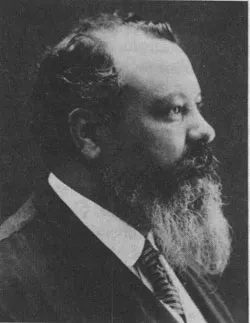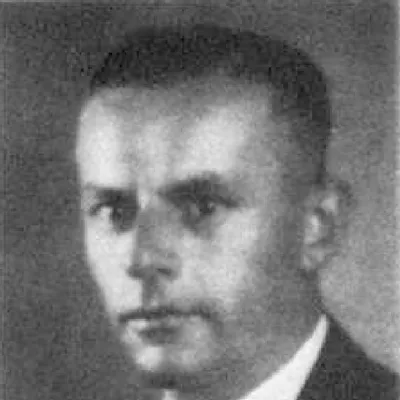
Friedrich Wilhelm Krüger
Human Design Chart
Biography
He became member of the Nazi party in 1929, of the SA in 1930 and of the SS in 1931. In 1939, he cumulated the functions of supreme head of the police and the SS (HSSPF) in Cracow and of responsible for security in the General Government (May 1942). He was appointed in this latest function when systematic mass killing of Jews in the districts of Lublin and Galicia were extended to all districts of the General Government. This is when the death centers Sobibor and Treblinka were created while Belzec was momentarily closed in order to improve its capacities for mass murder. On June 3, 1942, Krüger received the confirmation of his nomination. He was also informed about his new mission: handle all “Jewish affairs” (Judenangelegenheiten). On June 18, 1942, in Lublin, Himmler met Krüger and Globocnik, the coordinator of the Reinhard Operation. During the meeting, they discussed the extermination operations and Krüger received the order to keep an eye on the resettlement process. Himmler asked him to complete it before the end of the year. Krüger used the police and the SS to evacuate Jews from the ghettos. In June, for example, a first action was organized against the ghetto of Tarnow. Krüger ordered the local SD (security police) to “clean” the ghetto. The SD leant upon the Waffen SS and other Polish units. The second action took place on July 24, 1942. Jews who were not killed on the premises were deported to Belzec. The last action ended on September 12 and all Jews were then deported to Belzec. The liquidation of the ghetto of Tarnow was operated in August 1943 under Wilhelm Koppe’s direction (he was Krüger’s successor). Krüger coordinated the operation Erntefest.
Human Design Analysis: Friedrich Wilhelm Krüger as Manifestor 5/1
Manifestor 5/1 — Design at a Glance
Friedrich Wilhelm Krüger revealed himself as a pioneer and visionary whose design was geared towards actively leading the world into a new future. Similar to an emperor in ancient Rome, he had great plans and goals but did not personally wage the necessary wars or battles for them; instead, he delegated these tasks to others to secure foreign territories for his vision. This style of leadership often led to polarization: while some people loved his big dreams and followed him, others misunderstood or even rejected him because of these far-reaching perspectives. The pain point of not being understood was characteristic of him. To find the right followers, it was crucial for Friedrich Wilhelm Krüger to inform others about his intentions in a timely and precise manner. This strategy of information formed the core of his design. When he followed this strategy and trusted his inner authority, he was rewarded with a feeling of inner peace. If he lived against this design, however, he felt instead a persistent, deep anger within him. His path was thus marked by the tension between radiating great visions and the necessity to communicate them clearly to minimize resistance and gain support.
Splenic Authority
Friedrich Wilhelm Krüger displayed a basic attitude based on immediate inner certainty. His design determined that he did not make decisions through prolonged deliberation or emotional weighing, but rather through a fine, spontaneous impulse. This inner authority in the Spleen Center was only possible because his Emotional and Sacral Centers were open – a configuration characteristic of Projectors or Manifestors.
The Spleen served as his health and alarm system. It provided him with excellent survival intelligence: a spontaneous inner knowledge about whether a situation, environment, or society was right for him. His instinct and physical well-being served as reliable indicators. The first impulse was always considered the correct path since it immediately served his health. This allowed him to rigorously distance himself from harmful influences and take good care of himself.
This Spleen impulse, however, was very fine and only appeared once at a moment in time. It could easily be overshadowed by other influences, requiring high vigilance. Sometimes a short retreat helped to hear this signal clearly. Since Friedrich Wilhelm Krüger only knew what was right for him in the respective situation, his plans often changed last-minute. Long-term commitments were difficult; instead, he needed much freedom and flexibility to act spontaneously without unnecessarily restricting himself.
The 5/1 Profile — Heretic / Investigator
Friedrich Wilhelm Krüger's design pointed towards a double role: He was both the deep researcher and the public hero. As someone with Profile 5/1, he used the intense, isolated knowledge base of Line 1 to develop solutions that he then made available to others through the magnetic radiance of Line 5. Others often sought him out because they intuitively recognized that he possessed answers to their problems. This attraction was, however, connected with a specific challenge: Without clear boundaries, he risked being exhausted by constant inquiries and expectations from his environment. His inner self demanded the strategic intelligence of Gate 2 to target resources and pursue personal goals while Gate 49 in him carried an emotional wave of revolutionary ideas. The danger lay in these new principles failing without sufficient support in the social environment or waiting for emotional clarity. Friedrich Wilhelm Krüger had to learn to balance between necessary withdrawal for research and public appearances as a problem solver. Only through conscious boundary setting could he avoid his ego suffering under the unconscious projection of his role as guide or that his revolutionary impulses would sink into chaos. His life task was to connect deep insight with the ability to responsibly pass it on without sacrificing himself.
Split Definition — Defined & Open Centers
Friedrich Wilhelm Krüter was characterized by a constant internal mental pressure. His defined Head and Ajna centers created a permanent inspiration that shaped questions but did not provide direct energy for implementation. This state often led to confusion or doubt, as he had to learn not to turn the pressure into hasty actions but rather use it as a source of thought impulses. His thoughts were stable and trustworthy, yet without his own engines, he could only pass them on to others who were willing to receive them.
His communication was marked by his defined Throat center, serving as a pivot point to articulate these mental concepts into words. He spoke reliably from his mind, which however tended to make him hold his opinions as absolute truths. Simultaneously, he possessed strong willpower through his defined Heart center. This gave him the ability to keep promises and steer his own life. He sought recognition for his contribution and preferred to independently decide when to work or rest to maintain a healthy ego strength.
His defined Spleen center provided spontaneous intuitive perception of the moment. It delivered immediate warning signals or confirmations about health and well-being that he could not rationalize but had to accept. This body intelligence contrasted with his open centers. His open G center meant he did not have a fixed identity but blended into his environment. He tended to seek love and direction by waiting for initiations from others rather than initiating them himself.
His open Sacral center made him susceptible to exhaustion, as he amplified foreign vital energy without generating it himself. He had to learn to set boundaries and rest before fatigue set in. His open Solar Plexus absorbed emotions from the environment, leading him to experience other people’s moods as his own and avoid confrontation. Finally, his open Root center took on external stress that he could not release by doing more but only through acceptance or withdrawal.
Channels for logic, intuition and fulfilled commitments.
Friedrich Wilhelm Krüter was characterized by a healthy skepticism in his mind. The Logic Channel 63-4 connected his Head Center with the Ajna Center, ensuring he constantly filtered patterns to test their consistency. Doubt was not an obstacle for him but essential: Only through logical experimentation and proving consistent, verifiable processes could an answer be considered true. Unfounded belief had no place here; his predictions always relied on current data and recognizable structures to provide orientation for the collective.
Parallel to this, Friedrich Wilhelm Krüter possessed the ability to transform intuitive depth into masterful skillfulness. The Wavelength Channel 48-16 connected his Spleen Center with his Throat Center. Here, his inner intelligence (Gate 48) sought life-critical information while he refined precise skills through repeated practice and experimentation (Gate 16). This combination of instinct and technical mastery allowed him to develop talents beyond mere routine – a process requiring patience and engagement to be effective at the cellular level.
In the material world, Friedrich Wilhelm Krüter acted with a strong will for control and responsibility. The Money Line Channel 21-45 connected his Heart Center with his Throat Center. He was geared towards mastering the material plane and securing resources through his willpower. In doing so, he sought balance between hard work and the need to act self-determinedly. For him, it was crucial to maintain control over “How” and “When” of his activities to avoid stress for his heart while simultaneously serving the welfare of the tribe through reliable commitment and financial success.
Collective Circuitry — Circuit Signature
Friedrich Wilhelm Krüter's design tended towards strategic clarity and resource-oriented cooperation. He had a Shared Definition, meaning his energetic connections ran in two separate groups that did not directly communicate with each other. This created parallel existing forces rather than one single continuous flow.
The Understanding Circuit connected two distinct segments for him: on the one hand, Head to Ajna Center; on the other hand, Throat to Spleen Center. This configuration promoted an emotionless ratio and the ability to visually focus logical insights and make them useful for the future. The connection between Head and Ajna supported strategic thinking, while the channel between Throat and Spleen enabled sharing these rational structures.
Independently, the Ego Circuit worked through the channel between Heart and Throat Center. Here it was not about individual self-awareness but tribal dynamics: mutual support and the joint creation of resources. Since there was no connection to the Sacral center, this area relied on rest pauses to collect energy for material wealth generation. Friedrich Wilhelm Krüter thus showed himself as someone who developed clear logical strategies on one hand and bundled resources in cooperative structures on the other – two separate but equally important aspects of his nature.
Left Angle Cross of Defiance 1
Friedrich Wilhelm Krüger's design pointed towards a life characterized by inner tensions and the necessity of overcoming challenges. He was someone who did not strive for harmonious clarity but whose nature was oriented toward accepting and mastering challenges.
This attitude resulted from what is known as the "left challenge cross." In Human Design mechanics, this configuration does not describe a pre-fabricated solution or a simple goal but rather a dynamic process of learning through resistance. Friedrich Wilhelm Krüger lived in a structure that continuously encouraged him to confront difficulties, thereby gaining personal strength and clarity. It was not about passive suffering but an active engagement with life. The energy of this cross acted as a driving force, preventing him from retreating into comfort zones. Instead, it shaped his existence through the constant search for growth beyond obstacles. For Friedrich Wilhelm Krüger, this meant that his path was less defined by external validation and more by the internal integration of experiences life threw at him. His life task consisted in not avoiding these challenges but accepting them as a necessary part of his development and transforming them.
Saturn Return · Uranus Opposition · Chiron Return — Life Cycles
Friedrich Wilhelm Krügers design indicated a tendency towards structural breaks and necessary renewals that manifested as external upheavals during his life phases. This dynamic became active in 1931 when he was 37 years old, through his first Uranus return, a cycle often associated with sudden changes or the breaking of old bonds. In this year, he joined the SS – a decision reflecting the impulsive and dividing nature of the Uranus influence and marking a clear break from his previous career path.
Later came his Chiron return around 1942 (age 48), a period during which one's incarnation cross unfolds and the inner purpose becomes experiential. Here, there was no healing in an emotional sense but rather a completion of his designated role within the system. His confirmation for handling all "Jewish affairs" was the concrete expression of this fulfillment: His specific task became institutionalized and took its final form. These two events illustrate how the mechanical cycles of his design – first the disruptive cut by Uranus, then the purposeful affirmation by Chiron – significantly shaped his career and placed him in positions requiring structural enforcement and administrative finality.
Manifestor · Splenic Authority — Synthesis
Friedrich Wilhelm Krüger lived an internal drive that manifested in a continuous process of questioning and understanding. His design as a Manifestor (with defined Head and Ajna Centers) shaped his ability to recognize patterns and draw logical conclusions (Channel 63-4), which he further deepened through constant mental pressure towards analysis and doubt. This intellectual depth, coupled with the Profile of Hero/Explorer, led him to accumulate knowledge and make it available to others – a tendency that drew attention from others but also continuously prompted requests for further explanations. The Spleen Authority underscored an instinctive compass for his own well-being, helping him to define boundaries in environments that met his needs.
A central paradox lay in the combination of his manifesting nature and the defined Head Center. He was destined to take initiatives and shape the world, yet his mind demanded constant validation and logical consistency. This led to a tension between the impulsive action of a Pioneer and the necessity to filter every action through a lens of doubt and analysis. Documented events showed that he operated in areas requiring both strategic planning (Cross of Reptile 1) as well as quick decisions, intensifying this inner conflict.
3 Defined Channels
Incarnation Cross - Left Angle Cross of Defiance 1
Solar Return
The Solar Return shows the moment when the sun returns to its exact birth position - your personal solar year.
Life Cycles
Discover the life cycles with a detailed triple view (birth chart, cycle chart, composite).
Human Design Profile
- Type
- Manifestor
- Strategy
- To inform others before acting
- Authority
- Splenic Authority
- Profile
- 5/1 - Heretic / Investigator
- Definition
- Split Definition
- Incarnation Cross
- Left Angle Cross of Defiance 1
- Date of Birth
- 08.05.1894 01:00
- Place of Birth
- Strasbourg, France
Frequently Asked Questions
What was Friedrich Wilhelm Krüter's Human Design type?
What Profile did Friedrich Wilhelm Krüter have?
What Authority did Friedrich Wilhelm Krüter have?
Which incarnation cross was active for Friedrich Wilhelm Krüter?
When was Friedrich Wilhelm Krüter born?
Discover your own Human Design
Are you also a Manifestor? Find out in a personal reading how to use your initiation power peacefully and dissolve resistance.
More Personalities
Back to overviewChristian-Jaque
Kesha

Laurent-Eynac
Lucebert
Masaccio
Papus