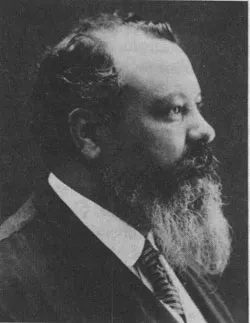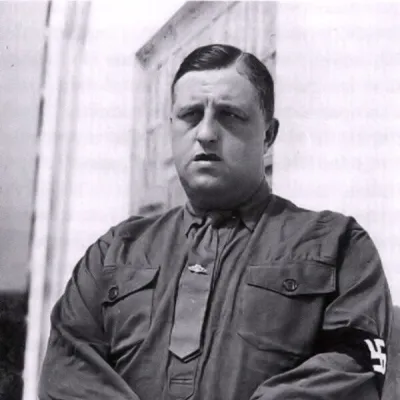
Frits Clausen
Human Design Chart
Biography
Born in Aabenraa, since 1864 a part of Prussia, Clausen served in the German Army during World War I. After the war, Clausen studied medicine in Heidelberg and became a doctor in 1924, after which he returned to Aabenraa, which had been voted back to Denmark in 1920, and set up a practice. Clausen initially became involved in politics as an advocate of Aabenraa once again becoming a part of Germany. Still, he eventually turned to Danish politics, advocating causes favouring the German minority in southern Jutland.
Clausen initially became a conservative party member, but he eventually resigned and, in 1931, joined the DNSAP. Two years later, Clausen ousted the leadership committee of the party (whose members were Einar Jørgensen, C. C. Hansen, and Cay Lembcke) from power and became the party's sole leader.
Under Clausen's direction, the party essentially espoused nationalism and called for a stronger relationship between Denmark and Nazi Germany. At the height of its popularity, the DNSAP had about 20,000 members and 20,000 sympathizers. However, the party fared relatively poorly in the 1939 elections, winning only three seats in the Folketing. A year later, when Germany invaded Denmark, Clausen strongly supported the German occupation and took credit for the lenient way Germany governed the country.
The Germans attempted to reward Clausen for his services by persuading King Christian X to let Clausen and his followers have roles in the nation's government in 1940 and 1943, but the King opposed any such suggestions. The German government was unwilling to forcibly put him in charge of Denmark for fear of angering its people, although there were talks of doing so in 1940 and 1942. The Germans did hope, however, that Clausen would legally seize power over the nation in the 1943 elections.
Frits Clausen as a Manifestor 2/4 in Human Design
Manifestor 2/4 — Design at a Glance
Frits Clausen revealed himself as someone with a fundamental pioneering energy aimed at setting new directions and guiding others into a changed future. His design corresponds to the Manifestor type, a configuration that does not primarily focus on cooperation or adapting to existing structures but rather initiating changes. Similar to a strategic leader, he possessed an inner vision and the power to bring it into the world without having to execute every single step himself.
However, this configuration also brought specific challenges: His thinking often extended beyond his environment, leading him to be frequently misunderstood or polarizing others. While some were attracted by his ideas and followed him, others rejected or even resisted him solely due to the magnitude of his visions. The ideal strategy for this design was to clearly communicate these intentions before taking action. By informing others, he could find the right resonance and minimize unnecessary friction. If he lived according to this strategy, it led to a state of inner peace; if he ignored it, however, it often resulted in prolonged feelings of anger or frustration over environmental resistance.
Splenic Authority
Frits Clausen revealed himself as someone who relied solely on a fine, momentary impulse for his orientation. His internal authority lay in the defined Spleen Center, an area that controls survival intelligence and health awareness. Since both his Emotional and Sacral Centers were open – a configuration only Projectors or Manifestors exhibit – he was dependent on hearing this specific instinct. This impulse appeared spontaneously and uniquely; it signaled immediately whether a situation or environment was healthy for him. Frits Clausen therefore had to make decisions in the present moment. The first thought was considered the right path, rigorously separating harmful influences and protecting his well-being. Long-term planning stood against this nature, as inner truth only revealed itself in concrete moments. Flexibility was essential for him not to be distracted from this fine signal by rigid commitments. The challenge lay in practicing vigilance so that this short impulse would not be drowned out by external advice or excessive analysis. A temporary withdrawal served to clearly hear the Spleen voice and remain free for what proved right in each moment.
The 2/4 Profile — Hermit / Opportunist
Frits Clausen revealed himself as someone who constantly oscillated between a deep need for retreat and the desire for close community. This Profile 2/4 set a tension: On one hand, he sought solitude to gain inner clarity; on the other hand, it drew him into the circle of his favorite people. Important for his design was the ability to clearly communicate these phases – when he needed company and when he wanted to be undisturbed. During 'Me-Time', he immersed himself in internal processes to regenerate. Only after this need was satisfied did he emerge from his 'cave' to maintain the network. These cycles allowed him to reflect on external knowledge and develop brilliant ideas from it. His Line 2 (Gate 43) brought a particular readiness and deep engagement with itself. He projected his knowledge in an extraordinary way, where education was crucial not to remain theoretical. Sometimes, his unique thought processes and insights were perceived as unconventional or even 'crazy' from the outside. Simultaneously, the energy of Line 4 (Gate 4) acted like a player who understands the game of knowledge. Here there was a danger of confusing fantasies with facts, but through quick learning and exposing deceptions, he found liberation. This combination shaped him as someone navigating between deep innerness and social connection to gather and share insights.
Single Definition — Defined & Open Centers
Frits Clausen's Human Design profile indicated a tendency towards constant mental activity and clear communication. His defined Ajna Center ensured a continuous, trustworthy thought process; he was not easily influenced by external factors in his concepts. This mental energy flowed directly into his defined Throat Center, allowing him to express what he thought – a reliable voice that carried his inner processes outward.
At the same time, Frits Clausen had a defined Spleen Center. This gave him a sharp instinct for health and well-being in the present moment. He tended to sense intuitive warning signals that appeared only once; they did not allow rational analysis at the moment but required immediate trust in his body. His defined Root Center also provided a firm, adrenalized push to move forward materially and process stress in a specific way, giving him stability in everyday life.
In contrast, Frits Clausen was vulnerable to conditioning through several open centers. His open Head Center lacked consistent access to inspiration; he tended to engage with foreign questions or doubts and sometimes sought answers to problems that were not his own concern. The open G Center meant a lack of firm identity; he often adapted to the environment and had to learn that he could not find a fixed direction but rather initiated it through correct places and relationships.
His open Heart Center made him sensitive to questions of self-worth. He was not designed to prove willpower or make promises; attempting to legitimize himself through performance often led into cycles of disappointment. The open Sacral Center meant no constant energy flow; he absorbed the vitality of others and risked overexertion, as he did not know when 'enough' was enough. Finally, his open Solar Plexus absorbed foreign emotions. He intensely felt the emotional climate of his environment but had to learn not to personalize these feelings to remain emotionally stable.
Channels for structuring, intuitive experimentation and critical judgment.
Frits Clausen combined intuitive depth with technical precision in his work. His profile indicated a tendency towards perfection: he sought hidden connections and worked them through repeated experimentation into mastered skills. This attitude stemmed from the Channel of Wave Length 48-16, which linked the Spleen Center to the Throat Center. Here, the inner intelligence of Gate 48 worked together with the experimental dexterity of Gate 16, transforming raw talent into recognized skill through discipline.
This process was supported by the Channel of Judgment 58-18, which channeled Root energy into the Spleen Center. It gave him a drive to question and correct patterns. Frits Clausen used this logic not for criticism but to find solutions; he waited to be asked before offering his diagnosis, avoiding conflicts and making his advice effective.
Additionally, the Channel of Structuring 23-43 shaped his expression. It conveyed complex insights from the Ajna Center through the Throat Center into a form that others could understand. His thinking often seemed prescient, but he learned to wait for the right timing so that his innovative concepts would be accepted.
Furthermore, Gates like 4 (Formulation for Future Security) and 57 (intuitive clarity in the present moment) helped him recognize suspicious patterns early on and communicate them clearly. His ability to learn through interaction (Gate 35) and continuously contribute (Gate 8) rounded out a profile designed for mastery, correction, and clear transmission of knowledge.
Collective Circuitry — Circuit Signature
Frits Clausen's Human Design indicated a tendency towards structured, rational analysis that directly translated into tangible results. He was someone who not only followed logical connections mentally but also communicated and implemented them clearly. This trait resulted from his simple definition: Head, Ajna, Spleen, Root, and Throat Centers formed one continuous energetic flow.
This overall flow divided into two specific circuits. The Understanding Circuit connected the Throat Center with the Spleen and Root Centers in him. This created a direct line from intuitive perception (Spleen) through energy readiness (Root) to verbal articulation. Here, it was about sharing logical, rational insights – free of disruptive emotion – to structure strategies and lead society towards a better future.
Parallel to this, the Knowledge Circuit worked, connecting Frits Clausen's Ajna Center with his Throat Center. This channel stood for structuring: The ability to bring mental concepts (Ajna) into orderly, understandable forms and express them. Although both circuits used the Throat Center, their impulses came from different sources – once from rational strategy, once from mental shaping – which united in expression. Thus, these energies shaped his way of transforming new things and initiating change through clear, structured expression.
Right Angle Cross of Explanation 4
Frits Clausens design carried the signature of the right cross of statement four. This configuration was characterized by a profound, often silent dedication to what was felt as divine or absolutely true. It wasn't about loud prophecy but rather an inner certainty that led to the willingness to proclaim and live this truth.
In Human Design, this cross marks a specific energetic focus on spiritual revelation. The energy flows from deep internal authority towards external communication. Those born with this pattern tend to offer their own experiences as guidance for others not out of arrogance but driven by the urge to share the recognized truth. It is a path of affirmation and trust in the unseen.
For Frits Clausen, this meant a way of living based on inner clarity. His authority did not lie in logical analysis or external validation but in a direct intuitive connection with his essence. This structure fostered humility towards the great while also fostering courage to openly express these insights. It was a path of showing how one can walk through the world with unshakable faith without forcing others to believe the same. The energy of this cross worked as a silent affirmation for all who were ready to accept this kind of truth.
Saturn Return · Uranus Opposition · Chiron Return — Life Cycles
Frits Clausen showed himself in his midlife as someone who had to endure immense external expectations and internal tensions. This dynamic was reflected in 1933 when he became the leader of the Danish National Socialists at age 40. This career leap coincided with a Uranus opposition, an astrological-human design aspect often marking sudden breaks or breaking out of old structures forcing individuals to adapt to new, often overwhelming realities.
Later, in 1944 at age 51, Clausen experienced his Chiron Return. In Human Design mechanics, this is not a time for wound healing but rather a cycle of blooming and fulfilling the incarnation purpose – provided one's own strategy was lived. For Clausen, however, this phase appeared as a crisis: he was forced to resign from his party leadership due to a triumvirate. This compulsion marked the end of an era and forced confrontation with the true life task beyond the external power structures that had previously dominated.
Manifestor · Splenic Authority — Synthesis
Frits Clausen lived a life shaped by an inner necessity to tread new paths and guide others – a pattern reinforced by his type as a Manifestor (with the need to initiate things) and defined in the mental center. This center enabled him to develop concepts and convey them with force, making him a prominent figure. The connection of Spleen Center and Throat Center through Channel Wave Length pointed towards deep inner wisdom that he instinctively recognized and brought into the world often coupled with the desire to perfect skills and offer solutions. His profile as a Natural Talent and Networker showed in his ability to form relationships but also in constant oscillation between the need for withdrawal and social interaction.
A central paradox lay in the tension between his drive towards leadership and the potential for misunderstandings (as a Manifestor) along with an inner desire for separation and autonomy, reinforced by Profile 2/4. He was destined to initiate changes but also needed phases of retreat to maintain his internal clarity and correctly interpret impulses from his body (Spleen Center). The documented events – rise into leadership followed by crisis – reflected this dynamic: a life between living out visions and the consequences resulting from polarization.
3 Defined Channels
Incarnation Cross - Right Angle Cross of Explanation 4
Solar Return
The Solar Return shows the moment when the sun returns to its exact birth position - your personal solar year.
Life Cycles
Discover the life cycles with a detailed triple view (birth chart, cycle chart, composite).
Human Design Profile
- Type
- Manifestor
- Strategy
- To inform others before acting
- Authority
- Splenic Authority
- Profile
- 2/4 - Hermit / Opportunist
- Definition
- Single Definition
- Incarnation Cross
- Right Angle Cross of Explanation 4
- Date of Birth
- 12.11.1893 15:45
- Place of Birth
- Åbenrå, Denmark
Frequently Asked Questions
What was Frits Clausen's Human Design type?
What Profile did Frits Clausen have in Human Design?
Which Authority guided Frits Clausen?
What incarnation cross did Frits Clausen have?
When was Frits Clausen born?
Discover your own Human Design
Are you also a Manifestor? Find out in a personal reading how to use your initiation power peacefully and dissolve resistance.
More Personalities
Back to overviewChristian-Jaque
Kesha

Laurent-Eynac
Lucebert
Masaccio

Papus