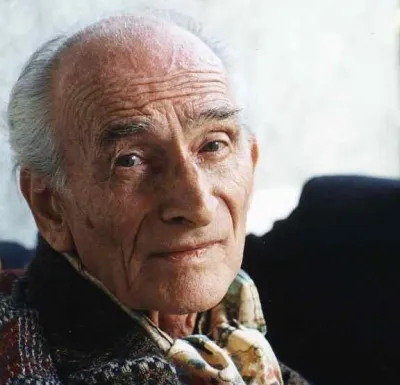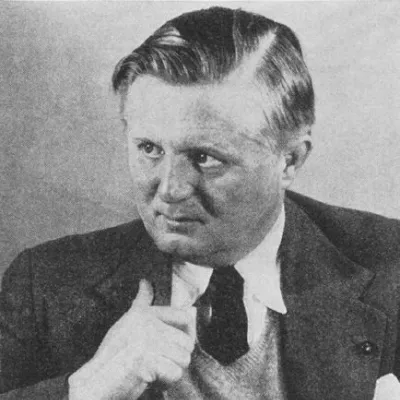
Fritz Busch
Human Design Chart
Biography
Died in London on 14 September 1951.
The Human Design of Fritz Busch: Manifesting Generator 1/3
Manifesting Generator 1/3 — Design at a Glance
Fritz Busch revealed himself as someone who possessed hybrid energy: the constant power of a Generator, paired with the lightning-fast execution power of a Manifestor. His design suggested that he could draw things into his life by skipping steps and achieving rapid results. However, this speed was a double-edged sword. If he moved too quickly, he risked neglecting important stages, forcing him to backtrack later to fill in gaps – a potential source of frustration, as his non-self theme lay in fighting against this natural flow.
Furthermore, his system tended to react to multiple impulses simultaneously. Instead of focusing on one thing, he often started several projects at once. This worked seamlessly only if he waited strictly for his inner confirmation. The strategy was not to initiate himself but to respond to life and act only when his Sacral Center gave a clear “yes”. As long as he felt this inner approval and fell into a playful mode, he drew deep satisfaction from his work. Parallelism was no obstacle for him but the prerequisite for his creative power, as long as he did not work against his own authority.
Emotional Authority
Fritz Busch revealed himself as someone who never made decisions immediately but gave himself time for his emotional wave to subside. His design carried Emotional Authority, meaning his defined Emotional Center held inner guidance – regardless of which other centers were also defined. This configuration subjected him to a constant up and down of feelings. The world appeared to him always colored by the current mood: one moment totally excited about something, the next moment completely negative about the same thing.
This feeling in the moment was, however, only a snapshot, not a final judgment. Quick, spontaneous decisions based on such emotion could have had negative consequences for him, as the first impression did not yet represent his truth. Instead, his mechanics required patience. He had to let decisions mature, let himself be properly courted, and ask himself multiple times. Only with time did the intense feelings subside, he gained emotional distance, and clarity and calmness set in. This process of “sleeping on it” was essential, especially for long-term decisions that significantly influenced his life course. By waiting for emotional clarity, he ensured that his choice was not based on a passing mood wave but on a deeper, more comprehensive insight.
The 1/3 Profile — Investigator / Martyr
Fritz Busch revealed himself as someone who did not just collect knowledge theoretically but validated it through practical application and the conscious experience of failure. His design as a Researcher and Experimenter (Profile 1/3) established a fundamental stance where learning and action were inseparable. Line 1 anchored him in the foundation of research, where he accepted resistance and uncertainty as necessary prerequisites for genuine progress. Without this willingness to overcome crises, no stable understanding would have emerged. At the same time, Line 3 drove him to test ideas through trial and error. He recognized that concepts could be transient and only prove their validity through the test in reality. This combination of deep theoretical analysis and pragmatic experimentation meant that his judgment was always based on a double check: both in the mind and in practice. If he saw a method or approach as sustainable, he had previously both intellectually penetrated it and tested it rigorously in everyday life. His path was marked by overcoming the fear of the unknown by actively moving towards implementation and learning from the resulting mistakes. Thus, the potential paralysis from too much planning became a dynamic force of adaptation and renewal.
Single Definition — Defined & Open Centers
Fritz Busch was someone who exhibited a reliable inner identity and a clear life direction. His defined G Center provided him with a stable self-esteem, allowing him to love others without becoming dependent on them. This solid foundation was supported by his defined Sacral Center, a source of immense vital energy. As a Generator, his design was set up to react to life rather than initiate actions. By waiting for an internal confirmation - the 'yes' tone from the Sacral Center - he could use his energy for tasks that deeply satisfied him, thereby avoiding frustration.
His defined Solar Plexus Center served as an inner authority. It demanded that he not make decisions impulsively but wait for the emotional wave to subside. Only when emotions had calmed and emotional clarity had set in would he act correctly. This patience allowed him to grasp the depth of situations before committing.
At the same time, Fritz Busch was vulnerable to external conditioning through several open centers. His open Head Center made him susceptible to mental pressure and the questions of others, leading him to engage with problems that were not his own. The open Ajna Center amplified this flexibility of thought but could also lead him to adopt foreign concepts or opinions as his own truth.
His open Heart Center lacked consistent willpower. Here, there was a risk of making promises to prove his worth, often leading to overextension, as the energy for this was not consistently available. Additionally, his open Root Center absorbed stress from the environment, creating an adrenalized pressure that could push him to do more than his design allowed, making him susceptible to burnout. Finally, his open Spleen Center reflected the fears and well-being of his environment. It was important for him to avoid spontaneous decisions and learn to distinguish between his own intuition and absorbed impulses to maintain his health and inner balance.
Channels for rhythm, intimacy, presence, self-expression and manifestation.
Fritz Busch's life was driven by a deep, biological pulse that propelled him forward relentlessly. This fundamental stance came from the Rhythm Channel 5-15, connecting his Sacral Center to his G Center. Through Gate 5, he adhered to firm habits and rituals, while Gate 15 integrated the diversity of society into his life flow. This channel created a universal rhythm, closely linking him to the natural world's flow and shielding him from the arrogance of the mind and emotional fluctuations. His timing was internally determined and often unconsciously led others into their own rhythm.
Parallel to this, Fritz Busch possessed a powerful, intimate energy that deepened relationships. The Pairing Channel 59-6 connected his Sacral Center to his Solar Plexus Center. Here, the sexuality of Gate 59 merged with the emotional wave of Gate 6, defining intimacy as the core of his creative essence. This connection required patience, as the emotional wave set the timing for friendships and partnerships before deeper trust could develop.
Furthermore, Fritz Busch spoke a clear language of self-affirmation. The Awakening Channel 10-20 connected his G Center to his Throat Center. Gate 10 ensured an appearance based on self-love and acceptance, while Gate 20 transformed this knowledge into immediate action in the 'now'. This was reinforced by the Exploration Channel 34-10, which gave him the inner strength (Gate 34) to hold onto his convictions and honor himself. Finally, the Charisma Channel 34-20 endowed him with the ability to express this energy directly. His generative power from Gate 34 met the expression of Gate 20, allowing him to act in the moment and inspire others through his vitality, as long as he listened to his inner response.
Individual Circuitry — Circuit Signature
Fritz Busch was a person with a firm inner core and clear convictions. His design directly connected the Identity and Sacral Centers, fostering a strong individuality. This connection supported his self-esteem and allowed him to live his own way without being dictated by external expectations.
The Centering Circuit worked through the Exploration Channel. It connected the Identity Center to the Sacral Center. This gave him the strength to explore and reinforce his inner truth. Although this circuit often brings difficulties in expressing firm convictions due to the Throat Center not being directly involved, it shaped his character's firmness.
Additionally, the Understanding Circuit worked through the Rhythm Channel. Here, too, Identity and Sacral Centers were connected. This supported him in sharing logical insights and creating structures based on reason. The energy was focused and future-oriented, free from emotional influence.
The Protector Circuit worked through the Pairing Channel. It connected the Sacral Center to the Solar Plexus Center. This brought ancient energies of protection and care into play. It was about preserving and nurturing to secure the survival and stability of his own genetics.
Finally, the Integration Circuit connected the Throat, Sacral, and Identity Centers. Through the Awakening and Charisma Channels, he could express his inner strength in the now. This allowed him to implement intuitive knowledge and correct behavior, thus securing his survival.
Right Angle Cross of Eden 1
Fritz Busch's design laid a tendency towards a deep, often painful confrontation with one's own existence. This configuration, the right cross of Eden 1, described a life dynamic that was marked by the consciousness of loss and impermanence. It was not mere melancholy, but a fundamental experience of separation from the origin, which triggered a constant search for meaning and connection.
This mechanism worked as an inner drive to find one's own identity in a context that went beyond the purely material. The right cross of Eden 1 connected the experience of suffering with the potential for spiritual or creative transcendence. Fritz Busch showed through this structure as someone who did not ignore the dark sides of existence, but used them as a necessary path to a deeper understanding. The configuration demanded an integration of pain and insight, thereby creating a particular intensity in perception and expression. It was an energy that gained a paradoxical strength through the acceptance of one's own finiteness, manifesting in a clear, yet often solitary, stance. This dynamic shaped his inner landscape and significantly determined how he dealt with the challenges of his path, by forcing a continuous reflection on his place in the world.
Saturn Return · Uranus Opposition · Chiron Return · 2nd Saturn Return — Life Cycles
Fritz Busch's design showed a tendency to prove itself in phases of structuring and transformation. The first Saturn return often marked the transition from training to an established role. In 1918, at the age of 28, he ended his work as music director for the Aachen Symphony Orchestra. This step highlighted the Saturn energy: letting go of old structures to make way for new, solid foundations.
Ten years later, in 1928, the Uranus opposition arrived. This cycle often demands radical innovations and breaking with the familiar. In this year, Busch conducted the premiere of "The Egyptian Helen". The Uranus energy pushed for innovation and the introduction of something new, which was evident in this artistic premiere.
The Chiron return around the age of 50 is a fulfillment cycle in which the inner sense increasingly unfolds. In 1940, at the age of 50, Busch fled with his wife Grete to America. This step was not just a reaction to a crisis, but a necessary movement to continue and fulfill his life's mission in a new context.
The second Saturn return then confirmed the achieved stability. In 1945, at the age of 55, he became the artistic director of the Metropolitan Opera in New York. This position represented the condensation of his years of work into a solid, recognized structure. His design thus followed a clear pattern: through structuring, transformation, and inner alignment towards an established, meaningful position.
Manifesting Generator · Emotional Authority — Synthesis
Fritz Busch lived a life path characterized by a deep, sacral energy (Sacral Center) and an unstoppable urge to explore and implement (Manifesting Generator, Profile 1/3). This drive, combined with the emotional wave (Emotional Authority), led him to a constant process of testing and weighing options before making decisions – a process that allowed him to gain insights from his own experiences and to advocate for them with conviction (Projector Strategy). The connection of energy and inner guidance created a dynamic in which he was guided both by external impulses and internal processes, which was evident in his professional journey (documented events during Saturn Return and Uranus Opposition).
A central paradox in Fritz Busch's design lay in the tension between the need to act quickly and set things in motion (Manifesting Generator) and the necessity to let emotional decisions mature (Emotional Authority). He could get caught up in the flow of sacral energy and act swiftly (Channel of Rhythm), yet at the same time, his inner authority required patience and the reconsideration of decisions. This ambivalence led to a dance between initiation and reaction, between trying new paths and re-evaluating established patterns, which shaped his life path.
5 Defined Channels
Incarnation Cross - Right Angle Cross of Eden 1
Solar Return
The Solar Return shows the moment when the sun returns to its exact birth position - your personal solar year.
Life Cycles
Discover the life cycles with a detailed triple view (birth chart, cycle chart, composite).
Human Design Profile
- Strategy
- To respond - wait for something to respond to
- Authority
- Emotional Authority
- Profile
- 1/3 - Investigator / Martyr
- Definition
- Single Definition
- Incarnation Cross
- Right Angle Cross of Eden 1
- Date of Birth
- 13.03.1890 09:00
- Place of Birth
- Siegen, Germany
Frequently Asked Questions
What was Fritz Busch's Human Design type?
What profile did Fritz Busch have?
What authority did Fritz Busch have?
What incarnation cross did Fritz Busch have?
When was Fritz Busch born?
Discover your own Human Design
Are you also a Manifesting Generator? Find out in a personal reading how to unfold your multi-talents and direct your energy wisely.
More Personalities
Back to overviewAldair

Alizée

Angeli

Arletty

Artus

Balthus