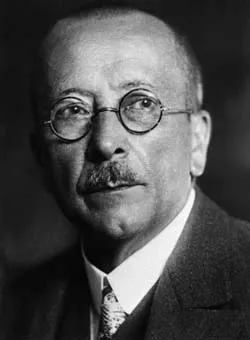
Fritz Pregl
Human Design Chart
Biography
Fritz Pregl died on 13 December 1930 at age 61 in Graz, Styria, Austria.
What does Manifesting Generator 6/2 mean for Fritz Pregl?
Manifesting Generator 6/2 — Design at a Glance
Fritz Pregl's design suggests a tendency towards hybrid work methods: He has the constant energy source of a Generator but also possesses the ability to skip steps and quickly draw results into his life. This configuration combines the need to respond to inner impulses with characteristic speed in action.
As an Manifesting Generator, Fritz Pregl showed himself as someone who could pursue multiple projects simultaneously. The mechanics of his chart describe this ability not as distraction, but as a natural state provided that internal consent – the "yes" of the sacral center – is maintained. In this mode, deep satisfaction entered; work became play, and variety served to maintain creative power.
However, this acceleration carried risks. If Fritz Pregl acted too quickly or omitted important intermediate steps, it could lead to frustration – the specific non-self theme of this type. Also, pursuing multiple impulses simultaneously without clear internal authority threatened to transform initial enthusiasm into exhaustion. Therefore, his strategy was first to respond to life impulses and then proceed only when the energy clearly confirmed that a path was right. Regularly checking this inner resonance allowed him to use his speed constructively, without blocking himself through hasty decisions or unfinished paths. Thus, he could derive satisfaction from his work rather than struggling against his own nature.
Emotional Authority
Fritz Pregls design inclines towards inner restlessness and emotional wave movements. His inner authority is Emotional Authority, carried by the defined Emotional Center. In Human Design mechanics, this center is considered primary: Whenever it is activated, it determines decision-making regardless of which other centers are also defined. This configuration meant for him that his perception was always colored by the current mood – moments of intense enthusiasm could quickly turn into negative evaluations. An immediate feeling only provided a provisional snapshot, not necessarily the deeper truth. Quick, spontaneous decisions from such an emotional state carried the risk of being detrimental. The mechanics therefore required patience and time. By letting decisions sleep and reviewing them multiple times, he allowed strong emotional fluctuations to subside. Only with this gained emotional distance did clarity and calmness set in. This process of maturation was particularly relevant for long-term life directions that significantly influenced his life course. Through waiting, he managed to look beyond the superficial emotional wave and gain more grounded insights rather than being led by passing impulses.
The 6/2 Profile — Role Model / Hermit
Fritz Pregls Design set a tendency towards experimental learning in early years, followed by a phase of intense distancing. As a person with Profile 6/2, he appeared before the age of thirty as a natural talent who learned through trial and error. This phase was marked by withdrawal after mistakes to gather experiences. Around his thirtieth year, the sixth line activated. Then Pregl metaphorically retreated into a cave to look back on his past experiments with great distance. This period of reflection served for healing and deep self-knowledge. From this isolation, he emerged later as a wise person whose life wisdom attracted others.
The mechanics show: Gate 40 went through three phases until the age of thirty, focused on contracts and peace. It identified inferior forces in the community and exercised strong willpower to resist unfair demands, leading to the dethroning of such powers. At the same time, Gate 35 represented a blocked creative force that could be brutal with incorrect life conduct. This line radiated boredom and demanded new experiences. Creativity and progress were dependent on the phases of ebb and flow of this energy. Pregl showed a strong desire for change and an anxiety about stagnation, which underscored his drive for continuous progress.
Split Definition — Defined & Open Centers
Fritz Pregl revealed himself as someone whose ability to act was based on a deep inner resonance. His design was characterized by defined centers in Sacral, Heart, Root, Solar Plexus, and Throat. This configuration gave him a constant source of generative energy (Sacral), which he did not initiate but responded to external impulses. His willpower (Heart) and the driving pressure for existential security (Root) were always available to keep promises and act materially.
However, crucial was his emotional authority: The defined Solar Plexus Center required him to wait out emotional waves before making decisions until clarity emerged. Only then could he communicate these insights clearly and reliably through his defined Throat Center. His voice was not an impulsive eruption but the result of a mature inner truth.
In contrast, his vulnerabilities were revealed in the undefined centers Head, Ajna, G-Center, and Spleen. Without a set mental structure (Head/Ajna), he tended to absorb foreign ideas or confusion rather than assert his own conceptual truths. The open G-Center left him unable to define his identity and direction from within; he relied on being initiated in correct environments to feel where he belonged. Additionally, lacking the spontaneous intuitive security of Spleen could make him vulnerable to survival fears or clinging to unhealthy structures if he did not trust his inner authority. His strength lay in patient reaction and waiting for emotional clarity, while mental frenzy or searching for a firm identity distanced him from his source of power.
Channels for community, focus and emotional change.
Fritz Pregl's design tended towards extreme focus paired with an emotional drive for change. The Concentration Channel 52-9 connected his Root Center to the Sacral Center. This created a calm, passive pressure (Gate 52) to hold still and keep distractions at bay while Gate 9 maintained his focus on details and facts. As Format Energy, this channel carried the qualities of the Understanding Circuit: logic as a step-by-step process that needed time to correct and perfect patterns. His energy was effective when he was quiet enough to assess all aspects before his Sacral Center reacted. Without an appropriate focus, this energy could become restless.
Simultaneously, the Transience Channel 36-35 showed an emotional manifesting impulse. This channel connected Solar Plexus with Throat and dedicated itself to the prudence of logic to move things towards new experience. Gate 35 actively sought change ("I've been there before"), while emotional Gate 36 perceived inexperience as inadequacy, sometimes generating crises just to bring about movement. This restless longing drove him to explore the depth of his feelings, contributing to maturity. He learned through experience, often by fully immersing himself in new situations, even if they were temporary.
The Community Channel 37-40 connected Solar Plexus with Heart and emphasized the organic nature of cohesion. Gate 40 was willing to work to provide for loved ones but needed rewards and breaks. Gate 37 sought recognition and his place within the whole. This channel secured tribal business through emotional clarity and willpower. A good deal could not be made spontaneously but had to be carefully considered over time so it would benefit both sides. He waited for the right invitation to become part of an organization and built bridges between individuals so everyone found a honorable place in the community.
Influential Gates like Gate 5 (Rhythm) supported this process through firm habits, while Gate 31 (Transmission) understood leadership as energetic transmission. Gate 41 (Evolution/Feeling) and Gate 23 (Understanding/Amorality) promoted development through specific experiences and explaining differences. Gate 33 (Reflection) strengthened withdrawal to process experiences. Gate 19 (Resources/Territory) needed a safe environment, while Gate 45 (Tribe Hierarchy) expressed willpower. Gate 59 (Coupling/Binding) pursued a genetic strategy for union without personal preferences. Gate 53 (Freedom/Pioneer) enabled new paths, and Gate 51 (Willpower/Shock) responded with adaptability to challenges.
Collective Circuitry — Circuit Signature
Fritz Pregl's design tended towards structured concentration and emotional reflection, separated by a clear energetic structure. With his Split Definition, there were two parallel, not directly connected power fields: one from Sacral and Root Centers, the other from Throat, Solar Plexus, and Heart Centers.
In the Understanding Circuit, the Concentration Channel (Gates 9–52) worked exclusively between Fritz Pregl's Sacral and Root Centers. This promoted focused rational energy that directed logical insights free of emotional influence into the future – an "emotionless ratio" driven by constant life force.
Parallel to this, in the Meaning Circuit, the Transience Channel (Gates 35–36) connected Throat with Solar Plexus. Here it was about cyclical emotional waves from the past. Fritz Pregl reflected on past events to grasp their meaning and share these felt insights with the collective for mutual learning.
A third aspect came from the Ego Circuit via Community Channel (Gates 40–37). This connected Heart with Solar Plexus within the second group. It was a relationship of give-and-take, mutual support, and cooperation. Since this circuit did not connect to Sacral Center, rest pauses for regenerating resources were necessary for the tribe.
This configuration described a life task: rational future shaping on one hand, emotional past reflection on the other, connected with cooperative resource building – always as separate, coexisting forces.
Left Angle Cross of Migration 2
Fritz Pregl's Human Design profile indicated a tendency towards an ongoing, often unconscious urge to detach from the current situation or task. This was not random restlessness but rather a deeply rooted mechanical pattern: the left Moving Away 2 cross. This configuration acted as an internal driving force that prompted him to leave behind existing structures once they had fulfilled their immediate purpose or were perceived as obstacles. It was not about fleeing in a negative sense, but rather a necessary process of letting go to make space for new impulses. For Fritz Pregl, this meant his path was characterized by constant movement – away from the known towards the unspoken or new. This dynamic ensured that he rarely stayed at one point long enough without developing a need to move on. The mechanics of this cross fostered an intuition that signaled when it was time to take the next step, even if the destination was not yet clearly defined. Thus, his life unfolded as a series of departures and new beginnings, driven by this specific energetic alignment that kept him in motion and protected from static existence.
Saturn Return · Uranus Opposition · Chiron Return · 2nd Saturn Return — Life Cycles
Fritz Pregl's Human Design profile indicated a tendency towards structural affirmation that intensified during later phases of life. This was evident at his second Saturn Return: A cycle often associated with the consolidation of experience and recognition for long-term work within Human Design. During this phase, a maturation became apparent where earlier efforts crystallized into stable results.
In 1923, at age 54, Fritz Pregl received the Nobel Prize in Chemistry. This event marked a peak within this astrological passage. The second Saturn Return often acts as a catalyst for public validation or institutional affirmation. For his chart pattern, it meant that years of groundwork and the internal structure of his approach became externally visible. It was not a sudden turning point but rather the logical consequence of a developmental line that reached its full potential at this age. The mechanics of the Saturn Return promoted the integration of knowledge and status, thereby firmly establishing his scientific position. This moment highlighted how his design was geared towards achieving sustained success through perseverance and structural clarity, which then culminated in this specific phase of life.
Manifesting Generator · Emotional Authority — Synthesis
Fritz Pregl lived a life marked by a profound drive for understanding and transformation. The connection of an expressing generator with emotional authority (and the defined Throat Center) points to someone who pursued impulses quickly but always filtered them through intense emotional scrutiny. The defined Sacral Center provided constant energy for this approach, while Channel 9-52 revealed a need for detailed analysis and focus on essentials – a skill that served him in his quest for knowledge. Line 6 in the profile indicated a process of experimentation followed by a phase of deep reflection and wisdom-seeking.
A central paradox in Fritz Pregl's design lay in the tension between his expressing energy and emotional authority. He had the ability to initiate things quickly, yet simultaneously required time and waiting for emotional clarity before making decisions internally. This likely led to an internal struggle between the desire for rapid progress and the necessity of thorough examination and weighing before acting – a dynamic that repeated throughout his life and ultimately led him to profound insights, as evidenced by the Nobel Prize event in advanced age.
3 Defined Channels
Incarnation Cross - Left Angle Cross of Migration 2
Solar Return
The Solar Return shows the moment when the sun returns to its exact birth position - your personal solar year.
Life Cycles
Discover the life cycles with a detailed triple view (birth chart, cycle chart, composite).
Human Design Profile
- Strategy
- To respond - wait for something to respond to
- Authority
- Emotional Authority
- Profile
- 6/2 - Role Model / Hermit
- Definition
- Split Definition
- Incarnation Cross
- Left Angle Cross of Migration 2
- Date of Birth
- 03.09.1869 12:30
- Place of Birth
- Ljubljana, Slovenia
Frequently Asked Questions
What was Fritz Pregl's Human Design type?
What profile did Fritz Pregl have in Human Design?
Which authority guided Fritz Pregl's decisions?
Which incarnation cross was active for Fritz Pregl?
When was Fritz Pregl born?
Discover your own Human Design
Are you also a Manifesting Generator? Find out in a personal reading how to unfold your multi-talents and direct your energy wisely.
More Personalities
Back to overviewAldair

Alizée

Angeli

Arletty
Artus

Balthus