
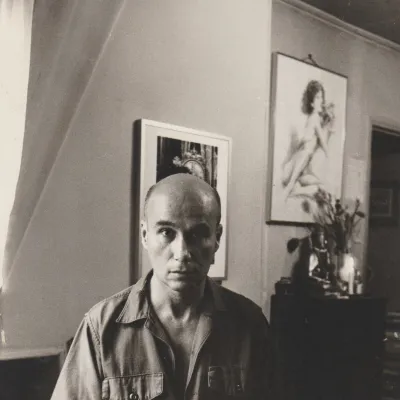
Gabriel Matzneff
Human Design Chart
Biography
For his literary works, he received the Mottart and Amic prices from the French Academy, respectively in 1987 and 2009, the Renaudot essay price in 2013, the Cazes prices from the Lipp brewery and the Incorrect Book in 2015.
In spite of his pedophile practices described without blatantly in his books, he remained sheltered from any criminal prosecution for a long time and benefited from a large support within the literary world. At the end of 2019, the announcement of the publication of a testimony book for one of her former victims, Vanessa Springora, unleashed an intense controversy over the tolerance of the literary milieu towards an assumed pedophile. This controversy led to a withdrawal from the marketing of some of his works, in particular his Black Notebooks and The Under-sixteen, Gallimard being the first to withdraw.
He took refuge on the Italian Riviera.
Gabriel Matzneff as a Generator 2/4 in Human Design
Generator 2/4 — Design at a Glance
Gabriel Matzneff's design points to a tendency towards great endurance and inner strength, comparable to a workhorse that generates energy when it is fueled by its task. This configuration describes a Generator type whose strength lies in reacting to impulses from life rather than initiating actions on their own. The motto is: wait until the sacral center signals a clear 'yes', then take action.
Gabriel Matzneff showed himself as someone who used his energy most efficiently when he responded to signals, rather than taking the first step himself. Living by this principle led to deep satisfaction and a sense of fulfillment. However, if there was a need to do things without inner resonance or if he was prevented from pursuing his heart's project despite having available energy, frustration or a lack of power could arise.
The mechanics of his design revealed two stumbling blocks: wasting energy on disliked tasks led to burnout risk, while interrupting work even when fully powered up was blocking. Gabriel Matzneff's path to effectiveness involved reacting from the gut and only deploying his immense endurance when the inner response was positive. Only then could he materialize his energy without falling into ongoing frustration.
Sacral Authority
Gabriel Matzneff's design laid the foundation for decision-making that directly comes from the body. As a Generator, his strategy was identical to his inner authority: sacral authority. This simplified his process significantly as he did not have to choose between different internal voices but could wait for a clear physiological signal.
This authority manifested in an immediate reaction to external stimuli – as gut feeling or surge of power. Gabriel Matzneff learned to pay attention to bodily sounds like grunts, hums, or groans. A positive 'mmh' signaled that his sacral motor had started; a negative 'hm-hm' indicated rejection. Following this impulse made him feel vital and alive. He was endowed with seemingly inexhaustible energy that allowed him to immerse himself fully in his activities without aimlessness but with great enthusiasm and satisfaction.
Additionally, the activated spleen center acted as supporting authority. As it might be directly connected to the sacral center, Gabriel Matzneff could react particularly quickly and spontaneously. This gave him immediate access to his physical well-being and instinctive perception. He could reliably trust this inner navigation, further strengthening his ability for quick decision-making. His path involved recognizing and trusting these bodily signals to go through life with joy.
The 2/4 Profile — Hermit / Opportunist
Gabriel Matzneff's design points towards a constant oscillation between deep withdrawal and an intense desire for community. As a 2/4 profile, he fluctuates between Line 2, which demands isolation and internal condensation, and Line 4, which seeks connection to the network. This tension requires clear communication: He must signal when he wants company and when he needs solitude. During his 'Me-Time', he immerses himself in internal processes to gain clarity. Only once this need is satisfied does he return to spend time with his favorite people.
Line 2 emphasizes timing and tolerance; misunderstandings often arise from incorrect response times, not lack of understanding. It promotes acceptance of boundaries within oneself and others. Line 4 initiates transpersonal processes and relies on interactions. It acts like a 'fragmentation', gathering knowledge without synthesizing it immediately. This can lead to an intense thirst for knowledge that, without synthesis, may result in isolation or fear of the network if individual expression is not understood.
Gabriel Matzneff ideally uses this dynamic to reflect on the collected wisdom of his network during his alone time and develop brilliant ideas from it. The challenge lies in maintaining balance: neither overburdening himself with Line 4's thirst for knowledge nor isolating due to Line 2's withdrawal, but understanding both as complementary phases of a creative process.
Split Definition — Defined & Open Centers
Gabriel Matzneff's Human Design configuration indicated a tendency towards constant, independent thinking that directly translated into clear communication. His defined Ajna Center ensured consistent mental processes and concepts which were reliably articulated by his also-defined Throat Center. This created a trustworthy voice that was not easily influenced from the outside. Complementing this cognitive stability was his defined G Center, which gave him a firm sense of self-identity and a clear direction without needing to rely on others for validation or approval.
These internal anchors contrasted with his open centers, making him vulnerable to external conditioning. His open Head Center meant he lacked personal mental pressure for inspiration; instead, he tended to be overwhelmed by doubts or questions from others and sought answers that were not his own. The absence of consistent willpower in his open Heart Center could push him into a cycle of wanting to prove his worth through promises or performance to gain recognition – a structural game he cannot win.
Furthermore, his open Solar Plexus absorbed the emotions of the environment. He had a tendency to personalize foreign moods and feelings as his own, leading to emotional instability if he did not let go of them. The open Spleen Center amplified fears about survival and well-being, causing him to cling to people or situations that gave a false sense of security rather than trusting his inner intuition. Finally, the open Root Center took on external stress, which could make him hyperactive in an attempt to escape this pressure, even though it did not originate from within himself. His challenge lay in not interpreting these open fields as his own reality but using them as mirrors of the environment while orienting towards his defined mental and identity structure.
Channels for rhythm, insatiable curiosity and clear structure.
Gabriel Matzneff's design was characterized by a deep connection to the natural flow of life, making him vibrant with a unique inner timing. This configuration created a magnetic rhythm that unconsciously drew others into his energy flow. The Rhythm Channel 5-15 connected his Sacral Center with his G Center; stable habits (Gate 5) provided the foundation while love for human diversity and extremes (Gate 15) acted as universal attraction. This generated a logical, repeating pulse that carried him through life independent of intellectual arrogance or emotional fluctuations.
Alongside this fundamental rhythm, he had a pronounced ability to transform complex ideas into captivating stories. The Channel of Curiosity 11-56 connected his mind with the expression center and drove him constantly to seek new stimuli. He functioned as a storyteller who used the imaginative power of parables rather than facts to inspire others and convey philosophical perspectives on human existence. His creativity lay in weaving narrative threads from individual discoveries that engaged listeners.
Simultaneously, he possessed an innovative way of thinking that often felt like a quantum leap. The Channel of Structuring 23-43 allowed him to express spontaneous insights (Gate 43) through assimilation and clear language (Gate 23). This created a unique perspective that promoted efficiency and mutated established views. Although this knowledge was sometimes perceived as forward-thinking or off the mainstream, it served to open new avenues of perception when the timing was right.
Additionally, Gates like 4 (logical formulas for future security), 10 (complex integration in G Center) and 59 (genetic strategy of pairing without personal attachment) were at work. Gate 27 brought a caring warmth into his activities while Gate 35 sought change through interaction. These elements shaped a person oscillating between firm rhythm, narrative curiosity, and structuring innovation.
Collective Circuitry — Circuit Signature
Gabriel Matzneff's design indicated a tendency towards structured individual expression. His Knowledge Circuit connected the Ajna with the Throat Center (Channel 43-23). This allowed him to articulate inner thoughts in clear, structured words and express his unique identity.
Parallel to this, his Understanding Circuit operated through Channel 15-5 between Identity and Sacral Centers. Here a rhythmic, logical flow was found that enabled strategic and focused carrying of rational insights into the future – free from emotional influence.
A third aspect appeared in the Meaning Circuit (Channel 11-56), also between Ajna and Throat Center. This channel brought curious, experience-based impulses from the past into play. Gabriel Matzneff could reflect on and communicate past impressions.
As he had a Shared Definition, these forces existed as two separate groups: The connection of Sacral and Identity Centers did not energetically exchange directly with the two Head-Throat connections (Knowledge and Meaning). Thus, they were parallel but independent energy flows – one side rational, future-oriented strategy, the other expressive communication based on structure and past.
Right Angle Cross of Explanation 3
Gabriel Matzneff's Human Design shows a tendency towards a clear and explanatory power, characterized by the so-called right cross of explanation. This configuration describes an inner dynamics where complex connections are not only understood but actively transformed into comprehensible forms. It is an energy aimed at clarifying confusion and creating clarity by filtering out the essential elements and presenting them in a structured way.
For Gabriel Matzneff, this meant that his natural mode of expression or internal focus was directed towards explaining things so clearly that others could understand them. The right cross of explanation acts as a catalytic process: it takes raw information or experiences and transforms them into forms that provide insight and orientation. This mechanism is less about emotional conviction and more about intellectual and structural transparency.
In his life orientation, this manifested as a persistent need for precision and clarity. Gabriel Matzneff was enabled by this design to reduce uncertainties by revealing the underlying principles of situations or ideas. The energy of this cross supports not only knowing but also conveying that knowledge in such a way that it truly reaches the recipient as insight and promotes actionability. It is an enlightening force in the literal sense: shedding light on what was previously hidden or unclear, to avoid misunderstandings and establish common understanding.
Saturn Return · Uranus Opposition · Chiron Return · 2nd Saturn Return — Life Cycles
Gabriel Matzneff's Human Design shows a dynamic where external crises often act as catalysts for deep internal restructuring. In 1961, at age 25, his first Saturn Return marked the beginning of his own text publications after returning to Paris – a moment when years of groundwork condensed into a solid result and a new professional identity was established.
This tendency towards consolidation through external events continued. In 1976, at age 40, Uranus Opposition hit him; it often brings sudden breaks or liberating blows. Matzneff responded by publishing his personal diary in several volumes – a direct translation of internal unrest into creative productivity.
The Chiron Return around 1982 (age 46) is an achievement cycle in Human Design where the incarnation cross unfolds. However, a crisis occurred: Le Monde ended its collaboration with him. This shows that the path to self-realization is not linear but marked by sharp confrontations that must dissolve old structures.
In 1990, during his second Saturn Return (age 54), accusations against him were addressed in a literary program. This cycle often demands a final clarification of one's position and responsibility. Matzneff's chart indicates that he went through such public trials not as an end but as a necessary process of maturation and affirmation of his true nature – even if it was painful.
Generator · Sacral Authority — Synthesis
A central red thread runs through the design: deep, sacral energy (Generator type, Rhythm Channel) paired with a defined mental center that constantly creates concepts and filters the world. This combination points to someone who is immersed in their actions when they align with their inner reaction – a powerful flow rhythmized by firm habits (Gate 5) and acceptance of diversity (Gate 15). The ability to generate and transform knowledge (Knowledge Circuit) seems closely tied to the need to also express this, thereby initiating change.
The design reveals a central paradox between the need for internal peace and connection with community. The profile as a natural talent/networker (Lines 2/4) oscillates between retreating into one's own world to gain clarity and the desire for exchange with loved ones. This tension is documented through recurring crisis phases (Cross of Explanation 3, Chiron Return), as well as career pushes that point towards living out one's inherent identity (Saturn Returns, Uranus Opposition).
3 Defined Channels
Incarnation Cross - Right Angle Cross of Explanation 3
Solar Return
The Solar Return shows the moment when the sun returns to its exact birth position - your personal solar year.
Life Cycles
Discover the life cycles with a detailed triple view (birth chart, cycle chart, composite).
Human Design Profile
- Type
- Generator
- Strategy
- To respond - wait for something to respond to
- Authority
- Sacral Authority
- Profile
- 2/4 - Hermit / Opportunist
- Definition
- Split Definition
- Incarnation Cross
- Right Angle Cross of Explanation 3
- Date of Birth
- 12.08.1936 23:30
- Place of Birth
- Neuilly sur Seine, France
Frequently Asked Questions
What is Gabriel Matzneff's Human Design type?
Which Profile does Gabriel Matzneff have?
What Authority guides Gabriel Matzneff?
What is Gabriel Matzneff's incarnation cross?
When was Gabriel Matzneff born?
Discover your own Human Design
Are you also a Generator? Find out in a personal reading how to use your sacral energy correctly and discover deep satisfaction.
More Personalities
Back to overviewAaliyah

Alain-Fournier
Alexia

Angèle

Angeli

Anne-Marie
