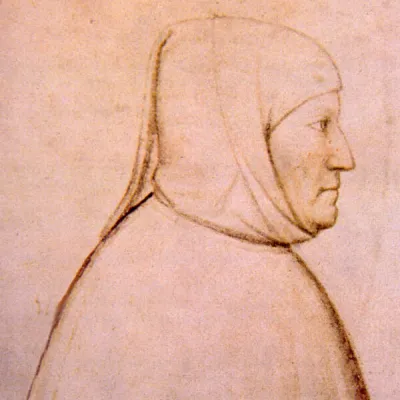
Gabriele Amorth
Human Design Chart
Biography
The Human Design of Gabriele Amorth: Manifestor 4/6
Manifestor 4/6 — Design at a Glance
Gabriele Amorth's Human Design laid the groundwork for being a pioneer and visionary, aiming to pave new paths. His character aligned with that of an Manifestor archetype, not fighting in the front trenches himself but rather as a strategic leader directing others to achieve his goals. This structure, however, brought inherent tension: As his thinking often outpaced those around him, this inevitably led to polarization. While some were drawn to his clear vision and followed him, it repelled or even incited hatred from others due to misunderstanding the rapid changes.
This conflict between attraction and repulsion was no coincidence but a direct consequence of being someone meant to lead the world into a new future. To minimize resistance and find proper support, informing became crucial. By clearly communicating his intentions, he could reduce misunderstandings. If Gabriele Amorth lived by this strategy and followed his inner authority, his design rewarded him with an internal peace. Failing to do so resulted in deep, lasting anger, signaling a life against his own nature.
Emotional Authority
Gabriele Amorth's inner compass was the Defined Emotional Center. This configuration fundamentally determined her decision-making process: She was constantly under emotional waves, a permanent up and down of feelings. The world appeared colored by her current mood; at one moment she could be totally excited about something, in the next view it completely negatively. However, this immediate feeling was only a snapshot, an initial impression that did not necessarily reflect her deepest truth.
Quick, spontaneous decisions based on intense emotions were therefore risky and could have negative consequences. Instead, her design required patience and the ability to take time. She had to let decisions mature, often through multiple nights of reflection. It involved taking proper time to consider and asking herself several times over. Over time, the strong feelings subsided, she gained emotional distance. Only then did clarity and calm set in – a sign that she had gone through the process. This need for distancing was particularly important for long-term decisions with significant influence on her life course. Her inner authority thus lay not in immediate reaction but in growing calm after the emotional wave had passed.
The 4/6 Profile — Opportunist / Role Model
Gabriele Amorth's Human Design pointed towards a fundamental internal conflict: between an emotional desire for belonging and an intellectual drive for solitude. His Profile 4/6, the Networker/Role Model type, shaped this life path through the tension of Heart (Line 4) against Head (Line 6).
In the first thirty years, the experimental energy of Line 4 dominated. Gabriele Amorth actively tested in relationships and friendships while Line 6 still acted like a Line 3 – error-oriented and searching. This phase was characterized by externalization and building a network of trusted individuals.
With the activation of Line 6, however, a contradiction arose: The desire to be part of the 'tribe' clashed with an impulse towards isolation. Gabriele Amorth showed herself as someone needing absolute solitude to maintain integrity and knowledge while simultaneously operating in a fantasy world that could foster illusions and self-deception. The spiritual path led through surrender and retreat – the 'Fool on the Hill'.
The great heart of Line 4 had to be carefully protected throughout this process to avoid injuries from false attachments. In later years, there grew an expectation for Gabriele Amorth to meet high standards as a wise role model. Her dominance extended beyond the material level; she often chose retreat to escape the ego circuit and deepen her spiritual wisdom.
Split Definition — Defined & Open Centers
Gabriele Amorth's Human Design profile indicated a tendency towards constant high mental pressure. His defined Head Center and Ajna Center generated a continuous stream of inspiration, questions, and concepts. This mental energy was translated directly into speech by his defined Throat Center, allowing him to express his thoughts authoritatively. His identity was firmly anchored; the defined G Center provided clear direction and self-love.
Crucial for managing this intensity was his defined Solar Plexus as an inner authority. Despite the pressure to act or speak immediately, he had to wait out emotional waves to gain clarity. Impulsive action would have distanced him from his true truth; patience allowed him to make decisions on a deeper level.
His open centers marked specific vulnerabilities. His open Heart Center meant that he lacked consistent willpower and was prone to making promises he couldn't keep, in an attempt to prove his worth. His open Sacral Center lacked continuous vital energy; he tended to be overwhelmed by external energies and needed regular rest periods rather than being constantly available. The open Spleen Center made him sensitive to external threats and health conditions, which made spontaneous decisions risky. Finally, his open Root Center absorbed stress from the environment instead of generating it himself. This configuration required him not to succumb to external pressure or inner haste but to trust in emotional clarity and inner direction to transform mental load into constructive communication.
Channels for inspired emotional reflection and rational clarity.
Gabriele Amorth was characterized by a constant public inspirational force that relied less on words than on their authentic presence. This effect came from the Inspiration Channel 1-8, connecting the G Center with the Throat Center. Here, Gate 1 (Self-expression) and Gate 8 (Contribution) worked together: they lived out their individual direction as an example, encouraging others to be brave too. This energy served as a public outlet for creative leadership; simply by living their uniqueness, they drew attention and inspired their environment towards creativity without having to explain it actively.
Parallel to this, the Awareness Channel 61-24 shaped Gabriele Amorth's mental landscape. This channel connected the Head Center with the Ajna Center and was defined through Gate 61 (Secrets/Inspiration) as well as Gate 24 (Rationalizing/Satori). Since Gate 24 belongs to the Sun, it contributed about seventy percent of the total energy and dominated the mental experience. It wasn't about logical planning or reflecting on the past but rather sudden insights – a Satori. Knowledge would spontaneously arise when mental pressure subsided. Gabriele Amorth had to trust this process; thinking served to process inspiration until the moment of inner truth arrived. This combination of visible, inspiring presence (1-8) and deep intuitive access to knowledge (61-24) created a profile marked by authentic individuality and at the same time shaped by mysterious, unmediated insight power. The other mentioned gates worked here as supportive facets of this central interplay between public radiance and inner clarity.
Individual Circuitry — Circuit Signature
Gabriele Amorth's Human Design indicated a tendency towards pulsating acoustic creativity driven by the search for an original path. The Knowledge Circuit shaped this attitude: in her case, it connected two separate segments. Head Center and Ajna Center formed a unit of awareness (Gates 24/61) and inspiration (Gates 8/1), while Throat-, Solar Plexus- and Identity Centers interacted together. This configuration promoted the expression of a unique identity through the transformation of new knowledge, with emotional wave movements between individual inspiration and communal learning from the past.
The Meaning Circuit complemented this by cyclic processing of past emotions. Here it exclusively connected the Throat Center with the Identity Center (Channel 33/13). This channel, 'the lost son', directed energy towards sharing felt insights and experiences from the past with the collective to learn together from them. The wave-like nature of these emotions – with beginning, middle, and end – contrasted with the more rational, future-oriented logic of other circuits.
Through shared definition, these energies existed as parallel, not directly connected streams: the group consisting of G-, Throat- and Solar Plexus Centers alongside the separate connection between Ajna- and Head Centers worked side by side. This created a dynamic tension between inner, inspiring awareness and outer emotionally colored expression aimed at sharing collective learning success and initiating change through the authentic expression of one's individuality.
Right Angle Cross of the Four Ways 1
Gabriele Amorth's design carried the archetypal structure of the Right Cross of the Four Paths. This configuration marked him with a profound inner tension between different perspectives and paths. It was not arbitrary contradictions but rather a fateful pattern aimed at finding truth and integrity in a complex world.
The Cross 54 describes the energy of searching for the right path amidst multiple options. For Gabriele Amorth, this meant a lifelong task: to consider various viewpoints without prematurely settling on one, ultimately distinguishing what is essential from mere distractions. The mechanics of this cross demand the integration of seemingly opposing approaches. It's about not simply choosing a path but developing the ability to understand several paths simultaneously and unite them into coherent action.
This structure inclined towards reflection. Gabriele Amorth was someone who accepted the complexity of his environment and tried to bring clarity within it. The four paths symbolize the various directions life can take. The challenge lay in experiencing these directions not as competing forces but as parts of a greater whole. Through this stance, he could maintain integrity even when the external path seemed unclear or contradictory. It was a quiet yet persistent force aimed at creating order from the multitude of possibilities.
Saturn Return · Uranus Opposition · Chiron Return · 2nd Saturn Return — Life Cycles
Gabriele Amorth's design showed an inclination towards early identity formation, where taking on adult responsibilities significantly shaped his life path. This transition from youth to definitive self-determination manifested concretely in his first Saturn return. In this cycle, years of groundwork and internal stances coalesced into a stable structure that required a clear, binding decision.
In 1951 at the age of 26, Gabriele Amorth received the sacrament of priestly ordination in Rome. For his Human Design, this was a typical moment: The first Saturn return marks the point where individual identity is no longer just sought but anchored through a major life decision. This ordination defined his subsequent path and laid the foundation for his later role. Instead of remaining in uncertainty, he chose a clear path of commitment. The mechanics of this phase describe the conclusion of one developmental stage and the beginning of a new stable state where the person knows who they are and what they carry. Gabriele Amorth's step into the priesthood was thus not an arbitrary choice but the result of a profound inner maturation process triggered by this astrological cycle. The responsibility he took on corresponded exactly to the pressure built up by this configuration: creating a structure that holds.
Manifestor · Emotional Authority — Synthesis
Gabriele Amorth's design reveals a central thread of transformative communication. As a Manifestor with defined Head, Ajna, and Throat Centers, he was destined to receive inspiration, process it, and express it – a process amplified through the channels of Awareness (24/61) and Openness (22/12). The connection to the G Center points to a deep inner direction that he revealed, while his emotional authority gave him time to gain clarity before acting or communicating. This interplay enabled him to act as a pioneer and role model who opened new perspectives through authentic expression.
A central paradox lies in the tension between his individual switch circuit (Knowledge) and the Meaning-making Switch Circuit. While knowledge drove him to develop and communicate innovative ideas, the Meaning-making Switch Circuit required reflection on past experiences and their transmission. This duality created a dynamic field of tension between creative inspiration and profound contemplation, enabling him both to show new paths and learn from the past.
4 Defined Channels
Incarnation Cross - Right Angle Cross of the Four Ways 1
Solar Return
The Solar Return shows the moment when the sun returns to its exact birth position - your personal solar year.
Life Cycles
Discover the life cycles with a detailed triple view (birth chart, cycle chart, composite).
Human Design Profile
- Type
- Manifestor
- Strategy
- To inform others before acting
- Authority
- Emotional Authority
- Profile
- 4/6 - Opportunist / Role Model
- Definition
- Split Definition
- Incarnation Cross
- Right Angle Cross of the Four Ways 1
- Date of Birth
- 01.05.1925 16:10
- Place of Birth
- Modena, Italy
Frequently Asked Questions
What was Gabriele Amorth's Human Design type?
What Profile did Gabriele Amorth have in Human Design?
What authority did Gabriele Amorth have?
When was Gabriele Amorth born?
Discover your own Human Design
Are you also a Manifestor? Find out in a personal reading how to use your initiation power peacefully and dissolve resistance.
More Personalities
Back to overviewChristian-Jaque
Kesha

Lucebert
Masaccio
Papus
Petrarch