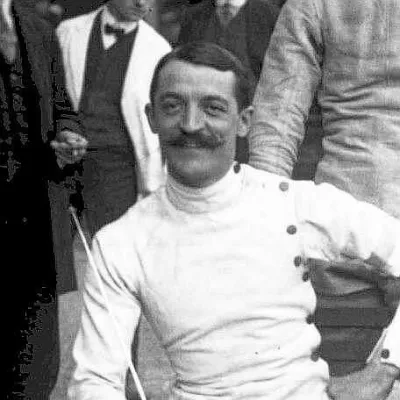
Gaston Alibert
Human Design Chart
Biography
Human Design Analysis: Gaston Alibert as Manifesting Generator 4/6
Manifesting Generator 4/6 — Design at a Glance
Gaston Alibert revealed himself as someone who possessed a hybrid energy: the constant power of a Generator paired with the lightning-fast alignment of a Manifestor. His design suggested that he could skip steps and achieve results quickly, allowing him to draw things into his life rapidly. This speed, however, carried the risk of not being self-reflective: Alibert tended to miss important stages or pursue multiple projects simultaneously without inner consent. Such multitasking often led to frustration when the inner resonance was lacking.
The mechanics of his Manifesting Generator required a clear strategy: instead of initiating himself, he responded to external impulses. Only when his sacral center – the source of his constant energy – gave a clear "yes" response, was the path open for effective action. Regular checks of this inner resonance were crucial to ensure that started projects continued to bring joy. With proper application of this strategy, Alibert found deep satisfaction in creation. His design promoted a "play mode," where variety and fun were driving forces. Rather than fixating on one single task, he flourished through variation as long as each activity was supported by his sacral energy. This transformed potential frustration into sustainable fulfillment and optimally utilized his unique ability for rapid implementation.
Emotional Authority
Gaston Alibert showed a decision-making process that relied on emotional detachment and time; his current mood was considered a snapshot, not an absolute truth. His design featured Emotional Authority in the defined Solar Plexus Center. This configuration was subject to a constant emotional wave with feelings swinging up and down continuously. Gaston Alibert saw the world always colored by his current mood: at one moment totally excited, then the next moment evaluating the same thing negatively. However, his immediate feeling was merely an initial impression, not yet necessarily his truth. Quick, spontaneous decisions based on such emotions often had negative consequences.
The mechanics of his inner authority required patience and conscious waiting until the emotional wave subsided. The more time Gaston Alibert took to let a decision mature, the deeper and broader his understanding became. This meant repeatedly "sleeping on" decisions and having to take his time properly. Over time, intense feelings faded, he gained emotional distance, clarity set in, and calmness followed. Only then had he gone through the process. This mechanism was crucial for long-term decisions that could have a significant impact on his life course. Emotional Authority always took precedence, regardless of other defined centers in his chart.
The 4/6 Profile — Opportunist / Role Model
Gaston Alibert revealed himself in his youth as someone who intensely sought connection and experimentally explored relationships. His design indicated a tendency to make happiness and satisfaction heavily dependent on other people, which is typical for Line 4. In the first thirty years of his life, his Line 6 still acted somewhat like a Line 3, causing him to invest much energy in testing various social dynamics.
After Saturn's return, this attitude fundamentally changed. Line 6 became effective and brought common sense as well as a need for overview into play. Gaston Alibert now experienced an inner conflict: On one hand, his deep desire was to be part of a community (Line 4), on the other hand, it drew him towards withdrawing to think about the meaning of life and maintain distance (Line 6). This conflict between heart and head characterized his middle phase of life.
In his later years, he was expected to act as a wise role model. His task was to protect the big heart of Line 4 from false bonds while simultaneously standing out through cooperation with others. He learned to be authentic without constantly needing to exert power and integrated common sense into how he dealt with his surroundings.
Triple Split Definition — Defined & Open Centers
Gaston Alibert revealed himself through a high, constant inner structure and energy. His design imposed a permanent mental pressure for inspiration and concept formation, which could not be directly translated into action. Instead, these thoughts were articulated through his defined Throat Center. The motor of this system was the Sacral Center, providing an enormous, consistent vital energy that could only be correctly utilized in reaction to external impulses. His emotional level, the Solar Plexus Center, served as inner authority and required patience during periods of waiting for clarity. The Root Center supplied a constant adrenaline-driven pressure for movement and stress management.
In contrast, his G Center (Identity/Direction), Heart Center (Willpower) and Spleen Center (Health/Intuition) were open. This meant that identity, direction, and love had to be initiated situationally by the environment; willpower was not consistently available but needed to be reflected from outside; and intuition as well as health perception were susceptible to conditioning from the environment. Gaston Alibert tended to question his worth or seek confirmation through promises, which is typical for an open Heart Center. His intuitive perception was also unreliable, often mirroring the environment.
The challenge lay in integrating this strong inner mechanism – thinking, speaking, reacting, feeling – with the flexibility of the open centers without getting entangled in false identities or commitments. The tension existed between the permanent internal pressure towards mental inspiration and emotional clarity on one hand and the necessity to wait for external initiation for direction and identity on the other. Energy had to be released through sacral reactions while the open centers prevented him from becoming fixed or forcing himself willfully.
Channels for synthesis, logical doubt and charismatic impact.
Gaston Alibert revealed himself through a tension between analytical skepticism and emotional tribal connection. His design integrated the Channel of Logic 63-4, connecting Head Center with Ajna Center. This doubting mind constantly filtered patterns; only verifiable, consistent answers were considered true. Instability triggered pressure that demanded solutions to provide security for the collective. At the same time, the Channel of Synthesis 19-49 between Root and Solar Plexus was active. It conveyed emotional loyalty and belonging to the "tribe." Here, a frequency of acceptance or rejection determined who belonged. The focus was on protection, territory, and shared ideals, not abstract logic. This connection was based on genuine resonance and the need for reciprocity rather than duty.
The driving force came from the Channel of Charisma 34-20 in his design. It connected Sacral Center with Throat through Gate of Power (34) and Gate of Now (20). This energy allowed Gaston Alibert to directly transform generative power into action – but only upon correct sacral reaction to external stimuli. Without this inner guidance, the energy risked manifesting as obsession or chaotic outburst. The challenge lay in sharing logical answers from Channel 63-4 only when practically viable and engaging emotional connections through Channel 19-49 where true connection existed. His vitality was best shown in self-determined activity, not serving others' expectations. Additional nuances included Gates like the Gate of Abundance (55) with its mood swings or the Gate of Genetic Strategy (59), aiming for pure connection without emotional filters. Also, the openness of Gate 22 supported individual processes through calm waiting. Gaston Alibert utilized this configuration to navigate between the need for logical clarity and the deep human desire for tribal belonging, driven by an energy that wanted to act in the moment.
Tribal Circuitry — Circuit Signature
Gaston Alibert revealed himself as a Triple Defined individual, whose energy did not flow from a single source but rather operated across three separate fields. He was not a carrier of constant dominance but reacted situationally to his environment. His design included the Mind Circuit, which connected the Head Center with Ajna through Channel Logic (Gates 63-4), creating an ability for emotionless ratio and strategic future planning free from emotional conditioning. Parallel to this, the Ego Circuit operated through Channel Synthesis (Gates 49-19), linking Solar Plexus and Root Centers. This was about stem logic: cooperation and resource accumulation without Sacral drive, necessitating necessary pauses for regeneration. The third field was Integration, connected by Channel Charisma (Gates 20-34) between Throat and Sacral Centers. This allowed Gaston Alibert to draw power from reacting to life and express it in the present – an individual survival strategy based on intuition and correct behavior. These three groups – Mind (Head-Ajna), Ego (Solar Plexus-Root), and Integration (Throat-Sacral) – were energetically isolated from each other. Thus, Gaston Alibert navigated between logical structure, social cooperation, and reactive vitality without any of these forces directly crossing over into the others.
Right Angle Cross of the Sleeping Phoenix 1
Gaston Alibert's Human Design configuration carried the archetypal essence of the right cross of the sleeping Phoenix. This arrangement shaped his deepest, often unconscious life task and formed the spiritual backdrop of his existence. It was an energy of transformation that did not manifest through constant action but rather through rest, patience, and waiting for the right moment to unfold.
The symbol of the sleeping Phoenix represents latent potential held consciously in stillness. Gaston Alibert lived with this inner dynamic: His strength showed not in immediate action but in his ability to hold back until external conditions were ripe enough. This structure described a way of living where development emerged from stillness and endurance rather than being forced through continuous activity. The mechanics of this cross suggested that true change could only be lasting for him if it arose out of a state of inner collection and waiting, similar to how a Phoenix re-emerges after a period of rest. This characteristic determined the way he approached challenges and drove his inner development without disrupting the necessary rhythm of tension and release.
Saturn Return — Life Cycles
Gaston Alibert appeared as an Olympic champion in individual and team foil fencing at the London Games in 1908, when he was 30 years old. For his design, this triumph marked a central turning point: the first Saturn Return. This cycle typically occurs between the ages of 29 and 30 and functions as a phase of initial structural consolidation. Here, one's identity is tested against reality, and the chosen life path is confirmed or corrected through external recognition. Alibert's double gold medal was no coincidence but rather the visible result of this inner condensation. Years of groundwork in fencing found its definitive anchoring at this moment. The Saturn Return demands constancy and discipline; it filters what is essential from what is not. Those who go through this process according to their strategy experience a strengthening of self-confidence and a clear alignment with their role in the world. Alibert's success was thus a concrete manifestation of this mechanical necessity: The structure of his character was reinforced by public victory, which gave him the necessary stability for subsequent life phases. It was an affirmation of the path taken up to that point and a milestone of personal maturity.
Manifesting Generator · Emotional Authority — Synthesis
Gaston Alibert was a person marked by the combination of manifesting Generator energy and emotional authority. His life seemed determined by a constant interplay between the need for rapid manifestation and the necessity of weighing decisions in the depth of his emotions. The defined Throat indicates a clear mode of expression that, however, is modulated through the emotional center – a synergy of initiating power and inner maturity. This constellation, combined with the defined Head and Ajna Centers, makes him appear as someone who was constantly inspired but only brought this inspiration into the world after thorough examination. The fixation on logic (Channel 63-4) and the pursuit of principles (Channel 49-19) pointed to a deep engagement with patterns and values, while the connection between Root and Solar Plexus Centers helped him find inner stability in a dynamic environment.
A central paradox in Gaston Alibert's design lay in the tension between his ability for quick reaction (Sacral Center) and the need for emotional clarity. He was destined to react to impulses, yet simultaneously his emotional authority required time to filter these impulses and make a well-founded decision. This likely led to an internal conflict between the desire for immediate manifestation and the realization that true fulfillment lies in patience and waiting.
3 Defined Channels
Incarnation Cross - Right Angle Cross of the Sleeping Phoenix 1
Solar Return
The Solar Return shows the moment when the sun returns to its exact birth position - your personal solar year.
Life Cycles
Discover the life cycles with a detailed triple view (birth chart, cycle chart, composite).
Human Design Profile
- Strategy
- To respond - wait for something to respond to
- Authority
- Emotional Authority
- Profile
- 4/6 - Opportunist / Role Model
- Definition
- Triple Split
- Incarnation Cross
- Right Angle Cross of the Sleeping Phoenix 1
- Date of Birth
- 22.02.1878 02:45
- Place of Birth
- Paris Arrondissement 9, France
Frequently Asked Questions
What was Gaston Alibert's Human Design type?
Which Profile did Gaston Alibert have?
What Authority did Gaston Alibert have?
Which incarnation cross was active for Gaston Alibert?
When was Gaston Alibert born?
Discover your own Human Design
Are you also a Manifesting Generator? Find out in a personal reading how to unfold your multi-talents and direct your energy wisely.
More Personalities
Back to overviewAldair

Alizée

Angeli

Arletty

Artus

Balthus