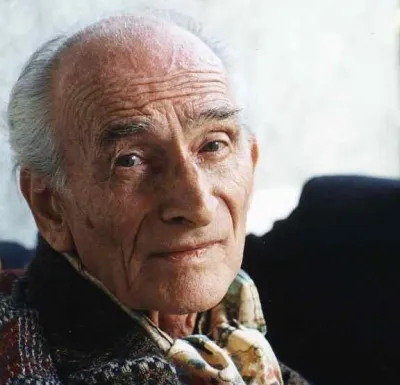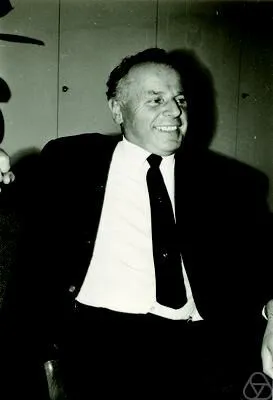
Georg Aumann
Human Design Chart
Biography
Georg Aumann — Manifesting Generator with Profile 5/1
Manifesting Generator 5/1 — Design at a Glance
Georg Aumann revealed himself as someone who quickly brought things to life and skipped steps in the process. His design identified him as an Instantiating Generator – a hybrid type with constant sacral energy like Generators, but complemented by an active connection of Motor Centers to the Throat Center. This configuration endowed him with Manifestor qualities: the ability for quick initiation and multitasking parallelism across multiple projects simultaneously.
Although he possessed this dynamic power, his primary strategy was that of a Generator: not initiating himself but reacting to impulses. He should only act when his sacral center gave a clear “yes”. The danger lay in his speed; often skipping necessary steps led to frustration and the need to return to neglected stages. Additionally, he tended to tackle many things simultaneously, driven by various impulses.
When strategy and inner authority aligned, Georg Aumann found deep satisfaction in his work. For him, the saying “Finish one thing first” was counterproductive. His true energy source arose in play mode, with variety and parallel engagement with different undertakings. Thus, his speed could be beneficial rather than leading to friction losses by regularly checking if his projects were still supported by his inner self.
Emotional Authority
Georg Aumann’s design inclined towards patient decision-making. His inner authority was defined through the Emotional Center. In Human Design mechanics, this means: Once this center is colored, it functions as the primary instance for decisions – independent of other defined centers in the chart. This rule always took precedence.
Georg Aumann was subject to an emotional wave that showed itself in a constant up and down of his feelings. The world appeared to him always colored by his current mood. In one moment, he could be enthusiastic about something, only to see it negatively in the next. His feeling at any given moment, however, was merely a snapshot, a first impression, not necessarily representing his truth yet. Quick, spontaneous decisions based on such emotion often had negative consequences.
Instead, Georg Aumann showed himself as someone who needed time to gain clarity. The longer he let a decision ripen, the deeper and more comprehensive could he perceive the situation. This required patience and conscious hesitation. He should take his time properly and ask again multiple times. Over time, intense feelings subsided. An emotional distance set in, followed by clarity and calmness. Only then was the process complete. This mechanism was particularly important for long-term decisions that could have a significant impact on his life course. Through repeatedly sleeping over important questions, he arrived at well-founded insights, free from the distortion of current mood.
The 5/1 Profile — Heretic / Investigator
Georg Aumann’s design was marked by a specific tension: He possessed magnetic charisma to attract others while his inner need for deep, isolated research persisted. As a 5/1 – the profile of the Hero and Researcher – he appeared in his environment as someone who held solutions ready. Line 5 gave him this almost attractive quality; people sought him out because they assumed he had answers to their problems. This corresponded with societal expectations that came along with this line.
At the same time, however, line 1 in his design demanded time for personal study and preparation. Here lay the central challenge: Others expected immediate help while Georg Aumann’s mechanics required that answers be given only when the right moment was reached through self-study. Without clear boundaries, there was a risk of him becoming exhausted, similar to an expert who answered questions day after day without advancing his own research work.
Success in this design depended on saying “No”. Only by setting limits could Georg Aumann maintain balance: He protected his time for line 1 – the deep dive into knowledge – and then used this foundation purposefully for line 5 to offer practical solutions to others during crises. His design showed that true creativity and steadfastness only became possible when he learned to separate societal projections from his own research work.
Triple Split Definition — Defined & Open Centers
Georg Aumann's design established a structure of absolute mechanical consistency. All nine centers were defined, meaning there was no situational openness to external influences; his system operated consistently according to internal, fixed patterns without gaps to the environment. This completeness shaped him as someone whose energy and functions—from thinking to acting—were always present and unchanging.
This closed system manifested concretely in the definition between Head Center and Ajna Center. It created a constant mental pressure to question and find answers. This process was for him a permanent source of inspiration, but it also brought confusion or doubt since there was no direct energy available to implement these thoughts. Instead, his defined mind served to create concepts and inspire others to think.
His defined G Center gave him a clear self-identity and a firm sense of direction in life. He knew where he belonged and could radiate this security without being dependent on others. Parallel to this, his defined Heart Center determined his approach to willpower and resources. He enjoyed controlling his environment and keeping promises, which strengthened his self-esteem as long as he respected his own authority.
The energy base was provided by his defined Sacral Center. As a Generator, he had constant vitality that was released through reactions to life. His strategy was to wait until he was asked before responding with full force. This aligned with his defined Solar Plexus Center, which functioned as an emotional authority. He needed to go through his emotional wave before clarity emerged; he avoided impulsive decisions at the peak or low point of his feelings in favor of a deeper, time-matured truth.
His Spleen Center was also defined, giving him spontaneous intuitive intelligence in "the now." He trusted his body awareness and instinctive warnings for survival and well-being. Finally, his defined Root Center ensured a constant pressure to move forward and progress in the material world. Since no centers were open, he was not vulnerable to typical conditioning traps of undefined areas such as identity uncertainty or emotional mirroring of others. His entire being worked as an integrated autonomous unit.
Channels for community, logical leadership and inner rhythms.
Georg Aumann's design tends towards constant filtering: Channel 63-4 connects the doubting mind with formulation, making skepticism a tool for pattern recognition. Only verifiable, consistent patterns were accepted; unfounded space for belief was minimal. This logical foundation influenced his timing: Channel 5-15 links fixed habits with love of extremes, creating a biological flow. His inner rhythm determined the pace at which he moved and brought others into this energy flow, provided he did not act against his natural rhythm.
Leadership occurred only by invitation: Channel 7-31 connects logical role with collective leadership. He sought areas of influence but could effectively guide only if chosen by the majority; absolute authority was not available to him. Parallel to this, Channel 18-58 links a desire for vitality with an impulse to correct. This generated an insatiable wish to perfect patterns and fix errors – yet he succeeded in doing so only when asked rather than unsolicited criticism.
Emotionally rooted in his design is tribal loyalty: Channel 19-49 connects Root pressure towards belonging with emotional principles. He sought clear affiliation and rejected what went against the ideals of the "tribe." This led to building community through fair agreements: Channel 37-40 links friendship with a need for balance. Here it was about closing good deals where both sides saw their benefit, and the connection was sealed over time by emotional clarity and willpower.
Collective Circuitry — Circuit Signature
Georg Aumann's design was characterized by a pronounced cognitive structure based on logic and strategic planning. The Understanding Circuit shaped his way of perceiving the world: it was an "emotionless ratio," free from impulsive feelings, aimed at improving society and the future through clear insights. In him, these energies flowed in three separate strands. First, he connected the Head Center with the Ajna Center (Channel 63-4), which enabled focused visual perception and logical structuring. Second, energy flowed between Throat, Identity, and Sacral Centers (Channels 31-7, 15-5, 18-58). This linked his rhythm and judgment directly with his radiance and life force, allowing him to share rational insights rhythmically and authentically. Third, the Spleen and Root Centers worked together (Channel 18-58 connects Throat and Ajna).
Group 1: Head and Ajna were connected – focused visual logic.
Group 2: Throat, Identity, and Sacral formed a stream – rhythmic expression of personality.
Group 3: Spleen and Root Center worked together – intuitive security and energy balance.
Additionally, Georg Aumann displayed the Ego Circuit. Here, Heart, Solar Plexus, and Root Centers (Channel 40-37 Community) were connected, promoting cooperation and mutual support within the tribe. The Synthesis Channel (49-19) was also active, linking emotional waves with life force, but without a direct connection to the Sacral Center in this specific segment of the circuit, necessitating pauses for resource generation. His Triple Definition meant that these three areas – cognitive logic, social cooperation, and intuitive security – operated as parallel forces within him, not directly merging with each other.
Left Angle Cross of Defiance 2
Georg Aumann's design established a clear strategic orientation through the Left Challenge Cross. He was someone whose focus was on preserving and passing down knowledge. His identity formed strongly through his connection to the 'True' and his role as guardian of established traditions or systems. This configuration shaped his actions through the drive to define himself by adhering to proven paths, often rejecting new or foreign elements to maintain the integrity of his own system against external influences. It was not mere rigidity but a deep inner impulse towards stabilizing the known. For Georg Aumann, this meant that his life energy flowed into protecting and nurturing existing structures. He sought stability in the tried-and-true and saw it as the key to coherent existence. The rejection of innovation primarily served to delineate against destabilizing forces. His design challenged him to live this stance at the core of his personal identity. Thus, preserving the old became a central task through which he understood himself and anchored himself in the world. It was always about maintaining an inner order amidst external changes.
Saturn Return · Uranus Opposition · Chiron Return · 2nd Saturn Return — Life Cycles
Georg Aumann's design showed a tendency towards structural consolidation and institutional anchoring driven by planetary cycles. His first Saturn Return marked 1934 at age 28, when he entered as a Rockefeller Fellow at the Institute for Advanced Study – a moment where years of groundwork condensed into a viable result. This phase established the foundation for his later academic career.
The Uranus Opposition at age 43 in 1949 brought his appointment as full professor at the University of Würzburg. This cycle often promoted an expansion of influence and establishment of new structures within existing systems, visible here through a firm academic position.
The Chiron Return, a fulfillment cycle of bloom, occurred at age 52 in 1958. His election as a regular member of the Bavarian Academy of Sciences showed increasing realization of his incarnation purpose and recognition of his professional authority. Finally, his second Saturn Return in 1960 marked the transition to an Ordinariat at TU Munich, completing institutional anchoring on a new level and fulfilling his life task within a stable structure.
Manifesting Generator · Emotional Authority — Synthesis
Georg Aumann's design reveals a central thread of profound connection between logical thinking and the need to translate this knowledge into concrete results. The defined Head Center and Ajna Center connection, paired with the Channel of Logic, points to an ongoing search for understanding and the ability to filter and structure complex information. This manifests in the Profile of Hero/Researcher (5/1), striving to make this knowledge accessible to others – a drive amplified by the defined Heart Center, signaling engagement and the ability to implement ideas. The connection to the Sacral Center through the Channel of Rhythm indicates that this energy flows most efficiently when embedded in a natural, recurring cycle.
A central paradox lies in the combination of manifesting Generator authority and emotional center. Aumann was destined to react quickly to impulses and initiate things (Manifestor aspect), yet simultaneously his emotional authority required careful deliberation and sleeping on decisions. This tension between speed and reflection suggests he often found himself in an internal conflict – the urge for immediate action versus the need to gain clarity through the emotional wave. This could lead to phases of rapid activity followed by times of withdrawal and emotional processing to regain balance.
6 Defined Channels
Incarnation Cross - Left Angle Cross of Defiance 2
Solar Return
The Solar Return shows the moment when the sun returns to its exact birth position - your personal solar year.
Life Cycles
Discover the life cycles with a detailed triple view (birth chart, cycle chart, composite).
Human Design Profile
- Strategy
- To respond - wait for something to respond to
- Authority
- Emotional Authority
- Profile
- 5/1 - Heretic / Investigator
- Definition
- Triple Split
- Incarnation Cross
- Left Angle Cross of Defiance 2
- Date of Birth
- 11.11.1906 02:00
- Place of Birth
- Munich, Germany
Frequently Asked Questions
What was Georg Aumann's Human Design type?
What Profile did Georg Aumann have in Human Design?
Which Authority guided Georg Aumann's decisions?
What incarnation cross did Georg Aumann have?
When was Georg Aumann born?
Discover your own Human Design
Are you also a Manifesting Generator? Find out in a personal reading how to unfold your multi-talents and direct your energy wisely.
More Personalities
Back to overviewAldair

Alizée

Angeli

Arletty

Artus

Balthus