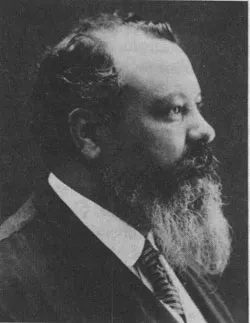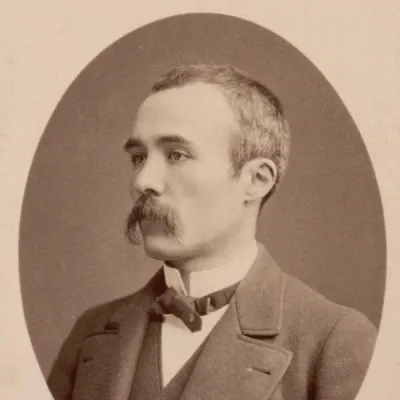
Georges Clemenceau
Human Design Chart
Biography
Trained as a doctor, he traveled and taught before entering politics, serving as the Mayor of Montmartre.
He died on 24 November 1929 at 1:45 AM in Paris.
Georges Clemenceau as a Manifestor 2/4 in Human Design
Manifestor 2/4 — Design at a Glance
Georges Clemenceau revealed himself as a pioneer and leader whose design was predestined to guide the world into new directions. His Human Design type was that of a Manifestor, often compared to the role of an emperor in ancient Rome: He possessed the vision of a great whole but did not lead the necessary wars and battles himself; instead, he sent others out to conquer foreign lands for him. This grand vision naturally didn't please everyone; it was one of his greatest pain points. Clemenceau was misunderstood because he often thought ahead more than others, polarizing strongly as a result. Some people loved him with his big dreams and a following began to form, while others simply couldn’t stand or even hated him for these enormous visions. For the right followership to find him, it was important that he informed others about his plans in time and accurately – this was his ideal strategy. When Clemenceau followed this informing strategy as well as his authority, he was rewarded with a feeling of inner peace. Living against his design, however, he felt instead a persistent, deep anger.
Splenic Authority
Georges Clemenceau showed a decision-making stance based on a fine, spontaneous internal impulse. His inner authority lay in the defined Spleen Center, while the Emotional and Sacral Centers remained open – a configuration that distinguishes Projectors or Manifestors alone. The Spleen functioned as his health and alarm system, endowing him with an acute survival intelligence. This did not manifest through long reflection but rather as immediate physical knowledge about whether a situation, environment, or society was right for him. His instinct and physical well-being served as reliable indicators; the first spontaneous impulse always counted as the correct path and directly protected him from harmful influences.
This Spleen voice, however, was a very subtle signal that only appeared once in the current moment. It could easily be drowned out or ignored by external noise sources, requiring high vigilance. Often, a brief retreat helped him to clearly hear this fine impulse. Since he knew what suited him only at the moment of occurrence, his plans were constantly changing short-term. Long-term commitments were therefore difficult; he needed much freedom and flexibility to avoid unnecessary binding. This structure shaped his life through strict boundaries against harmful influences and a strong ability for self-care in the here and now.
The 2/4 Profile — Hermit / Opportunist
Georges Clemenceau revealed himself as someone who oscillated between a deep need for withdrawal and the urge towards community. His design tended to periodically retreat into a “Cave” to gain inner clarity before seeking contact with his trusted people again. This dynamic stemmed from his Profile 2/4: Line 2 demanded solitude for reflection, while line 4 required exchange within the network. It was crucial for him to clearly communicate these needs – when he wanted company and when he needed silence. During solitary times, he processed what he had learned from social contacts. Additionally, Gate 18 (line 2) carried an attitude of acceptance: Where correction was impossible, renewal could be found through acceptance rather than futile resistance. At the same time, Gate 52 (line 4) demanded self-discipline and concentration. Even in social interaction, this focus remained; doubts here could be shared as collective benefit. Clemenceau used his withdrawal phases to evaluate the knowledge of his network and develop precise ideas from it. His path lay in bringing these seemingly contradictory forces – isolation for depth, connection for breadth – into a rhythmic alternation that allowed him both tranquility and social effectiveness.
Single Definition — Defined & Open Centers
Georges Clemenceau revealed himself as someone with a clear inner orientation and a reliable self-image. His defined G Center gave him a firm identity and the sense of his own life mission, without being dependent on others. This inner security allowed him to support others on their path rather than directing them.
His way of communicating and acting was marked by his defined Throat Center. This center functioned as a pivot point that translated messages from the body into the world. Clemenceau thus always spoke and acted from a specific, consistent source, making his statements clear and honest. Supported by this structure was his defined Spleen Center, which gave him spontaneous intuitive intelligence. He perceived what was correct for his well-being and survival in each moment and trusted this bodily wisdom rather than rational concepts. Additionally, he had a fixed way of dealing with stress through his defined Root Center, providing the necessary pressure to move forward in the material world and master existential challenges.
In contrast, Clemenceau was exposed to several open centers that made him vulnerable to conditioning. His open Head and Ajna Centers meant that he did not have consistent mental inspiration or logical structure. He tended to identify with others' questions and doubts or seek answers that were not his own, which could lead to mental confusion. Similarly, his Heart Center was open; he did not possess a constant willpower in the sense of competitive drive. Instead, he risked binding himself through promises to prove his worth, often ending up in cycles of self-doubt when these expectations were unfulfilled.
His open Sacral Center also made him sensitive to the energy of his environment. He could absorb and amplify others' vital energy but was not designed to generate this energy or set boundaries within it. This led to him easily overextending himself when working on borrowed energy rather than listening to his own rhythm. Finally, his open Solar Plexus absorbed the emotions of the surroundings. He had to learn not to personalize these feelings to avoid being overwhelmed by emotional waves and making decisions out of fear of confrontation.
Channels for intuitive elegance, reflection and critical judgment.
Georges Clemenceau revealed himself as someone who acted through intuitive insight and a sharp corrective instinct. His design tended towards securing his survival through spontaneous, appropriate reactions while simultaneously questioning patterns that did not work.
This profile was significantly influenced by the Channel of Perfect Form 57-10. This channel connected intuitive wisdom with self-behavior, giving him rare clarity to move existentially and unburdened through the world. He acted spontaneously based on his deep impulses, let go of unfounded future fears, and thus perfected his physical existence in the present moment. His creativity differed from intellectual reflection; it was a direct result of loving himself and creating something healthy and beautiful through his life.
Parallel to this, the Channel of Judgment 18-58 drove an insatiable urge to correct and perfect any patterns. Clemenceau judged whether what he perceived hindered happiness in life. His sense of what needed correction kept him motivated as he sought satisfaction in perfect patterns. He logically questioned patterns to find solutions applicable to society, thereby avoiding wasting valuable energy.
Another aspect was the Channel of the Lost Son 13-33. Here he gathered information and secrets as a listener, then withdrew to reflect on these experiences before sharing them. This process of reflection and memory brought continuity to his development. He learned from the past, saw all sides of an experience, and later shared wisdom that life ultimately makes sense if one observes patiently.
Additionally, Gates like Gate 17 (Succession, logical teaching), Gate 52 (Focus on pattern correction) and Gate 41 (evolutionary development through feeling and crisis) contributed to his ability to steer change and further develop himself. His identity was strengthened by Gate 8 (Contribution) and Gate 32 (Continuity, material success), helping him advocate for group goals and maintain stability.
Collective Circuitry — Circuit Signature
Georges Clemenceau revealed himself as someone who combined logical clarity with emotional depth. His simple definition created a continuous energetic flow from the Spleen through the Root and Throat to the Identity Center. This allowed for a direct translation of intuitive perception into expressive action.
The Understanding Circuit worked through him via the Channel of Judgment, connecting the Spleen and Root Centers. This connection utilized the intuitive foresight of the Spleen to make strategic decisions free from disruptive emotions. It was about sharing rational insights to improve the future.
Parallel to this, energy flowed through the Meaning-Finding Circuit. The Channel 'The Lost Son' connected Throat and Identity Centers. Here past experiences and emotional waves were reflected upon to gain collective learning insights. These felt insights served to be shared with others.
Integration rounded off this profile. The Channel 'Perfect Form' connected Identity and Spleen Centers. This strengthened individual power through intuitive knowledge and proper behavior in the present moment. Georges Clemenceau used this connection to secure his own survival strategy and strengthen himself. All three circuits worked together as they lay within the same defined group, forming a single coherent expression pathway.
Right Angle Cross of Service 3
Georges Clemenceau was characterized by a deeply rooted orientation towards supporting others. His design featured the right cross of service, indicating a life task primarily aimed at helping and fulfilling the needs of others. This configuration marked him as someone whose energy and attention naturally flowed towards serving others.
In Human Design, this pattern describes a specific alignment: The person feels best when they are useful and support others. It is not about negative sacrifice but rather an authentic joy in contributing to the well-being of others. For Georges Clemenceau, this meant that his actions were often guided by the question of how he could serve most effectively. This inner logic significantly determined his decisions and interactions. He did not primarily seek fame or individual power but aimed to have a positive influence on his environment. The right cross of service endows personality with a consistent quality of care that became particularly evident in times of challenge. Georges Clemenceau lived this dynamic by using his abilities to carry and promote others.
Saturn Return · Uranus Opposition · Chiron Return · 2nd Saturn Return — Life Cycles
Georges Clemenceau emerged as someone who took responsibility within concrete structures. In 1870, at the age of 29, he became the mayor of Montmartre – a typical moment for his first Saturn return. This cycle marked the condensation of years of groundwork into a solid result. The design indicated a tendency to carry inner values outward and manifest them in tangible forms. The energy of Saturn promoted discipline and the ability to enter long-term commitments. Clemenceau used this phase to clearly define his role within the community. It was not about spontaneous impulses but rather establishing a stable position. The Saturn return acted as a catalyst for the transition from private ambitions to public recognition. Through the office of mayor, his inner order received an external manifestation in social structures. This corresponded with the mechanics often seen during this cycle: The integration of personal goals into societal tasks. Clemenceau lived this dynamic by linking local politics with his own life philosophy. The success of this appointment was based on the ability to maintain pressure and create structures. Thus, individual striving became institutional reality.
Manifestor · Splenic Authority — Synthesis
Georges Clemenceau was a Manifestor who throughout his life demonstrated strong inner guidance from the Spleen center. This authority, fueled by spontaneous knowledge about one's own well-being and the right environment (Spleen Center), shaped his decisions and boundaries. His profile as a natural talent and networker points to an interplay between the need for withdrawal into internal processes (Line 2) and the search for connection with a chosen community (Line 4) – a dynamic that was evident throughout his life. The channel of Completed Form (57/10) reinforced this tendency, integrating intuitive awareness into behavior and securing one's survival through self-love and appreciation.
A central paradox lay in the combination of his manifesting nature – the drive to advance the world and implement visions – with the necessity of withdrawal and inner clarity (Line 2). He was a pioneer who polarized but simultaneously relied on a secure environment to hear his inner voice. This tension between the desire for influence and the need for self-protection shaped his character and showed in his ability to proceed strategically (Understanding Circuit) while always keeping an eye on his own well-being.
3 Defined Channels
Incarnation Cross - Right Angle Cross of Service 3
Solar Return
The Solar Return shows the moment when the sun returns to its exact birth position - your personal solar year.
Life Cycles
Discover the life cycles with a detailed triple view (birth chart, cycle chart, composite).
Human Design Profile
- Type
- Manifestor
- Strategy
- To inform others before acting
- Authority
- Splenic Authority
- Profile
- 2/4 - Hermit / Opportunist
- Definition
- Single Definition
- Incarnation Cross
- Right Angle Cross of Service 3
- Date of Birth
- 28.09.1841 21:30
- Place of Birth
- Mouilleron-en-Pareds, France
Frequently Asked Questions
What was Georges Clemenceau's Human Design type?
Which Profile did Georges Clemenceau have?
What was Georges Clemenceau's Authority?
What incarnation cross determined George Clemenceau's design?
When was Georges Clemenceau born?
Discover your own Human Design
Are you also a Manifestor? Find out in a personal reading how to use your initiation power peacefully and dissolve resistance.
More Personalities
Back to overviewChristian-Jaque
Kesha

Laurent-Eynac
Lucebert
Masaccio
Papus