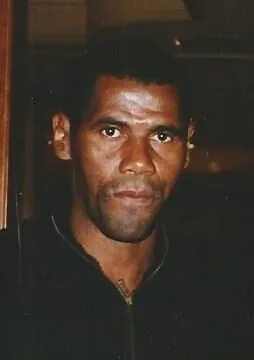
Photo: Wikimedia Commons
Georges de La Falaise
Human Design Chart
Biography
By his wife, the former Henriette Hennessy, he had four children. He died on 8 April 1910 at age 44 in Paris.
What does Generator 6/2 mean for Georges de La Falaise?
Generator 6/2 — Design at a Glance
Georges de La Falaise's Human Design profile indicated a tendency towards great endurance and inner strength, provided he engaged in tasks that stirred his intrinsic enthusiasm. As a Generator, he possessed a lot of sacral energy, which made him extremely strong and persistent, comparable to a workhorse. This energy, however, was not released through spontaneous initiatives but rather through reactions to signals from life. His motto was to not initiate but to wait for impulses and respond to them only when his sacral center gave a clear "yes."
Living in alignment with this strategy yielded him deep satisfaction and a sense of fulfillment. Persistently initiating or dedicating himself to things he had no interest in, on the other hand, risked burnout and a lack of energy. The biggest pitfall was being held back from his heart project, even though he still wanted to continue working with full power. Conversely, ignoring the inner signal led to ongoing frustration. His path to effectiveness therefore lay in responding intuitively to what spoke to him and then acting fully upon it.
Sacral Authority
Georges de La Falaise based his decisions on an immediate, physical resonance. As a Generator, his strategy to react was identical to his inner authority, which simplified his decision-making process. This sacral authority did not manifest through intellectual deliberation but rather through a direct gut feeling or a sudden surge of energy in response to external stimuli.
He learned to pay attention to specific bodily sounds – grunts, hums, or sighs like "Mmm" or "Hmm". These signals marked the moment when his sacral motor engaged with something. In these states, he felt vital and alive, with seemingly inexhaustible energy, and he tackled his tasks with great enthusiasm. His design predisposed him to move through life with joy and satisfaction, fully immersed in his activities without the need for external purpose.
Additionally, his activated Spleen Center served as a supportive instance. This connection allowed him particularly quick and spontaneous reactions. He had an immediate access to his physical well-being and instinctive perception. This combination of sacral energy and spleen-supported intuition enabled him to reliably follow his inner compass, allowing decisions to be made quickly and in harmony with his life force.
The 6/2 Profile — Role Model / Hermit
Georges de La Falaise showed himself in his youth as an experimental and curious individual who learned through trial and error. His design as a 6/2 line shaped this phase: before the age of 30, the 3-line dominated, leading to a withdrawal after mistakes and an intense search for personal experiences. This period was marked by ignorance and inappropriate actions, as described by Gate 25 in the 6-line. Here, the influence of Uranus could lead to spiritual fractures if innocence was lost through repeated mistakes.
After the age of 30, his approach fundamentally changed. The 6-line became active, prompting him to withdraw and look back at his earlier experiments with distance. This introspective phase served for healing and deeper self-awareness. At the same time, the 58.2 line brought joy in the unusual and a readiness to invest energy in new, unconventional ideas. It also expressed the pressure to challenge authorities but could also lead to indulgence.
Emerging from this reflective period, Georges de La Falaise appeared as a wise person. Others recognized his life wisdom and came to him to learn from his ability for deep introspection. His development from the youthful experimental phase to the mature, reflective authority illustrates the typical path of the 6/2 line: from ignorance through transformation by experience to a spiritual stance and wisdom.
Split Definition — Defined & Open Centers
George de La Falaise's Human Design showed a tendency towards clear self-determination and vital endurance. His defined G Center gave him a reliable identity and a sense of direction without being dependent on others. Combined with the defined Heart Center, which provided willpower and control over resources, he was someone who determined his life and kept promises. His defined Sacral energy functioned as a motor that worked best by reacting to invitations rather than initiating to avoid frustration. The defined Spleen Center secured intuitive, momentary judgments for health and well-being, while the defined Root Center delivered a constant pressure for forward movement.
These stable internal resources contrasted with his open centers. His open Head Center made him vulnerable to mental confusion and the pressure to find answers to questions that were not his own; he tended to wonder if he had to find inspiring solutions to gain clarity. The open Ajna Center led him to absorb concepts and opinions from the environment without identifying them as his own truth, which sometimes made him uncertain about his intellectual position. His open Throat Center generated a drive to force attention rather than waiting for natural invitations to speak. Finally, his open Solar Plexus absorbed the emotions of others, making him vulnerable to emotional conditioning and causing him to avoid confrontations to prevent negative reactions. This openness required him not to identify with foreign emotions or thoughts but to observe them as transient waves.
Channels for maturation, change, pioneering spirit and devotion.
George de La Falaise was someone deeply rooted in the rhythms of experience and transformation, driven by an energy that was both individually mutative and collectively maturing. His design featured the Mutation Channel 60-3, connecting the Root Center with the Sacral Center. This configuration brought a potential for evolutionary change that required accepting limitation (Gate 60) and the ability to move beyond the confusion of a new beginning (Gate 3). The melancholic, pulsating energy associated with this channel shaped his way of living out his unique design and profoundly influenced everyone in his vicinity. He had to learn to trust the reaction from his Sacral Center rather than rationalizing moods while patiently allowing growing mutations to mature underground.
Parallel to this, the Maturation Channel 53-42, also connecting Root and Sacral Centers, steered the abstract process of experience. This channel pushed him to complete new cycles and then reflect on them to gain wisdom. Each experience had to be brought to a satisfying conclusion before a new cycle could begin; this reflection helped him reveal learned lessons and build upon past experiences. Without this thorough penetration and reflection, he risked getting stuck in cycles that lost his interest.
Additionally, his design featured the Initiation Channel 51-25, connecting the Heart Center through the Shock Gate (51) and the Self Spirit Gate (25). Here, the competing ego energy that always wanted to be first was connected with universal love and the ability to see the beauty of the living and the unliving. This configuration awakened and strengthened competitiveness in others, but true expansion and testing of creative limits only occurred when he correctly entered situations. The impulse towards individuation was a mystical process that could not be controlled; initiation had to find him so he could surrender to it.
The Channel of Devotion 44-26 finally connected the Spleen Center with the Heart Center and gave him the gift of instinctively assessing others and finding appropriate products or ideologies. As an entrepreneur and promoter at the forefront, he used his willpower to manipulate and persuade the tribe by recognizing what people needed before they knew it themselves. His success depended on waiting until the market or his tribe recognized his gifts and asked him to promote himself or his product.
Additionally, Gates like 46 (Devotion, Body Love), 58 (Experiment, Perfection), 52 (Concentration, Pattern Correction), 48 (Logical Process, Depth), 21 (Control, Material Life), and 57 (Intuitive Clarity) as well as 15 (Collective Behavior) influenced his design, further shaping his way of engaging, experimenting, and moving within collective structures.
Individual Circuitry — Circuit Signature
George de La Falaise's design indicated a tendency towards separate, parallel functioning energetic blocks. His structure consisted of two non-connected groups: one connected the Sacral with the Root Center, the other the Identity, Heart, and Spleen Centers. This separation meant that his inner power (Sacral) and his emotional/identity dynamics did not flow directly but existed as separate systems.
In the Knowledge Circuit, the Mutation Channel (3-60) was active. This connected his Sacral with the Root Center and promoted a pulsating energy aimed at walking his own unique path and creating new knowledge through deviation from the known.
The Centering Circuit was shown through the Initiation Channel (25-51). This connected the Identity with the Heart Center. It was a very individual, inward-looking configuration that shaped strong personalities with firm convictions and high self-esteem. Since there was no connection to the Throat Center, these firm convictions often remained unspoken or hard to verbalize.
In the Meaning Circuit, the Maturation Channel (42-53) was active, also between Sacral and Root Centers. Here, it was about emotionally processing experiences from the past. The energy flowed in waves and served to find meaning behind events to learn from them.
Finally, the Ego Circuit was active through the Channel of Devotion (26-44), connecting Heart and Spleen Centers. This belonged to the tribe dynamics and concerned cooperation as well as the joint creation of resources. Since the Sacral Center was missing here, this interaction required necessary pauses to replenish energy for mutual support.
Left Angle Cross of Healing 1
Georges de La Falaise's Human Design configuration indicated a tendency towards profound, often painful inner work that can be understood as a path towards personal and collective healing. This configuration, known as the left healing cross, described a life task focused on building bridges through personal experiences and insights, helping others process and overcome their own wounds.
This cross emphasized the importance of empathy and compassion, coupled with a strong will to bring about positive change. It was not just about individual healing but also about sharing wisdom and support to help others master similar challenges. The mechanics of this design promoted a stance of humility and learning from one's mistakes, contributing to an authentic connection with others.
Without specific events mentioned in the raw content, it can be inferred that Georges de La Falaise was likely a central figure in his environment as someone who promoted healing and growth. His ability to generate deep emotional resonance while offering practical solutions made him a valuable resource for those seeking guidance and understanding.
Saturn Return · Uranus Opposition — Life Cycles
Georges de La Falaise's Human Design indicated a tendency towards sudden, disruptive breakthroughs that challenged established structures. He was someone who could reveal his true strength in crisis moments or during profound transformations, rather than adhering to conventional paths. This dynamic resulted from the Uranus opposition in his chart, a configuration that creates inner tension between the desire for individual autonomy and external expectations. It marked him as an impulse generator who broke through the status quo, often through unexpected actions or radical decisions that dissolved old patterns.
In 1906, at the age of 40, Georges de La Falaise won the gold medal with the foil team and in the foil individual event. This success occurred precisely during the phase of the Uranus opposition, an astrological cycle often associated with profound life changes and the need to break free from past entanglements. For his design, this victory was not just a sporting triumph but the realization of his inner drive for freedom and individual expression strength. The opposition acted as a catalyst that released his hidden potentials and enabled him to push through resistance. This moment marked a peak where his unique energy unfolded in a concrete, visible success, underscoring his ability to deliver outstanding performance in moments of transformation.
Generator · Sacral Authority — Synthesis
Georges de La Falaise was a Generator whose life was marked by deep, sacral energy. This energy, fueled by the Channel of Mutation (3-60), was evident in a constant interplay between exploring new possibilities and accepting limitations. His profile as a role model and natural talent suggests that he initially learned through experimentation and life experience to later act as a wise mentor. The sacral authority challenged him to listen to his inner voice and be guided by the life force within him – a process supported by the defined G Center and its directional sense. He thus lived a life characterized by the search for authentic experiences and the sharing of wisdom.
A central paradox in his design lay in the tension between the pulsating, mutative nature of the Knowledge Circuit and the need for withdrawal and reflection brought by the 6/2 line. On one hand, he was destined to bring about change through creative impulses and innovative ideas, on the other hand, he needed phases of distance to process and integrate the insights gained. This was reflected in the left healing cross and underscored by the success at a significant event (gold medal) at the age of 40, which both expressed his abilities and marked a turning point in his life.
4 Defined Channels
Incarnation Cross - Left Angle Cross of Healing 1
Solar Return
The Solar Return shows the moment when the sun returns to its exact birth position - your personal solar year.
Life Cycles
Discover the life cycles with a detailed triple view (birth chart, cycle chart, composite).
Human Design Profile
- Type
- Generator
- Strategy
- To respond - wait for something to respond to
- Authority
- Sacral Authority
- Profile
- 6/2 - Role Model / Hermit
- Definition
- Split Definition
- Incarnation Cross
- Left Angle Cross of Healing 1
- Date of Birth
- 24.03.1866 12:30
- Place of Birth
- Luçon, France
Frequently Asked Questions
What was Georges de La Falaise's Human Design type?
What profile did Georges de La Falaise have?
Which authority guided Georges de La Falaise?
What incarnation cross was Georges de La Falaise assigned to?
When was Georges de La Falaise born?
Discover your own Human Design
Are you also a Generator? Find out in a personal reading how to use your sacral energy correctly and discover deep satisfaction.
More Personalities
Back to overviewAaliyah

Aldair
Alexia

Angèle

Anne-Marie

Arcángel