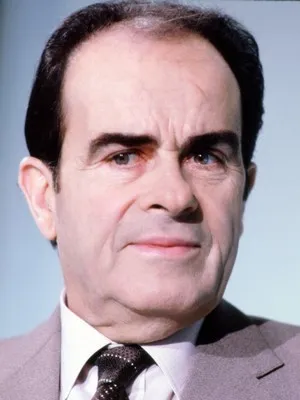
Georges Marchais
Human Design Chart
Biography
As a young man he worked as a mechanic and in 1946 became Secretary of the Union of Metalworkers. He joined the Communist Party in 1947, and his rise through the hierarchy was rapid. In 1956 he became a member of the Central Committee, and in 1972, Secretary General of the Party.
In 1972, with the Socialist leader François Mitterrand and Robert Fabre, Marchais worked out a common political program between the leftist parties in France to combine their electoral strength. Elected to the National Assembly in March 1973, he was continually reelected thereafter. He and his party supported Mitterrand as the unsuccessful candidate of the unified left in the presidential elections of 1974.
After the breakup of the Communist-Socialist alliance in 1977,Marchais abandoned his previous moderate Marxist stance and adopted a more pro-Soviet, hard-line policy. But his attempt to restore the Communists to their former dominance of the left by adopting an orthodox and dogmatic Communist stance alienated many sympathizers and drove them to the Socialist camp. In the first round of the presidential election in April 1981, he ran against Mitterrand but dropped out after the first round, having polled only 15.3 percent of the vote, the worst showing for a Communist presidential candidate since 1935. In subsequent years support for the Communist Party declined further; in parliamentary elections held in 1986 and 1993 the party received less than 10 percent of the vote.
Throughout his career Marchais's wartime record was a subject of controversy. Opponents charged that during World War II he volunteered to work in an aircraft factory in Germany; Marchais claimed that he had been deported into forced labour.
He had a marriage and divorce; three children. He had a second marriage on 18 February 1977; one son. Died of pulmonary edema on 16 November 1997.
Georges Marchais — Manifesting Generator with Profile 5/2
Manifesting Generator 5/2 — Design at a Glance
Georges Marchais showed himself to be someone who worked with a hybrid energy that combined the endurance of a Generator with the explosive speed of a Manifestor. His design indicated a tendency towards quick actions, allowing him to skip steps and rapidly draw things into his life. This ability stemmed from an active connection of the Motor Centers to the Throat Center, enabling him to communicate initiatives directly.
At the same time, he had a defined Sacral Center, which provided him with constant energy. The strategy for this configuration was not to initiate himself but to respond to external impulses. Only when the Sacral Center gave a clear "yes" should he act. This feedback loop was crucial, as his natural inclination was to pursue multiple projects in parallel. Without this inner confirmation, frustration threatened, especially when he moved too quickly and skipped important intermediate steps that he would have to make up for later.
With the correct application of this strategy – by constantly checking whether the energy was still there – Georges Marchais could draw deep satisfaction from his work. His design promoted a "play mode," in which variety and parallel work were not distractions but sources of his creative power. The challenge always lay in combining the speed with the necessary patience to avoid overstepping the inner agreement.
Sacral Authority
Georges Marchais showed himself to be someone who made decisions not through intellectual analysis but through direct physical resonance. His design indicated a tendency towards spontaneous, instinctive action based on a clear inner response. As a Generator, he possessed sacral authority that also served as his strategy. This greatly simplified his decision-making process, as strategy and inner guidance were identical. A prerequisite for this was an open Emotional Center, meaning that he did not react to emotionally charged impulses but rather to the immediate, physical response of the Sacral Center. This manifested as bursts of vitality or characteristic vocalizations like grunts or affirmations in response to external stimuli. When his sacral motor was engaged, he had inexhaustible energy and completed his tasks with great enthusiasm and satisfaction, free from compulsive purposefulness. Additionally, his Spleen Center was activated and possibly directly connected to the Sacral Center. This served as a supporting authority, giving him quick, spontaneous access to his instinctive perception and physical well-being. He could reliably guide himself from these immediate impulses, further accelerating and refining his responsiveness and decision-making.
The 5/2 Profile — Heretic / Hermit
Georges Marchais showed himself as someone who oscillated between the urge for public recognition and the deep need for withdrawal. His design as a 5/2 Profile, "Hero/Natural Talent," highlighted this tension: He wanted to help and be admired, yet simultaneously sought refuge in his "cave" to withdraw. As long as he was not discovered, he worked intensively on himself, using the solitude to strengthen his role. However, if he waited only for passive discovery, frustration and bitterness threatened, as heroism does not function in isolation. His task was to examine his own expectations and boldly step into the spotlight.
This pattern was shaped by specific energies. Gate 35 promoted selflessness and sharing experiences, especially during crises, where practical solutions were paramount. It was about not holding onto the past but passing on insights. Parallel to this, Gate 22, the "Etiquette School," had an influence. This energy emphasized style and social skills to ease interactions. However, there was a danger that style could come at the cost of awareness, which others could exploit. Marchais had to learn to actively show his gifts instead of hiding them, to effectively bring his presence and clear insights to the fore without neglecting his necessary boundaries and quiet phases.
Single Definition — Defined & Open Centers
Georges Marchais shows himself through a defined G Center as someone with a firm inner identity and clear direction. He had a natural sense for his life path and could support others in finding their own orientation without being dependent on them. This reliable self-love formed the foundation of his presence.
At the same time, he had a defined Sacral Center, marking him as a Generator. He possessed a tremendous, constant vital energy source that manifested in everyday life as restlessness or a drive to be active. His strength, however, was only ignited through reacting to life; spontaneous initiating led to exhaustion and frustration, as he then worked against his natural energy flow. His truth lay in the ability to respond with a clear "yes" or "no" from the gut to questions or invitations, to use his energy correctly.
A third defined center was his Throat. It served as a pivot point to translate information from his inner self—whether from identity or energy—into concrete communication and action. His voice was a reliable instrument to express his truth clearly and honestly, provided he trusted his inner authority.
In contrast, his Head and Ajna Centers were open. Georges Marchais was not designed to process continuous mental inspiration or to possess conceptual answers. He tended to absorb the mental pressure and doubts of others, which could confuse him when trying to solve problems that were not his own. His open mind, however, was flexible and open to new insights, as long as he did not identify with foreign thoughts.
His Heart Center was also open. He was not designed to hold willpower in the sense of competition or promises. He tended to put himself into impossible situations through the need to prove his worth, often leading to disappointment. His strength did not lie in asserting will but in letting go of the need to prove himself.
His open Solar Plexus absorbed the emotions of his environment. He was prone to intensifying and experiencing foreign moods as his own, which could lead to emotional instability if he did not let these waves go. His open Spleen Center made him sensitive to well-being and fears. He tended to cling to people with defined Spleen Centers to gain a sense of security, which could lead to unhealthy dependencies if he did not learn to see through his own fears. Finally, his open Root Center absorbed stress from the environment. He was under the pressure to be constantly active to escape this stress, which protected him from burnout only if he recognized that this pressure was not his own.
Channels for rhythm, extremes and reflective memory.
Georges Marchais revealed himself through a deep rooting in the natural flow of life, where his design exhibited a specific tension between a fixed rhythm and a reflective withdrawal. The Rhythm Channel 5-15 connected his Sacral Center with the G Center. Gate 5 held fast to fixed habits and rituals, while Gate 15, with its love for extremes, integrated the diversity of society into the life flow. This channel served as a cornerstone for biological processes, unaffected by intellectual arrogance or emotional waves. It generated a collective magnetism that drew others impersonally into his rhythm and propelled them forward. Marchais lived in this perpetual movement impulse, which gave him his own inner timing. As long as he followed this flow, everything seemed effortless and utilized his environment by bringing it into its own rhythm.
Simultaneously, the Lost Son Channel 13-33 shaped his way of processing experiences. This channel connected the G Center with the Throat Center. Gate 13, the Gate of Listeners, gathered information, secrets, and memories. Gate 33 withdrew to reflect on these gathered experiences and wait for the revelation of deeper truths. Here, it was about patience and the ability to see all sides of an experience before sharing it. Marchais functioned as a guardian of the heard, sorting life stories to bring continuity and stability to development. His challenge lay in the timing: he had to wait until the lessons were complete before revealing them to avoid frustration from unmet expectations.
Additionally, gates like 35 (Change through Interaction), 22 (Openness and calm listening), and 47 (Purpose from past confusion) contributed to his collective perspective. Gates 16 and 7 emphasized the importance of experimenting and hierarchical leadership, while Gate 59 represented the genetic strategy of bonding without personal preference. These configurations showed a person who made wisdom from the past useful for the future through patient observation and rhythmic flow.
Collective Circuitry — Circuit Signature
Georges Marchais revealed himself through a design that processed logical future strategies and emotional past reflections in parallel but energetically separated ways. His Understanding Circuit connected the Identity Center with the Sacral Center. This created a rhythmic, emotionless ratio that planned structural improvements for the future. This energy was constant and focused, free from mood swings.
At the same time, he possessed the Meaning Circuit, which linked the Throat Center with the Identity Center. Here, it was about sharing emotional waves from the past. This energy followed a cyclical pattern: feelings would rise, reach a peak, and then subside before insights could be verbally formulated and shared.
Although both circuits utilized the Identity Center, they did not form a continuous bridge between the Sacral and Throat Centers. The rational planning of the future and the emotional processing of the past remained separate forces. Marchais lived with this dual structure: on one hand, the disciplined, strategic power of the rhythm, and on the other, the wave-like, reflective nature of emotional meaning-making. This separation prevented a direct mixing of cool logic and emotional experience, allowing them to operate side by side.
Left Angle Cross of Separation 1
Georges Marchais was characterized by a fundamental attitude oriented towards clear demarcation and the definition of boundaries. His design bore the signature of the left separation cross, describing an inner dynamic aimed at separating the self from the foreign. This configuration promoted an attitude that did not seek fusion or harmony in the sense of adaptation, but rather the clear identification of what belongs to oneself and what does not.
This mechanism acted as a driving force for a life task that involved defining structures and relationships through precise demarcation lines. It was not about rejection in an emotional sense, but about a functional necessity to create clarity by distinguishing the necessary from the superfluous, the true from the false, or the self from the foreign. Georges Marchais lived this tendency by focusing on what such demarcations proved to be authentic and sustainable. The energy of this cross supported him in disengaging from expectations or connections that did not align with his own structure, and instead taking an independent path based on the recognition of individual differences. This created a foundation for actions rooted in a solid, self-determined basis, free from the need to adapt to others.
Saturn Return · Uranus Opposition · Chiron Return · 2nd Saturn Return — Life Cycles
Georges Marchais showed himself to be someone who sought his role within a larger structure and defined himself through clear commitments. His design suggested that he found his true strength in phases of maturation and consolidation. In 1947, at the age of 27, he joined the Communist Party. This fell within the period of his first Saturn return. In Human Design mechanics, this cycle often marks the transition from youth to a serious engagement with the world. Here, years of preparatory work condensed into a durable, long-term commitment to an organization that shaped his life path.
Later, in 1972, he became General Secretary of the Communist Party of France. He was 52 years old at the time, in the middle of his Chiron return. This cycle represents the flowering and fulfillment of one's life purpose. If one follows their inner authority, this phase unfolds what defines them most clearly. For Marchais, this meant taking on the highest responsibility in the party, the concrete embodiment of his life task.
In 1977, at the age of 57, he entered his second marriage. This occurred during his second Saturn return. This cycle often demands a reordering of one's responsibilities and structure. The decision for a new, stable partnership showed how he re-established his private foundations after fully establishing himself professionally. His life stations thus followed the typical patterns of Saturn and Chiron cycles: commitment, fulfillment, and reordering.
Manifesting Generator · Sacral Authority — Synthesis
Georges Marchais lived a life path marked by a deep, sacral energy (Spleen Center defined), which drew him into a steady flow of activity and reaction. This energy, channeled through the Rhythm Channel (Gate 5/15), gave him endurance and the ability to adapt to the changing demands of life. His profile as Hero/Natural Talent (Line 5/2) suggests that he felt at home in the role of a fighter for his beliefs, while also possessing a natural inclination towards restraint and self-sufficiency. The defined Throat Center indicated that his communication and actions sprang from an inner source of authority and determination.
A central paradox in his design lay in the combination of manifesting Generator energy and the need for rest, brought by Line 2 of his profile. He was capable of quickly setting things in motion (Manifestor aspect), yet he also enjoyed withdrawing to go inward and collect his energy. This tension between the urge to act and the desire for isolation shaped his decision-making and actions, particularly regarding events that determined his career and relationships.
2 Defined Channels
Incarnation Cross - Left Angle Cross of Separation 1
Solar Return
The Solar Return shows the moment when the sun returns to its exact birth position - your personal solar year.
Life Cycles
Discover the life cycles with a detailed triple view (birth chart, cycle chart, composite).
Human Design Profile
- Strategy
- To respond - wait for something to respond to
- Authority
- Sacral Authority
- Profile
- 5/2 - Heretic / Hermit
- Definition
- Single Definition
- Incarnation Cross
- Left Angle Cross of Separation 1
- Date of Birth
- 07.06.1920 04:00
- Place of Birth
- Falaise, France
Frequently Asked Questions
What was Georges Marchais' Human Design type?
What Profile did Georges Marchais have in Human Design?
What authority did Georges Marchais have?
What incarnation cross did Georges Marchais have?
When was Georges Marchais born?
Discover your own Human Design
Are you also a Manifesting Generator? Find out in a personal reading how to unfold your multi-talents and direct your energy wisely.
More Personalities
Back to overviewAldair

Alizée

Angeli

Arletty

Artus
Balthus