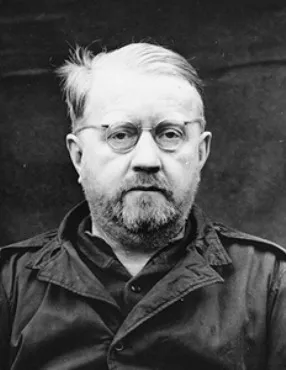
Gerhard Rose
Human Design Chart
Biography
What does Generator 4/6 mean for Gerhard Rose?
Generator 4/6 — Design at a Glance
Gerhard Rose revealed himself as someone with remarkable endurance and the ability to generate energy over long periods. His design suggested he functioned like a strong workhorse: extremely resilient as long as he found the right internal resonance for his tasks. This strength came from his sacral center, which provided him with a vital foundation.
However, the key mechanism in his life was not initiative but responding to signals. Gerhard Rose was a Generator whose energy flow worked most efficiently when he responded to cues from his environment. Instead of taking the first step himself and forcing projects from outside, he waited for inner confirmation – that gut feeling signaling something aligned with his true interests.
Living in harmony with this reactive strategy rewarded him with deep feelings of fulfillment and satisfaction. Conversely, trying to fight against this nature by initiating things he didn't have an internal desire for or being held back from his heart project despite the energy still being there inevitably led to frustration and a noticeable lack of energy. His path thus involved persistent action but always waiting for life to call before acting.
Emotional Authority
Gerhard Rose showed a decisive tendency: He took time before acting. His inner authority lay in the defined Emotional Center – a mechanism that takes precedence over any type except Reflectors, regardless of other definitions in the chart. This configuration subjected him to an emotional wave, a permanent up and down of feelings. The world appeared colored by his current mood; enthusiasm could turn into negative evaluation within moments. His immediate feeling was only a snapshot, not a secured claim to truth. Quick decisions from this emotional heat often proved disadvantageous. Instead, Gerhard Rose gained clarity by letting decisions ripen. This process required patience and repeatedly sleeping on important questions. The longer time passed, the more intense feelings subsided. Emotional distance set in, followed by calmness and deeper understanding. Only then was the inner process complete. This strategy of delay primarily served long-term life decisions with significant influence on his further path. Through waiting, he filtered out temporary emotional coloring and made decisions that aligned with his actual truth, not just current affect.
The 4/6 Profile — Opportunist / Role Model
Gerhard Rose's design pointed towards a tension-filled shift between social engagement and distanced reflection. In the first three decades of his life, he acted experimentally, driven by Line 4 in Profile 4/6, which activated him in relationships and friendships. This phase served to collect initial experiences through detailed concentration and externalization.
With the onset of the second life phase marked by Saturn Return, his focus shifted towards Line 6. Here an inner conflict emerged: The heart of Line 4 sought belonging and cooperation while the head of Line 6 yearned to withdraw for deeper reflection. Gerhard Rose became a 'networker' and later role model. His task was to integrate these two poles.
The mechanics of his lines supported this through strong willpower (Gate 40), enabling him to identify inferior forces in the community and reject unfair demands. He exercised authority by showing 'generosity' – lifting others up – while simultaneously bringing 'the earth down', correcting unjust power structures. His life revolved around cautiously opening his heart while wisely acting from a higher position, without being hurt by false bonds.
Split Definition — Defined & Open Centers
Gerhard Rose was characterized by a strong inner foundation of willpower and vital energy. His defined Heart Center gave him the ability to determine his own resources and reliably fulfill promises; he preferred following his own rhythm rather than instructions. This structure promoted natural competitiveness as well as the drive to be recognized for his contribution. Simultaneously, his defined Sacral Center generated a constant source of life force. Gerhard Rose had a mechanical intuition regarding energy availability: His immediate internal response to requests decided whether he had the strength for a task or not. By waiting for this reaction, he avoided exhaustion and found deep satisfaction in activities that activated his generative energy.
Additionally, his defined Solar Plexus acted as an emotional authority. He learned to trust the wave movement of his feelings and make decisions only after completing the emotional cycle, which gave him a profound clarity over time. His defined Root Center provided the necessary existential pressure to move forward in the material world and face challenges.
At the same time, his design revealed specific vulnerabilities through open centers. The open Head and Ajna Centers made him susceptible to foreign mental inspirations; he tended to identify with non-self questions or concepts, which could lead to inner confusion if he did not rely on his internal authority. His open G Center meant a flexible identity: Gerhard Rose mirrored the environment and often sought direction through external initiation rather than stepping out from himself. The open Spleen Center led to sensitivity for health signals; he was prone to holding onto uncertain situations or making spontaneous, fear-driven decisions that were not sustainable in the long term. Finally, his open Throat Center naturally attracted attention when he waited instead of actively seeking confirmation.
Channels for focus, details and true community.
Gerhard Rose showed himself as someone who precisely channeled his energy while paying attention to the quality of his relationships. His design featured Channel 52-9 Concentration between Root and Sacral Centers. This connection linked Gate 52 Non-doing with Gate 9 Focusing, creating a calm internal pressure to stay still and avoid distractions in order to logically examine details. Gerhard Rose had to wait for his Sacral Center to react before he acted; this pause served to recognize and perfect patterns. Without this focus, he felt restless as his energy would otherwise be scattered.
Parallel to this, the Channel 37-40 Community between Solar Plexus and Heart Centers was at work. It connected Gate 40 Alone with Gate 37 Friendship, which sought recognition for effort in the collective. This configuration emphasized that true connections do not arise spontaneously but grow through careful agreements and mutual respect. Gerhard Rose understood the value of a fair deal where everyone contributes without forming hierarchies.
Additionally, further Gates shaped his profile: Gate 16 promoted experimenting towards mastery while Gate 38 set boundaries and defended integrity. Gate 14 helped him handle power with grace, and Gate 30 taught him to accept emotions as fate. Gate 29 in the Sacral Center challenged persistent saying yes to challenges, while Gate 6 regulated emotional waves. Together these elements created a profile based on focused logic and respectful community work.
Collective Circuitry — Circuit Signature
Gerhard Rose's design inclined towards structured, focused energy application. He was someone who used logical connections to improve or direct things into the future – free from emotional coloring. This was grounded in the Understanding Circuit: In him, it linked the Sacral with the Root Center (Channel 9-52 Concentration). This direct connection channels life force into precise focus, enabling a rational, strategic approach.
Parallel to this, an independent, non-connected flow operated: the Ego Circuit. Here he connected the Heart with the Solar Plexus Center (Channel 40-37 Community). As Gerhard Rose had a Split Definition, these two centers existed in their own group, isolated from the Sacral-Root stream. This configuration promoted a sense of mutual support and the relationship of give-and-take within a community. It was timeless energy of cooperation but worked without direct connection to his constant life force. Therefore, he needed quiet pauses to build resources for these social dynamics. The separation between the focused, future-oriented mind and the community-related, emotional-intuitive exchange shaped him as two adjacent, non-directly flowing power fields.
Right Angle Cross of Planning 4
Gerhard Rose's Human Design indicated a tendency towards strategic and long-term thinking. He was someone who steered actions not impulsively but through careful consideration and planning. This approach stemmed from the influence of the right cross of Planning in Human Design, which grants the ability to analyze complex situations before making decisions. It is a mechanism of internal structure that creates stability through deliberation. Gerhard Rose used this energy to consciously choose his paths and assess risks. The planning function acted as a filter between impulse and action, enabling him to foresee consequences and make appropriate preparations. This was not mere caution but an active shaping opportunity through cognitive clarity. His design supported him in bringing order into unclear situations. Through this trait, he could focus on goals that extended beyond the immediate moment. The right alignment of this energy emphasized individual judgment and personal responsibility for decisions made. Gerhard Rose lived with this inner compass function, which helped him act within a structured framework. His way of acting was characterized by this thoughtful approach, fostering stability and reliability.
Saturn Return · Uranus Opposition · Chiron Return · 2nd Saturn Return — Life Cycles
Gerhard Rose's life followed a structure where external events marked his internal development. In 1922, at the age of 26, he obtained his medical license and earned his doctorate in Breslau. This coincided with his first Saturn Return, a cycle that often condenses years of groundwork into sustainable results and lays the foundation for professional basics.
In 1936, Rose returned to Germany and was appointed as a professor. At age 40, this event aligned with the Uranus Opposition, a phase in Human Design considered a moment of sudden change where old structures break down and new roles are forced or enabled.
In 1945, at 49 years old, Rose was captured by allied troops. This marked his Chiron Return, a fulfillment cycle during which one's incarnation cross unfolds. Here, it did not show traditional healing but rather a profound confrontation with the purpose of life and the reality of existence.
In 1953, he began serving a life sentence in prison. At age 57, this occurred during his second Saturn Return, a period often leading to final clarification of responsibilities and making long-term consequences of earlier actions visible. This sequence highlighted how astrological cycles structured his biographical turning points.
Generator · Emotional Authority — Synthesis
Gerhard Rose lived as a Generator with defined sacral energy and emotional authority, marked by a deep drive for work and the need for inner clarity. The Heart Center determined his actions, emphasizing self-determination and adherence to given promises (defined heart). This energy combined with the ability to grasp details through the Channel of Concentration (Gate 9/52) and dive into focused work flow – an energy format aimed at improving things. His profile as a Networker/Roles Model points towards a life revolving around relationships, yet with an internal tension between the desire for community (Line 4) and the necessity to withdraw and reflect on larger contexts (Line 6).
A central paradox in Gerhard Rose's design lay in the interplay of emotional wave and sacral drive. Emotional authority required time for decision-making to grasp the true essence of a situation, while the Generator type sought tasks that ignited his energy. This combination led to an internal field of tension between the need for reflection and the urge towards activity, manifesting in transitions throughout his life cycles – from professional establishment (Saturn Return 1) through career peaks (Uranus Opposition) to crisis times (Chiron Return, Saturn Return 2).
2 Defined Channels
Incarnation Cross - Right Angle Cross of Planning 4
Solar Return
The Solar Return shows the moment when the sun returns to its exact birth position - your personal solar year.
Life Cycles
Discover the life cycles with a detailed triple view (birth chart, cycle chart, composite).
Human Design Profile
- Type
- Generator
- Strategy
- To respond - wait for something to respond to
- Authority
- Emotional Authority
- Profile
- 4/6 - Opportunist / Role Model
- Definition
- Split Definition
- Incarnation Cross
- Right Angle Cross of Planning 4
- Date of Birth
- 30.11.1896 08:00
- Place of Birth
- Danzig, POL
Frequently Asked Questions
What is Gerhard Rose's Human-Design type?
What Profile did Gerhard Rose have?
Which authority guided Gerhard Rose?
Which incarnation cross did Gerhard Rose carry?
When was Gerhard Rose born?
Discover your own Human Design
Are you also a Generator? Find out in a personal reading how to use your sacral energy correctly and discover deep satisfaction.
More Personalities
Back to overviewAaliyah

Alexia

Angèle

Anne-Marie

Arcángel

Arno