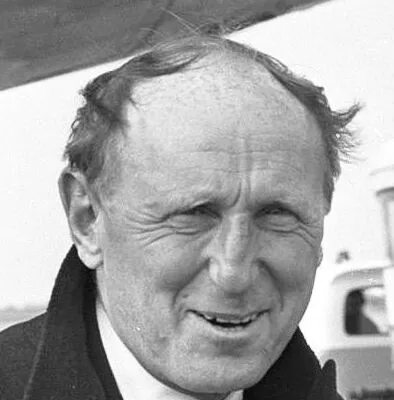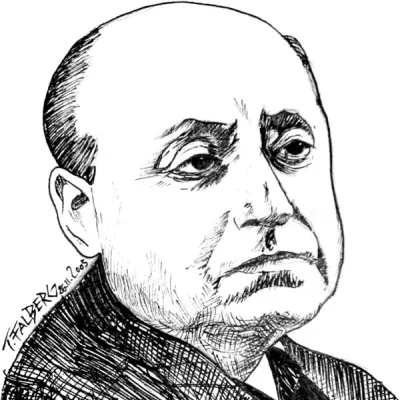
Gottfried Benn
Human Design Chart
Biography
With a beat of a kettledrum, Benn started as an expressionist poet before World War I when he published a booklet of poems, titled Morgue and other Poems, 1912, dealing with physical decay of flesh, with blood, cancer, and death. Poems like this "were received by critics and public with shock, dismay, even revulsion." Benn's poetry offers an introverted nihilism: an existentialist philosophy which sees artistic expression as the only purposeful action. In his early poems Benn used his medical experience and terminology to portray a morbid conception of humanity as another species of disease-ridden animal.
He enlisted in 1914, spent a brief period on the Belgian front, and then served as a military doctor in Brussels. Benn attended the trial and execution of Nurse Edith Cavell. He worked as a physician in an army brothel. After the war, he returned to Berlin and practiced as a dermatology and venereal disease specialist.
Hostile to the Weimar Republic, and rejecting Marxism and Americanism, Benn, like many Germans, was upset with ongoing economic and political instability, and sympathized for a short period with the Nazis as a revolutionary force. He hoped that National Socialism would exalt his aesthetics, that Expressionism would become the official art of Germany, as Futurism had in Italy. Benn was elected to the poetry section of the Prussian Academy in 1932 and appointed head of that section in February 1933. In May he defended the new regime in a radio broadcast, saying "the German workers are better off than ever before," and later signed the Gelöbnis treuester Gefolgschaft, the "vow of most faithful allegiance" to Adolf Hitler.
The cultural policy of the new State didn't turn out the way he hoped, and in June 1933 he was replaced as head of the Academy's poetry section.
Gottfried Benn as a Projector 5/2 in Human Design
Projector 5/2 — Design at a Glance
Gottfried Benn's design was characterized by a dense, focusing aura that acted like a bright flashlight. It targeted areas in the environment that were not functioning or were in darkness. Benn immediately identified system errors and weaknesses in others. This ability to find faults in systems was central to his nature as a Projector.
As projectors lack constant intrinsic life energy due to an undefined sacral, Benn moved through cycles of high activity followed by necessary rest phases. This prevented burnout since the education system and many jobs often ignored this need for recovery.
His strategy did not involve active confrontation. Had he directly addressed the found errors, it would have been like shining a bright light in someone's face, causing resistance and bitterness – his non-self theme. Instead, Benn worked more elegantly through his own harmonious example. Through this passive attraction, he drew others who then sought his insights. Success only came when he waited for a respectful invitation. Living by this design rewarded him with success; ignoring it led to bitterness sooner or later.
Emotional Authority
Gottfried Benn's decision-making required emotional detachment and time; spontaneous impulses proved misleading. His design dictated that clarity could only be achieved after the subsiding of emotional waves – the necessity of 'sleeping on decisions' shaped his inner workings.
This structure arose from his emotional authority: With a defined emotion center, it always served as an internal guiding force, independent of other defined centers in the chart. Benn was constantly swept by rising and falling emotions that colored his perception of the world momentarily. What seemed inspiring at one moment could appear negative the next. This current feeling was only a snapshot, not the final truth. Quick, spontaneous decisions from this emotional heat risked negative consequences.
Instead, time was needed. The longer Benn let a decision mature, the deeper and more comprehensive his understanding became. This required patience and multiple 'sleeping on' important steps. Through this hesitation and self-reflection, intense feelings gradually subsided. Emotional distance emerged, leading to clarity and calmness. Only then was the inner process complete. This mechanism was especially crucial for long-term decisions that significantly influenced life's course. Thus, Benn demonstrated someone who found true insight through patient waiting for emotional tranquility.
The 5/2 Profile — Heretic / Hermit
Gottfried Benn's design created a tension between his deep need for retreat into the 'cave' of solitude and the impulse to be recognized as a hero. He did not immediately present himself to the world; instead, he used his isolation to develop inner strength and clear insights. This dynamic stemmed from his 5/2 configuration: The second line promoted selectivity and the desire for undisturbed seclusion, while the fifth line carried the drive to act effectively in crises.
The risk lay in passively waiting for an external 'discovery' as a hero, which could have led Benn to bitterness. His design challenged him to consciously set boundaries of his private space and carry his presence and specific insights outward. Once he did this, he could receive the admiration that his profile sought without sacrificing his necessary alone time. The challenge was always to not accept the 'lonely wolf' as a final state but to actively bring forth developed strength while clear boundaries secured the survival of this public role.
Single Definition — Defined & Open Centers
Gottfried Benn's Design established a tendency towards constant inner structure of willpower and emotional depth. He showed himself to be someone who found his own authority through emotional clarity and intentional affirmation. His defined Heart Center provided the steady energy for self-assertion, resource control, and the need for personal responsibility; it required keeping promises to strengthen the ego. The also defined Solar Plexus Center dictated the rhythm: decisions had to follow the emotional wave – "truth reveals itself over time" – rather than being made in the moment. This combination created a person who found their own authority through emotional clarity and intentional affirmation.
His open centers shaped him with specific vulnerabilities. His open Head Center tended to be overwhelmed by doubts and confusion that belonged to others; he might have sought inspiration to focus, instead of riding out mental pressure waves. His open Ajna Center made him susceptible to interpreting concepts as personal truth or pretending to know things to be accepted. His open G Center meant no fixed identity; he tended to seek direction and love by orienting himself towards others rather than possessing inner constancy. His open Sacral Center left him sensitive to the energy of others, which could lead to exhaustion if he did not know when enough was enough. His open Spleen Center carried a fundamental fear of survival; he tended to hold onto things that were not good for him in order to feel secure. His open Root Center absorbed stress from the environment, which could lead to hyperactivity as he tried to release this pressure.
Channels for authentic connection between freedom and heart.
Gottfried Benn's Design inclined towards strategic waiting: He sought the right moment and personal invitation to build bridges between individuals. This attitude stemmed from Channel 37-40, which connected emotional clarity of the Solar Plexus with the willpower of the Heart. Benn showed himself as someone who entered into agreements based on reciprocity – "I do this for you if you do that for me" – where these connections did not arise spontaneously but through careful consideration and emotional maturity. The channel guaranteed the depth of such alliances by transitioning from pure survival struggle to liberation in organic structures.
Additional energies were at work: Gate 24 brought mental mutations and a desire for inner stillness, while Gate 44 promoted vigilance and transformation through interaction. Gate 13 ensured continuity and reflection in collective memory, and Gate 7 projected leadership patterns as well as hierarchies. On the personality level, Gate 51 contributed strong willpower without social bonds, reacted to shocks with adaptation, and harboured both competitive and mystical potentials. Gate 36 enabled the release of emotional energy through crisis cycles that prepared the ground for new experiences. Finally, Gate 6 regulated emotional waves in the context of fertility and friction as an elemental building block of further development. Together, these configurations shaped Benn's specific way of forming community: not through hierarchy or material exchange, but through respected functions, loyalty to the group, and willingness to work side by side to create an honourable place for all.
Tribal Circuitry — Circuit Signature
Gottfried Benn's design inclined towards cooperative action and the joint building of resources. His ego circuit connected the Heart Center with the Solar Plexus Center, functioning as the Community Channel (37-40). This configuration promoted a balance between giving and taking: the willingness to support today in anticipation of mutual aid tomorrow. It was about practical solidarity within the tribe, not individual self-promotion.
Since Gottfried Benn had no connection to the Sacral Center, he lacked the constant life force of this center. This necessitated regular rest breaks for regeneration and the creation of new resources. Without these pauses, his energy for communal living would have been exhausted. His approach was conservative and tradition-influenced; he sought stability through proven structures of mutual protection. The mechanics were evident in a pragmatic attitude: resources were created together but only used sustainably if adequate rest was planned. It was a system of reciprocal exchange based on trust and timeless support, yet set strict limits due to the need for rest.
Left Angle Cross of Incarnation 1
Gottfried Benn's design included the structure of the Left Incarnation Cross. Since this configuration lacks a specific energetic description in the available data, no detailed characterization or life task can be derived from it. The Human Design system typically uses such crosses to mark central themes of existence; here, however, the necessary content is missing to describe a concrete dynamic.
There was no derived tendency, no specific behavior, and no recognizable strategic orientation that emerged from this element. The mechanics did not provide any clues for a particular kind of action or perception. Gottfried Benn lived with this empty structure in his chart, meaning that other defined parts of his design—such as type, profiles, or active channels—formed the primary drivers of his experience. The Left Incarnation Cross of Inception 1 did not act as a formative factor in the present analysis.
Without underlying description, this component remained neutral and without influence on the interpretation of his character. There was no evidence that this cross played a specific role in his life or influenced certain events. The absence of data at this point leads to Gottfried Benn's design remaining silent here. No assumptions were made, no fictional properties attributed. This chapter ends here as there are no further information from the raw content available to allow for deeper classification.
Saturn Return · Uranus Opposition · Chiron Return · 2nd Saturn Return — Life Cycles
Gottfried Benn's life course was marked by clear, cyclical turning points. The first Saturn return in 1914 at age 28 signaled a phase of professional consolidation: He traveled as a ship's doctor to the USA and represented the chief physician of a lung sanatorium in the Fichtelgebirge. This corresponds with the typical pattern of this cycle, where early efforts condense into concrete responsibility.
The Uranus opposition around 1927 at age 41 brought a phase of public recognition and transformation. The publication of his poetry collection 'Gesammelte Gedichte' signaled his claim as an outstanding poet of the time, a moment when inner development came to the fore and new roles were defined.
The Chiron return around 1935 at age 49 ushered in a phase of fulfillment and purpose. Benn joined the Wehrmacht and took charge of department IVb of the reserve recruitment office in Hannover. This cycle promoted alignment with his life's purpose; his role in military health services was an expression of his current life task, not as healing old wounds but as activation of his core potential.
The second Saturn return around 1946 at age 60 concluded this series and brought stability to the private sphere. Benn married dentist Ilse Kaul. This cycle often ended long phases of testing and established new, sustainable structures in personal life, which here was visible through the establishment of a partnership.
Projector · Emotional Authority — Synthesis
Gottfried Benn's design reveals a profound inner compass manifesting as a combination of emotional authority, an open G Center, and undefined centers for energy and identity. He was an observer who absorbed and reflected the energies of others without possessing a firm internal source—a state that made him vulnerable to external influence but also endowed him with the ability to perceive nuances and act as a mirror for his environment. This openness, coupled with the need for recognition (Line 5 in Profile), points towards a search for validation from others, yet always under the condition of being left alone first (Line 2). The ability to recognize the potential and flaws of others (Channel 37-40) led him to engage with dynamics of relationships and communities.
Central to Gottfried Benn's design is a paradox between the need for connection and the inherent isolation of an open G Center. He was designed to wait on invitations to bring his gifts, yet simultaneously, through the lack of firm identity, he was constantly searching for a place in the world. This tension between the desire for belonging and the difficulty of finding it permanently shaped his character and manifested in his approach to relationships and environment. The undefined centers amplified feelings of vulnerability and the necessity to rely on inner authority to find a clear path amidst external influence.
1 Defined Channel
Incarnation Cross - Left Angle Cross of Incarnation 1
Solar Return
The Solar Return shows the moment when the sun returns to its exact birth position - your personal solar year.
Life Cycles
Discover the life cycles with a detailed triple view (birth chart, cycle chart, composite).
Human Design Profile
- Type
- Projector
- Strategy
- Wait for the respectful invitation
- Authority
- Emotional Authority
- Profile
- 5/2 - Heretic / Hermit
- Definition
- Single Definition
- Incarnation Cross
- Left Angle Cross of Incarnation 1
- Date of Birth
- 02.05.1886 19:30
- Place of Birth
- Mansfeld, Germany
Frequently Asked Questions
What was Gottfried Benn's Human Design type?
What Profile did Gottfried Benn have in Human Design?
Which Authority guided Gottfried Benn's decisions?
Which incarnation cross was active for Gottfried Benn?
When was Gottfried Benn born?
Discover your own Human Design
Are you also a Projector? Find out in a personal reading how to unfold your leadership qualities and recognize the right invitations.
More Personalities
Back to overviewSissy Spacek

Alain-Fournier

Anémone

Angeli

Ann-Margret

Bourvil