
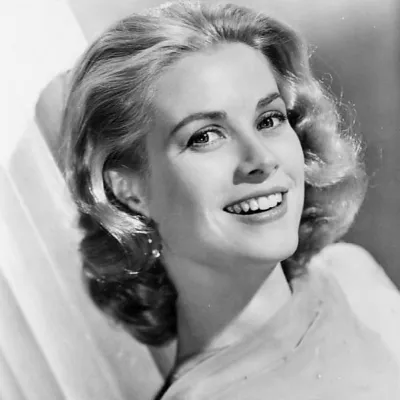
Grace Kelly
Human Design Chart
Biography
Kelly was one of four children born to high achieving parents. Her father, Jack Kelly, was a bricklayer turned contractor who, by 1929, built a mansion in fashionable East Falls, Pennsylvania. Though a champion oarsman, he was denied entry by the British in the Diamond Scull race on the grounds that he worked with his hands and was therefore not a gentleman sportsman. Channeling his anger at the class system, Kelly saw to it thirty years later that his namesake son was accepted into the race and came away holding first prize. Mom was the first female athletic coach at the University of Pennsylvania. Sports was the focus of the Kelly family and father Jack, a charming philanderer, could in no way relate to his frail, asthmatic and decidedly unathletic daughter Grace, who spent countless hours alone in her room in a fantasy world where she acted out roles with her dolls, using a different voice with each one. As a result Grace never gained attention or approval from her father, thus setting the pattern in her adult life to seek older, important men who were father substitutes. The biography be Robert Lacey related that she lost her virginity at 17 to a friend's husband.
Living in a fantasy world was an escape route to acceptance and by age 12, she was acting in productions with the East Falls Academy Players. After attending a strict convent school, Kelly moved to New York to pursue a career in acting at the American Academy of Dramatic Arts.
Grace Kelly as a Generator 1/3 in Human Design
Generator 1/3 — Design at a Glance
Grace Kelly's design indicated a tendency towards high endurance and materialization power, which was strictly dependent on inner impulses. As a Generator, she possessed abundant sacral energy, comparable to a strong workhorse that only effectively uses its strength when it is burning for its task. Her nature did not show through spontaneous initiatives but rather through reacting to signals from life. The strategy involved waiting until the sacral center gave a clear "yes," and then responding with full action.
This mechanism created two central dynamics. When Grace Kelly engaged in activities that she had inner desire for, no one could stop her; she was rewarded with deep satisfaction. Conversely, frustration or energy loss threatened when she performed forced activities and wasted her strength. Similarly problematic was being held back from her heart's project despite the internal power still being present. The core conflict thus lay between the abundance of her energy in resonance and the risk of burnout due to suppressing these impulses. Her design required listening from the gut to find the right response, rather than planning or initiating from the head. This orientation towards reaction instead of action defined her fundamental energy dynamics.
Emotional Authority
Grace Kelly's inner compass was the defined Emotional Center. This configuration established that her inner authority always took precedence over all other defined centers, regardless of which additional energies were active in her design. She experienced a natural emotional wave that manifested as an ongoing fluctuation in her feelings. The world appeared to her colored by her current mood: at one moment she could be totally enthusiastic about something, only to view the same thing completely negatively moments later.
This mechanism meant that her immediate feeling was just a snapshot, a first impression that did not necessarily reflect her deepest truth yet. Spontaneous decisions based on such emotions carried the risk of proving incorrect later on. For Grace Kelly, it was essential to take time to let decisions mature. This process required patience and consciously "sleeping on" important questions. By hesitating and asking herself multiple times, intense feelings gradually lost their intensity over time. Only when this emotional flood subsided did true clarity and calm set in. This journey through the emotional wave pattern was particularly significant for long-term decisions, ensuring that her choice rested on a stable, comprehensive understanding rather than fleeting excitement or depression.
The 1/3 Profile — Investigator / Martyr
Grace Kelly's design set a tendency to not only passively absorb knowledge but also to validate it through active action and occasional failures. As the carrier of Profile 1/3, the Researcher and Experimenter, she emerged as someone whose authenticity arose in the tension between deep study and practical testing. Line 1 in her chart emphasized the need for patience and introspection; here lay the drive for depth and the necessity to thoroughly examine new insights before accepting them as valid. Without this theoretical foundation, there was a risk of being perceived superficially. Yet knowledge alone was not enough. Line 3 demanded stepping into practice – trial and error. Grace Kelly's mechanics required her to face the fear of ignorance in order to learn through concrete experiences. Only what was both intellectually understood and tested on a personal level was truly real for her configuration. These self-discovered insights gave her judgments a special credibility: when she chose something or rejected it, this decision was based on double verification. Line 3 also addressed aspects of irresponsibility in the sense of spontaneity and shifting priorities through mistakes, breaking and bringing to life the rigid theoretical framework of Line 1. Her life task was to integrate these two poles so that theory and practice formed an inseparable unity.
Triple Split Definition — Defined & Open Centers
Grace Kelly's design indicated a tendency towards constant mental presence and direct expressiveness. Her defined Ajna Center ensured continuous independent conception; she always thought independently of external stimuli. This mental structure was trustworthy and specific, not easily influenced by others. Through the connection to her also defined Throat Center, she could reliably translate her thoughts into reality. The Throat acted as a reliable pivot point that directly spoke or acted on what was thought without intermediate steps.
This interplay formed the core of a fully determined energy system. Along with Ajna and Throat were also G-Center, Heart, Sacral, Solar Plexus, and Spleen defined. The defined G-Center gave her a firm self-identity and clear sense of direction in life; she knew who she was and could radiate this identity without being dependent on others. Her defined Heart Center provided access to willpower and ego; she could make promises and keep them, strengthening her self-esteem. The energy source came from the defined Sacral Center, which generated a constant vital force. Her strategy was to react to questions or situations rather than initiate herself in order to use this energy correctly. Emotional clarity was achieved through her defined Solar Plexus Center by waiting for the emotional wave before making decisions. Her defined Spleen Center provided intuitive warning signals in the present moment for health and well-being.
In contrast, her open centers meant she lacked a constant mental pressure or inner inspiration. She tended to question whether she needed to find inspiring answers that were not actually her concern, getting stuck in doubts if she followed external pressures. Similarly, her Root Center was open, making her susceptible to absorbed stress from her environment; she believed she had to hurry or achieve something to escape this adrenalized pressure, although it did not originate with her. These opennesses required trusting inner authorities rather than reacting to external stimuli.
Channels & Gates
Grace Kelly's design indicated a tendency towards innovative perspectives that increased efficiency. This ability was rooted in the Channel of Structuring 61-24, which clarified spontaneous insights from Ajna Center through assimilation in Throat Center. Her mind was often light-years ahead; however, she had to respect timing to find acceptance and avoid rejection. The Personality-Sun in Gate 43 drove this mutative force as the primary energy source.
Her life energy manifested through the Channel of Beats 14-2, connecting Sacral with G Center. Through Gate 14, she possessed the competence to use material resources to drive mutation, while Gate 2 functioned as a driver for higher knowledge directing movement through space and time. This allowed her to take new directions by trusting her sacral reaction.
In interpersonal dynamics, the Channel of Pairing 59-6 was active. It connected Sacral with Solar Plexus Center via sexuality in Gate 59 and emotional wave in Gate 6, creating a powerful foundation for intimacy but requiring patience as the emotional wave needed time to gain clarity.
Additionally, the Channel of Devotion 44-26 shaped her way of assessing others. Through Gate 44 in Spleen Center and Gate 26 in Heart Center, she used instinctive vigilance and willpower to offer improvements to the tribe. She could intuitively recognize what was needed before it was consciously perceived and acted as an entrepreneur generating resources.
Individual Gates complemented this picture: Gate 4 enabled logical formulas for future security while Gate 22 promoted openness and calm listening. Gate 50 ensured protection of traditions and values. Grace Kelly's design thus combined mutative thinking with the ability to efficiently and intuitively translate it into reality.
Circuit Signature
Grace Kelly's design presented three separate, parallel energy flows. The Knowledge Circuit connected Ajna with Throat Center as well as Identity with Sacral Center, promoting individual path structuring and expression of new knowledge through emotional waves. Simultaneously, the Ego Circuit linked Heart and Spleen Centers. This Channel of Devotion supported cooperation and resource creation in the tribe but required pauses due to lack of sacral connection. The Protector Circuit finally connected Sacral with Solar Plexus Center. This primordial energy served protection, nutrition, and preservation of family as well as genetics through pairing.
The triple definition meant that these three circuits did not flow directly into each other but rather acted as separate force fields. A tension arose between the pressing need for individual transformation and new knowledge in the Knowledge Circuit on one side, versus binding tribal-oriented energies of cooperation in the Ego and family survival protection in the Protector Circuit on the other side. Grace Kelly thus showed herself to be someone who had to carry these different requirements - individual innovation, social support, and genetic preservation - parallel in her life without them merging into a single continuous stream. Each of these energies retained its own quality: pulsating creativity, traditional cooperation, and instinctive protection.
Right Angle Cross of Explanation 4
Grace Kelly's design showed a tendency towards strategic clarity. She was someone who could unravel complex situations through precise definitions and logical structures. This ability served to translate confusion into understandable instructions or principles. Her Human Design marked the 'right cross of explanation 4'. This aspect describes a specific energy aimed at clarifying the essence of things. It wasn't about superficial descriptions but identifying underlying logic. Grace Kelly thus acted as a clarifying force in her environment. When uncertainty reigned, she could instill order through her way of thinking. She took vague or unclear connections and transformed them into comprehensible models. This was not an act of conscious eloquence but a natural result of her inner mechanics. The energy of this cross promoted the ability to name things correctly at the right time without slipping into speculation. It helped others grasp the core of an issue by defining necessary conditions. Through this precise way of explaining, she created security and orientation. Her influence lay in making chaos manageable through clear structuring. This significantly shaped her interactions: She was the voice of reason that reduced complex reality to its essence so others could understand and apply it.
Saturn Return · Uranus Opposition · Chiron Return · 2nd Saturn Return — Life Cycles
Grace Kelly's design was marked by existential turning points influenced by planetary returns and oppositions. Her first Saturn return occurred in 1957; at age 28, Princess Gracia Patricia gave birth to her daughter Caroline Louise Marguerite. This cycle condensed years of groundwork into a solid result that cemented her role.
The Uranus opposition marked a phase of crisis and sudden change. In 1967, at the age of 38, she experienced her third miscarriage during a visit to Expo in Montreal. This moment abruptly interrupted continuity and demanded adaptation to unexpected circumstances.
The Chiron return, a fulfillment cycle between ages 49 and 51, allowed for the unfolding of her incarnation cross. If Grace Kelly had lived according to her strategy and authority, she experienced purpose and meaning during this phase. In 1978, this was evident: Her flower art was exhibited at Galerie Drouant in Paris. This success was no coincidence but a bloom period where her life's mission increasingly unfolded. The mechanics of these cycles—from condensation through rupture to fulfillment—structured her path and made her inner development visible externally.
Generator · Emotional Authority — Synthesis
Grace Kelly lived a life deeply influenced by an internal dynamic: the interplay between sacral energy and emotional depth. As a generator, she possessed immense endurance and the ability to materialize things (Sacral Center), yet her decisions were always subject to emotional waves (Emotional Authority). This design led her to need time to gain clarity while simultaneously having a strong drive for experimentation and learning (Profile 1/3). She thoroughly examined things both theoretically and practically before committing—a stance reinforced by the defined mental center that created consistent concepts. This combination of energy, feeling, and thirst for knowledge shaped her actions and pursuit of authenticity.
A central paradox in her design lay in the tension between a desire for innovation (Knowledge Circuit) and the necessity of emotional maturity. The Sacral Center provided energy for new paths, but the emotional center required patience and reflection on decisions. Events in her life—both successes and crises (charted cycles)—demonstrated how these forces interacted: an ongoing balance between the urge to act and the need to understand and acknowledge one's feelings.
4 Defined Channels
Incarnation Cross - Right Angle Cross of Explanation 4
Solar Return
The Solar Return shows the moment when the sun returns to its exact birth position - your personal solar year.
Life Cycles
Discover the life cycles with a detailed triple view (birth chart, cycle chart, composite).
Human Design Profile
- Type
- Generator
- Strategy
- To respond - wait for something to respond to
- Authority
- Emotional Authority
- Profile
- 1/3 - Investigator / Martyr
- Definition
- Triple Split
- Incarnation Cross
- Right Angle Cross of Explanation 4
- Date of Birth
- 12.11.1929 05:31
- Place of Birth
- Philadelphia, PA, United States
Frequently Asked Questions
What was Grace Kelly's Human Design type?
Which Profile did Grace Kelly have?
What Authority did Grace Kelly have?
What incarnation cross did Grace Kelly have?
When was Grace Kelly born?
Discover your own Human Design
Are you also a Generator? Find out in a personal reading how to use your sacral energy correctly and discover deep satisfaction.
More Personalities
Back to overviewSissy Spacek

Aaliyah

Alexia

Anémone

Angèle

Ann-Margret
