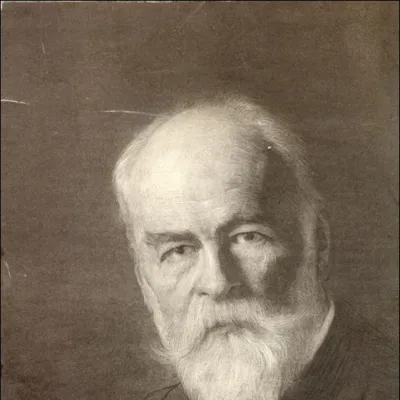
Gustav von Schmoller
Human Design Chart
Biography
He served as professor of civic administration at the universities of Halle, Strassburg, and Berlin. He was also a member of academies in Berlin, Munich, St. Petersburg, Copenhagen, Vienna, and Rome.
In the early 1860s Schmoller defended the commercial treaty between France and the German Customs Union, negotiated with Prussian leadership. This defense curtailed his career in Württemberg but gained favor for him with Prussian authorities, and he was appointed official historian of Brandenburg and Prussia in 1887. He became a member of the Prussian state council in 1884 and representative of the University of Berlin in the Prussian upper house in 1889.
Schmoller was the founder and leader of the Association of German Academic Economists. He was also editor of several publications series, one of which was later known as Schmoller's Yearbook (from 1881). One of the first great organizers of research in the social sciences, he dominated for several decades the development of economics and of related social sciences.
One of the reasons why Schmoller is not more widely known today is that most of his books and articles were not translated.
He died at Bad Harzburg on 27 June 1917 at age 79.
The Human Design of Gustav von Schmoller: Projector 5/1
Projector 5/1 — Design at a Glance
Gustav von Schmoller was someone who immediately spotted structural weaknesses in his social and economic environments. His Projector design gave him a dense, focused aura, comparable to a bright flashlight that targeted dark spots in the system of those he interacted with. This configuration allowed him to identify errors and inefficiencies instantly.
However, since Projectors do not have an undefined Sacral Center, they lack a constant intrinsic source of life energy. Instead, Gustav von Schmoller experienced phases of high activity followed by necessary rest periods for regeneration. The traditional school system and most work structures of his time did not adequately accommodate this rhythmic energy profile, increasing the risk of burnout.
The optimal strategy for his design was to wait for a respectful and sincerely meant invitation from others. Rather than presenting his observations directly and possibly as instructive, it was more elegant to attract attention through his own harmonious actions. When he accepted such an invitation and gave advice, he was rewarded with success. If he did not live by the principle of patience and waiting for the right moment, his design tended towards developing the bitterness theme – a feeling of injustice or non-recognition despite his clarifying insights.
Emotional Authority
Gustav von Schmoller never made decisions impulsively but consciously let them rest. His inner authority was Emotional Authority carried by the defined Solar Plexus Center. In Human Design mechanics, this authority is always prioritized regardless of other defined centers in the chart. Gustav von Schmoller experienced an emotional wave with permanent ups and downs of his feelings. The world appeared to him colored by his current mood; a moment of enthusiasm could quickly turn into negative perception. His immediate feeling was only a snapshot, not a secured insight. Quick spontaneous decisions from this emotional heat would have been detrimental for him. Instead, his design required patience and multiple reconsiderations of important matters. The more time Gustav von Schmoller took, the deeper he could understand the situation. Through this process, intense feelings subsided, gaining emotional distance. Only then did clarity and calmness set in. This journey through emotional waves was crucial for long-term decisions with significant influence on his life path. He consciously hesitated, asked himself multiple times, and did not seek an immediate answer but rather waited for the tranquility that came after the initial impressions had subsided. This strategy of delay served to find the true truth behind transient moods.
The 5/1 Profile — Heretic / Investigator
Gustav von Schmoller was someone who gathered deep, independent insights to offer others as solutions to concrete problems. His 5/1er
Split Definition — Defined & Open Centers
Gustav von Schmoller was characterized by a design that combined constant mental structure with deep emotional dynamics. His defined Ajna Center ensured a consistent form of conceptual thinking; he was always in a mental process and created concepts in a trustworthy manner, unaffected by external opinions. This mental resilience flowed directly into his defined Throat Center, which served as a pivot point for communication. He spoke reliably about what his mind conceptualized, making his statements clear and honest as long as he followed his inner guidance.
At the same time, his defined G Center shaped a firm self-identity and a clear sense of direction. Gustav von Schmoller had a reliable feeling of where he belonged and could show others new perspectives without controlling their paths. His defined Heart Center also gave him willpower; he kept promises and worked independently to prove his worth and determine resources for himself.
The complexity of his design arose from the interplay with his defined Solar Plexus Center. As an inner authority, this required patience: He had to wait for the emotional wave to clear before acting. Impulsive decisions at the highs or lows of the wave would have been misguided; only in emotional equilibrium did the truth of a situation reveal itself.
At the same time, Gustav von Schmoller was vulnerable to external influences through his open centers. His open Head Center tended to take on foreign questions and mental pressure as its own problems, leading to confusion if he didn't trust his emotional authority. The open Sacral Center made him sensitive to others' energy; he risked exhaustion by using borrowed vitality and neglecting boundaries. Additionally, his open Root Center absorbed external stress, which could lead to a cycle of overactivity and burnout if he did not recognize this as foreign.
Channels for structure, pioneering spirit, perfection and community.
Gustav von Schmoller was someone who combined intuitive depth with technical precision. His design suggested a tendency towards sustained refinement: The Channel of Wavelength 48-16 linked the inner intelligence of Gate 48 with the experimental dexterity of Gate 16. This promoted a step-by-step attainment of mastery through repeated practice, where his talent truly flourished with recognition and resources.
At the same time, he had the ability to formulate unique perspectives. The Channel of Structuring 23-43 connected spontaneous insights from Gate 43 with the assimilated expression of Gate 23. His thinking often felt ahead of its time; he needed to learn to explain his innovative knowledge clearly and simply so that it could be accepted by the collective. Without proper timing, he risked rejection, but at the right moment, he changed how others saw things.
His nature was also marked by a deep competitive spirit leading to individualization. The Channel of Initiation 25-51 linked the competition-oriented Gate 51 with the spiritual Gate 25. He often awakened competitiveness in others to test and advance them. However, this process was mystical and uncontrollable; true initiation had to find him, not vice versa. Through authentic living, he endured these shocks and served as an example for others.
In interpersonal relationships, he sought his place within the community. The Channel of Community 37-40 linked the affection from Gate 37 with the need for reward and pause in Gate 40. He waited for personal invitations to become part of an organization and built bridges between individuals to close harmonious, fair agreements. His additional Gates related to collective behavior (Gate 15), complex integration (Gate 10), logical teaching for the future (Gate 17) as well as correction and human rights (Gate 18).
Individual Circuitry — Circuit Signature
Gustav von Schmoller's design suggested a tendency towards structured analysis and inner stability. His Knowledge Circuit linked Ajna with Throat Center, translating logical thinking into clear expression. Parallel to this, his Understanding Circuit worked between Spleen and Throat, directly communicating intuitive perception. These two separate streams allowed him to articulate both rational concepts and internal intuitions precisely without them energetically overlapping.
Another aspect was his inner stability. His Centering Circuit linked Identity and Heart Centers, fostering deeply rooted convictions and personal will. However, this energy remained inwardly directed as there was no connection to the Throat; his firm principles were lived through his presence rather than proclaimed aloud. Simultaneously, his Ego Circuit connected Heart with Solar Plexus Centers, creating a dynamic interaction between willpower and emotional reaction in social contexts. Gustav von Schmoller sought mutual support and resources, where his emotions influenced the quality of his relationships. Since these circuits worked separately due to shared definition, they existed as parallel, not directly linked systems: on one hand, clear articulation of knowledge and intuition, on the other, inner stability and emotional social dynamics. This shaped him as someone who acted through structured communication and inner conviction, while his emotional reactions in interpersonal contexts played a separate role distinct from pure rationality.
Left Angle Cross of Prevention 1
Gustav von Schmollers Human-Design leged a tendency towards proactive action. He showed himself as someone who was not primarily specialized in reacting to acute crises, but rather in aligning structures so that problems never arose in the first place. This configuration corresponds to what is called the Left Cross of Prevention. It describes an energetic alignment that looks forward: Instead of asserting oneself defensively or waiting for shocks, he sought ways to nip risks in the bud.
For his system, this meant that his greatest strength lay in shaping systems and rules so that stability was built-in from the start. He acted less like a firefighter in burning situations but more like an architect of secure foundations. The energy of this cross supports recognizing potential dangers long before they materialize. Gustav von Schmoller used this ability to prevent chaos through clear definitions and preparatory measures. His approach was proactive: he created conditions that allowed others to act safely without constantly fighting the unexpected. This shaped his work style sustainably – not through dramatic interventions after problems erupted, but through consistent preparation and building resilience beforehand.
Saturn Return · Uranus Opposition · Chiron Return · 2nd Saturn Return — Life Cycles
Gustav von Schmoller appeared as a figure whose professional career was marked by clear cyclic condensations. His Human-Design indicated a tendency to form structural achievements from inner developments that gained weight over the years. This became apparent in 1864, when at age 26 he experienced his first Saturn Return and took up a chair in Halle – a moment where years of groundwork often condensed into a solid result.
The search for new structures and overcoming existing boundaries characterized his middle life phase. In 1876, at the age of 38 during the Uranus Opposition, he founded the series 'State and Social Science Research'. This step marked a break with the old and established new scientific formats, typical for this planetary constellation.
He reached his peak around his Chiron Return in his early forties. Here, his personal Inkarnation Cross increasingly unfolded in life; meaning and purpose became experiential. In 1887, Gustav von Schmoller was admitted as a regular member to the Prussian Academy of Sciences – proof that his life task now found full recognition.
His second Saturn Return around age 58 confirmed this development through further institutional anchoring. In 1896 he received an honorary doctorate from the Faculty of Law in Breslau. This distinction underscored how his earlier work and stance had condensed into a stable foundation that was honored by the community.
Projector · Emotional Authority — Synthesis
He was a Projector whose life seemed to be marked by a deep need to recognize patterns and make them accessible to others. The ability to spot errors in the system (Gate 11), combined with the strategic depth of the Wave Length channel, suggests he longed to contribute his insights – not to criticize but to refine processes and unlock potentials. This showed in repeated professional successes that went hand-in-hand with recognizing and fostering talent (career cycle events). The defined mental authority reinforced this tendency by giving him a consistent way of thinking that allowed him to develop concepts and inspire others to think.
A central paradox lay in the tension between his Projector design and emotional authority. As a Projector, he was dependent on being recognized and invited by others to share his wisdom, while the emotional wave made him tend to delay decisions until they had matured over time. This inner dynamic carried the risk that although his potential solutions were profound, they might not be communicated in time or adequately due to the necessary maturation period.
4 Defined Channels
Incarnation Cross - Left Angle Cross of Prevention 1
Solar Return
The Solar Return shows the moment when the sun returns to its exact birth position - your personal solar year.
Life Cycles
Discover the life cycles with a detailed triple view (birth chart, cycle chart, composite).
Human Design Profile
- Type
- Projector
- Strategy
- Wait for the respectful invitation
- Authority
- Emotional Authority
- Profile
- 5/1 - Heretic / Investigator
- Definition
- Split Definition
- Incarnation Cross
- Left Angle Cross of Prevention 1
- Date of Birth
- 24.06.1838 20:45
- Place of Birth
- Heilbronn, GER
Frequently Asked Questions
What was Gustav von Schmoller's Human Design type?
Which profile did Gustav von Schmoller have?
What authority did Gustav von Schmoller have?
What incarnation cross did Gustav von Schmoller have?
When was Gustav von Schmoller born?
Discover your own Human Design
Are you also a Projector? Find out in a personal reading how to unfold your leadership qualities and recognize the right invitations.
More Personalities
Back to overviewSissy Spacek

Alain-Fournier

Anémone

Ann-Margret

Bourvil
Christian-Jaque