
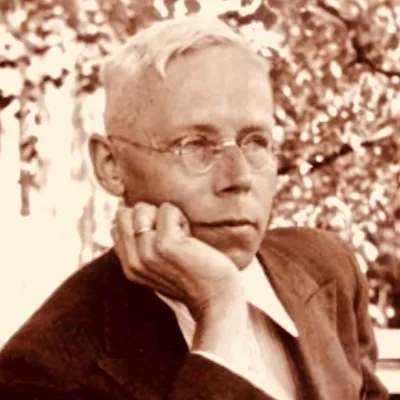
Hans Kollwitz
Human Design Chart
Biography
Hans Kollwitz was the first son of the physician John Carl August Kollwitz and his wife, Käthe. As children, Hans and his younger brother Peter were frequent artist models for their mother. Hans was depicted as a baby and a small child. From 1904, he and his brother grew up together with Georg Gretor, Käthe Kollwitz's "foster son" from Paris, the son of her student friend Rosa Pfäffinger and her husband Willy Gretor.
As a youngster, Hans Kollwitz was a member of the Wandervogel, a left-wing bourgeois youth movement, along with Walter Benjamin, Hans Blüher, Ernst Joëll, Fritz Klatt, the brothers Hans and Walter Koch, Erich Krems, Alfred Kurella and Alexander Rüstow.
From 1908, the 16-year-old Kollwitz was involved in a student newspaper project, which later became known throughout the empire. First published in 1911, the youth magazine Der Anfang (The Beginning) featured Kollwitz's writing and brother Peter's drawings; two cousins also contributed drawings, and Georg Gretor wrote articles. Georg Gretor published under a pseudonym as Georges Barbizon, after his hometown Barbizon near Paris. Other authors included Walter Benjamin and Siegfried Bernfeld, while Gustav Wyneken was editor. In Bavaria Der Anfang was banned in all schools.
Kollwitz began studying medicine at the Friedrich Wilhelm University in Berlin around 1910. After the outbreak of the First World War, he volunteered and was recruited to the medical service. On 23 October 1914, only ten days after his departure to the Western Front, his younger brother Peter died, aged 18, during combat in Flanders.
In 1919 Hans Kollwitz married the graphic artist and book illustrator Ottilie (nee Ehlers, 1900-1963). The marriage produced four children, Peter (1921-1942), the twins Jordis and Jutta (born 29 May 1923) and Arne (born 1930).
Human Design Analysis: Hans Kollwitz as Generator 6/2
Generator 6/2 — Design at a Glance
Hans Kollwitz revealed himself as someone with immense inner endurance and strength, comparable to a workhorse. His design as a Generator established a fundamental stance that did not rely on self-initiated impetus but rather waited to be engaged from the outside. This structure possessed much sacral energy, which only became free when a clear impulse came from life. The strategy consisted of responding to these signals and acting only when his inner center gave a clear "yes."
Hans Kollwitz could thus implement things sustainably into reality as long as he followed this rhythm. Living in harmony with this mechanism rewarded him with a deep sense of fulfillment and satisfaction. Conversely, if he constantly initiated actions himself or forced himself to do things he had no interest in, it inevitably led to frustration and energy loss. Another danger lay in being diverted from his true heart project while still having full power available. His path therefore did not consist of constant pushing forward but rather in patiently reacting to life to use his great endurance meaningfully.
Emotional Authority
Hans Kollwitz exhibited a decision-making approach characterized by emotional wave movements. His internal authority came from the defined Solar Plexus Center. In Human Design mechanics, every defined Solar Plexus Center automatically carries emotional authority, independent of other configurations in the chart. This meant for Hans Kollwitz that he was subject to constant fluctuations in his feelings. The world appeared to him always colored by his current mood; enthusiasm could quickly turn into rejection.
This mechanism required from him a specific strategy: patience. Since the immediate feeling was only a snapshot and not necessarily the deeper truth, spontaneous decisions based on emotion were risky and often negatively charged. For Hans Kollwitz it was essential to take time to let decisions mature. The process involved repeatedly sleeping on questions and allowing hesitation. Only when intense feelings subsided and emotional distance was gained did clarity and calmness set in for him. This path through the emotional wave was particularly key for long-term, life-defining decisions to his inner truth.
The 6/2 Profile — Role Model / Hermit
Hans Kollwitz revealed himself in the first three decades of his life as someone who learned through intensive experimentation. His design suggested that this phase was marked by trial and error; mistakes served not as failure but as necessary steps towards self-discovery. He withdrew after setbacks to reassess the situation – a typical pattern of Line 2 in Profile 6/2, which relies on pragmatism and selective experience.
With the return of Saturn, around age thirty, his fundamental approach fundamentally shifted. The previous experimental energy gave way to deep introspection. Hans Kollwitz metaphorically retreated into a "cave" to gain distance and view the past years from an eagle's perspective. This phase served for healing and synthesizing individual knowledge. The complexity of his experiences was now processed, rather than merely collected.
From this period of reflection, he emerged as a wise person. His wisdom did not stem from theoretical knowledge but from lived practice. Others sought his counsel to benefit from his deep self-awareness and ability to clearly synthesize information. The fusion of his earlier experiences with later distance created a unique individuality that he could communicate clearly. His path was a process of mutation through experience, followed by maturation into a stable advisory role.
Triple Split Definition — Defined & Open Centers
Hans Kollwitz was characterized by a constant, trustworthy mental function: his defined Ajna Center ensured that he always created concepts in the same way and was difficult to influence from outside. This mental stability resulted in a defined Throat Center serving as a pivot point to clearly articulate these thoughts; his voice spoke directly out of his mind, what he conceptualized. His actions were driven by a defined Sacral Center, a source of immense vital energy that only became correctly available through reactions to external requests – initiation without question led to exhaustion and frustration.
At the same time, his defined Solar Plexus shaped an emotional authority: he had to wait out waves of his feelings to gain clarity, as spontaneous decisions in emotional highs or lows were often regretted. His defined Root Center provided a constant pressure and stress that propelled him forward, with this adrenaline impulse always needing guidance from his strategy not to appear obsessive.
In contrast, his open Head Center revealed vulnerability to mental pressure: he tended to get entangled in questions and doubts that weren't his own or desperately sought inspiration to resolve inner confusion. His open Heart Center made him vulnerable to trying to prove his worth through willpower and promises – a cycle of self-disapproval if he failed because he lacked the constant energy to independently hold such commitments. Additionally, his open Spleen Center was marked by fundamental survival anxiety; he tended to cling to people or situations with defined spleen energy for a sense of security and well-being, even when these bonds were unhealthy, as spontaneous decisions from this center often proved risky and costly.
Channels for insight, inner endurance and emotional clarity.
Hans Kollwitz showed himself as someone whose thinking often soared light-years ahead. His design laid a tendency to develop unique perspectives and express them so clearly that they could change how others saw and thought. This ability stemmed from the Channel of Structuring 43-23. Here, Gate Insight (43) in the Ajna Center connected with Gate Assimilation (23) in the Throat Center. Spontaneous breakthroughs were received, processed, and then communicated as innovative concepts. For these insights to be accepted, however, Hans Kollwitz had to wait for the right timing; otherwise, he risked rejection or misinterpretation of his brilliant ideas by the environment.
Parallel to this, an intense drive towards new experiences propelled him forward. The Channel of Recognition 41-30 connected the Root Pressure (Gate 41) with the emotional wave in the Solar Plexus (Gate 30). This generated restlessness and a great imagination, driving him to deeply feel life and constantly hunger for the "next" thing. The challenge was not to blindly follow this desire but to trust his emotional authority and allow time for clarity before jumping into new adventures.
Another central aspect was his ability to discover through persistence. The Channel of Discovery 29-46 connected the Sacral Center (Gate of Saying Yes) with the G Center (Gate of Resolve). Hans Kollwitz had to let go of expectations and fully immerse himself in experiences to ultimately gain valuable insights. His success depended on waiting for positive reactions and then unwaveringly sticking to his path, even if the sense only became clear later.
Additionally, individual Gates like Gate 52 (Focus and Pattern Correction) as well as Gate 19 (Resources and Territory) emphasized his need to focus in secure environments and refine patterns before acting.
Collective Circuitry — Circuit Signature
Hans Kollwitz was marked by three separate yet parallel flowing energy streams. The Knowledge Circuit connected his Ajna with the Throat Center (Channel 43-23). This promoted the ability to articulate inner structuring and clarity into words, expressing his own path.
The Meaning Circuit consisted of two unconnected parts. On one hand, it linked the Identity with the Sacral Center (Channels 46-29 and 30-41). Here, a powerful energy of discovery and recognition allowed finding deeper truths about himself and holding them. On the other hand, it connected the Solar Plexus with the Root Center. This generated wave-like emotional impulses often felt as an urge for immediate action or reaction without being directly tied to identity or mental structuring.
This triple definition meant that Hans Kollwitz experienced these three areas – structured speaking, powerful self-discovery, and impulsive emotional waves – as separate experiences. They did not flow into each other but existed alongside one another. This required constant adaptability since each of these energies had its own logic and rhythm without being directly synchronized through a common channel.
Left Angle Cross of Dedication 1
Hans Kollwitz's design indicated a tendency towards deep, often unspoken dedication to certain values or relationships. This configuration, the left cross of devotion, described an inner compass that did not seek short-term successes but rather a constancy that went beyond individual will. It was an energy that showed itself in readiness to devote oneself completely to something or someone without necessarily demanding immediate recognition or control.
For Hans Kollwitz, this dedication was not passive submission but an active, often quiet process of engagement. The mechanics of this cross suggested that its power lay in establishing loyalty and fidelity as fundamental pillars of his actions. This shaped a stance of reliability that arose not from duty but from a deep inner resonance with the object of his devotion. The challenge of this configuration was to experience this dedication not as a loss of self, but as an expression of authentic connection. Hans Kollwitz thus showed himself in moments when he set aside his own agenda for a greater cause or relationship, which gave him a special depth and stability.
Saturn Return · Uranus Opposition · Chiron Return · 2nd Saturn Return — Life Cycles
Hans Kollwitz's design indicated a tendency towards deep, binding dedication that was particularly evident in partnership. In 1919, at the age of 27, he married Ottilie Ehlers, a graphic designer and book illustrator. For his chart, this was a typical moment: The first Saturn return often marked the transition from an experimental phase to structural anchoring. During this period, years of inner development condensed into a solid foundation for further life. The marriage did not stand alone but as an expression of maturing ability to clearly take on responsibility in relationships and shape long-term commitments. This configuration described a life task of connecting emotional depth with stable form – not through mere impulsiveness, but through conscious decision at the right time. The Saturn return acted here as a catalyst for stability and continuity by carrying inner clarity outward. Thus, personal search became tangible life structure that created space for joint development without loss of identity.
Generator · Emotional Authority — Synthesis
Hans Kollwitz lived a life marked by profound emotional sensitivity and an unstoppable creative energy. As a Generator with emotional authority, he needed time to let decisions mature (emotional center), while his defined Ajna Center enabled him to continuously develop and implement concepts – a combination that was evident in a deep engagement with the themes of their art. Through the Profile as Role Model/Natural Talent, he initially experimented intensely before gaining wisdom from these experiences and passing it on later (Line 6). This process of personal experience followed by reflection formed a red thread through his life and work, supported by sacral energy that provided him long-lasting endurance.
A central paradox in his design lay in the interplay between the need for emotional clarity and the constant mental process (Ajna Center). The emotional wave demanded time for decision-making while the mind continuously developed and implemented concepts – a tension that led him to filter the world through his feelings and simultaneously formulate innovative perspectives. This dynamic was evident in his work, where personal sensations merged with intellectual design power. A documented event, the marriage (Saturn return), fell during a phase of intense personal development and experimental freedom.
3 Defined Channels
Incarnation Cross - Left Angle Cross of Dedication 1
Solar Return
The Solar Return shows the moment when the sun returns to its exact birth position - your personal solar year.
Life Cycles
Discover the life cycles with a detailed triple view (birth chart, cycle chart, composite).
Human Design Profile
- Type
- Generator
- Strategy
- To respond - wait for something to respond to
- Authority
- Emotional Authority
- Profile
- 6/2 - Role Model / Hermit
- Definition
- Triple Split
- Incarnation Cross
- Left Angle Cross of Dedication 1
- Date of Birth
- 14.05.1892 09:30
- Place of Birth
- Berlin, Germany
Frequently Asked Questions
What was Hans Kollwitz's Human Design type?
Which Profile did Hans Kollwitz have?
Which Authority guided Hans Kollwitz?
What incarnation cross did Hans Kollwitz have?
When was Hans Kollwitz born?
Discover your own Human Design
Are you also a Generator? Find out in a personal reading how to use your sacral energy correctly and discover deep satisfaction.
More Personalities
Back to overviewAaliyah

Alexia

Angèle

Anne-Marie

Arcángel

Arno
