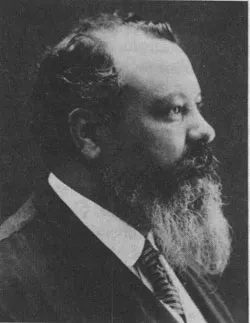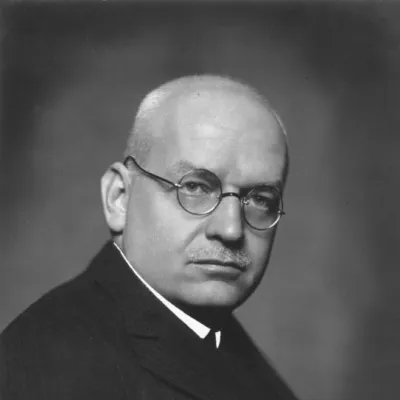
Hans Luther
Human Design Chart
Biography
He died in Düsseldorf on 11 May 1962, aged 83.
The Human Design of Hans Luther: Manifestor 3/5
Manifestor 3/5 — Design at a Glance
Hans Luther revealed himself as someone who moved forward with a clear vision and actively directed the world into a new direction. His design cast him in the role of a pioneer and leader, similar to an emperor in ancient Rome: He possessed the great idea for an empire or system but did not fight every battle personally; instead, he sent others out to realize his plans. This kind of leadership inevitably polarized people. Since he often thought further ahead than his surroundings, Hans Luther was loved and followed by some, misunderstood or even rejected by others. This conflict was a central pain point in his design. To find the right followers and minimize resistance, it was crucial for him to inform others about his intentions early and precisely. This strategy of informing before acting was key to his effectiveness. When Hans Luther adhered to this principle and held onto his inner authority, his system rewarded him with a deep sense of inner peace. If he lived against this principle, however, he felt instead a persistent, deep anger within himself. His life was thus marked by the tension between his leading vision and the necessity to communicate it clearly in order to create harmony rather than rejection.
Emotional Authority
Hans Luther showed a basic attitude of emotional restraint at crucial crossroads. His design carried Emotional Authority, meaning that his defined Emotional Center formed his inner decision-making instance – regardless of which other centers were also defined in his chart. This configuration subjected him to a natural wave movement of emotions: Moods swung between enthusiasm and rejection, with the current emotional state always only a temporary coloring of perception, not the final truth.
Quick, spontaneous judgments from this emotional heat would often have proven misleading for Hans Luther. The mechanics of his authority required instead patience and conscious hesitation. By letting decisions rest and sleeping on them multiple times, the initial emotional wave could abate. Only with this temporal distance did he gain the necessary distance to the initial impulses. In this phase of calming down, true clarity set in for him. This strategy of waiting and maturing was particularly crucial for long-term, life-defining decisions as it allowed him to go beyond fleeting emotional chaos to reach deep, comprehensive insight.
The 3/5 Profile — Martyr / Heretic
Hans Luther revealed himself as someone who learned through personal experimentation to later support others with this practical knowledge. His design as an experimenter and hero laid a tendency: He initially believed little in prefabricated dogmas and had to experience things for himself. This attitude of Line 3 of the Adventurer meant that he learned from trial and error, even if public failures were painful. The acquired knowledge made him attractive to others who wanted to use his experiences – a role served by him as a hero (Line 5).
His emotional baseline was characterized by enchantment and a striving for perfect grace (Gate 22). This process did not proceed linearly but through bindings that were entered into and then dissolved, characterizing fleeting openness. Emotional energy and consciousness went hand in hand here. Parallel to this, he possessed strong adaptability and sales skills (Gate 26). He understood how to win people over and advise them effectively, especially when uncertainty reigned. His memory and self-strength helped him gain others for himself. However, his ego resisted deep-seated changes; he felt uncomfortable if fundamental techniques or approaches had to be learned anew. His strength lay in sharing a rich trove of practical life experiences gathered through his own adventures.
Triple Split Definition — Defined & Open Centers
Hans Luther was someone who constantly felt mental pressure to ask questions and understand connections. His defined Head and Ajna centers created a continuous stream of inspiration but did not provide direct energy for implementation; he relied on inspiring others to think rather than executing himself. This mental process culminated in his defined Throat, which served as the focal point to communicate these concepts and theories to the world.
At the same time, Hans Luther possessed a firm will through his defined Heart Center. He preferred to set his own resources and use his energy to fulfill promises and build structures. This ego strength was linked with his defined Root Center, which gave him a constant adrenaline-driven pressure to move forward in the material world and master existential challenges. His emotional authority lay in his defined Solar Plexus; he had to wait out the waves of his feelings to find clarity before acting.
In contrast, his G Center, Sacral, and Spleen Centers were open. Without a fixed identity or direction, Hans Luther tended to blend with his environment and seek borrowed security. His open Sacral Center made him vulnerable to exhaustion from foreign energies since he lacked a consistent vital force to set boundaries. Additionally, the open Spleen Center was exposed to fundamental survival fears; he could not make spontaneous decisions and had to learn to release conditioned fears rather than react impulsively. This openness challenged him to use his inner guidance to avoid falling into conditioning by others.
Channels for clarity, value realization and emotional intuition.
Hans Luther showed a strong orientation towards material responsibility and the will to control, resulting from Channel 7-19, which connects the Heart Center with the Throat Center. This connection created an internal conflict between the need for authority (Gate 45) and service to the community (Gate 21), driving him to achieve independence so he could determine his own work style. He worked best as his own boss since delegation was stressful for him.
Parallel to this, Channel of Awareness 61-24 shaped his mental functioning by connecting Head Center with Ajna Center. Through this connection, he experienced knowledge not as logical deduction but as spontaneous mutation or satori. His mind sought silence to filter the “white noise” of inspiration and develop individual insights without actively steering them.
Emotionally and energetically, Channel of Recognition 30-41 influenced him by connecting Root pressure for new experiences with the emotional wave of Solar Plexus. This created restlessness that had to be balanced through patience and waiting out his own emotional clarity before jumping into new situations.
Additionally, individual Gates contributed to shaping: Gate 22 promoted openness and calm listening until mutation occurred. Gate 47 helped recognize collective meaning from past experiences. Gate 26 in the Heart Center supported introducing innovations through persuasive power. Gate 38 set boundaries for defending integrity. Gate 11 enabled visual assessments before acting. Gate 43 brought forth spontaneous insights that needed to be communicated. Gate 31 transferred leadership qualities onto others. Gate 36 used crises for emotional development. Gate 8 promoted individual contribution to the group.
Individual Circuitry — Circuit Signature
Hans Luther's design showed a tripartite structure. Three independent energy blocks existed parallel without direct exchange between them, creating three clearly delineated functional areas within him.
The first block connected Heart with Throat Center via the “Money Line”. This connection served to accumulate material resources and prosperity within a group. Since there was no direct life force from Sacral center flowing here, this area required regular rest pauses for regenerating energy needed for collective creation.
The second block linked Head with Ajna Center through Channel of Awareness. Here innovative flashes of insight and creative impulses emerged. This energy drove the search for new knowledge forward and fostered the expression of a unique individual identity through mental mutations and deviations from the known.
The third block connected Solar Plexus with Root Center via Channel of Recognition. This area was dedicated to processing past experiences. Emotional waves from the past were reflected upon to understand their meaning. These felt insights served to learn from history and share this wisdom with others, while emotional energy ebbed in wave-like fashion.
These three separate systems - resource management, mental innovation, and emotional reflection - worked alongside each other as independent forces within Hans Luther. They did not form a cohesive unit but rather parallel specialized areas of his personality that functioned according to their own laws.
Right Angle Cross of Rulership 1
Hans Luther's design carried the structure of the right cross of governance. This configuration set a specific dynamic in his life, characterized not by spontaneous impulses but rather by a deep, often unconscious search for inner confirmation and authority. In Human Design, this cross marks a turning point in one's life path: The first half is marked by striving for control or submission to external power structures to find stability. Often lacking internal security, Hans Luther moved through roles where he either governed or was governed, rarely acting from a free, authentic center.
Only in the second phase of his life, typically after the age of 40, did this energy shift. The earlier dependence on external validation transformed into a sovereign, quiet leadership role. Hans Luther learned to trust his inner voice without needing to prove it loudly. This reversal allowed him to take responsibility in a way that was no longer based on fear or the need for recognition but rather on an adult, calm authority. His path was thus not a linear rise to power but a process of internal maturation where he learned that true governance means holding one's own space and trusting others to find their own paths.
Saturn Return · Uranus Opposition · Chiron Return · 2nd Saturn Return — Life Cycles
Hans Luther exhibited clear structuring moments that divided his life into definable segments. His design tended towards strategic turning points, at which inner maturity became visible externally. In 1907, at the age of 28, he married Gertrud Wolff. This marked his first Saturn return, a cycle often serving to transform years of groundwork and personal development into stable, sustainable connections. The marriage was not just an event but an expression of this condensing energy.
Six years later in 1918 at the age of 39, Hans Luther became Oberbürgermeister of Essen. This step fell during his Uranus opposition, a phase of sudden change and breaking with the past. The assumption of this high office was a direct response to pressure for realignment; his design demanded quick adaptation to new political realities, moving from previous structures into a leading role in city administration.
In 1928 at age 49, he reached his Chiron return. In this fulfillment cycle, his life mission became clearer: He became one of the founding members and first chairman of the League for the Renewal of the Reich. This was not a moment of healing but rather of bloom, where his sense of political order and leadership unfolded concretely in public life.
Finally, in 1937 at age 58, he ended his service as ambassador to Washington. His second Saturn return marked this phase's conclusion. It signaled not just an end but a necessary consolidation after a long period of intense diplomatic work, where the design supported reflection on essentials and separation from external commitments.
Manifestor · Emotional Authority — Synthesis
Hans Luther was a Manifestor whose life seemed driven by a constant urge towards initiation and shaping. The combination of emotional authority and the Profile of the Explorer/Hero points to someone who needed deep internal processes to reach clear decisions but then carried them into the world with vigor and risk-taking readiness. His defined Head Center (with Channel 21-45) reinforced this impulse, creating a continuous inspiration and desire for control over material resources – an expression of tribal leadership that showed in documented career events. He moved through various roles, always seeking new experiences to then serve others with his knowledge.
At the same time, the design revealed an internal tension between the need for emotional maturity and the impulsive nature of the Manifestor type. The emotional wave required time for decision-making while the energy to set things in motion (Channel 21-45) pushed towards quick action. This discrepancy likely led him to be perceived as someone who acted both visionary and decisive, yet also experienced moments of inner confusion and doubt – a tension field between the desire for control and acceptance of emotional processes.
3 Defined Channels
Incarnation Cross - Right Angle Cross of Rulership 1
Solar Return
The Solar Return shows the moment when the sun returns to its exact birth position - your personal solar year.
Life Cycles
Discover the life cycles with a detailed triple view (birth chart, cycle chart, composite).
Human Design Profile
- Type
- Manifestor
- Strategy
- To inform others before acting
- Authority
- Emotional Authority
- Profile
- 3/5 - Martyr / Heretic
- Definition
- Triple Split
- Incarnation Cross
- Right Angle Cross of Rulership 1
- Date of Birth
- 10.03.1879 03:00
- Place of Birth
- Berlin, Germany
Frequently Asked Questions
What was Hans Luther's Human Design type?
What Profile did Hans Luther have in Human Design?
What Authority did Hans Luther have?
What incarnation cross did Hans Luther have?
When was Hans Luther born?
Discover your own Human Design
Are you also a Manifestor? Find out in a personal reading how to use your initiation power peacefully and dissolve resistance.
More Personalities
Back to overviewChristian-Jaque
Kesha

Laurent-Eynac
Lucebert
Masaccio
Papus