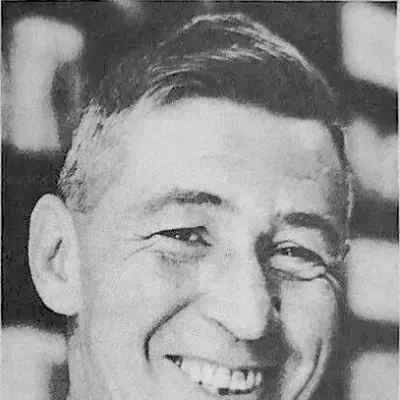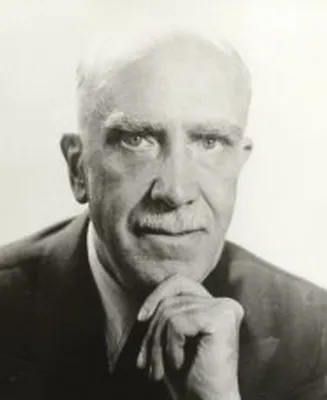
Hans Meerwein
Human Design Chart
Biography
He died on 24 October 1965, aged 86, in Marburg, West Germany.
Human Design Analysis: Hans Meerwein as Projector 5/2
Projector 5/2 — Design at a Glance
Hans Meerwein appeared as someone who perceived his surroundings with an intense, focused aura. His Human-Design type was Projector, meaning he did not have his own constant life energy source but rather functioned like a bright flashlight: He shone his light directly onto areas in the environment that were still dark or not functioning optimally. This ability allowed him to immediately identify errors in systems and guide others.
However, this direct perception required a specific approach. If Hans Meerwein expressed his observations spontaneously and uninvitedly, it could be perceived as unpleasant or accusatory by others – comparable to shining a light directly into someone's face. The most effective strategy for him was therefore to wait for an honest and respectful invitation from other people. Through his own harmonious actions, he attracted individuals who then actively sought out his advice.
Since his Sacral Center was undefined, his energy followed a rhythmic pattern: Phases of high productivity alternated with necessary rest phases to avoid exhaustion. If Hans Meerwein lived in harmony with this dynamic – by waiting for invitations and respecting his breaks – he was rewarded with success. Ignoring this structure, however, led him to develop bitterness, the characteristic non-self theme of Projectors.
No Inner Authority
Hans Meerwein did not have an inner physical authority – a rare trait that marked him as either a mental projector or reflector. This configuration meant that he lacked firm energetic structures below the Throat Center to make autonomous and immediate decisions. Instead, his orientation was dependent on exchange with other people. Through this dialogue, latent potential in his open centers was activated, allowing him to view issues from multiple perspectives and filter information.
This process of information evaluation was complex and required time as well as withdrawal to distinguish the essential from the non-essential. Only then could Hans Meerwein develop his specific intelligence and structure the received impressions meaningfully. A central success factor lay in being in an environment where he felt comfortable and could exchange trustingly. Over time, this deepened his sense of what fit him. Whether his decision-making was influenced by resonance in dialogue or – if a reflector – by the moon cycle, it always remained necessary to not be rushed and to create space for the inner condensation of impressions.
The 5/2 Profile — Heretic / Hermit
Hans Meerwein appeared as someone who oscillated between the urge for public recognition and a deep need for withdrawal. His design as 5/2 Profile ("Hero/Natural Talent") suggested an internal tension: On one hand, he projected through the Five Line contributions that others admired; on the other hand, the Two Line retreated into its "cave" to recharge. This configuration did not describe an immediate heroic act but rather a phase of waiting and strengthening in isolation.
The mechanics were clear: The Five Projection only works when it is invited – like a taxi driver who takes the passenger where they want to go and then continues driving. Hans Meerwein had to learn to set boundaries so as not to fall into sadness through excessive expectations or holding onto parents (Sun case). At the same time, his emotional mindset (Line 2) was prone to mood swings and distrust. Attempts to actively prove reliability often failed; instead, his balance depended on whether others trusted him – which they did not always do. Malicious gossip could diminish his fullness.
His path lay in using his own authority to make time-limited contributions and then withdraw again. Instead of waiting to be "discovered" – which led to bitterness – he had to trust himself onto the stage. Once out there, others appreciated his presence and clear insights, provided he maintained sufficient alone time not to neglect the Two nature.
Single Definition — Defined & Open Centers
Hans Meerwein was characterized by a persistent inner mental pressure. His defined Head and Ajna Centers generated constant inspiration but primarily formed questions rather than providing immediate answers. This configuration created a specific cognitive ability: he was designed to develop concepts and inspire others through his presence, yet not directly implement these ideas into reality on his own. Attempting to impatiently transform this mental pressure into immediate action would have led to frustration; instead, he acted effectively by waiting for the right moment and motivating others.
This clear mental focus contrasted with his high receptivity to external influences. His open G Center meant that he did not possess a fixed identity or life direction. He tended to reflect in relationships and environments, making him vulnerable to adopting 'borrowed' identities when not in the right place. Simultaneously, his open Solar Plexus absorbed the emotions of his surroundings, causing him to be pulled between foreign moods without recognizing them as his own.
His open Heart Center lacked consistent willpower; he was not designed to make promises or prove himself through competition, making him vulnerable in a performance-oriented world. His open Sacral Center did not have a steady energy flow, leading him to work in spurts and require rest phases to prevent exhaustion. Additionally, his open Root Center took on external stress, potentially causing feelings of pressure that were not his own. His wisdom lay in using these open fields as sources of information rather than identifying with the conditioned reactions of others.
Channels for inspired inner truth.
Hans Meerwein was someone whose mind was shaped not by arbitrary thinking but by spontaneous, unmanageable insights. This attitude resulted from Channel Awareness 61-24, which connected his Head Center to his Ajna Center. Here, the inspiration of Gate 61 (Secrets) merged with the rational processing of Gate 24 (Rationalizing). His thinking did not follow a linear plan; instead, his mind constantly sought the inner truth that only revealed itself in moments of mutation—the Satori. He was designed to know what is worth knowing and accepted that knowledge unfolds at its own pace, not through coercion.
In addition to this mental structure, further energetic impulses were at work. Gate 14 brought skillful handling of power and direction, while Gate 55 in the Solar Plexus triggered extreme mood swings and emotional awareness. Gate 8 challenged him to find expression through individual contribution and identity, often requiring affirmation. In his Sacral Center, Gate 59 acted as a strategic impulse for bonding and pairing, independent of personal feelings. Moreover, Gate 63 (Doubt) propelled his mental process forward by transforming uncertainties into the pursuit of security and improvement. Hans Meerwein lived this configuration by surrendering to the flow of his inspiration rather than controlling it and understanding his insights as part of a larger genetic strategy.
Individual Circuitry — Circuit Signature
Hans Meerwein was someone whose inner focus strongly centered on awareness and mental clarity. His design was marked by a simple, coherent structure connecting his Head Center with his Ajna Center. This direct connection allowed him to guide intuitive impulses from the Head Center—often appearing as sudden insights or ideas—directly into the realm of mental processing and understanding in the Ajna Center.
This specific channel, Awareness (Channel 24-61), was part of the Knowledge Circuit. In Hans Meerwein's case, however, this circuit did not function as a complete system but rather focused on this single connection between Head and Ajna. The general description of this circuit also includes transformation through emotions or creative innovations via other channels, yet these energies were not directly connected to his mental flow in him. Instead, the pulsating, acoustic qualities of Format Energy and the drive for individual clarity shaped his inner stance. He used this configuration to understand new connections and solidify his own identity through clear, conscious perception. The energy flowed purely mentally: from initial inspiration to structured insight without overstepping into other unconnected centers.
Left Angle Cross of Uncertainty 1
Hans Meerwein's design carried the signature of the left Cross of Uncertainty. This configuration suggested an inner tension arising from the interplay between Gate 28 and Gate 39. Gate 28 provided the impulse for self-exploration and understanding one's nature, while Gate 39 represented a quest for comprehensive, often spiritual truth. The connection of these two poles created a dynamic search for meaning that rarely resulted in final answers. Instead, doubts and constant re-evaluation of beliefs characterized his inner stance. This was not mere everyday uncertainty but a profound philosophical instability that made it difficult to adhere strictly to dogmas. Hans Meerwein showed through this mechanism as someone who sought answers without ever fully considering them complete. The process of searching was more essential than finding static truths. This configuration fostered a continuous openness to new perspectives, as each found solution quickly became re-examined. Uncertainty thus was not a lack but the driving force behind his intellectual and spiritual development. It prevented dogmatic adherence and promoted an attitude of open curiosity, even if this came with a sense of inner unrest.
Saturn Return · Uranus Opposition · Chiron Return · 2nd Saturn Return — Life Cycles
Hans Meerwein's design showed a tendency towards structural consolidation that crystallized in clear professional milestones. This mechanism became visible in 1908: At the age of 29, he habilitated with a work on condensation reactions. The first Saturn return often marks the point where years of groundwork leads to a solid, institutionally recognized result – here the scientific consolidation of his position.
Twenty years later, in 1922 at the age of 43, he accepted an appointment as full professor at Königsberg and became extraordinary professor. This fell into the cycle of Uranus opposition, a phase often marked by sudden changes or new authority structures. His career shifted fundamentally; he transitioned from the role of young scientist to a leadership position.
In 1929, at age 50, Hans Meerwein succeeded Karl von Auwers at the University of Marburg. This time corresponds to his Chiron return, an achievement cycle ("flowering") in which one's incarnation cross unfolds and meaning becomes experiential – if the person has lived according to their strategy. Here, the realization of his academic purpose through taking up a prestigious professorship was evident.
The second Saturn return around 1933 (age 54) brought a crisis turn: He signed the declaration of German professors for Adolf Hitler and was elected to the Leopoldina. This cycle tests previously established structures against external pressure resistance. The signature signaled an adaptation to prevailing power, while membership in the academy confirmed scientific recognition – an ambivalent moment of structural testing and consolidation under changed political conditions.
Projector · No Inner Authority — Synthesis
Hans Meerwein was a mental projector whose life seemed marked by a deep drive for knowledge. Continuous mental activation (Head-Ajna channel) led to a constant search for understanding and the need to share this knowledge – he "projected" his light onto what others could not see. This pattern showed in his ability to identify system errors and inspire new paths through insight (Knowledge Circuit). The Profile of Hero/Natural Talent suggests that while he tended to withdraw and keep his gifts to himself, ultimately he had a desire to serve others and receive recognition for it.
A central paradox in his design lay in the tension between the need for recognition (Line 5) and withdrawal into his own world (Line 2), amplified by his lack of inner authority. He sought dialogue with others to gain clarity but was also vulnerable to external influence and struggled to establish an independent truth. The documented events – habilitation, professorship, membership in the Leopoldina – as well as the crisis in 1933 show how he both pursued professional affirmation and navigated complex societal environments while possibly making compromises.
1 Defined Channel
Incarnation Cross - Left Angle Cross of Uncertainty 1
Solar Return
The Solar Return shows the moment when the sun returns to its exact birth position - your personal solar year.
Life Cycles
Discover the life cycles with a detailed triple view (birth chart, cycle chart, composite).
Human Design Profile
- Type
- Projector
- Strategy
- Wait for the respectful invitation
- Authority
- No inner authority - learn more
- Profile
- 5/2 - Heretic / Hermit
- Definition
- Single Definition
- Incarnation Cross
- Left Angle Cross of Uncertainty 1
- Date of Birth
- 20.05.1879 14:30
- Place of Birth
- Hamburg, Germany
Frequently Asked Questions
What is Hans Meerwein's Human Design type?
What Profile did Hans Meerwein have?
What authority did Hans Meerwein have?
What incarnation cross did Hans Meerwein have?
When was Hans Meerwein born?
Discover your own Human Design
Are you also a Projector? Find out in a personal reading how to unfold your leadership qualities and recognize the right invitations.
More Personalities
Back to overviewSissy Spacek

Alain-Fournier

Anémone

Ann-Margret

Bourvil
Hergé