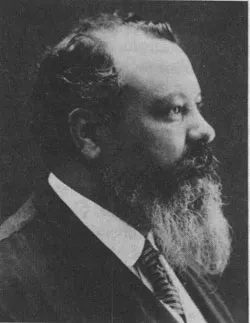
Hans Richter
Human Design Chart
Biography
He was born into a well-to-do family. In 1916, he went to Zürich and joined the Dada movement; moving from Switzerland to the United States in 1940 where he became an American citizen. He taught in the Institute of Film Techniques at the City College of New York.
While living in New York City, Richter directed two feature films, Dreams That Money Can Buy (1947) and 8 x 8: A Chess Sonata in 8 Movements (1957) in collaboration with Max Ernst, Jean Cocteau, Paul Bowles, Fernand Léger, Alexander Calder, Marcel Duchamp, and others, which was partially filmed on the lawn of his summer house in Southbury, Connecticut.
In 1957, he finished a film entitled Dadascope with original poems and prose spoken by their creators: Hans Arp, Marcel Duchamp, Raoul Hausmann, Richard Huelsenbeck, and Kurt Schwitters.
After 1958, Richter spent parts of the year in Ascona and Connecticut and returned to painting. In 1963, he directed the short film From the Circus to the Moon on the American artist Alexander Calder.
Richter was also the author of a first-hand account of the Dada movement titled Dada: Art and Anti-Art which also included his reflections on the emerging Neo-Dada artworks.
He died on 1 February 1976, aged 87, in Minusio, near Locarno, Switzerland.
Human Design Analysis: Hans Richter as Manifestor 3/5
Manifestor 3/5 — Design at a Glance
Hans Richter revealed himself as a pioneer and visionary, whose design predisposed him to lead the world into a new future. His character matched that of an emperor in ancient Rome: He possessed the vision of a great empire, but did not lead the necessary wars and battles himself. Instead, he sent his soldiers out to conquer foreign lands for him. This kind of leadership inevitably polarized. As his plans did not appeal to everyone, he was often misunderstood because he thought ahead of others. Some people loved him for his great dreams and found followership; others did not like or even hated him because of these huge visions. For the right followership to find him, it was crucial for him to inform others about his visions at the right time and in sufficient detail. This formed the ideal strategy for his design. If he followed this strategy of informing, he was rewarded with a feeling of inner peace. If he lived against his design, he probably felt a persistent, deep anger within himself. His path was to attract the right people through clear communication and thus maintain inner peace, rather than fighting against the resistance of those who did not share his vision.
Emotional Authority
Hans Richter revealed himself as someone who never made decisions out of the moment. His design laid a tendency towards emotional delay: He needed time to gain clarity. This attitude stemmed from his emotional authority, carried by the defined Solar Plexus Center. In Human Design mechanics, this authority always takes precedence over all other defined centers. Hans Richter was subject to an emotional wave, a permanent up and down of his feelings. The world he saw was always colored by his current mood. A moment of enthusiasm could quickly turn into negative evaluation. His immediate feeling was only a snapshot, not yet his truth. Quick, spontaneous decisions based on this emotion often had negative consequences. Instead, he let decisions mature. The more time he took, the deeper and more comprehensive he could see. This required patience and the repeated consideration of questions. He hesitated properly, let himself be asked multiple times. Over time, the intense feelings subsided. He gained emotional distance. Then clarity and calmness set in. Only then had he gone through the process. This mechanism was crucial for long-term decisions that could have a significant impact on his life course. Hans Richter lived this strategy of emotional distancing to find his inner truth.
The 3/5 Profile — Martyr / Heretic
Hans Richter revealed himself as someone who learned through personal experimentation to then help others with this practical knowledge. His design as a 3/5 profile – the experimenter and hero – shaped this attitude. The third line required him to initially make no assumptions, but to experience everything himself. He learned from trial and error, often also from failures that forced him to adapt spontaneously. This phase of withdrawal and shock reaction formed the basis of his knowledge.
In the second half of his life, the fifth line came into play. Here, his role shifted from learner to helper. Hans Richter used his accumulated experiences to find solutions for other people's problems. This generosity allowed him to act supportively without fear of negative consequences. Recognition for this work was crucial for him. His attractiveness to others arose precisely from this: They saw him as someone who spoke from practice. However, this heroic role could be painful if he failed in front of others. His path was marked by the necessity of gaining authority through his own experience to later be seen as a reliable advisor.
Single Definition — Defined & Open Centers
Hans Richter revealed himself as someone whose expression and actions were marked by a profound emotional clarity that required time to unfold. His defined Solar Plexus Center served as an inner authority: He relied on waiting for the waves of his feelings to pass before making decisions. Impulsive reactions to emotional highs or lows he avoided, recognizing that truth only reveals itself over time. This emotional depth influenced his surroundings and colored the social field in which he moved.
His defined Throat Center gave him a steady, reliable way of communicating. His voice was not just a tool of the mind, but a channel that transformed the information from his emotional system into the world. He spoke from the clarity that came at the end of the emotional cycle, making his words authentic and honest. This process was supported by his defined Spleen Center, which provided him with spontaneous, intuitive warning signals in the present moment. This existential intuition protected him from health or survival risks and complemented the slow emotional reflection with immediate bodily knowledge. Additionally, his defined Root Center provided a constant inner pressure that propelled him forward and grounded him in the material world by transforming stress into constructive energy.
In contrast, his open Head Center revealed a vulnerability to mental confusion and the pressure to find answers to questions that were not his. He tended to get caught up in the thoughts of others when he did not trust his inner authority. His open Ajna Center allowed him a flexible, learning mind that took in various concepts, but without the danger of holding opinions as absolute truth. Particularly challenging was his open G Center: He lacked a firm, unchanging identity. Instead, he adapted to the people and places he encountered and sought the right environment to feel at ease. His open Heart Center made him vulnerable to the attempt to prove his worth through promises or competition, which he could counteract by avoiding unnecessary commitments. Finally, his open Sacral Center was sensitive to the energy of others; he had to learn to set boundaries and rest to avoid being drained by borrowed vitality.
Channels for synthesis, intuitive clarity and sustained transformation.
Hans Richter showed a deep need for tribal belonging and emotional security, paired with an instinctive drive to work his way up through competence. His design connected the search for support with the ability to articulate intuitive truths in the moment.
The Channel of Synthesis 19-49 linked the Root Center with the Solar Plexus. Gate 19 pressed for closeness and cohesion, while Gate 49 rejected anything that contradicted tribal ideals. This emotional frequency determined who belonged and who did not, based on loyalty and mutual resource protection. Hans Richter sought this balance between accessibility and fairness to secure his position in the 'company' of family or community.
Simultaneously, the Channel of Transformation 54-32 drove ambition through constant effort. Gate 54 aimed for ascent and visibility, driven by the fear of tribal failure. Gate 32 sought talents and continuity. Hans Richter worked hard to prove his worth and gain recognition, which helped him rise above his social stratum. This ambition was always anchored in service to the tribe.
Another imprint came from the Channel of Brainwave 57-20, which translated intuitive insight directly into communication. Gate 57 in the Spleen provided spontaneous, survival-relevant knowledge that Gate 20 in the Throat Center expressed in the moment. This allowed Hans Richter to act with penetrating self-awareness and encourage others in their inner intelligence without prolonged thought.
Additionally, priority gates like Gate 51 (Willpower, Adaptation to Shocks) and Gate 53 (Pioneer Spirit, New Cycles) contributed to his resilience. Gate 41 fostered evolutionary development through emotional crises, while Gate 22 offered openness to social mutations. Gate 33 promoted reflection and withdrawal to process experiences. Gate 38 set boundaries to preserve integrity, and Gates 31 and 8 supported leadership and individual contribution to the collective.
Tribal Circuitry — Circuit Signature
Hans Richter revealed himself as someone who acted on targeted impulses rather than operating in a constant flow. His design was simply defined, meaning a coherent, connected energetic structure. The connected centers – Root, Solar Plexus, Spleen, and Throat – formed a single functional unit where the forces supported each other without being interrupted by undefined gaps.
The Knowledge Circuit worked through him via Channel 20-57, linking the Throat Center with the Spleen. This channel enabled lightning insights that were directly translated into expression. It was about the ability to recognize innovative ideas quickly and manifest them acoustically or verbally, driven by the inner intuition of the Spleen.
Parallel to this, the Ego Circuit shaped his approach. Here, two channels were active: 32-54 (Transformation) and 49-19 (Synthesis). These connected the Spleen with the Root Center and the Solar Plexus. The energy of Transformation (32-54) helped convert fears or pressure into actionable impulses, while Synthesis (49-19) brought together various perspectives or information into a new whole. Since the Ego Circuit does not have a direct connection to the Sacral Center, it was important for Hans Richter to take pauses between phases of resource generation and cooperation to regenerate. The combination of impulsive insights and the ability to grasp them into synoptic overall images characterized his specific approach to the world.
Right Angle Cross of Penetration 1
Hans Richter's design carried the imprint of the right Cross of Manifestation. This configuration combined an inner, often unconscious driving force with the ability to overcome barriers through direct physical presence and clear communication. In Human Design, this cross marks a specific life path aimed at reaching and inspiring others through personal experience and action, without necessarily exercising formal authority. The energy of this cross promoted a stance of direct confrontation with reality, with the goal of making an impact through one's own actions and example. Hans Richter thus showed himself to be someone who did not just think theoretically but put his convictions into practice to bridge different worlds or ideas. The mechanics of this cross supported a form of leadership that relied less on command and more on the radiant effect of authentic, penetrating action. It was about clearing the way for others through one's own presence and clarity of intent, advancing oneself while not ignoring resistance but rather overcoming it. This energy shaped his way of moving through the world: directly, purposefully, and with a focus on bringing about change through personal action that could inspire others.
Saturn Return · Uranus Opposition · Chiron Return · 2nd Saturn Return — Life Cycles
Hans Richter's design showed a tendency towards cyclical consolidation, manifesting in clear professional turning points. In 1916, at the age of 28, he joined the Dadaists in Zurich. This marked his first Saturn Return, a time when years of groundwork often condenses into a solid, structural result and new responsibilities are taken on.
At the age of 40, in 1928, came the Uranus Opposition. Here, Richter was tasked with filming a music festival for Deutsche Kammermusik Baden-Baden. This transit often brings unexpected impulses or sudden changes that break the established framework and open up new, innovative paths.
The Chiron Return around the age of 49 is a fulfillment cycle in which one's incarnation cross unfolds and meaning becomes tangible. In 1937, Richter then took a position as head of film production at Central-Film in Zurich. This was not a moment of healing but of bloom, where his life's purpose became concrete.
Finally, in 1946, at the age of 58, Richter's first solo exhibition in the USA opened at Peggy Guggenheim's gallery in New York. This fell during his second Saturn Return, often leading to final confirmation and success of long-term work. His career thus followed the rhythmic patterns of his astrological transits.
Manifestor · Emotional Authority — Synthesis
Hans Richter was a Manifestor, marked throughout his life by a deep inner dynamism. His design showed a strong connection between the need to develop and implement visions (Knowledge Circuit, Gate 19/49) and the emotional wave that accompanied his decisions (Emotional Authority). This combination led to a life of repeatedly charting new paths, experimenting (Profile 3/5), and experiencing both recognition and resistance – a pattern evident in professional turning points such as joining the Dadaists (1916) and leading film production (1937). He lived the role of a trailblazer, setting impulses through the exploration of new forms of expression and confrontation with existing norms.
Central to Hans Richter was the tension between the drive to realize his principles (Gate 49) and the necessity to adapt to the demands of the world. His emotional process required time to gain clarity, while his manifesting nature tended towards quick action. This led to an internal conflict, manifesting in creative cycles and associated successes (such as the exhibition in 1946) as well as challenges. He navigated between a desire for authenticity and adaptation to external circumstances, always driven by the search for new forms of expression.
3 Defined Channels
Incarnation Cross - Right Angle Cross of Penetration 1
Solar Return
The Solar Return shows the moment when the sun returns to its exact birth position - your personal solar year.
Life Cycles
Discover the life cycles with a detailed triple view (birth chart, cycle chart, composite).
Human Design Profile
- Type
- Manifestor
- Strategy
- To inform others before acting
- Authority
- Emotional Authority
- Profile
- 3/5 - Martyr / Heretic
- Definition
- Single Definition
- Incarnation Cross
- Right Angle Cross of Penetration 1
- Date of Birth
- 06.04.1888 16:30
- Place of Birth
- Berlin, GER
Frequently Asked Questions
What was Hans Richter's Human Design type?
What profile did Hans Richter have in Human Design?
Which authority guided Hans Richter's decisions?
What incarnation cross was Hans Richter assigned to?
When was Hans Richter born?
Discover your own Human Design
Are you also a Manifestor? Find out in a personal reading how to use your initiation power peacefully and dissolve resistance.
More Personalities
Back to overviewChristian-Jaque
Kesha

Lucebert
Marilyn

Masaccio

Papus