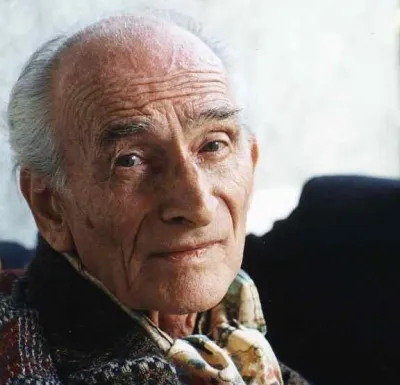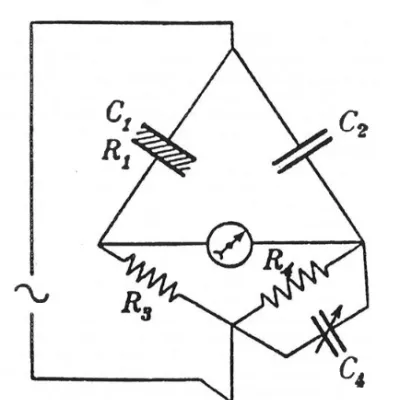
Harald Schering
Human Design Chart
Biography
He studied physics at the University of Göttingen, and earned his doctorate in 1904. Beginning in 1905 he was a scientific assistant at the Physics and Technology Institute in Berlin Charlottenburg; today known as the Physikalisch-Technische Bundesanstalt (PTB). His work at PTB primarily dealt with high voltage/high current research and development, and in 1914 he developed a measurement methodology for examining current transformers. In 1919 he attained the title of professor at PTB.
Beginning in 1927, Schering was a professor of electrical engineering and high voltage technology at the Technical University of Hanover (today known as the Leibniz University of Hanover). Today, the Schering Institute at Leibniz University is named in his honour.
He died on 10 April 1959 in Hanover, aged 78.
Harald Schering — Manifesting Generator with Profile 4/6
Manifesting Generator 4/6 — Design at a Glance
Harald Schering revealed himself as a hybrid being that united the constant energy of Generators with the lightning-fast implementation power of Manifestors. His design provided him with a steady source of energy in his sacral center, but required the strategy of not initiating things himself and instead waiting for external impulses to react to them. This reaction allowed him to skip steps and quickly draw things into his life.
However, this speed brought two specific risks along with it. Firstly, he tended to miss important stages, which inevitably led to him having to return later to make up for the missing parts – a process that would turn into frustration if ignored. Secondly, his speed pulled him towards pursuing multiple projects simultaneously as he responded to various impulses at once. Without strict adherence to his inner authority and the strategy of waiting, this creative enthusiasm quickly turned negative.
When the right conditions were met – waiting for the impulse, confirmation through the sacral 'yes', and regular review of projects – Harald Schering found deep satisfaction in his work. For him, it was no obstacle but a necessity to handle different tasks simultaneously. The advice to focus on one thing at a time did not suit his nature; instead, he found his true strength and play mode in variety and the ability to advance efficiently through proper reaction.
Emotional Authority
Harald Schering revealed himself as someone whose inner decision-making process was inseparable from the rhythm of his feelings. His inner authority resided in the defined Emotional Center – a mechanism that took precedence over all other definitions in his chart. This did not mean he acted emotionally constantly, but rather that his deepest truth could only be accessed through the ebb and flow of his moods.
His perception was always colored by the current emotional state: A project might appear highly inspiring at one moment to then seem completely unattractive in the next. These fluctuations were not instability but the necessary dynamics of his system. Quick, spontaneous decisions driven by the initial emotional impulse often proved misleading or disadvantageous for him, as the first impression did not yet represent full clarity.
True insight only set in for Harald Schering when he allowed himself time. The process of 'sleeping on' decisions was essential: As time passed, intense feelings smoothed out and an emotional distance emerged. In this phase of calmness, the actual truth crystallized. This patience was not a virtue but a mechanical necessity of his design to make long-term life decisions safely without following fleeting whims.
The 4/6 Profile — Opportunist / Role Model
Harald Schering revealed himself in his first half of life as an experimental person who sought intense relationships and friendships. His Profile 4/6 worked similarly to a Line 3 before the age of 30: He learned through direct experience in social interaction. The Line 4 at Gate 34 gave him intuitive power in the here and now, paired with a deep need for trust and respect.
With the activation of Line 6, an inner conflict came to light: The desire for community (Heart) stood against the urge to withdraw to reflect on the meaning of life (Head). This tension shaped his entire life. Harald Schering had to learn to endure this polarity – between openness to others and the need for distance in seeking wisdom.
In his later years, he became a role model. The Line 6 at Gate 59 brought an understanding of long-term commitments and their consequences, such as in education or enduring partnerships. Venus elevated this level by allowing moments of perfect union. Harald Schering carried the expectation to serve others through cooperation and wise leadership. His heart remained cautious; he only opened up to those people from whom he could exclude distrust based on earlier disappointments. His task was to maintain this balance between social engagement and individual integrity.
Split Definition — Defined & Open Centers
Harald Schering was characterized by a constant mental pressure to ask questions and find answers, coupled with a clear inner direction. His design linked defined Head and Ajna centers, creating a specific kind of conceptual thinking. This mental process wasn't impulsive but followed its own rhythm of inspiration and confusion that he accepted rather than rushing to resolve it. His voice, marked by the defined Throat Center, served as a reliable channel for these conceptual contents.
At the same time, Harald Schering possessed an enormous vital energy source in his defined Sacral Center. This power required patience: He reacted to life instead of initiating it. His inner authority lay in his defined Solar Plexus Center, meaning that emotional clarity was only achieved by waiting out the emotional wave. Spontaneous decisions were avoided in favor of deeper insights that revealed themselves over time.
In contrast, his Heart Center was open. Harald Schering tended not to get lost in competitions or proving willpower but learned to avoid promises that overstretched his energy. His open Spleen Center made him vulnerable to conditioned fears about survival security; he unconsciously sought comfort in his environment and had to learn to refrain from spontaneous decisions to avoid false commitments. Additionally, his open Root Center absorbed external stress, which prompted him to distinguish between self-imposed and external pressure to prevent exhaustion. This configuration shaped a person who combined mental depth with sacral endurance but carefully navigated emotional and physical boundaries.
Channels for powerful manifestation, rhythm, intimacy and abstraction.
Harald Schering was marked by a powerful, mutative life energy. The Beat channel 14-2 connected his Sacral Center with the G Center, giving him the ability to set innovative directions. Through Gate 14, he had resources for mutations, while Gate 2 moved higher knowledge into action. This allowed him to open new perspectives for others through his aura without having to actively lead; he simply needed to trust in and react to his inner life.
His interpersonal interactions were strongly influenced by the Pairing channel 59-6. It connected Sacral Center with Solar Plexus Center, creating a deep intimacy through the connection of sexuality (Gate 59) with emotional friction (Gate 6). Harald Schering sought fusion, yet his emotional wave required patience. Only through waiting could he gain clarity and enter into real connections rather than getting lost in confusion.
At the same time, the Charisma channel 34-20 drove him. It linked the raw power of the Sacral Center (Gate 34) with expression in the Throat Center (Gate 20). This gave him the energy to show himself self-assured and active as long as he listened to his inner reaction. Without this guidance, however, his energy threatened to break out chaotically. His vitality was best expressed when he immersed himself in satisfying activities and thus set an example for others.
Mentally, Harald Schering was marked by the Abstraction channel 64-47. He tried to understand experiences through the Gate of Confusion (64) in Head Center to frame them into a story via the Gate of Understanding (47) in Ajna Center. His mind constantly played with possibilities, often leading to inner unrest. Yet through patience, these images eventually condensed into clear insights that he could then communicate.
Additionally, Gates like 55 (emotional awareness), 11 (visual memory), and 43 (penetrating insight) shaped his profile. Gate 35 promoted change through interaction, while Gate 7 projected leadership impulses. Harald Schering lived these mechanisms by knowing his energy and waiting for the right moments to act or communicate.
Individual Circuitry — Circuit Signature
Harald Schering was marked by separate, parallel energy flows. His Split Definition formed two independent systems: a large network of Identity, Sacral, Solar Plexus, and Throat Center as well as a smaller one comprising Head and Ajna Centers. These blocks did not work as a single stream but alongside each other.
The Knowledge Circuit connected his Identity with the Sacral Center via the channel 'The Beat'. This promoted a pulsating, acoustic creativity and emphasized individuality. The Protector Circuit linked Sacral and Solar Plexus Centers through the channel 'Pairing'; here, ancient energies of protection, care, and genetic preservation worked timeless. Throat Center joined in the Integration Circuit via the channel 'Charisma' to Sakral Center; this served to channel power from reacting to life and express it in the present.
Completely separate from these, the Meaning-Finding Circuit operated. It connected Head and Ajna Centers through the channel 'Abstraction'. This connection directed attention to emotions and experiences from the past. Harald Schering reflected on past events to grasp their meaning and share this knowledge visually as well as cyclically with others. The mechanics of his design thus suggested a structure in which personal expressive strength and protective instincts, on one hand, and analytical processing of the past, on the other hand, existed as independent, not directly connected forces.
Right Angle Cross of the Sleeping Phoenix 4
Harald Scherings design was marked by the right cross of the sleeping phoenix. This specific configuration is characterized by a fundamental tension: the desire for rest and recovery against an inner drive to prove oneself or fight. For Harald Schering, this meant that he often found himself torn between the need to simply be and the impulse to become active. The mechanics of this cross show that energy is built not through constant action but through targeted pauses and reflection. Those who carry this structure tend to overextend themselves when they ignore their natural rhythm of activity and recovery. Harald Schering lived with this dynamic balance, which allowed him to gain deep insights during moments of stillness while other phases were marked by intense, often combative energy. This duality shaped his way of dealing with challenges: not through blind perseverance but through finding a personal rhythm that allows both strength and regeneration. His design challenged him to learn when it was worth taking on the fight and when it was wiser to return to the rest of the 'sleeping phoenix' to gather new strength.
Saturn Return · Uranus Opposition · Chiron Return · 2nd Saturn Return — Life Cycles
Harald Schering emerged as someone whose professional authority and responsibility steadily gained weight throughout his career. His design laid a tendency towards structured buildup and institutional anchoring, which was reflected in clear milestones of his career.
In 1905, at the age of 25, he joined the high-voltage laboratory of the Physikalisch-Technische Reichsanstalt as a scientific assistant. This first Saturn return marked the beginning of a phase where years of groundwork condensed into a solid foundation – a typical effect of this cycle, often associated with building something lasting.
The Uranus opposition in 1918 (age 38) brought a decisive change: Schering became head of the high-voltage laboratory and professor at the PTR. This cycle often demands a reorganization of existing structures; here it was shown through taking on a leadership role that broke old boundaries and opened new perspectives.
The Chiron return around 1926 (age 46) was an achievement cycle in which his life purpose increasingly unfolded. The call to the Technical University of Hannover as successor to Wilhelm Friedrich Kohlrausch confirmed his professional bloom and meaningfulness – no healing process in a pathological sense, but the realization of his incarnation cross through recognition and dissemination of knowledge.
In 1937 (age 57), during his second Saturn return, he laid the foundation for the high-voltage hall. This cycle condensed his long-term work into a visible, material result: a building that permanently transferred his scientific imprint into the physical world.
Manifesting Generator · Emotional Authority — Synthesis
Harald Schering lived a life marked by an inner dynamic between sacral energy and mental pressure. As a Manifesting Generator (MG), he possessed the ability to quickly initiate things and mutate – a trait amplified by the connection of his Sacral Center with the Throat Center. At the same time, however, he was constantly subjected to internal questioning and the need for understanding (defined Head Center), which forced him to repeatedly reassess and question things. This combination manifested in his career, where he alternately embarked on new paths (Saturn Return 1, 1905) and took over established positions (Uranus Opposition, 1918), always driven by the search for innovation and the desire to transform knowledge.
A central paradox in his design lay in the tension between the need for community and the drive towards individuality (Profile 4/6). He sought connection with others (Line 4) while simultaneously retreating into his own thinking and reflection (Line 6), representing a constant tug-of-war between heart and mind. This inner conflict, intensified by emotional authority, required time for decision maturation and led to a profound understanding of the world – yet also possibly to melancholy that came with the Beat Channel (14/2).
4 Defined Channels
Incarnation Cross - Right Angle Cross of the Sleeping Phoenix 4
Solar Return
The Solar Return shows the moment when the sun returns to its exact birth position - your personal solar year.
Life Cycles
Discover the life cycles with a detailed triple view (birth chart, cycle chart, composite).
Human Design Profile
- Strategy
- To respond - wait for something to respond to
- Authority
- Emotional Authority
- Profile
- 4/6 - Opportunist / Role Model
- Definition
- Split Definition
- Incarnation Cross
- Right Angle Cross of the Sleeping Phoenix 4
- Date of Birth
- 25.11.1880 05:00
- Place of Birth
- Göttingen, GER
Frequently Asked Questions
What was Harald Schering's Human Design type?
Which Profile did Harald Schering have?
What was Harald Schering's Authority?
What incarnation cross was assigned to Harald Schering?
When was Harald Schering born?
Discover your own Human Design
Are you also a Manifesting Generator? Find out in a personal reading how to unfold your multi-talents and direct your energy wisely.
More Personalities
Back to overviewAldair

Alizée

Angeli

Arletty
Artus

Balthus