
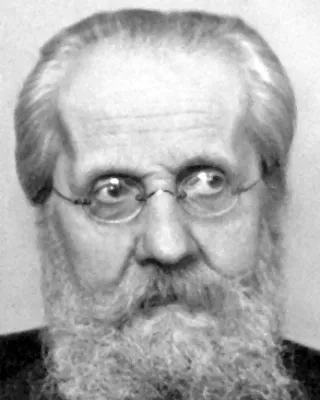
Heinrich Rickert
Human Design Chart
Biography
Rickert's philosophy was an important influence on the work of sociologist Max Weber. Weber is said to have borrowed much of his methodology, including the concept of the ideal type, from Rickert's work. Also, Martin Heidegger started out his academic career as Rickert's assistant, graduated with him and then wrote his habilitation thesis under Rickert.
He was professor of philosophy at the University of Freiburg (1894–1915) and Heidelberg (1915–1932).
He died on 25 July 1936 at age 73 in Heidelberg, Germany.
Human Design Analysis: Heinrich Rickert as Manifesting Generator 4/6
Manifesting Generator 4/6 — Design at a Glance
Heinrich Rickert revealed himself as someone who combined the endurance of a Generator with the accelerating power of a Manifestor through a hybrid energy configuration. His design inclined towards rapid action, allowing him to skip steps and quickly pull things into his life. This ability stemmed from an active connection between one of his motor centers and the Throat Center, which endowed him with Manifestor qualities, while his defined Sacral Center provided constant energy.
However, this configuration brought specific challenges. Rickert tended to pursue multiple things simultaneously as he reacted to various impulses and started projects in parallel. If his inner authority or strategy was not aligned, his creative drive quickly turned into frustration – the non-self theme of the Manifesting Generator. Additionally, there was a risk that through his speed, he might omit important intermediate steps and later have to backtrack to make up for them.
For Rickert, it was crucial not to initiate himself but to respond to life impulses. Only when his Sacral Center gave a clear “yes” could he effectively utilize his energy. Under these conditions, he drew deep satisfaction from his work. Variety and playful modes were no distractions for him but essential sources of creativity and fulfillment that enabled him to work on different tasks in parallel without getting distracted.
Emotional Authority
Heinrich Rickert's design inclined towards emotional delay: quick judgments often proved misleading for him. His inner authority was Emotional Authority, carried by the defined Emotional Center. In Human Design mechanics, this configuration is considered absolutely prioritized; it always takes precedence over all other defined centers regardless of additional chart factors. This meant that Rickert was subject to a wave movement of feelings – a permanent up and down that colored his perception momentarily. What appeared inspiring in one moment could turn negative the next. These mood swings were not an ultimate truth but merely initial impressions. Spontaneous decisions made out of this heat often proved detrimental. Instead, his system required patience: he had to let decisions mature, sleep on them multiple times and take time until intense feelings subsided. Only then, when emotional distance was gained, did clarity and calmness set in for him. This process of waiting served to gain deeper insights before acting. Especially for long-term life-changing decisions that shaped his life course, this strategy of delaying and waiting was crucial to not be swayed by passing moods.
The 4/6 Profile — Opportunist / Role Model
Heinrich Rickert's design inclined towards a deep inner conflict that shaped his life. The Profile 4/6 described a person whose early years were marked by strong experimentation in relationships and friendships. During this phase, the later Line 6 still appeared like a Line 3, leading to promising but often superficial connections.
Over time, especially after the first Saturn return, a fundamental contradiction emerged: the desire to belong to a community (Line 4) stood in tension with the need to withdraw and contemplate the meaning of life (Line 6). This conflict between heart and mind often generated confusion. Heinrich Rickert showed himself as someone who had to learn to integrate these poles.
The mechanics of his lines underscored this. The fourth line from Gate 20 marked the beginning of a transpersonal process where knowledge should be conveyed not only theoretically but through action and intuition. Simultaneously, the sixth line from Gate 55 demanded intensive individual development. Before the mind could awaken, material needs had to be met. Heinrich Rickert thus had to first take care of himself to later act as a wise role model. His path was marked by carefully guarding the great heart of Line 4 so as not to get hurt while simultaneously taking responsibility for giving orientation to others through his own practice and intuition.
Single Definition — Defined & Open Centers
Heinrich Rickert was characterized by a consistent inner direction and a reliable way of self-expression. His defined G Center gave him a firm sense of self-understanding as well as a clear purpose for his life mission, independent of external expectations. This identity flowed into his defined Throat Center, enabling him to communicate messages with honesty and clarity – not as impulsive speech, but from a stable source.
As a Generator, Rickert had a defined Sacral Center that provided him with immense vital energy. His design required him to wait and react to questions or invitations rather than initiate action himself. Only through this reactive stance could he unleash his full power and avoid frustration. Furthermore, his decisions were guided by his defined Solar Plexus Center; here it was necessary to await the emotional wave until clarity emerged, instead of acting in haste or mood.
This complex tension field between inner peace and external pressure was influenced by his open Heart Center. Without constant willpower, he tended to be distracted from the necessity of proving his worth through performance or promises – a pattern that often ended in frustration when he acted against his own nature. Additionally, his Head and Ajna Centers were open, making him receptive to others' ideas but also vulnerable to mental confusion and pressure to find answers to questions that weren't his. Instead of getting lost in this mental labyrinth, Rickert found his orientation through his defined Spleen Center: a spontaneous, intuitive intelligence that acted in the present moment and protected him from being overloaded with foreign concepts. His defined Root Center provided the necessary pressure to maintain this existential clarity.
Channels for powerful intuition, emotional depth and determination.
Heinrich Rickert was someone who operated through immense, physically grounded life force energy, which always had to be guided by a deep, instinctive perception. His design was characterized by channels that transformed raw energy into precise, momentary actions.
The Charisma Channel 34-20 connected his sacral power with the expression in the present moment. This gave him a charismatic presence and the ability to act quickly, provided he responded to external stimuli rather than acting out of mental constraints. Without this inner guidance, his energy threatened to break out chaotically. This was complemented by the Flash of Insight Channel 57-20, which gave him sharp intuitive insight. The connection between Spleen and Throat allowed him to articulate existential truths spontaneously – knowledge that stemmed not from logic but from immediate survival intelligence.
His actions were further determined by the Power Channel 34-57. Here, sacral energy and spleen-based intuition merged into a strong survival instinct. Rickert was designed to protect and assert himself as an individual through acoustic attention and spontaneous reaction. This combination created a person who was active and powerful but could only channel his vitality correctly if he followed his inner authority.
Additionally, the Discovery Channel 29-46 shaped his life path. He had to fully immerse himself in an experience to understand its meaning. This required persistence and letting go of expectations; only at the end of the process did the significance of his journey become clear. Emotional dynamics also played a role: The Transience Channel 35-36 drove him to seek new experiences, often motivated by emotional crises, while the Release Emotions Channel 39-55 influenced his mood wave and taught him to use his own mood as a tool for authentic interaction.
Individual Circuitry — Circuit Signature
Heinrich Rickert's design inclined towards impulsive, creative insights that he articulated verbally. This energy flowed directly from the Spleen Center (intuitive knowledge) into the Throat Center (expression), generating spontaneous mental flashes. Parallel to this, a channel connected the Solar Plexus with the Root Center, causing emotional waves to trigger immediate action impulses. Both segments belonged to the Knowledge Circuit, which revolved around the development of a unique identity through new knowledge.
Another aspect was reflecting on past experiences. The Sense Finder Circuit linked his Throat and Solar Plexus Centers, leading to the sharing of emotional insights from the past. Simultaneously, there existed a separate connection between Identity and Sacral Centers, providing a stable, powerful foundation for this reflection. These two groups were energetically separated: speaking about feelings did not flow directly with the inner power source but formed parallel experiential fields.
Additionally, the Integration Circuit connected Throat, Sacral, and Spleen Centers. This gave his impulsive ideas (Spleen) a physical presence (Sacral), which he verbally manifested in the here and now (Throat). Through these configurations, Heinrich Rickert was someone who linked intuitive truths with emotional depth and carried them into the world through charismatic presence. His energy was pulsing and acoustically marked, always focused on formulating and sharing individual insights.
Right Angle Cross of the Sleeping Phoenix 2
Heinrich Rickerts Human-Design trug die Signatur des rechten Kreuzes des schlafenden Phönix. Diese Konfiguration verband eine tiefe, oft unbewusste Suche nach Sinn mit der Fähigkeit, in Krisenmomente zu schauen und daraus neue Perspektiven zu entwickeln. Der Name “schlafender Phönix” deutet auf ein Potenzial hin, das nicht ständig aktiv ist, sondern sich in spezifischen Lebensphasen oder unter bestimmten Bedingungen entfaltet. Heinrich Rickert zeigte sich somit als jemand, dessen innerer Kompass nach verborgenen Wahrheiten und tieferen Zusammenhängen suchte, auch wenn diese Suche nicht immer im Vordergrund seines Alltags stand.
Die Mechanik dieses Kreuzes beschrieb eine Spannung zwischen dem Wunsch nach Ruhe und der Notwendigkeit, aus alten Mustern aufzubrechen. Heinrich Rickert lebte mit einer inneren Dynamik, die ihn dazu anregte, scheinbar unlösbare Situationen zu hinterfragen und nach neuen Wegen zu suchen. Dies geschah nicht durch äußeren Druck, sondern aus einem inneren Drang heraus, der in Momenten der Reflexion oder des “Schlafens” – also der Rückzugphasen – besonders stark wurde. Sein Design legte nahe, dass seine größten Erkenntnisse oft dann kamen, wenn er sich von der Hektik des Tages zurückzog und sich den tieferen Schichten seines Erlebens zuwandte. Diese Eigenschaft prägte seinen Lebensweg als einen fortwährenden Prozess des Erwachens und Neuanfangs, getrieben von einer subtilen, aber beständigen inneren Kraft.
Saturn Return · Uranus Opposition · Chiron Return · 2nd Saturn Return — Life Cycles
Heinrich Rickerts Human-Design prägte eine Entwicklung, bei der sich strukturelle Reifung und berufliche Bestätigung in klaren Phasen abzeichneten. 1891, im Alter von 28 Jahren, habilitierte er sich an der Universität Freiburg im Breisgau. Dieser Zeitpunkt markiert den ersten Saturn-Return, einen Zyklus, in dem jahrelange Vorarbeit oft zu einem tragfähigen Ergebnis verdichtet wird und die eigene Positionierung festigt. Es war ein Moment der Konsolidierung, bei dem frühere Anstrengungen ihre konkrete Form fanden.
Später trat der Chiron-Return ein, ein Erfüllungszyklus, in dem sich das Inkarnationskreuz entfaltet und Sinn erfahrbar wird. 1915, mit 52 Jahren, erhielt Rickert einen Ruf an die Ruprecht-Karls-Universität Heidelberg. Dieses Ereignis illustrierte diese Phase der Blüte: Die innere Ausrichtung fand ihre äussere Bestätigung durch eine führernde akademische Position. Der Wechsel nach Heidelberg war keine bloße Karriereänderung, sondern die Verwirklichung einer langfristigen Lebensaufgabe. Beide Ereignisse zeigen, wie Rickert seine Strategie und Autorität nutzte, um in den jeweiligen Zyklen stabile Meilensteine zu setzen, die seine intellektuelle und berufliche Identität verankerten.
Manifesting Generator · Emotional Authority — Synthesis
Heinrich Rickert lebte ein Leben, das von der dynamischen Verbindung zwischen innerer Wahrnehmung und äusserem Ausdruck geprägt war. Sein Design als Manifestierender Generator (mit definiertem Sakralzentrum) deutete auf eine konstante Energiequelle hin, die jedoch durch emotionale Wellen (emotionale Autorität) gefiltert werden musste. Diese Kombination führte zu einer Arbeitsweise, in der er zunächst Impulse empfing und dann, nach reiflicher Überlegung, blitzschnell agierte – ein Prozess, der gelegentlich dazu führen konnte, dass wichtige Schritte übersprungen wurden. Das Profil als Netzwerker/Rollenvorbild verstärkte diesen Zug zur Interaktion mit der Welt, während die Linie 6 den Wunsch nach Reflexion und dem Finden eines tieferen Sinns hinzufügte (Konflikt Herz gegen Kopf).
Zentral für Heinrich Rickerts Wesen war ein Paradox zwischen dem Drang zu handeln und der Notwendigkeit emotionaler Klarheit. Der Kanal des Charismas, der sakrale Energie direkt zum Throat-Zentrum leitete, deutete auf eine natürliche Fähigkeit zur Manifestation hin, die jedoch stets von der emotionalen Welle moduliert wurde. Die Ereignisse im Laufe seines Lebens – sowohl in Bezug auf Karriere als auch auf persönliche Entwicklung (Saturn-Return, Chiron-Return) – zeigten sich als Ausdruck dieses Spannungsfeldes: ein Wechselspiel zwischen schnellem Handeln und dem Bedürfnis, Entscheidungen über einen längeren Zeitraum reifen zu lassen.
6 Defined Channels
Incarnation Cross - Right Angle Cross of the Sleeping Phoenix 2
Solar Return
The Solar Return shows the moment when the sun returns to its exact birth position - your personal solar year.
Life Cycles
Discover the life cycles with a detailed triple view (birth chart, cycle chart, composite).
Human Design Profile
- Strategy
- To respond - wait for something to respond to
- Authority
- Emotional Authority
- Profile
- 4/6 - Opportunist / Role Model
- Definition
- Single Definition
- Incarnation Cross
- Right Angle Cross of the Sleeping Phoenix 2
- Date of Birth
- 25.05.1863 05:00
- Place of Birth
- Danzig, POL
Frequently Asked Questions
What is Heinrich Rickert's Human Design type?
Which Profile did Heinrich Rickert have in Human Design?
What authority guided Heinrich Rickert?
Which incarnation cross was active for Heinrich Rickert?
When was Heinrich Rickert born?
Discover your own Human Design
Are you also a Manifesting Generator? Find out in a personal reading how to unfold your multi-talents and direct your energy wisely.
More Personalities
Back to overviewAldair

Alizée

Angeli

Arletty

Artus

Balthus
