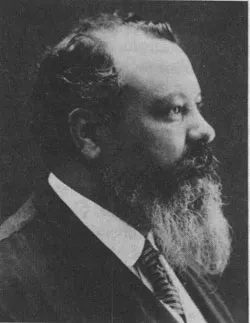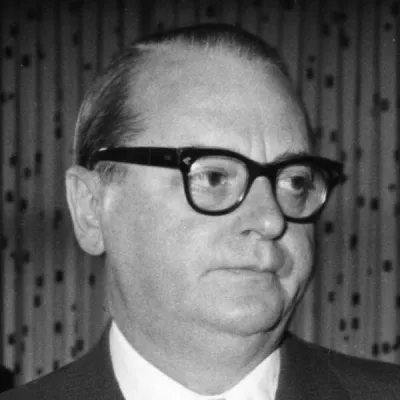
Heinrich von Brentano
Human Design Chart
Biography
Death 1964/11/14.
Heinrich von Brentano — Manifestor with Profile 1/3
Manifestor 1/3 — Design at a Glance
Heinrich von Brentano revealed himself as someone who wanted to actively steer the world into new directions. His Human Design type was that of a Manifestor, making him a pioneer and visionary. Similar to an emperor in ancient Rome, he had great plans for the future but did not lead the necessary battles himself; instead, he sent others to achieve his goals. This style of leadership often polarized people: some were inspired by his far-reaching ideas and followed him, while others rejected or even hated him because of these visions. A central pain point was the feeling of being misunderstood, as his thinking often outpaced that of those around him. To find the right followers, it was essential for him to inform others timely and precisely about his intentions. This formed his ideal strategy. If he followed this approach and adhered to his inner authority, his design rewarded him with a sense of inner peace. However, if he lived against this nature, he instead felt a persistent, deep-seated anger within himself. His character was thus marked by the tension between the urge to forge new paths and the necessity of finding acceptance through clear communication to avoid sinking into resistance.
Emotional Authority
Heinrich von Brentano's design revealed a tendency towards emotional depth and necessary delays. His inner authority was Emotional Authority, carried by his defined Emotional Center. In Human Design mechanics: Whenever the Emotional Center is activated, it takes on this role regardless of other defined centers in the chart. This configuration meant that he was subject to an emotional wave that showed itself through constant ups and downs in his feelings. The world appeared colored by his current mood; a moment of enthusiasm could quickly be replaced by a negative outlook. His feeling in the moment, however, was only a snapshot, not a final judgment. Quick, spontaneous decisions based on such emotions could have negative repercussions since the first impression did not necessarily represent the truth. For Heinrich von Brentano, it was essential to take time for decision-making. This required patience and repeatedly mulling over important questions. Over time, intense feelings subsided, emotional gain set in, clarity emerged, and calmness followed. This process was especially significant for long-term decisions that profoundly shaped his life path. He showed himself as someone who learned through this inner rhythm structure not to follow the first impulse but to give space to deeper insight before acting.
The 1/3 Profile — Investigator / Martyr
Heinrich von Brentano revealed himself as someone who did not just collect knowledge theoretically, but tested it through direct experience and experimentation. His design as a Researcher and Experimenter (Profile 1/3) inclined him to view life as an ongoing process of learning and trial-and-error. Line 1 drove him to engage comprehensively with topics, while Line 3 challenged him to test these insights in practice – often through shocks or failures that served as necessary teaching moments.
This dynamic created a specific tension: Sometimes the energy of Line 1 took control, leading to the fear of not knowing enough to act. Yet the essence of his profile demanded exactly this step towards implementation. Only through self-earned and tested experiences did he form solid judgment. When Heinrich von Brentano made a decision or took a position, it was based on double validation: theoretical depth and practical proof.
The key themes of his configuration included Duty and Harmony (Line 1), paired with Sensitivity and focus on the here and now (Line 3). Success for him did not emerge as a targeted goal but rather as a byproduct of authentic action. His path was marked by the necessity to endure failures and gain insight from them, rather than losing himself in exaggerated demands or alienation through unrealistic expectations. Thus, his authority arose not merely from theory but from the lived experience of experimentation.
Split Definition — Defined & Open Centers
Heinrich von Brentanos design sets a tendency for clear and resolute communication that arises from an established inner identity and emotional depth. His defined Throat Center connects with the Heart and Solar Plexus Centers: He does not just articulate concepts but also expresses his will ("I want this") as well as his emotional wave movements. This combination shapes an expression style that is both powerful and emotionally nuanced. Additionally, his defined G Center gives him a reliable sense of direction and self-love; he shows others paths without restricting their freedom as long as he follows his inner authority.
At the same time, his chart reveals specific vulnerabilities through several open centers. His open Head and Ajna Centers make him receptive to external inspirations and mental pressure waves. He tends to identify with questions or concepts of others if he does not wait for emotional clarity. The open Sacral Center leads to absorbing foreign energy; he risks overexertion through "borrowed" vitality and must learn to set boundaries rather than impulsively responding to external demands. His open Spleen Center amplifies fears of uncertainty or health issues in the environment, making him vulnerable to unhealthy attachments to seemingly secure structures. Finally, his open Root Center takes on external stress; he feels the adrenal impact of his surroundings intensely and must distinguish which pressure belongs to him and which does not to avoid burnout. This mechanism requires him always to wait for the emotional wave before acting or speaking to ensure clarity rather than conditioning.
Channels for emotional drama and spiritual pioneering power.
Heinrich von Brentanos design points to a tendency towards emotionally driven but cautiously dosed social expression. The Openness Channel 22-12 connects his Solar Plexus Center with the Throat Center, creating a moodiness that determined his articulation: He spoke or acted socially effectively only when he felt in the right mood. Gate 12 provided necessary restraint and limited this openness to people with high mutational potential. Forced interaction during low emotional phases led to harshness or misunderstandings; patience until the right wave was crucial for his transformative effect through voice and word.
Parallel to this, he showed himself as someone who used competitiveness to advance individualization. The Initiation Channel 51-25 connects the Heart Center with Gate of Shock (51) and Spirit of Self (25). Here, ego energy, always wanting to be first, merged with universal love. Brentano recognized the potential for individualization in others and could provide the necessary "shock" to initiate them – but only upon invitation. Without this invitation, the process failed and led to bitterness. His competitive drive served not only material goals but was a mystical impulse towards expanding consciousness.
Additionally, gates like 46 (Devotion to the physical process), 15 (Adaptation to natural rhythms), and 10 (Integration through genetically predetermined behavior) influenced his personality or design side. Gate 16 fostered an experimental joy on the path to mastery, while Gate 49 required principled loyalty in the lineage. These configurations shaped him as a person navigating between emotional intuition and competition-driven initiation, always dependent on inner timing and external invitation.
Individual Circuitry — Circuit Signature
Heinrich von Brentanos design points to an inner strength and emotional openness, with these forces operating independently of each other. As a person with split definition, he had two separate energy centers: the Throat and Solar Plexus Centers as well as the Identity and Heart Centers. These groups were not directly connected, creating parallel but distinct experiential fields.
In the Knowledge Circuit, Channel 12-22 (Offenheit) linked his Throat Center with his Solar Plexus Center. This allowed him to articulate emotional waves and inner pulsations directly in words. His communication was characterized by an acoustic quality and the ability to express feelings authentically without necessarily generating new ideas – inspiration came from the emotional center itself.
Simultaneously, in the Authority Circuit, Channel 25-51 (Einweihung) connected his Identity Center with his Heart Center. This configuration fostered a strong sense of self-worth and firm convictions stemming from deep inner security. Heinrich von Brentano was someone who clearly felt his individuality supported by willpower. However, without a connection to the Throat Center, these central beliefs often remained unspoken or hard to put into words, while the emotional level (Channel 12-22) formed the primary channel of expression. The two circuits colored his entire design with pulsating, individual energy without mixing energetically.
Right Angle Cross of the Vessel of Love 2
Heinrich von Brentanos Design carried the right cross of the Love Vessel 2. This configuration shaped a specific emotional orientation that was less characterized by spontaneous affection than by deep, often painful loyalty and an intense bond with certain individuals or ideals. In Human Design, this cross marks a strong emotional wave flowing through the Love Vessel – a center responsible for processing emotions and interpersonal connection.
The 'right' side of this configuration pointed to an inner, inwardly directed intensity. Heinrich von Brentano lived with an emotional depth that required his feelings time to mature before they could be released outward. This could lead to periods of internal isolation when the environment did not reflect or understand this emotional complexity. His love was no light feeling but a serious, often passionate commitment, entailing a high degree of responsibility and sometimes also the risk of emotional overflow.
This structure meant that he rarely remained superficial in relationships. Once a connection was established, his design sought authenticity and true resonance. The challenge lay in understanding his own emotional wave without being overwhelmed by it while simultaneously giving others the necessary space to absorb this intensity. His life was marked by a pursuit of love that was not only felt but also deeply understood and carried.
Saturn Return · Uranus Opposition · Chiron Return · 2nd Saturn Return — Life Cycles
Heinrich von Brentanos Design indicated a lifespan condensed into two prominent phases. The first peak occurred in 1955 when he became Federal Minister for Foreign Affairs at the age of 51, coinciding with his Chiron Return cycle (around ages 49–51). In Human Design mechanics, this period does not signify healing old wounds but rather a blooming phase: the incarnation cross unfolds increasingly if strategy and authority are observed. The purpose of the design became tangible here and manifested in a central political role.
The second phase culminated with his second Saturn Return. This cycle typically begins around age 60 and marks the final condensation of life's mission as well as the conclusion of the physical journey. Heinrich von Brentano passed away in Darmstadt in 1964 at the age of 60, aligning with this mechanical pattern: long-term structures built over decades reach their natural and often abrupt end. Thus, his design showed a clear arc from full realization of purpose in midlife to structural conclusion within the framework of the second Saturn Return.
Manifestor · Emotional Authority — Synthesis
He was a Manifestor who moved through life always seeking new paths (Knowledge Circuit). The connection between emotional authority and the Profile of Researcher/Experimentator points to a profound process of internal weighing before he communicated his visions outwardly (Openness Channel). He lived the exploration of possibilities and transformation through expression – a search for authentic knowledge that he then articulated via the Throat Center. This led to a pulsating energy, both creative and melancholic, driving him continually to make new experiences to reinforce his own individuality.
A central tension lay in the combination of his manifesting impulse to set things in motion and his emotional wave requiring careful maturation of decisions. The tendency towards experimentation (Line 3) clashed with the need for thorough examination (Line 1), possibly placing him between action and hesitation. This resulted in a polarizing effect, as while his visions could inspire others, they also met resistance – a pattern evident throughout his life until his death.
2 Defined Channels
Incarnation Cross - Right Angle Cross of the Vessel of Love 2
Solar Return
The Solar Return shows the moment when the sun returns to its exact birth position - your personal solar year.
Life Cycles
Discover the life cycles with a detailed triple view (birth chart, cycle chart, composite).
Human Design Profile
- Type
- Manifestor
- Strategy
- To inform others before acting
- Authority
- Emotional Authority
- Profile
- 1/3 - Investigator / Martyr
- Definition
- Split Definition
- Incarnation Cross
- Right Angle Cross of the Vessel of Love 2
- Date of Birth
- 20.06.1904 13:05
- Place of Birth
- Offenbach, Germany
Frequently Asked Questions
What is the Human Design type of Heinrich von Brentano?
Which Profile did Heinrich von Brentano have in Human Design?
What Authority did Heinrich von Brentano have?
What incarnation cross was Heinrich von Brentano assigned to?
When was Heinrich von Brentano born?
Discover your own Human Design
Are you also a Manifestor? Find out in a personal reading how to use your initiation power peacefully and dissolve resistance.
More Personalities
Back to overviewChristian-Jaque
Kesha

Laurent-Eynac
Lucebert
Masaccio
Papus