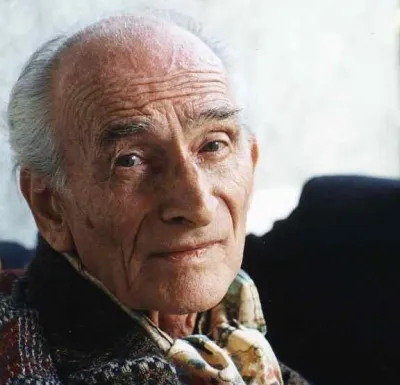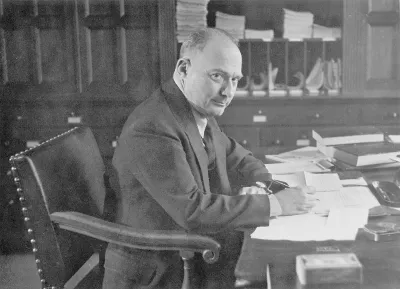
Helmuth Plessner
Human Design Chart
Biography
Human Design Analysis: Helmuth Plessner as Manifesting Generator 2/4
Manifesting Generator 2/4 — Design at a Glance
Helmuth Plessner revealed himself as someone who possessed a hybrid energy structure: He was an Manifesting Generator. This design combined the constant sacral power of a Generator with the ability of a Manifestor to skip steps and quickly draw results into his life.
This configuration created a specific dynamic. On one hand, he had a steady source of energy that, however, functioned according to the principle of reacting to impulses – not through self-initiative. On the other hand, his structure allowed him to push projects forward at great speed and often work on multiple things simultaneously.
However, this pace carried risks. If he acted too quickly or skipped important intermediate steps, it could lead to frustration due to backlogs. Also, working on many tasks at once required constant monitoring: Only when the sacral center signaled a clear "yes" at each step and his inner authority agreed did this multi-layered approach remain productive.
With correct application of this strategy – that is, waiting for an internal impulse before acting – Helmuth Plessner could draw deep satisfaction from his work. His design promoted a “play mode,” in which variety and parallel activities were not seen as distractions but rather as sources of his creative power. The challenge always lay in balancing speed through conscious reaction to inner signals to avoid frustration and ensure fulfillment.
Sacral Authority
Helmuth Plessner's design inclines towards intuitive, body-based decision-making. As a Generator, he possessed sacral authority that also served as his strategy and simplified the process of choice. This inner guidance did not manifest through intellectual analysis but rather as an immediate reaction to external stimuli: gut feelings or bursts of energy signaled whether something was right. His system responded with vitality and inexhaustible energy when activated; he lived in a state of enthusiasm, fully immersed in his activities without needing strict purposefulness.
A crucial prerequisite for this functionality was his open Emotional Center. This protected the clarity of the sacral response from emotional overlay. Additionally, an activated Spleen Center acted as a supportive instance. Since it might be directly connected to the Sacral Center, it allowed Helmuth Plessner particularly quick and spontaneous reactions. He had direct access to his physical well-being and instinctive perception. This combination enabled him to reliably guide himself from these deep, physical signals, which stamped his actions with authenticity and energy.
The 2/4 Profile — Hermit / Opportunist
Helmuth Plessner's design set a tendency to oscillate between retreating into solitude and seeking community. As a person with Profile 2/4, he constantly fluctuated between two fundamental needs: Line 2, which demands solitude and inner concentration, and Line 4, which seeks contact with the familiar community. This configuration created a dynamic tension that required him to set clear boundaries. Plessner had to learn to communicate his needs transparently: when he needed company and when he wanted to remain undisturbed in his "cave". During times of withdrawal, he immersed himself in internal processes to gain clarity. Only after this need for isolation was satisfied did he return to maintain the network. This cycle allowed him to reflect on impressions gathered in social contexts in silence and develop new insights from them. The mechanics of his design thus did not manifest as a static state but rather as rhythmic alternation: first solitude for processing, then the network for exchange. This structure helped him clarify confusion (a theme of his second-line influences) through conscious distancing while simultaneously fulfilling the urge for change and experience (from Line 4) within a protected framework. His path involved using this polarity not as a conflict but as a necessary sequence of phases – withdraw, process, re-emerge.
Single Definition — Defined & Open Centers
Helmuth Plessner's design tends towards clear, authentic communication stemming from a stable inner identity and vital energy source. His defined G Center gave him reliable self-awareness and an intuitive sense of direction; he knew intuitively where he belonged without needing to prove himself. This internal security flowed into his defined Throat Center, serving as the pivot point to translate this identity along with impulses from his defined Sacral Center – the source of his generative power – into words and actions. His voice was not a product of whimsical mood but an expression of a deep mechanical truth about his being and available energy.
At the same time, a complex interaction with the environment through several open centers became apparent. His open Head and Ajna Centers made him receptive to mental inspirations and concepts from others without anchoring them as personal convictions; he could take in and reflect on ideas but tended to lose himself in foreign questions or doubts if not trusting his inner authority. The lack of a stable willpower in his open Heart Center meant that he did not actively seek proof of his worth through competition, but was vulnerable to the pressure of making promises he mechanically could not keep. His open Solar Plexus absorbed emotional currents from the environment, making him sensitive to others' climates but also prone to personalizing foreign emotions or avoiding confrontation out of fear of emotional overload. Finally, his open Root Center mirrored the adrenalized stress of his environment; he was not driven by constant internal pressure but reacted to external chaos, making him vulnerable to burnout if he did not recognize this external pressure as such and withdrew.
Channels for endurance, creative expression and deep experimentation.
Helmuth Plessner's design tends towards inspiring others through authentic role modeling. The Inspiration Channel 1-8 connects the G Center with the Throat Center; it does not primarily act through words but by Helmuth Plessner living his unique identity, thereby drawing attention to himself. This exemplary presence encouraged others to express their own creativity provided they acted from inner authority and waited patiently for the right timing for recognition.
Parallel to this, Helmuth Plessner showed a deep dedication to perfecting skills. The Wave Length Channel 48-16 connects the Spleen Center with the Throat Center. Gate 48 instinctively sought life-critical information while Gate 16 transformed this through repeated experimentation into technical skill. This process required time and engagement to turn mere mastery into a talent accessible to others. Recognition and resources were essential here for further development of this talent.
As a personality, Helmuth Plessner carried the Discovery Channel 29-46 connecting the Sacral Center with the G Center. Here it was about letting go of expectations and fully immersing in experiences. Through persistent saying yes (Gate 29) and trusting his direction (Gate 46), Helmuth Plessner could make discoveries whose meaning only became clear at the end of the process, which he then shared with the collective.
Additionally, gates like Gate 64, processing past experiences for clarity, and Gate 35, seeking change through interaction, played a role. Gate 28 demanded decisions in the here and now while Gate 13 established continuity through collective memory. These configurations shaped Helmuth Plessner's path as someone who learned from experience, refined patterns, and ultimately communicated his insights.
Collective Circuitry — Circuit Signature
Helmuth Plessner's design tends towards a coherent, integrated expression style. As a simply defined person, he had a continuous energetic flow connecting the G Center (identity), Throat Center (expression), Spleen (intuition/survival) with the Sacral Center (life energy). This connection created a stable basis for translating inner convictions directly into words and actions.
The Knowledge Circuit worked through him via the Inspiration Channel (Gate 1-8). This connected the Throat Center with the Identity Center. It was about the ability to express inspired ideas or sudden insights acoustically at the right moment. This energy supported him in pulsatingly bringing his unique individuality and new insights into the world without it being compulsive.
Parallel to this, the Understanding Circuit activated the Wave Length Channel (Gate 16-48). This connected the Throat Center with the Spleen. Here a precise, focused intuition was shown: The ability to share the right information at the right time. It was a visual, future-oriented understanding that enabled logical structures and strategic thinking free from emotional overload.
Finally, the Meaning Circuit connected through the Discovery Channel (Gate 46-29) the Identity Center with the Sacral Center. This gave him cyclically deep emotional depth. He reflected on past experiences to draw meaning from them and emotionally process these insights. This connection ensured that his expression was not only intellectual or inspired but also carried by a deep, rhythmic life energy learning from the past.
Right Angle Cross of Consciousness 3
Helmuth Plessner's Human Design configuration established a tendency towards a specific and often paradoxical stance. The right Consciousness 3 Cross shaped his way of seeing the world and moving within it. This setup linked the drive for individual affirmation with the ability to recognize others in their own worth. It created a dynamic tension between the desire to be at the center oneself and the willingness to give this space to others.
Plessner showed himself as someone who did not experience these two impulses as contradictory but rather used them as complementary forces. The mechanics of this Cross promoted an attitude that could be both self-assured and supportive. It was about celebrating one's own achievements without dismissing or trivializing the accomplishments of others. Instead, this energy allowed for a shared appreciation where the success of one did not diminish the other.
This structure laid the groundwork for relationships and interactions in which honesty and recognition went hand in hand. Plessner lived with this inner logic: One can be proud of their own actions while also preserving the achievements of others. It was not passive tolerance but an active inclusion of the other into one's success cycle. The energy of this Cross ensured that self-esteem and social connectedness strengthened each other rather than fighting against one another. This shaped his way of communicating and acting in the social field sustainably.
Saturn Return · Uranus Opposition · Chiron Return · 2nd Saturn Return — Life Cycles
Helmuth Plessner's Human Design configuration established a tendency towards structural anchoring, which was evident in clear life phases. In 1920, at age 28, he received his Habilitation at the University of Cologne – a typical moment of the first Saturn Return, where years of groundwork often condense into a solid result and professional identity is consolidated. This phase marked the transition to an established position.
Stability was interrupted in 1933, when Plessner was dismissed at age 41 under the Law for the Restoration of the Professional Civil Service – a sudden break that corresponded with his Uranus Opposition, a cycle often breaking existing structures and forcing external circumstances to reorder themselves. The crisis here was not only personal but systemically caused, revealing the fragility of outer positions in this life stage.
From this watershed emerged a new form of authority. In 1950, at age 58, Helmuth Plessner was elected as the first President of the General Society for Philosophy in Germany. This fell into his second Saturn Return, often seen in Human Design as a phase of maturation and institutional influence. Here he demonstrated the ability to establish a new, broader platform after losing old structures, based on accumulated experience. The mechanics of his chart indicated that he used crises not as an end but as a necessity for recalibrating his role within the community.
Manifesting Generator · Sacral Authority — Synthesis
Helmuth Plessner lived a life marked by an inner dynamic between creative energy and the need for withdrawal. As a Manifesting Generator with sacral authority, he responded to impulses from the environment (Sacral Center), yet through the hybrid nature of his type could skip steps and quickly bring new things into his life. This potential for rapid implementation corresponded with the defined Throat Center, giving him a voice to express his perspectives (Channel Inspiration 1-8) and transform knowledge (Knowledge Circuit). Simultaneously, there was a steady pendulum swing between the desire for exchange and the necessity of returning to inner worlds – an expression of Profile Natural Talent/Networker (Lines 2/4), which required both social connection and individual reflection.
A central paradox lay in the combination of quick implementation power and the internal need for deep, self-generated clarity. While sacral authority urged him to listen to his body and act impulse-driven, Profile 2/4 required phases of withdrawal to complete inner processes. This tension was evident in documented events: professional successes (1950) followed crises (1933), each prepared by the processing of experiences and development of new perspectives (Cross 3). He was thus a person who both actively shaped and periodically needed rest.
3 Defined Channels
Incarnation Cross - Right Angle Cross of Consciousness 3
Solar Return
The Solar Return shows the moment when the sun returns to its exact birth position - your personal solar year.
Life Cycles
Discover the life cycles with a detailed triple view (birth chart, cycle chart, composite).
Human Design Profile
- Strategy
- To respond - wait for something to respond to
- Authority
- Sacral Authority
- Profile
- 2/4 - Hermit / Opportunist
- Definition
- Single Definition
- Incarnation Cross
- Right Angle Cross of Consciousness 3
- Date of Birth
- 04.09.1892 23:45
- Place of Birth
- Wiesbaden, GER
Frequently Asked Questions
What was Helmuth Plessner's Human Design type?
What Profile did Helmuth Plessner have in Human Design?
Which Authority guided Helmuth Plessner?
What incarnation cross was assigned to Helmuth Plessner?
When was Helmuth Plessner born?
Discover your own Human Design
Are you also a Manifesting Generator? Find out in a personal reading how to unfold your multi-talents and direct your energy wisely.
More Personalities
Back to overviewAldair

Alizée

Angeli

Arletty
Artus

Balthus