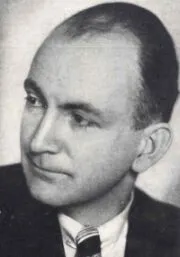
Henk Badings
Human Design Chart
Biography
He died on 26 June 1987 at Maarheze, Netherlands, age 80.
Human Design Analysis: Henk Badings as Generator 6/2
Generator 6/2 — Design at a Glance
Henk Badings revealed himself as someone with high endurance and a fundamental tendency towards reaction rather than initiation. His design established a strong sacral energy foundation, making him a powerful 'workhorse' – provided he used this strength where it was welcome. The key to his success lay not in driving plans forward but in waiting for impulses from the environment and then acting upon them.
This mechanism, however, contained two specific pitfalls. One involved investing energy into tasks that internally repelled him; despite his high potential, this often led to exhaustion or burnout. The other danger arose when he was prevented from engaging with his true heart's project even though his inner readiness for work remained high. In such moments of resistance against his own rhythm, he lost strength.
In harmony with his nature as a Generator, Henk Badings found his deepest satisfaction and fulfillment precisely when he responded to signals from life and gave an internal clear 'yes'. If he lived against this principle – for instance, by constantly initiating without inner confirmation – he faced persistent frustration and a noticeable lack of energy. His life strategy thus consisted in responding from the gut, not forcing.
Sacral Authority
Henk Badings oriented himself in decisions not through cognitive analysis but on an inner, physical resonance. His design featured sacral authority – a mechanism exclusive to the Generator type that also served as his internal guidance function. This simplified his decision-making process significantly, provided the Emotional Center remained open.
This authority manifested for him concretely in a 'gut feeling'. He learned to pay attention to specific physical signals: grunting, humming, groaning or loud affirmations like 'Mhm' and 'Hmm'. Such reactions to external stimuli signaled that his sacral motor had kicked in. In these moments he felt vital and alive; virtually inexhaustible energy was at his disposal. He tackled his tasks with great enthusiasm, fully immersed in the activity itself without needing an external purpose.
With his Spleen Center activated, it functioned as a supportive instance to the sacral authority. This allowed him particularly quick and spontaneous reactions. He had immediate access to his physical well-being as well as his instinctive perception. This combination enabled him to reliably be guided by these deep, physical impulses rather than falling into analytical deliberations.
The 6/2 Profile — Role Model / Hermit
Henk Badings followed a clear two-phase development pattern shaped by his Profile 6/2. In his youth, the second line dominated: He showed himself to be experimental and often encountered resistance. His ideas were intelligently presented, yet since his personal value systems were not deeply rooted enough, he frequently faced opposition. This conflict led to determined withdrawals when his visions were not accepted – a typical characteristic of Line 2 from Gate 50, which learns through projection and confrontation.
After the age of thirty, with the activation of the sixth line, his orientation fundamentally changed. Henk Badings retreated into a metaphorical 'cave' to gain distance. This phase served for intensive reflection and healing of past experiences. Line 6 from Gate 61 now reviewed the practicality of earlier solutions and decided which insights truly held merit. It transformed individual knowledge into collective wisdom.
Emerging from this period of deep introspection, Henk Badings appeared as a wise person. His ability for self-awareness became visible to others. People came to him to partake in his life wisdoms and learn the art of deep reflection. The transition from seeking individual confirmation to conveying collective knowledge formed the core of his development.
Single Definition — Defined & Open Centers
Henk Badings was characterized by a defined G Center, which gave him a firm identity and inner direction. He had a clear sense of his own mission and could guide others into new directions without being dependent on them. This reliable self-perception formed the foundation of his presence. This was complemented by a defined Sacral Center, providing him with constant vital energy. However, this life force was only effective when he waited for invitations to react; initiating from the mind led to stagnation or frustration.
In contrast, Head, Ajna, and Throat Centers were open. This made him vulnerable to mental pressure and the temptation to interpret answers as his own truth or demand attention through speaking. Instead of being guided by others' confused thoughts, he had to learn to be a detached observer of his own thoughts. His Heart Center was also open, making him prone to wanting to prove his worth through promises and performance – a spiral that ended in self-doubt without inner authority.
The open Solar Plexus Center absorbed emotions from the environment, causing him to personalize others' moods as his own instability. Through an open Spleen Center, he could not trust spontaneous decisions and often sought false security from others to alleviate existential fears. Finally, his open Root Center took on external stress, driving him into a cycle of adrenalized pressure and attempts to escape it through overactivity. His mechanics required patience: waiting for the correct invitation to use his sacral power rather than being swayed by the open fields of mental, emotional, or stress-induced conditioning.
Channels for fixed rituals and extreme life span.
Henk Badings was someone whose inner rhythm significantly shaped events around him. His design tended to naturally and magnetically draw others into their proper rhythm if he followed his own pulse. This dynamic was primarily influenced by Channel 5-15, connecting the Sacral Center with the G Center. Gate 5, the gate of fixed rhythms, ensured stability through firm habits and rituals, while Gate 15, the gate of extremes, represented universal love for human diversity. This connection created a unique energy flow: personal discipline from the sacral met the collective magnetism of the G Center. The result was timing rooted deep in biological logic rather than dictated by the mind or influenced by emotional waves. When Henk Badings trusted this inner guidance, everything worked effortlessly; his rhythm served as a compass for his environment. However, if he could not stay aligned with this flow, timing would falter, leading to confusion and chaos around him. The channel thus acted as a bridge between individual routine and universal life by integrating human existence into a larger, continuously evolving pattern of connection. Additional influences came from gates like 61 (inner truth) and 62 (logical detail work), sharpening his perception, as well as Gate 50 (tradition) and Gate 3 (mutation), oscillating between preservation and change. In the design, Gate 9 with its ability for meticulous perfection worked together with the creative freedom of Gate 1. Together, these energies formed a profile based on authentic timing: Henk Badings was designed to bring order and forward movement into his social environment by consistently following his inner rhythm rather than fighting against it.
Collective Circuitry — Circuit Signature
Henk Badings used rational insights to develop structure and strategy for a better future. His design tended to analyze logical connections free from emotional influence and share these clear perspectives with others. This occurred through the Understanding Circuit, which in him specifically worked via the Rhythm Channel. This channel connected his Identity Center directly with the Sacral Center. Since both centers lay within the same energetic group, the power of his true identity flowed seamlessly into his enduring action capability. It was a simple definition, making this connection appear as a clear, unbroken stream. The energy of this circuit was future-oriented and visually marked; it aimed to initiate societal improvements through focus and intellect. As the Solar Plexus Center was not involved, analysis remained objective and free from conditioned emotions. Henk Badings used this combination of inner clarity and physical endurance to formulate strategic solutions and implement them sustainably in reality. His drive lay in deciphering complex issues and making them understandable enough for collective progress. The connection between identity and sacral center ensured that his actions always aligned with his deepest essence, not just short-term impulses but long-term, rhythmically carried processes.
Left Angle Cross of Obscuration 2
Henk Badings was marked by the Left Cross of Veiling, a configuration that significantly influenced his perception and actions. His design indicated a tendency towards a specific kind of hiding or making invisible, not to be understood as deception in a negative sense, but rather as a deeply rooted strategy for self-assertion.
This cross describes a life path where the true nature or intention often remains hidden behind a facade. For Henk Badings, this meant that he might have had difficulties expressing his true motives or feelings directly. Instead, he may have appeared mysterious or distant, which served to protect him from unwanted interference or allowed him to pursue his own interests discreetly. The mechanics of this cross show that openness was not always the natural path; rather, the strength lay in controlling who gained access to his inner self.
It was a dynamic tension between the need for recognition and the urge to remain in the background. Henk Badings navigated through this duality by selectively disclosing information or modulating his presence. This created an atmosphere of uncertainty for those who knew him, as they could never be entirely sure what lay behind his facade. This veiling was not a mistake but an integral part of his design that helped him survive in a complex world and achieve his own goals without fully exposing himself. His way of being was thus characterized by a subtle yet effective distancing.
Saturn Return · Uranus Opposition · Chiron Return · 2nd Saturn Return — Life Cycles
Henk Badings’ design showed a clear tendency towards structural anchoring and professional stabilization during specific life phases marked by Saturn Return cycles. These cycles functioned as moments of consolidation, where years of work condensed into firm positions. In 1934, at the age of 27, this first cycle became effective: Badings was appointed as composition teacher at the Rotterdam Conservatory. This was no coincidence but the typical effect of the first Saturn Return, often establishing a solid professional foundation.
Parallel to this, the Chiron Return acted as an achievement cycle in which one’s incarnation cross unfolds and purpose becomes experiential – not as healing old wounds, but as the blossoming of intent. In 1954, at age 47, Badings received the Prix Italia for his composition “Salto Mortale”. This success reflected the artistic validation often occurring during this phase when life increasingly aligns with one’s inner design.
The second Saturn Return brought further structural maturity. In 1962, at the age of 55, he was appointed Professor of Composition at the State Academy of Music in Stuttgart. This positioning underscored his ongoing stabilization as a teacher and composer. Through these cycles, a pattern emerged: Badings’ design promoted a step-by-step anchoring in his professional identity, with each phase – whether Saturn or Chiron Return – revealing specific aspects of his purpose. The mechanics of these cycles shaped his career through clear milestones of recognition and institutionalization.
Generator · Sacral Authority — Synthesis
Henk Badings lived deeply rooted in his sacral center, a generator whose energy was released by reacting to external impulses. This natural flow was central to his way of life – not initiating but responding, thereby experiencing deep satisfaction. The definition of the G Center reinforced this inner direction, a firm self-identity that enabled him to inspire others without directing them. His profile as a role model suggests he gained wisdom through experiments and reflection, which he then shared with others. The connection between Sacral and G Centers in the Circuit of Understanding underscored his ability to create something new through logical patterns and creative energy.
A central paradox in Badings’ design lay between his deep sacral responsiveness and open Head and Root Centers. While the Sacral drew him into a natural flow of activity, he simultaneously absorbed fears and stress from his environment. This tension might have manifested as an ongoing balancing act between inner guidance and external pressure, a search for authentic fulfillment amid a world full of conditioning. The ability to navigate these two forces defined his unique approach to creativity and life itself.
1 Defined Channel
Incarnation Cross - Left Angle Cross of Obscuration 2
Solar Return
The Solar Return shows the moment when the sun returns to its exact birth position - your personal solar year.
Life Cycles
Discover the life cycles with a detailed triple view (birth chart, cycle chart, composite).
Human Design Profile
- Type
- Generator
- Strategy
- To respond - wait for something to respond to
- Authority
- Sacral Authority
- Profile
- 6/2 - Role Model / Hermit
- Definition
- Single Definition
- Incarnation Cross
- Left Angle Cross of Obscuration 2
- Date of Birth
- 17.01.1907 13:08
- Place of Birth
- Bandung, India
Frequently Asked Questions
What was Henk Badings' Human Design type?
Which Profile did Henk Badings have?
What Authority did Henk Badings possess?
What incarnation cross did Henk Badings have?
When was Henk Badings born?
Discover your own Human Design
Are you also a Generator? Find out in a personal reading how to use your sacral energy correctly and discover deep satisfaction.
More Personalities
Back to overviewAaliyah

Alexia

Alizée

Angèle

Anne-Marie

Arcángel