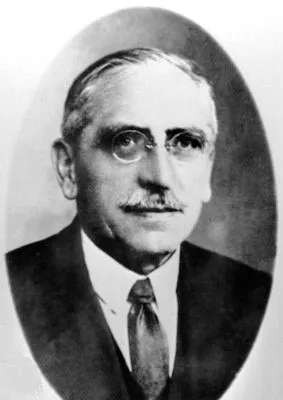
Henri Leon Lebesgue
Human Design Chart
Biography
Lebesgue was maître de conférences (lecture master) at the University of Rennes from 1902 until 1906, when he went to Poitiers, first as chargé de cours (assistant lecturer) of the faculty of sciences and later as professor. In 1910 he went to the Sorbonne in Paris as maître de conférences in mathematical analysis, and in 1921 he became a professor at the Collège de France. In 1917 he was awarded the Prix Saintour, and in 1922 he was elected to the French Academy of Sciences. He was made an honorary member of the London Mathematical Society in 1924 and a foreign member of the Royal Society of London in 1930.
One of the greatest mathematicians of his day, Lebesgue made an important contribution to topology with his covering theorem (which helps define the dimension of a set). He also worked on Fourier series and potential theory, but his main work was on integration theory.
The Lebesgue integral is one of the great achievements of modern real analysis, and Lebesgue integration was instrumental in greatly expanding the scope of Fourier analysis.
He died 26 July 1941.
Human Design Analysis: Henri Leon Lebesgue as Generator 3/5
Generator 3/5 — Design at a Glance
Henri Leon Lebesgue's Human Design profile established a tendency towards great endurance and inner strength, which, however, needed to be specifically directed. As a Generator, he had a lot of sacral energy, which made him extremely strong and resilient like a workhorse, provided he had energy for his task. This energy was not released through self-initiative but responded to signals from life. His successful strategy involved waiting for such impulses and then, when his sacral center signaled a clear "yes," reacting to them with action. This meant not initiating but responding from the gut.
If Henri Leon Lebesgue lived in alignment with this design, he was rewarded with a deep sense of fulfillment. If he deviated from it by constantly initiating himself or doing things he had no desire to do, he would eventually encounter persistent frustration and a lack of energy. Two pitfalls shaped his potential: on one hand, wasting energy on tasks without inner resonance, which could lead to burnout, and on the other hand, holding back from his heart's project even though he still wanted to work on it with full power. His satisfaction thus directly depended on whether he could channel this sacral energy through reactive action rather than fighting against the current of his own nature.
Sacral Authority
Henri Leon Lebesgue revealed himself as a Generator, whose decision-making was shaped by Sacral Authority. This inner leadership is unique to this type and simplified his process, as strategy and authority were identical. A prerequisite for this was his open Emotional Center, meaning he did not react to short-term mood swings but rather to a deeper, physical resonance.
His authority manifested as a "gut feeling" or immediate bursts of power in response to external stimuli. Henri Leon Lebesgue learned to pay attention to these physical signals – expressed through sounds like grunts, hums, or affirming "mm-hmm". When his sacral motor engaged with something, he felt vital and alive. He then had seemingly inexhaustible energy and tackled his tasks with great enthusiasm. His design suggested that he was born to go through life with joy and satisfaction, fully immersed in his activities without the need for a rigid goal-oriented approach.
Additionally, his activated Spleen Center acted as a supportive authority. As it may have been directly connected to the Sacral Center, this allowed for quick, spontaneous reactions. Henri Leon Lebesgue had immediate access to his physical well-being and instinctive perception. He was guided by this reliable, physical intuition, which underscored his ability to make quick and accurate decisions in the present moment.
The 3/5 Profile — Martyr / Heretic
Henri Leon Lebesgue revealed himself as someone who gained knowledge not from dogma but from direct, often painful practice. His design as Profile 3/5, the Experimenter and Hero, established that he had to try everything himself first before accepting it as truth. Line 3 forced a learning process through trial and error; Henri Leon Lebesgue learned from his own failures and was grateful for external pressure that forced him to concentrate. This phase of "imposed inactivity" was necessary to build a solid foundation. Only after this personal trial did he take on the role of Line 5, the Helper. He used his wealth of practical experience to solve other people's problems and bring order to hierarchies. Gate 17 emphasized the mutual dependence and the necessity of recognizing one's place in the whole to create harmony. His charisma arose from knowing his insights from personal experience and making them accessible to others. This flattered his nature but could be painful when experiments failed in public. Henri Leon Lebesgue thus embodied the path from the uncertain Experimenter to the trustworthy Advisor, who became an authority through his own defeats.
Single Definition — Defined & Open Centers
Henri Leon Lebesgue revealed himself as someone whose actions were driven by a deep, physical intuition and a constant inner source of strength. His design was marked by a defined Sacral Center, which endowed him with immense vital energy, but this energy could only be correctly utilized through spontaneous reactions to external stimuli. This energy was reliably available to him when he responded to questions or offers with a spontaneous yes or no, thereby avoiding resistance and frustration. Simultaneously, his defined Spleen Center served as an instance for spontaneous, intuitive judgments in the here and now, securing his survival and well-being. The connection between Root and Spleen Center generated a specific pressure to nurture existential awareness and establish material presence.
In contrast, his design revealed several areas of receptivity. His open Head Center made him vulnerable to mental confusion and the pressure to find answers to questions that were not his own. Without this conditioning search for inspiration, however, he could act as a mirror for the ideas of others. His open Ajna Center allowed him to be flexible with concepts without binding himself to his own theories, as long as he did not try to enforce security through intellectual control. His open Throat Center meant that he could not communicate consistently; he tended to feel pressured to demand attention rather than wait for an invitation to speak. His open G Center led to him not having a fixed identity, but rather feeling initiated by the right places and relationships. Additionally, his open Heart Center was not designed for consistent willpower, which protected him from trying to prove his worth through promises. Finally, his open Solar Plexus absorbed the emotions of the environment, requiring him to regularly withdraw to maintain emotional clarity and not personalize the moods of others.
Channels for logical clarity and caring values.
Henri Leon Lebesgue's design inclined towards precise pattern correction and the preservation of values. He was someone who questioned logical structures to perfect them, and simultaneously took responsibility for the survival of his community. This attitude resulted from the connection between Root and Spleen Center through the Judgment Channel 58-18. This channel connected the living energy of Gate 58 with the corrective function of Gate 18. It was an insatiable drive to examine and improve any patterns to ensure they were cheerful and feasible for the collective. Lebesgue sought the best answer by comparing the past with the present.
Parallel to this, the Preservation Channel 27-50, which connected the Sacral Center with the Spleen, came into play. Through the Gate of Care (27) and the Gate of Values (50), a strong instinct to protect and nourish the clan emerged. This meant that Lebesgue not only critically judged but also defended the traditional values and laws necessary for order. His aura attracted trust as he was willing to take responsibility for others, as long as they sought support.
Additionally, further Gates shaped his way of thinking. Gate 52 demanded a self-imposed pause for concentration and pattern correction, while Gate 17 called for logical teaching and organization for the future. Gate 48 enabled the recognition of deeper connections, even if this often led to frustration in the collective. Gate 53 drove him as a pioneer to go new ways, and Gate 32 ensured continuity and material success for the clan. Gate 57 gave him intuitive clarity in the here and now, while Gate 3 saw mutations and changes as necessary for the survival struggle. This combination created a person who both critically analyzed and acted with care.
Collective Circuitry — Circuit Signature
Henri Leon Lebesgue revealed himself as someone who combined logical clarity with instinctive security. His design was simply defined, suggesting an integrated, coherent energy distribution. The connected centers of Spleen, Root, and Sacral formed a continuous group.
In the Understanding Circuit, he connected Spleen and Root Centers through the Judgment Channel. This promoted the ability to structure and share rational insights free from emotional influence. It was about improving systems through focus and logic, oriented towards future solutions.
Parallel to this, the Protector Circuit was at work. Here, he connected Sacral and Spleen Centers through the Preservation Channel. This connection emphasized the Ur-Important: the protection and preservation of one's own genetics and family. It was energy-saving care and nourishment driven by deep instincts.
Since both circuits shared the Spleen Centers and all three centers lay in a single defined group, these energies flowed together. Henri Leon Lebesgue did not use his rational judgment in isolation but in service of long-term security and protection of his environment. His decisions were both strategically wise and instinctively grounded, always with the goal of maintaining the status quo while optimizing through clear structure.
Right Angle Cross of Service 2
Henri Leon Lebesgue's Human Design profile was marked by the right Service Cross. This configuration is characterized by a profound, often quiet dedication to the well-being of others, coupled with an inner discipline that allows one to carry great burdens without losing one's core essence. In Human Design, this cross represents a specific energetic alignment where the individual does not primarily rely on personal ambition but rather on the ability to serve and support others to unleash their power.
For Henri Leon Lebesgue, this meant that his life energy was most effective when he served others. His strength did not lie in loudly asserting his own interests, but in subtly yet sustainably supporting his environment. The right Service Cross bestows a particular endurance and patience, enabling one to remain stable even in challenging times and serve as a reliable anchor for others. This energy was not passive devotion but an active, conscious choice stemming from a deep inner conviction. Henri Leon Lebesgue lived this dynamic by using his gifts to enrich the lives of his fellow humans, often without seeking the spotlight himself. His presence was calming and stabilizing, a sign that true strength also lies in the readiness to clear the way for others.
Saturn Return · Uranus Opposition · Chiron Return · 2nd Saturn Return — Life Cycles
Henri Leon Lebesgue's life work was marked by clear phases of condensation and recognition. His first Saturn Return, the cycle that solidifies inner structure and responsibility, occurred in 1902. At the age of 27, he earned his doctorate and received his first university position in Rennes. This event marked the transition from education to established professional existence, a typical moment when years of groundwork solidified into a stable foundation.
The tension of the Uranus Return, often bringing unexpected breaks or sudden liberations, was reflected in 1917. At 42 years old, Lebesgue received the Prix Saintour. This success came during a period understood in Human Design as a phase of breaking free from old structures; the award confirmed his position beyond conventional expectations.
The Chiron Return, a fulfillment cycle in which personal meaning increasingly unfolds, reached its peak in 1924. At 49 years old, Lebesgue became an honorary member of the London Mathematical Society. This was not just a title but the late bloom of his life's mission, international recognition of his profound contributions.
Finally, his influence condensed in his second Saturn Return of 1931. At 56 years old, he became an associate member of the Académie royale in Belgium. This step showed the final integration of his life's work into the established scientific order, a confirmation of the integrity lived through his strategy and authority.
Generator · Sacral Authority — Synthesis
He lived as a Generator, whose sacral energy (Sacral Center) drove him to sustained activity as long as it was fueled by inner consent (Sacral Authority). This natural power, combined with the Profile of an Investigator and Helper (3/5 Profile), led him to gather knowledge through personal experience and make it accessible to others. The constant urge to question and correct patterns (Channel Judgment) points to a deep need to logically understand and optimize the world – an expression of the Understanding Circuit. This shaped his approach, as he did not simply accept the status quo but instead blazed new trails through his own investigations.
A central paradox lay in the tension between his need for practical experience and the restlessness that came with it (Sacral Center) and his desire to arrive at insights through logical analysis (Understanding Circuit). The repeated successes (documented events in cycles) showed that he was able to learn from his experiments and successfully pass on this knowledge, yet the Channel of Judgment also points to an insatiability that continually spurred him on to new improvements and corrections.
2 Defined Channels
Incarnation Cross - Right Angle Cross of Service 2
Solar Return
The Solar Return shows the moment when the sun returns to its exact birth position - your personal solar year.
Life Cycles
Discover the life cycles with a detailed triple view (birth chart, cycle chart, composite).
Human Design Profile
- Type
- Generator
- Strategy
- To respond - wait for something to respond to
- Authority
- Sacral Authority
- Profile
- 3/5 - Martyr / Heretic
- Definition
- Single Definition
- Incarnation Cross
- Right Angle Cross of Service 2
- Date of Birth
- 28.06.1875 07:00
- Place of Birth
- Beauvais, France
Frequently Asked Questions
What was Henri Leon Lebesgue's Human Design type?
What Profile did Henri Leon Lebesgue have?
Which Authority guided Henri Leon Lebesgue?
What incarnation cross was Henri Leon Lebesgue assigned to?
When was Henri Leon Lebesgue born?
Discover your own Human Design
Are you also a Generator? Find out in a personal reading how to use your sacral energy correctly and discover deep satisfaction.
More Personalities
Back to overviewAaliyah

Alexia

Angèle

Anne-Marie

Arcángel

Arno