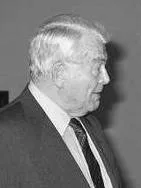
Henri Nannen
Human Design Chart
Biography
Human Design Analysis: Henri Nannen as Manifesting Generator 6/2
Manifesting Generator 6/2 — Design at a Glance
Henri Nannen was someone who quickly brought things into his life. His design as an actualizing generator combined the constant energy of a generator with the ability to skip steps when taking action. This hybrid nature allowed him a speed that went beyond pure reaction. However, this rapid pace carried risks: he tended to overlook important stages or tackle multiple projects simultaneously. If strategy and inner authority were not aligned, his creative enthusiasm quickly turned into frustration – his non-self theme. To remain effective, he had to react to impulses and check if his sacral center responded with a clear 'yes'. Only then could he draw deep satisfaction from his work. In this state, variety was no obstacle but necessary. He entered a play mode where parallel working was not a distraction but the source of his strength. The requirement to finish one thing before starting another would have harmed him. Instead, he lived off the dynamic interplay between impulse and quick implementation as long as his inner resonance confirmed it.
Emotional Authority
Henri Nannen showed a decision-making structure that did not rely on immediate clarity but was shaped by a wave-like emotional dynamics. His design determined the emotional center as inner authority – a position that took precedence over all other defined areas. This configuration meant that his perception of the world always appeared colored by current feelings: moments of intense enthusiasm alternated with phases of negative coloring. However, an initial emotional impression did not yet constitute final truth; spontaneous judgments based on this immediate reaction carried the risk of being misleading.
The mechanics of his authority therefore required strategic delay. Instead of trusting the first impulse, Henri Nannen had to allow time for the initial emotional wave to subside. This process of 'sleeping on decisions' served to gain emotional distance and find true clarity. Only when intense feelings subsided did calmness set in and the real direction became visible. This need for patience particularly concerned long-term turning points with significant life impact. Through conscious hesitation and waiting out several emotional cycles, he ensured that his decisions were not based on a temporary mood but on deeper, more comprehensive insight.
The 6/2 Profile — Role Model / Hermit
Henri Nannen showed a tendency towards experimentation in his youth, marked by the 6/2-line of his design. Before Saturn's return point, this configuration acted like a 3-line: trial and error characterized his early years, accompanied by a necessary retreat after failures to collect personal experiences.
Around thirty years later, the sixth line fully activates. Henri Nannen then metaphorically retreated into a 'cave' to look back at his past experiments with distance. This phase served intensive reflection, healing, and deep self-awareness. From this isolation, he emerged later as a wise person, ready to let others share in his life wisdom.
The sixth line went through three phases: martyrdom, a roof phase, and finally authenticity from the age of fifty. On the roof phase, hypocrisy could occur, perfect behavior that was only understood as individual survival strategy in old age. From fifty onwards, this facade could no longer be maintained; authenticity became necessary.
Furthermore, Henri Nannen had Gate 18 on his second line, linking a need for correction with the realization of the uncorrectability of certain situations. Where correction was impossible, this position enabled acceptance and spiritual renewal instead of fighting against the wind or denying reality. This mechanism shaped his ability to adapt and develop new perspectives from seemingly hopeless situations.
Split Definition — Defined & Open Centers
Henri Nannen was someone who operated under constant mental pressure to ask questions and understand connections. His defined Head and Ajna centers generated a continuous stream of inspiration, but this could not be directly translated into action because these centers did not have their own energy source. Instead of acting himself, he inspired others through his conceptual clarity and put people with open heads under the pressure to think. This mental activity flowed into his defined Throat Center, which served as a pivot point for translating thoughts into communication and manifestation. His voice was reliable when speaking from this mental process, but he had to learn not to speak impulsively and wait for the right receptivity of his listeners.
In addition to intellectual sharpness, Henri Nannen possessed immense vital energy through his defined Sacral Center. As a Generator, his strategy was not to initiate but to wait and respond to questions or situations. Only then did he have full energy available for satisfaction; mental initiatives without sacral confirmation led to frustration and exhaustion. His emotional depth was marked by the defined Solar Plexus Center, which acted as an inner authority. He learned to await his emotional wave to gain clarity rather than falling into impulsivity. Additionally, the defined G-, Spleen- and Root Centers supported his self-esteem, intuitive health, and stress management.
In contrast, his Heart Center was open. Henri Nannen tended to feel compelled to prove his worth through promises or competitive behavior. He could pick up on others' ego vibrations but had to learn not to fall into a cycle of self-doubt and overcommitment in pursuit of recognition. The challenge lay in not filling his open heart with mental effort, but rather trusting his inner authority from Solar Plexus and Sacral without needing proof.
Channels for rhythm, intimacy, focus, logic, change and vision.
Henri Nannen's life energy was determined by a deeply rooted biological pulse. The Rhythm Channel 5-15 connected his Sacral Center to the G Center, giving him an independent timing; he followed fixed habits (Gate 5) while Gate 15 magnetically drew him into the universal flow of humanity. This created an impersonal attraction that pulled others into his energy flow.
Parallel to this, the Pairing Channel 59-6 linked sacral sexuality with the emotional wave of Solar Plexus. Here it was about intimacy and merging; Nannen had to wait until his emotional clarity (Gate 6) confirmed the depth of connection to avoid frustration.
His work style was shaped by the Concentration Channel 52-9. As Format Energy, he kept body and senses still (Gate 52) to focus with laser-like precision on details (Gate 9). This allowed him to challenge and perfect patterns as long as his sacral reaction confirmed it.
Critically and correctively acted the Judgement Channel 58-18. Driven by a desire for vitality (Gate 58), he actively sought out flaws in systems to improve them (Gate 18). He functioned as a guardian who only spoke when asked to share his solution.
The Impermanence Channel 36-35 propelled change. This emotional channel sought new experiences; Gate 35 wanted to manifest change, while Gate 36 used crises to break out of stagnation and gain wisdom through experiencing highs and lows.
Mentally he worked with the Abstraction Channel 64-47. His mind filtered experiences through a kaleidoscope of images (Gate 64) to uncover a perspective or story in Ajna Center (Gate 47), which he could then share – never, however, as an authority for his own decisions.
Additionally, Gates like Gate 10 (Integration/Behavior), Gate 17 (Logical Sequence), and Gate 22 (Openness/Mutation) influenced his personality, while in the design Gate 61 (Inner Truth/Silence) and Gate 48 (Depth/Correction) sharpened his perception.
Collective Circuitry — Circuit Signature
Henri Nannen was marked by a split definition, highlighting two clearly separated energetic blocks in his design. This separation meant that his powers did not work as one continuous flow but rather existed as parallel independent systems.
The Understanding Circuit connected his Identity, Sacral, Root and Spleen Centers into one group. This created a direct link between his life energy (Sacral), his instinct for the essential (Spleen) and his personality (Identity). The Rhythm, Concentration and Judgement Channels allowed him to connect logical structures with inner authority. At the same time, the Meaning Circuit remained separate: Here Head and Ajna Centers formed their own group while Throat and Solar Plexus Centers made up a second isolated unit. Although the Abstraction and Impermanence Channels internally connected these centers, they did not link them to the first block. This separated his intellectual perception from his emotional expression.
The Protector Circuit partially bridged the gap by connecting Sacral and Solar Plexus Centers directly through the Pairing Channel. However, this connection between life force and emotions was part of the larger group (with Identity etc.) and not linked to the Head-Ajna block of the Meaning Circuit. Henri Nannen thus lived with a clear separation: His rational, instinctive personality operated independently from his abstract thinking and emotional articulation.
Left Angle Cross of Prevention 2
Henri Nannen exhibited a fundamental stance rooted in protection and the preservation of existing structures. His design was marked by the "left cross of prevention 2," signaling an internal orientation towards security, stability, and the avoidance of unnecessary risks. This configuration fostered a deep understanding of how systems could remain intact by identifying potential dangers early on and warding them off. It was not passive defense but rather strategic vigilance aimed at preventing chaos or destruction before it occurred. Henri Nannen lived with the task of maintaining existing structures and safeguarding them from external influences that might threaten their integrity. This energy created an atmosphere of reliability and trust, as others sensed his commitment to keeping the foundation secure. His focus was less on revolutionary innovations and more on careful monitoring and preserving what already had value. Through this preventive approach, he helped ensure his environment remained shielded from sudden setbacks by always acting proactively to maintain stability. This trait shaped how he dealt with challenges: not through confrontational force but through foresightful care and the desire to uphold balance.
Saturn Return · Uranus Opposition · Chiron Return · 2nd Saturn Return — Life Cycles
Henri Nannen showed himself to be someone who took strategic turns during crisis moments. His Uranus opposition in 1951 marked such a turning point: At the age of 38, he sold his shares in Stern. This step reflected the pressure of this configuration to break old structures to gain new freedom.
Ten years later, his Chiron return occurred, a cycle of fulfillment and blooming of one's purpose. In 1962, at 49 years old, Nannen publicly offered 100,000 DM for the return of the Riemenschneider Madonna. This action highlighted the power of this period: The incarnation cross unfolds when one lives according to their own strategy; here his will to actively shape and secure cultural values was evident.
His second Saturn return in 1970 brought another test. At 57 years old, he debated with Gerhard Löwenthal on television about Willy Brandt's politics. This moment of public confrontation illustrated the saturnine task of taking responsibility and negotiating boundaries. Nannen did not use this phase for withdrawal but to clearly define his position in the political landscape. The sequence of these events – sale, cultural engagement, political debate – mirrored how he translated the mechanical pressures of his chart structures into concrete actions, always driven by his inner compass.
Manifesting Generator · Emotional Authority — Synthesis
Henri Nannen was a Manifesting Generator whose life was marked by a dynamic interplay between rapid initiation and profound emotional maturity. The defined Sacral-Motor (from the design chapter) provided constant energy that, through its connection to the Throat Center (also from the design), inclined towards quick action – however, skipping necessary steps could lead to the need to revisit things. This tendency was amplified by his Profile as a role model and natural talent: early experimental phases (up to around 30 years old), followed by an intense period of reflection and wisdom-seeking.
A central paradox in his design lay in the interplay between the urge to initiate things and the necessity for emotional clarity. Emotional authority (from the authority chapter) required time for decisions, while the manifesting component pushed for quick action. This led to an internal tension between impulsive energy and a desire for deep understanding – a field of tension that was evident during crises when swift steps (Uranus opposition in 1951) or public appearances (Saturn Return 2 in 1970) necessitated re-evaluation.
6 Defined Channels
Incarnation Cross - Left Angle Cross of Prevention 2
Solar Return
The Solar Return shows the moment when the sun returns to its exact birth position - your personal solar year.
Life Cycles
Discover the life cycles with a detailed triple view (birth chart, cycle chart, composite).
Human Design Profile
- Strategy
- To respond - wait for something to respond to
- Authority
- Emotional Authority
- Profile
- 6/2 - Role Model / Hermit
- Definition
- Split Definition
- Incarnation Cross
- Left Angle Cross of Prevention 2
- Date of Birth
- 25.12.1913 13:45
- Place of Birth
- Emden, GER
Frequently Asked Questions
What was Henri Nannen's Human Design type?
What profile did Henri Nannen have in Human Design?
What authority determined Henri Nannen's decisions?
What incarnation cross was assigned to Henri Nannen?
When was Henri Nannen born?
Discover your own Human Design
Are you also a Manifesting Generator? Find out in a personal reading how to unfold your multi-talents and direct your energy wisely.
More Personalities
Back to overviewAlain-Fournier

Aldair

Alizée

Angeli

Arletty
Artus