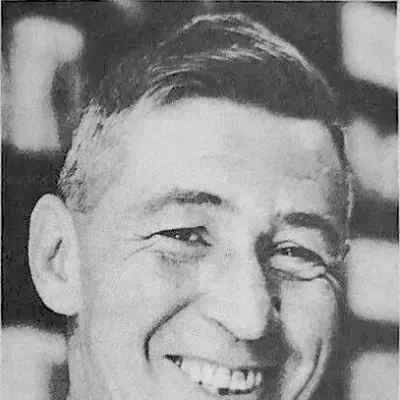
Henry de Lumley
Human Design Chart
Biography
The Human Design of Henry de Lumley: Projector 2/4
Projector 2/4 — Design at a Glance
Henry de Lumley's design tended towards precise diagnosis: He immediately saw where errors lay in systems. As a Projector, his aura acted like a focused flashlight, directing light directly onto dark spots in the vicinity of his counterpart. However, this ability to recognize weaknesses was only effective if it was not perceived as a direct attack. Directly addressing the problems would often trigger resistance or anger in others, similar to bright light shining directly into someone's face.
Therefore, the mechanics of his design required an elegant approach: Instead of openly criticizing the errors, he should shine through his own harmony and clarity. This radiant example was attractive; other people came to him of their own accord to seek advice. His strategy was to wait for an honest, appreciative invitation before sharing his insights. Since Projectors do not have a constant intrinsic energy source but alternate phases of high activity with necessary rest periods, this waiting strategy also protected him from exhaustion. If Henry de Lumley lives by this principle, he will be rewarded with success. If he ignores the invitation and acts out of his own motivation, this will sooner or later lead to his Non-Self theme: Bitterness. His path was therefore not constant action, but targeted, invited leadership.
Emotional Authority
Henry de Lumley's design tended towards emotional wave movement, which significantly influenced his perception and decision-making. His inner authority was Emotional Authority, carried by the defined Solar Plexus Center. In Human Design mechanics, this authority is always prioritized, regardless of other defined centers in the chart. Henry de Lumley was subject to a permanent emotional dynamics that colored his view of the world through current moods. What appeared inspiring in one moment could be negative in the next. His immediate feeling was only a snapshot, not necessarily the deeper truth. Quick, spontaneous decisions made in this emotional heat risked negative consequences.
The mechanics of his design required patience and conscious hesitation. By letting decisions sleep and taking multiple times, the intense feelings subsided. This process created emotional distance, leading to clarity and calmness. Only then was the emotional cycle complete and a well-founded decision possible. This strategy was particularly crucial for long-term, life-defining decisions. Henry de Lumley thus showed himself to be someone who reached deeper understanding through the mastery of his emotional wave movement, rather than succumbing to initial impulses.
The 2/4 Profile — Hermit / Opportunist
Henry de Lumley's design tended towards a pendulum rhythm: between the deep need for withdrawal and the urge to move in familiar circles. As someone with the Profile 2/4, he experienced these two poles not as a contradiction, but as a necessary sequence. Line 2, the Hermit, demanded time alone to clarify inner processes and find calm. Only when this inner order was established could Line 4, the Community Line, be effective.
This mechanism meant that Henry de Lumley was dependent on creating a safe environment in which he could clearly communicate: when he sought company and when he wanted to be undisturbed. The challenge lay in the timing. The second line teaches that incorrect response times can lead to misunderstandings. Henry de Lumley had to learn that conflicts often did not stem from a lack of understanding, but from a wrong timing.
During his alone time, he reflected the knowledge he drew from his network. The fourth line drove him to collect information and maintain relationships, but also risked isolation if this exchange did not work. By being aware of this dynamic, he could evaluate the collected knowledge in his 'cave' and develop clear insights from it. His design promoted tolerance towards the boundaries of others and himself, by interpreting misunderstandings as a matter of timing, not understanding. Thus, the interplay between solitude and community became the source of his strength.
Split Definition — Defined & Open Centers
Henry de Lumley's design inclined towards persistent mental activity and a clear, unwavering sense of self-identity. His defined Ajna Center fostered a trustworthy, specific form of conceptual thinking, while his defined G Center gave him a firm sense of direction and love. This combination allowed him to create concepts and communicate from a stable identity, supported by his defined Throat Center, which served as a pivot point for the manifestation of these messages. His emotional depth was shaped by his defined Solar Plexus Center, which required him to make decisions only after waiting for the emotional wave to pass, to gain clarity. The constant internal pressure of his defined Root Center propelled him forward, though he had to learn to channel this stress healthily, rather than obsessively acting on it or projecting it onto others.
At the same time, Henry de Lumley was vulnerable to external conditioning through several open centers. His open Head Center left him open to mental inspiration and doubt from others, which could lead him to engage with questions that were not his own, or suffer under the pressure to find answers. His open Heart Center lacked consistent willpower, which posed the risk of getting caught in a cycle of promises and disappointment to prove his worth, rather than trusting his inner authority. His open Sacral Center meant no constant energy flow; he absorbed the generative energy of his environment, which could lead to overload if he did not learn to set boundaries and rest adequately. Finally, his open Spleen Center made him sensitive to well-being and fears in the environment, with a tendency to cling to things or people that gave a false sense of security, rather than following spontaneous, impulsive decisions.
Channels for mystical principles, reflection, logic and insight.
Henry de Lumley's design inclined towards deep reflection and structured knowledge transmission. He was someone who gathered information to put into understandable contexts later. This attitude was shaped by the Lost Son Channel 13-33. This connects the G Center with the Throat Center and promotes patient listening as well as withdrawal to process experiences. Henry de Lumley used this ability to develop a coherent perspective from collected memories and secrets before sharing them. It was not about immediate reaction, but the quality of insight that matures through time and distance.
Parallel to this, the Channel of Structuring 23-43 was at work. It connected the Ajna Center with the Throat Center and enabled Henry de Lumley to translate spontaneous insights into clear, innovative explanations. His mind sought more efficient ways to describe or organize things. When he spoke, he often did so with the intention of presenting complex patterns in a way that others could easily absorb and understand. However, this required the right timing, as his unique perspectives could otherwise meet resistance.
Another aspect was the Channel of Acceptance 17-62. It also connected the Ajna Center with the Throat Center and pushed Henry de Lumley to logically organize visual patterns and details. His mind constantly worked on integrating new information into his existing worldview. If something did not fit, he searched for an explanation or a new formulation to close the gap. This gave him the ability to articulate theoretical concepts or hypotheses precisely, based on a careful analysis of the details.
Additionally, the Channel of Synthesis 19-49 was at work. It connected the Root Center with the Solar Plexus Center and created an emotional bond with groups or 'tribes'. Henry de Lumley felt connected through loyalty and mutual support. He sought a place where he was needed and where his contributions added to the safety and cohesion of the group. This emotional frequency helped him distinguish between what fit the community and what needed to be rejected.
The prioritized Gates added further nuances. Gate 4, the Gate of Formulation, helped him develop logical processes to clarify suspicious patterns and reduce future uncertainties. Gate 46 emphasized the importance of presence and dedication in the here and now, while Gate 53 represented the drive for freedom and new developmental cycles. Gate 7 showed a natural leadership quality and the need to understand and utilize hierarchical structures. Gate 8 underscored the desire to make an individual contribution and serve as an example. Gate 2 allowed him to be sensitive to external changes and take new directions. Finally, Gate 30 helped him recognize emotional waves and longings, giving him a deep understanding of human motivations and illusions.
Overall, this configuration resulted in a profile based on patience, logical clarity, and emotional connection. Henry de Lumley used his ability to gather and structure information to make complex topics accessible, while simultaneously seeking a safe and supportive environment where his contributions were valued.
Collective Circuitry — Circuit Signature
Henry de Lumley's design inclined towards structured knowledge transmission and emotional reflection. As someone with Shared Definition, he was characterized by two separate, parallel functioning energy fields.
The first field connected the Ajna with the Throat Center. Here, the Knowledge and Understanding Circuits were at work. The Channel 43-23 (Structuring) enabled the translation of complex thoughts into clear, logical structures. This was complemented by the Channel 17-62 (Accepting) of the Understanding Circuit, which shared rational insights free from conditioning. This connection shaped the ability to make abstract concepts accessible and acceptable, with the energy focused and future-oriented.
The second, energetically isolated field connected the Solar Plexus with the Root Center. Here, the Meaning and Ego Circuits were at work. The Channel 33-13 (The Lost Son) in the Meaning Circuit promoted the sharing of emotional experiences and learning from the past. Parallel to this, the Channel 49-19 (Synthesis) in the Ego Circuit connected emotional waves with root energy. This generated a cyclical dynamic: emotions and resources were not continuous but processed and shared in wave movements, requiring periods of rest for regeneration.
These two groups – the rational, structuring Head-Throat system and the emotional, wave-like Solar Plexus-Root system – were not directly connected in Henry de Lumley. They existed as independent, parallel potentials, each requiring its own strategies for interacting with the world.
Right Angle Cross of Explanation 3
Henry de Lumley's Human Design suggests a tendency towards clear, structured communication that makes complex connections accessible to others. This aligns with the mechanics of the right cross of the Explanation, which in Human Design describes the ability to organize information precisely and present it in understandable forms. It's not just about knowledge, but about the way insights are conveyed - factually, directly, and without unnecessary embellishment.
This configuration shows someone who is designed to create clarity by distinguishing the essential from the non-essential. The energy of this cross supports the need to explain things in a way that others can easily absorb and process. It's a way of influencing that relies on clarity rather than emotional persuasion or pressure.
In Henry de Lumley's case, this means that his natural presence and approach to knowledge sharing were geared towards presenting information in a way that is comprehensible to others. This reflects the fundamental function of the right cross: the ability to translate complex content into clear, tangible forms so that they are not just heard, but truly understood.
Saturn Return · Uranus Opposition · Chiron Return · 2nd Saturn Return — Life Cycles
Henry de Lumley's Human Design suggests a tendency towards structured, long-term commitments that crystallize into clear professional stages. This configuration describes a life task of taking on responsibility and sustaining it over decades.
In 1965, at the age of 31, Henry de Lumley earned his Doctorate in Natural Sciences. This marks his first Saturn Return, often a time when years of groundwork solidify into a substantial result. The energy of this cycle supports the consolidation of foundations.
In 1977, at the age of 43, he was appointed one of the *directeurs de recherche*. Here, the Uranus Opposition often brings sudden changes or new authority structures into play. For his design, this meant an expansion of influence through external recognition.
In 1994, at the age of 60, he became the Director of the Museum and Head of the Laboratoire de préhistoire at the Muséum national d’histoire naturelle. This falls during his second Saturn Return, often favoring establishment in a final, leading role. The mechanics show how earlier structures lead to a comprehensive leadership function.
This sequence underscores how Henry de Lumley's chart was designed for phase-driven development: from professional grounding through research leadership to institutional responsibility. Each step aligned with the internal logic of his energy centers, which favor stability and clear hierarchies.
Projector · Emotional Authority — Synthesis
Henry de Lumley seems to be driven by a deep inner urge to recognize patterns and understand them in a broader context. The combination of a defined mental center (Ajna) and the Lost Son Channel (13/33) points to an ability to absorb, reflect on, and ultimately transform information to pass on further. This happens not in a linear way, but in a cyclical process of listening, withdrawing, and then communicating maturely. Emotional authority underscores the need to give decisions time to unfold in the emotional wave, leading to a deep and authentic insight. Career events observed over time seem to confirm this inner process.
At the same time, the design reveals a tension between the need for isolation and the desire for community (Profile 2/4). The Projector type, which projects its energy and recognizes system errors, amplifies this dynamic. On one hand, he seeks withdrawal to process internally and gain clarity, on the other, he relies on having the right people around him to share his insights and use his energy effectively. This interaction between the need for inner peace and connection to the outside world shapes his essence.
4 Defined Channels
Incarnation Cross - Right Angle Cross of Explanation 3
Solar Return
The Solar Return shows the moment when the sun returns to its exact birth position - your personal solar year.
Life Cycles
Discover the life cycles with a detailed triple view (birth chart, cycle chart, composite).
Human Design Profile
- Type
- Projector
- Strategy
- Wait for the respectful invitation
- Authority
- Emotional Authority
- Profile
- 2/4 - Hermit / Opportunist
- Definition
- Split Definition
- Incarnation Cross
- Right Angle Cross of Explanation 3
- Date of Birth
- 14.08.1934 01:00
- Place of Birth
- Marseille, France
Frequently Asked Questions
What is the Human Design type of Henry de Lumley?
What Profile does Henry de Lumley have in Human Design?
What authority guides the decisions of Henry de Lumley?
What incarnation cross does Henry de Lumley have?
When was Henry de Lumley born?
Discover your own Human Design
Are you also a Projector? Find out in a personal reading how to unfold your leadership qualities and recognize the right invitations.
More Personalities
Back to overviewSissy Spacek

Alain-Fournier

Anémone

Ann-Margret

Bourvil
Hergé