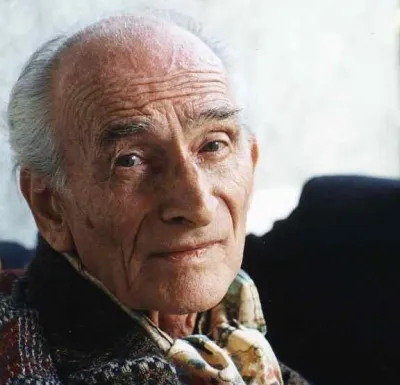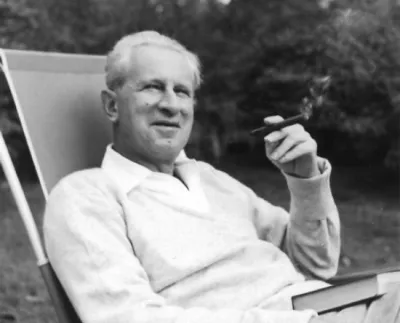
Herbert Marcuse
Human Design Chart
Biography
Marcuse studied at the universities of Berlin and then at Freiburg, where he received his PhD. He was a prominent figure in the Frankfurt-based Institute for Social Research – what later became known as the Frankfurt School. He was married to Sophie Wertheim (1924–1951), Inge Neumann (1955–1972), and Erica Sherover (1976–1979). In his written works, he criticized capitalism, modern technology, historical materialism and entertainment culture, arguing that they represent new forms of social control.
Between 1943 and 1950, Marcuse worked in U.S. Government service for the Office of Strategic Services (predecessor of the Central Intelligence Agency) where he criticized the Ideology of the Communist Party of the Soviet Union in the book Soviet Marxism: A Critical Analysis (1958). After his studies, in the 1960s and the 1970s he became known as the preeminent theorist of the New Left and the student movements of West Germany, France, and the United States; some consider him the "father of the New Left".
On 29 July 1979, ten days after his eighty-first birthday, Marcuse died after having suffered a stroke during a visit to Germany.
Herbert Marcuse — Manifesting Generator with Profile 1/3
Manifesting Generator 1/3 — Design at a Glance
Herbert Marcuse worked with hybrid energy: He had the constant power of a generator but also possessed the ability to skip steps and quickly draw results into his life. As an Manifesting Generator, he was not a pure initiator like a manifestor but someone who needed to react to inner impulses to optimally use his energy. This configuration meant that Marcuse could move forward quickly, yet there was a risk of overlooking important stages. When this happened, it often led him to return and catch up – a process that could cause frustration for him as speed and efficiency were central to his experience.
His strategy involved not taking the first step himself but waiting until life spoke to him. Only when his Sacral Center – his inner power source – signaled a clear “yes,” did he put his energy into action. This impulse response allowed him to draw deep satisfaction from his work. Marcuse tended to pursue multiple projects simultaneously, driven by variety and playful modes. As long as his inner authority supported this multitasking approach, this parallelism was not a source of overload but an expression of his natural creative power. The challenge always lay in ensuring that all started paths continued to be accompanied by this inner approval to avoid frustration and prevent his own efficiency from being slowed down by lack of resonance.
Emotional Authority
Herbert Marcuse showed a decision-making stance oriented towards the inner emotional wave. His design carried emotional authority, meaning the Solar Plexus Center was defined and served as the central instance for all important life decisions. Regardless of which other centers were defined in his chart, this emotional authority always took precedence.
This configuration shaped a perception world strongly colored by current mood; Marcuse was subject to constant ups and downs of feelings; something could appear highly relevant at one moment but be negatively evaluated the next. Since these immediate reactions merely represented snapshots and did not necessarily reflect his deeper truth, spontaneous decisions based on single emotions were often problematic.
Instead of quick judgments, his system required patience and time. A decision had to mature, which frequently meant multiple nights of reflection. Only when intense feelings subsided and emotional distance was gained, clarity set in. This process of calmness was crucial for long-term course adjustments that significantly influenced his life path. Through conscious hesitation and waiting for emotional calming, he could reach deeper insights beyond the first impression.
The 1/3 Profile — Investigator / Martyr
Herbert Marcuse showed himself as a person whose thinking was shaped by constant interaction between theoretical depth and practical experimentation. His design carried the profile of a researcher and experimenter, a configuration that understood life not as a static state but as an ongoing process of learning and action. This impulse compelled him to not only gather insights but actively test their usability in the fire of experience.
Line 1 in his chart emphasized the necessity of quality and thorough stimulation. Marcuse sought ideas with genuine value and needed concrete feedback to understand if his suggestions were effective or superficial. Simultaneously, the energy of Line 3 drove him, connected with themes like mutation, survival, and biological evolution. This component challenged him to face extremes and learn through personal experimentation – including associated errors.
For Marcuse, the result of these two forces was crucial: Self-earned and tested insights formed the basis of his judgment. If he deemed a theory or object valuable, he had previously both intellectually penetrated it and practically validated it. His design suggested that his trust in self-derived conclusions was only absolute if they passed this double test process of planning and implementation.
Single Definition — Defined & Open Centers
Herbert Marcuse was characterized by a design marked by constant inner strength and clear direction. His defined G Center gave him a reliable sense of self-identity and a deep sense of his life's mission, enabling him to show others new directions without needing their approval. This inner security was fueled by the also defined Sacral Center, the motor of his energy. As a Generator, he had an enormous vital energy source that only worked satisfactorily when he responded to external impulses and waited for his yes or no answer rather than initiating himself. His emotional authority lay in the defined Solar Plexus Center; here he needed to learn to give time to the emotional wave until clarity set in to prevent impulsive decisions. The defined Root Center provided the necessary pressure and endurance to survive in the material world.
In contrast, his open Head and Ajna Centers revealed a receptivity for ideas without constant mental structure. Marcuse tended to engage with questions and concepts of others, making him vulnerable to mental confusion if he did not trust his inner authority. His open Heart Center lacked consistent willpower; he was not designed to make promises or prove his worth through competition but learned to perceive the vibrations of other egos. Additionally, his open Spleen Center carried a fundamental survival fear and sensitivity for well-being. This led him to mistrust spontaneous decisions from the moment as these were often driven by conditioned fears rather than healthy intuition. His strength lay in using his defined energy and direction to not take the uncertainties of his open centers as his own truth.
Channels for leadership, rhythm, change, emotion and expression.
Herbert Marcuse was someone who triggered deep directional shifts. This inclination came from Channel Beat 14-2, which connected material resources with higher knowledge to drive innovation and mutation. He had the power to bring in new perspectives by trusting his inner reaction.
Simultaneously, there was a pulsating energy of change through Channel Mutation 60-3 within him. This channel linked Root with Sacral Center and brought forth a rhythm from chaos to order. Marcuse needed to learn to accept limitation when this mutative pulse stopped to avoid internal tension and melancholy.
In leadership, he stood for logical, collective orientation via Channel Alpha Animal 7-31. He did not seek absolute authority but influence from a position based on tested patterns. His success depended on being invited by the majority to show the way into the future.
His expression was marked by emotional waves through Channel Openness 12-22. He communicated with passion and drama when his mood allowed it, then acted as a catalyst for others. Compulsion led to harshness instead.
Additionally, he was driven by Channel Charisma 34-20. This channel connected generative power with the urge for immediate manifestation. Marcuse needed to ensure this energy was channeled through sacral reaction rather than impulsively bursting out. His presence inspired others as long as he remained true to himself and did not let external expectations guide him.
Individual Circuitry — Circuit Signature
Herbert Marcuse showed himself as someone whose design exhibited a strong tendency towards transformation and the expression of a unique identity. This resulted from his simple definition: all his defined centers – Throat, Solar Plexus, Identity, Sacral, and Root Center – formed one continuous energetic flow without separate groups.
The Knowledge Circuit significantly shaped this dynamic. Through Channel Mutation (Gates 3-60), he connected the Identity with the Sacral and Root Centers; this promoted deviation from the known and the power to change. Parallel to this, Channel Openness (12-22) created a connection between Throat and Solar Plexus Center, translating emotional waves directly into expression. Channel The Beat (2-14) supported this through rhythmic energy in the Identity area.
Additionally, the Understanding Circuit worked through Channel Alpha Animal (31-7), which linked Throat with the Identity Center. This allowed logical and rational insights to be shared strategically free from emotional influence since Solar Plexus Center was not involved here.
The Integration Circuit contributed via Channel Charisma (20-34) by linking Throat and Sacral Centers. This helped draw power from reacting to life and making it effective in the present moment. Overall, this formed a coherent pattern: Herbert Marcuse used rational strategies, emotional impulses, and transformative energy in an interconnected system to go new ways and express insights.
Right Angle Cross of Laws 2
Herbert Marcuse exhibited a fundamental disposition shaped by the 'Right Law Cross of Laws 2'. This configuration in the Human Design system indicates an intense engagement with internal and external order structures. It was not about passively accepting rules but rather a dynamic process of examining, understanding, and ultimately integrating laws into one's own life.
The 'Right Cross' symbolizes here the point where various influences converge to create a new quality. For Marcuse, this likely meant that he constantly dealt with questions of justice, morality, and social order – themes deeply rooted in his personality. The 'Laws 2' could be understood as a metaphorical expression for fundamental principles reflected in his thinking and actions.
Without naming specific events, it can be said that this structure in the design suggests how Marcuse might have processed conflicts between individual freedoms and collective norms. His way of dealing with such tensions was characteristic of someone striving to unite personal autonomy with social responsibility. This shaped his attitude towards complex questions of his time.
Saturn Return · Uranus Opposition · Chiron Return · 2nd Saturn Return — Life Cycles
Herbert Marcuse showed himself as someone whose life phases were marked by clear structural turning points. His design indicated a tendency to experience fundamental realignments at certain age stages, profoundly changing his external reality. This mechanism became visible in 1924, when he was 26 years old: During the first Saturn Return, he married Sophie Wertheim. This point marked for his system the transition from individual development to stable binding and responsibility within a partnership.
Another pattern emerged during the Uranus Opposition, a cycle often carrying internal tensions outward and forcing new perspectives. In 1937, at age 39, Marcuse published an essay with Horkheimer titled 'Philosophy and Critical Theory'. This publication was not a random event but aligned with his design's urgent need to question established structures and adopt a new intellectual positioning.
The second Saturn Return finally brought the phase of consolidation and confrontation with personal limits. In 1955, at age 57, controversy began with Erich Fromm. For his design, this was a typical moment of friction where long-standing ideological differences could no longer be ignored and clear demarcation became necessary. These three cycles illustrate how Marcuse's chart structured specific life events: binding, intellectual revolution, and conflict-ridden clarification.
Manifesting Generator · Emotional Authority — Synthesis
He was an Manifesting Generator who possessed constant life energy through the defined Sacral Center (Sacral-G Channel). This energy was filtered and communicated via connection to the Throat Center (defined Throat), enabling him to spark things quickly – though with a tendency to skip necessary steps. This pattern shaped his life as a researcher and experimenter (Profile 1/3), always seeking new insights through practical application and testing, where the speed of his processes occasionally required reevaluation. Emotional authority, however, challenged him to let decisions mature and wait for inner waves, initiating an internal process of weighing and transformation (Knowledge Circuit).
A central paradox lay in the combination of rapid initiation and emotional maturity. He moved between the impulse to spark things (Gate 14) and the necessity to filter these impulses through emotional processes (defined Emotional Center). This led to a dynamic tension between quick action and deep reflection, evident in documented events such as the publication of works (1937) and crises (1955) – an interplay of creative innovation and the need for emotional clarity.
5 Defined Channels
Incarnation Cross - Right Angle Cross of Laws 2
Solar Return
The Solar Return shows the moment when the sun returns to its exact birth position - your personal solar year.
Life Cycles
Discover the life cycles with a detailed triple view (birth chart, cycle chart, composite).
Human Design Profile
- Strategy
- To respond - wait for something to respond to
- Authority
- Emotional Authority
- Profile
- 1/3 - Investigator / Martyr
- Definition
- Single Definition
- Incarnation Cross
- Right Angle Cross of Laws 2
- Date of Birth
- 19.07.1898 11:00
- Place of Birth
- Berlin, Germany
Frequently Asked Questions
What was Herbert Marcuse's Human Design type?
Which Profile did Herbert Marcuse have?
Which Authority guided Herbert Marcuse?
What incarnation cross did Herbert Marcuse have?
When was Herbert Marcuse born?
Discover your own Human Design
Are you also a Manifesting Generator? Find out in a personal reading how to unfold your multi-talents and direct your energy wisely.
More Personalities
Back to overviewAldair

Alizée

Angeli

Arletty
Artus
Balthus