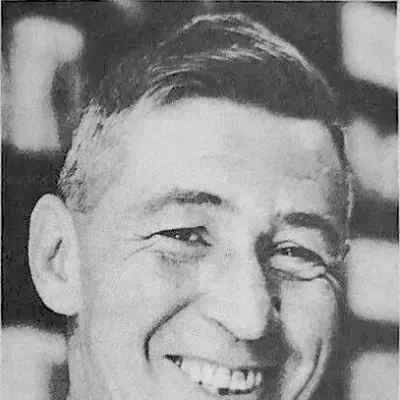
Herman Van Rompuy
Human Design Chart
Biography
After graduating from a Catholic University with economics studies, Van Rompuy worked at Belgium's Central Bank from 1972-1975. In 1973 he became politically active in the Christian Democratic Party. Fifteen years later he became its President, a post he held until 1993. From 1993 to 1999 he served as the country's Budget Minister and Deputy Prime Minister. As a member of Parliament he led its lower house from July 2007 to December 2008 when he was appointed Prime Minister.
The author of six books on economics and politics, he is credited with lowering the country's debt while he was Budget Minister and with easing tensions between the Flemish and the French factions in the country during his stint as Prime Minister.
Married with several children, the devout Catholic writes Haiku in Flemish in his spare time.
Human Design Analysis: Herman Van Rompuy as Projector 6/2
Projector 6/2 — Design at a Glance
Herman Van Rompuy's design points to a dense, focusing aura that immediately recognizes system errors. As a projector, he acted like a bright flashlight, shining directly on weaknesses in the environment and illuminating the path into the 'dark.' This ability to quickly identify inconsistencies requires sensitivity: direct criticism often triggers defense mechanisms, while personal harmony attracts others. The optimal strategy was to wait for an honest invitation rather than pushing forward independently.
Since Herman Van Rompuy did not have a constant sacrum, he lacked a steady source of intrinsic life energy. Instead, he moved in cycles of high activity and necessary rest phases. These pauses were essential to avoid exhaustion, as modern work environments often ignore this rhythmic structure.
Living according to this design – waiting patiently for invitations and conservatively dosing his energy – Herman Van Rompuy was rewarded with success. Deviations from this strategy led sooner or later to bitterness, the non-self theme of projectors. His nature was designed to be effective through targeted leadership and recognition, not constant self-assertion or unbridled effort.
Self-Projected Authority
Herman Van Rompuy's design points to extreme openness coupled with the risk of being distracted by motoric energies. His inner compass is authority in self, a configuration that only projectors can possess and rarely occurs. This mechanism brings a specific trap: the risk of becoming absorbed in one's own receptivity and constantly seeking external energy.
Decision-making for him did not happen through logical analysis but rather through his inner identity. Two paths were available to gain clarity. First, through self-talk or dialogues when invited to do so. Crucial was distinguishing between spontaneous expressions of true essence and thoughtful thoughts of the mind. What he spoke without thinking revealed his uniqueness to others.
Secondly, a physical feeling served as a directional guide. Herman Van Rompuy could feel drawn to or repelled by something geographically or thematically. His specific success potential lay in recognizing this personal direction and following it faithfully. By doing so, he became an example and orientation point for other people. The challenge always was to give priority to this inner truth over external distractions.
The 6/2 Profile — Role Model / Hermit
Herman Van Rompuy's design is characterized by a clear developmental arc: from an early phase of active experimentation to later reflective wisdom. In the first decades of his life, the 6-line of his profile acted like a 3-line. This created a basic attitude of 'trial and error.' Herman Van Rompuy showed readiness to take risks and test different paths in life to find out what worked. Mistakes were not seen as failure but as necessary steps for experience gathering.
With the transition into his thirties, this dynamic fundamentally changed. The 6-line became active and connected with the 2-line of the profile. This configuration described a drive to withdraw to process accumulated experiences. Herman Van Rompuy metaphorically retreated into a 'cave' – a space of distance and introspection. Here there was no passive isolation but an intensive reflection on earlier experiments. This process served healing and building deep self-awareness.
From this phase of inner work emerged a new quality. Herman Van Rompuy appeared as someone who had learned from past mistakes. His early willingness to take risks transformed into the ability to guide others through this gained insight. People sought him out not because of his earlier experiments but to partake in this mature life wisdom and the capacity for deep self-reflection.
Single Definition — Defined & Open Centers
Herman Van Rompuy's Human Design profile indicated a tendency towards consistent, reliable expression and a solid sense of self-identity. This structure came from the defined Triangle Axis of Ajna-Throat-G Center: thoughts were directly translated into words, anchored in a clear inner direction. This ensured stable mental function and the ability to communicate concepts consistently without being easily distracted by external opinions.
At the same time, six open centers shaped his experience: Head, Heart, Sacral, Solar Plexus, Spleen, and Root were undefined. This meant that there was no constant availability of personal inspiration, willpower, energy, emotions, intuition, or stress resistance. Instead, Herman Van Rompuy was situational in receiving these qualities from the environment. An open Head Center made him vulnerable to foreign mental pressure and confusion; he tended to engage with questions that were not his own. The open Heart Center led to conditioning through the need to prove personal worth or make promises for recognition, despite a lack of consistent willpower.
The open Sacral Center caused fluctuations in energy: sometimes vitality was present, other times it wasn't. There was a risk of overextending oneself with borrowed energy from others until exhaustion and ignoring boundaries. Emotional moods from the environment were absorbed and amplified by the open Solar Plexus Center, leading to experiencing foreign moods as personal instability or avoiding confrontation. The open Spleen Center caused sensitivity towards health and survival fears, which could lead to clinging to unhealthy situations due to a false sense of security. Finally, the open Root Center took on external stress, resulting in a cycle of adrenalized pressure and attempts to release it through hyperactivity.
This configuration described a person with a clear inner voice and identity who had to remain vigilant not to fall into environmental conditioning traps: adopting foreign thoughts, proving oneself, wasting energy, or identifying external stress as personal. The wisdom lay in using the defined axis while viewing open centers as mirrors of the environment without identifying with them.
Channels for structured insight and inspired expression.
Herman Van Rompuy's Human Design profile indicated a tendency towards authentic role modeling paired with the ability to convey complex insights structured and innovatively. His influence was not primarily through direct instructions but by living his own individuality, inspiring others in the process. This stemmed from Channel of Inspiration 1-8 connecting G Center with Throat Center. Through Gate 1 of Self-expression and Gate 8 of Contribution, he acted as a public outlet for creative potential. His mere presence could change perspectives since he mastered the art of living as an individual and drawing attention – not through explanations but by leading by example. This effect required patience until his uniqueness was recognized.
Parallel to this, Channel of Structuring 23-43 linking Ajna Center with Throat Center also played a role. Here spontaneous breakthroughs from Gate 43 of Insight combined with the assimilative processing of Gate 23. This allowed him to articulate innovative perspectives and efficiency-enhancing concepts so clearly that they were felt as 'forward-thinking'. For these innovative thoughts not to be perceived as outlandish, timing was crucial; only at the right moment could his unique knowledge be embraced by the collective.
Additionally, other Gates shaped his approach: Gate 28 promoted decisions in the here and now considering risks, while Gate 27 brought a genetic role of care for the tribe. Gate 33 supported through reflection and withdrawal the processing of experiences. In the background, leadership patterns from Gate 7 as well as logical formulations from Gate 4 were at work, complemented by mental stimulation (Gate 56), tribal energy bundling (Gate 45) and creative withholding (Gate 12). Together these elements formed a profile balancing individual inspiration with structured knowledge transmission.
Individual Circuitry — Circuit Signature
Herman Van Rompuy's Human Design profile indicated a tendency towards pulsating, creative energy that directly linked structuring and inspiration. This mechanism is shown through the Knowledge Circuit, which in him worked as a continuous flow: The Centers Ajna, Throat Center, and Identity Center were energetically connected. This allowed him to not only think of new insights but also immediately express them in clear form.
Channel 1-8 (Inspiration) provided creative impulses here, while Channel 43-23 (Structuring) ensured that these ideas received tangible order. This combination shaped his unique way of acquiring knowledge and using it for change. It was about expressing his unique identity driven by the ability to translate abstract concepts into concrete structures. The emotional component lacked as a direct driver in Throat Center; instead, the creative mind (Ajna) and willpower for form creation (Identity Center) dominated. This mechanism described a life task of uncovering hidden connections and making them effective through structured expression. The energy was acoustically grounded and present in the now, shaping his style of communication: direct, inspiring, and orderly at the same time.
Left Angle Cross of Alignment 2
Herman Van Rompuy's Human Design profile indicated a tendency towards strategic alignment and clear internal orientation. He was someone who initiated actions not impulsively but after careful consideration of the overall context. This approach stemmed from the influence of the left alignment 2 cross.
In Human Design mechanics, this configuration marks a process of inner clarity preceding external steps. The left alignment 2 cross describes an energy that first works inward: it sorts priorities, defines goals, and ensures that one's direction is correct before resources are invested. This isn't about reacting quickly to circumstances but rather consciously setting a course. Herman Van Rompuy possessed the ability to distinguish between what was essential and what wasn't, deploying his energy precisely where it would have the most impact.
This internal structuring created a stable foundation for his actions. Rather than being driven by external constraints, he oriented himself according to a self-determined strategy. This design thus fostered a kind of leadership or presence based on insight and purposeful action. Alignment 2 emphasizes the aspect of definition: it's important to know clearly where one is going before setting out. For Herman Van Rompuy, this meant a natural inclination towards analyzing situations, developing plans, and then consistently implementing them rather than getting lost in ambiguity or hesitation.
Saturn Return · Uranus Opposition · Chiron Return · 2nd Saturn Return — Life Cycles
Herman Van Rompuy's Human Design profile did not reveal any specific characteristics through Human Design mechanics such as Gates, Channels, or Centers. The available data describes only astrological transits – Saturn cycles, Uranus oppositions, and Chiron cycles – which are not applicable for a Human Design reading. Without these structural elements, no Human Design-specific derivation is possible; it's not feasible to derive an individual trait or life purpose from the chart. The provided facts remain limited to general cyclical patterns that do not fit into the Human Design system. Therefore, no person-specific description can be made based on Herman Van Rompuy's mechanics. The absence of relevant HD data prevents a thorough analysis; any interpretation would go beyond the raw content and thus violate the rule of using only confirmed facts. Astrological events – first Saturn return, Uranus opposition, Chiron return, and second Saturn return – are noted here as standard transits but do not contribute to Human Design analysis. Hence, this chapter remains devoid of substantive content in terms of Human Design; no characterization or classification can be made based on the principles of this system. The structure requires a person-specific statement, yet without underlying HD mechanics, this is impossible. Therefore, it's only noted that there are no derivable characteristics.
Projector · Self-Projected Authority — Synthesis
A central red thread in this design is the dynamic interaction between inner perception and external expression. The projection of mental understanding (defined Ajna Center) finds its channel through inspiration (Channel 1-8), giving creative impulses and inspiring others. However, this potential is amplified by the Profile as a role model, which foresees an intense phase of self-experience before a later role of wisdom transmission – a process of inner search before insights can be carried outward. The authority in oneself underscores the necessity to find one's own internal compass and express it authentically rather than being led by external influences.
The central paradox lies in the tension between the need for recognition through expression (Channel 1-8) and the potential danger of losing oneself in openness (authority in oneself). The ability to recognize errors in the system and shed light on darkness carries the challenge of doing so in a way that is not perceived as an attack. This requires a conscious withdrawal for reflection (Profile 6/2), gaining wisdom, and finding the right time to express creative impulses – a dance between the desire for connection and the necessity of distance.
2 Defined Channels
Incarnation Cross - Left Angle Cross of Alignment 2
Solar Return
The Solar Return shows the moment when the sun returns to its exact birth position - your personal solar year.
Life Cycles
Discover the life cycles with a detailed triple view (birth chart, cycle chart, composite).
Human Design Profile
- Type
- Projector
- Strategy
- Wait for the respectful invitation
- Authority
- Self-Projected Authority
- Profile
- 6/2 - Role Model / Hermit
- Definition
- Single Definition
- Incarnation Cross
- Left Angle Cross of Alignment 2
- Date of Birth
- 31.10.1947 13:15
- Place of Birth
- Etterbeek, BEL
Frequently Asked Questions
What is Herman Van Rompuy's Human Design type?
What Profile does Herman Van Rompuy have in Human Design?
What Authority determines Herman Van Rompuy?
When was Herman Van Rompuy born?
Discover your own Human Design
Are you also a Projector? Find out in a personal reading how to unfold your leadership qualities and recognize the right invitations.
More Personalities
Back to overviewSissy Spacek

Alain-Fournier

Anémone

Ann-Margret

Bourvil
Hergé