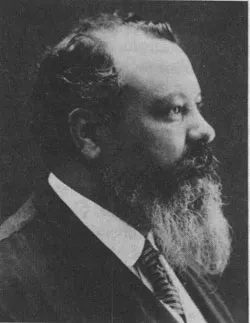
Hermann Staudinger
Human Design Chart
Biography
He died on 8 September 1965 in Frieburg, Germany.
Human Design Analysis: Hermann Staudinger as Manifestor 6/2
Manifestor 6/2 — Design at a Glance
Hermann Staudinger's design predisposed him to acting ahead of time and taking the initiative. As a Manifestor, he was destined to lead the world into new directions, much like an emperor in ancient Rome who had visions but did not fight every battle himself. His nature polarized: while some loved and followed his great vision, others misunderstood or even hated it. This resulted from him often thinking ahead of his environment.
To find the right following and minimize resistance, it was crucial for him to inform others timely and accurately about his intentions. This strategy of informing before acting formed the core of his optimal alignment. Living in accordance with this strategy as well as his inner authority rewarded him with a feeling of inner peace. Acting against his design without informing or ignoring his authority tended to result in persistent, deep anger. His path thus involved working as a trailblazer and visionary while using communication with his environment as a necessary step towards conflict avoidance and maintaining his inner balance.
Ego Authority
Hermann Staudinger's design predisposed him to a clear, will-driven orientation. As a Projector or Manifestor with open Emotional, Sacral, and Spleen centers along with a defined Ego Center, he possessed the rare “Authoritarian in Ego” configuration. This setup combined great openness with strong influenceability, which facilitated distractions. His truth lay in his will, manifesting through spontaneous, uncensored speech. He had to learn to listen to what directly came from his throat and distinguish it from the mind, often negotiating foreign interests in open centers.
When Hermann Staudinger did something that truly mattered to him, he possessed the strength of will to achieve goals and keep promises. Consistently following his own will could appear selfish externally; however, his inner authenticity was crucial. His actions had to personally reward him, whether through material success or the drive to surpass limits and be a pioneer in new directions. This allowed the possibility of guiding others into these new paths. A central mechanism of his design was the necessity of a pause after goal achievement. Persistent work without recovery did not lead to desired results but threatened to turn into unhealthy exhaustion and illness. His design thus demanded a balance between willful goal pursuit and necessary regenerative phases.
The 6/2 Profile — Role Model / Hermit
Hermann Staudinger's design predisposed him to a two-phase life path: initially characterized by intensive experimentation, later defined by profound wisdom. As someone with Profile Line 6/2, the energy of Line 3 was prominent in his younger years. This showed as constant testing and learning from personal mistakes; trial and error were his driving principles. He accumulated many life experiences, withdrew after failures, and started anew.
Around his thirtieth birthday, this dynamic fundamentally changed. Line 6 became active, initiating a phase of distancing. Hermann Staudinger metaphorically retreated into a “Cave” to view his earlier experiments with great calmness. This period served for healing and intense self-reflection. From this isolation, he developed deep self-awareness.
His configuration also combined Gate 25 with the theme of ignorance and spiritual mutation through action in the present moment, as well as Line 58.2, which fostered joy in the unusual and courage to challenge authority. After this maturation phase, Hermann Staudinger re-emerged into public life as a wise person. Others sought him out for his life wisdom and learned from his ability for deep introspection. He became an example figure who passed on clarity gained through personal experience.
Single Definition — Defined & Open Centers
Hermann Staudinger's design inclined towards clear, resolute communication. His defined Throat Center served as a steady focal point for expression, which was fueled by his also defined Heart Center. This configuration endowed him with the ability to articulate his intentions and values with inner conviction; he spoke from an 'I' that knew what it wanted and promised. His willpower was a reliable resource enabling him to keep promises and seek recognition for his contribution.
At the same time, Hermann Staudinger showed openness in areas where he lacked a constant internal source. His open Head Center made him vulnerable to mental pressure; he tended to identify with others' questions or doubts and sought external inspiration to gain clarity. The open Ajna Center amplified this flexibility of thought but also left him confused when he accepted concepts as his own truth. His open G Center meant that his identity and direction were not set in stone; he often looked for validation from the environment and unconsciously wondered who he was or where love could be found.
His open Sacral Center also shaped him: He did not have a constant generative energy but absorbed others' vitality, which could lead to exhaustion if boundaries were ignored. His open Solar Plexus Center made him absorb and amplify emotions from the environment, leading him to feel emotionally unstable even though these feelings were not his own. Finally, his open Root Center took on external stress, causing a feeling of chaos or overburden when he tried to withstand this pressure. His design challenged him to use his defined voice and willpower while perceiving the open areas as mirrors for external influences rather than personalizing them.
Channels for bold initiative and clear self-assertion.
Hermann Staudinger's design inclined towards material sovereignty paired with a deep need for control over one's own rhythm. This attitude stemmed from the 21-45 Money Line, connecting the Heart Center to the Throat Center. This channel expressed the tension between the will to lead (Gate 21) and the authoritative voice of the tribal leader (Gate 45). Staudinger appeared as someone who took responsibility to secure resources while always being careful not to be controlled himself. His success depended on asserting his will in a way that protected his interests while also serving others – a balancing act between service and independence.
Additionally, further energies influenced him: Gate 25 promoted mystical innocence and centeredness, whereas Gate 46 demanded full commitment to the process and physical presence. In the Root Center, Gates 58 (Experimentation and Perfection) and 52 (Focused Pattern Correction) drove him towards constant optimization of processes. On the personality side, Gate 40 sought liberation through work but expected clear recognition and recovery for this effort. Within his design itself, Gate 12 with creative restraint and individual mutation as well as Gate 8, which carried a desire for a unique contribution to the group and identity strengthening, were at play. Finally, Gate 26 stood for the ability to implement innovations in a conservative environment while it required calmness to maintain this persuasive power. Staudinger lived within this complex web of material power, spiritual depth, and constant drive towards improvement.
Tribal Circuitry — Circuit Signature
Hermann Staudinger's design inclined towards strategic resource acquisition and cooperative action. His chart was marked by the Ego Circuit, which did not serve individual self-expression but was assigned to the tribal group. Here it was about collectively creating prosperity and material security through cooperation.
In Hermann Staudinger's case, this circuit was simply defined, meaning a focused yet limited energetic orientation. The actual active connection consisted of Channel 21-45, the so-called 'Money Line'. This channel connected the Heart Center to the Throat Center and created a direct flow between inner authority, willpower, and the ability for verbal implementation or action in the material realm. It was a mechanism of resource accumulation: By applying personal strength and determination (Heart), Hermann Staudinger could achieve concrete results and create value (Throat).
Since there was no connection to the Sacral Center, constant, steady life energy was lacking. Instead, this design required rhythmic pauses for regenerating power reserves to sustainably function. The energy was not continuously available but had to be purposefully deployed and handled gently in order to build sufficient wealth for himself and his group.
Left Angle Cross of Healing 1
Hermann Staudinger's design showed a tendency towards a deep, often unspoken connection to matter. He appeared as someone whose internal compass did not seek abstract theory or pure intellect but rather how things are held together in the physical world and how they can be changed through understanding their structure. This orientation stemmed from what is known as the left cross of Healing 1, a configuration that focuses on the physical foundation of life.
For his system, this meant that true knowledge did not arise in the mind but emerged from direct engagement with the material. He lived with the imprint that healing or improvement must always begin where things are tangible. His path was marked by the search for hidden laws that bind atoms and molecules, not as an academic game, but as a necessary step to stabilize the world. This configuration described a life task: making the invisible visible and graspable by understanding and strengthening one's material basis. His energy flowed towards places where structure could be created or repaired, far from purely idealistic worlds.
Saturn Return · Uranus Opposition · Chiron Return · 2nd Saturn Return — Life Cycles
Hermann Staudinger's design showed a tendency toward structural anchoring that condensed into clear phases of life. The first Saturn return often marked the transition from preparation to established position. In 1912, at age 31, he followed a call to the Swiss Federal Institute of Technology in Zurich – a step that transferred his professional competence into a stable institutional structure and thus confirmed the typical mechanism of this cycle: years of groundwork culminated in a stable career anchor point.
Later came the Chiron return, a fulfillment cycle where one's incarnation cross unfolds and meaning becomes experiential. In 1928, at age 47, Staudinger married botanist Magda Woit. This connection was not mere coincidence but an expression of how inner values and life purpose can be concretized in a central relationship when following one's strategy.
The second Saturn return, however, brought a challenge: In 1937, at age 56, Staudinger was denied foreign travel due to his political stance. This cycle often tests the limits of established structure. The restriction showed as a crisis that tested his previous position and highlighted how external circumstances can challenge the inner strength of the design without fundamentally destroying it.
Manifestor · Ego Authority — Synthesis
Hermann Staudinger lived a life marked by an internal calling towards leadership and shaping (Manifestor). This inclination was evident in his readiness to tread new paths and take responsibility for the tribe – a stance reinforced by the connection between Heart Center and Throat Center (Channel 21-45). The ability to speak and act from one's own will (authority in ego) correlated with a deep reflective capacity that manifested after phases of intense experience through withdrawal (Profile 6/2), providing wisdom for others. These cyclical phases of action and contemplation shaped his development over decades.
A central tension lay in Staudinger acting as a pioneer whose visions did not always find understanding (Manifestor) while simultaneously being dependent on cooperation within a tribe (ego circuit). This led to dynamics between the desire for autonomy and the necessity to share resources and form relationships. Experiences during Saturn returns made this clear: professional successes alternated with crises triggered by external circumstances – an expression of the internal conflict between individual will and collective demands.
1 Defined Channel
Incarnation Cross - Left Angle Cross of Healing 1
Solar Return
The Solar Return shows the moment when the sun returns to its exact birth position - your personal solar year.
Life Cycles
Discover the life cycles with a detailed triple view (birth chart, cycle chart, composite).
Human Design Profile
- Type
- Manifestor
- Strategy
- To inform others before acting
- Authority
- Ego Authority
- Profile
- 6/2 - Role Model / Hermit
- Definition
- Single Definition
- Incarnation Cross
- Left Angle Cross of Healing 1
- Date of Birth
- 23.03.1881 23:45
- Place of Birth
- Worms, GER
Frequently Asked Questions
What is Hermann Staudinger's Human Design type?
Which profile did Hermann Staudinger have?
What was Hermann Staudinger's authority?
What incarnation cross did Hermann Staudinger have?
When was Hermann Staudinger born?
Discover your own Human Design
Are you also a Manifestor? Find out in a personal reading how to use your initiation power peacefully and dissolve resistance.
More Personalities
Back to overviewChristian-Jaque
Kesha

Lucebert
Masaccio
Nadar
Papus