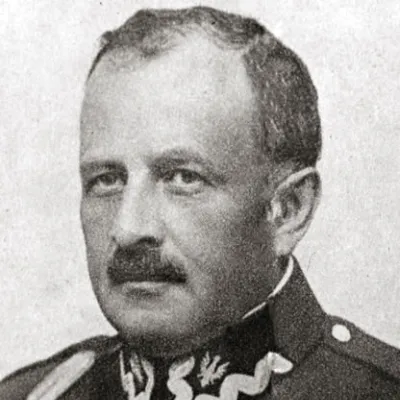
Ignacy Boerner
Human Design Chart
Biography
The Human Design of Ignacy Boerner: Projector 6/2
Projector 6/2 — Design at a Glance
Ignacy Boerner had a dense, focusing aura that allowed him to immediately spot errors in other people's systems. His design acted like a bright light beam, directing itself towards areas where his surroundings were still in the dark or not functioning optimally. However, this ability to 'shed light into darkness' and illuminate paths was often met with a specific challenge: Directly addressing these weak spots was frequently perceived by others as unpleasant or aggressive, similar to a light beam shining directly into someone's face.
Instead, Ignacy Boerner worked most effectively through his own harmony and presence. By being an example himself, he naturally attracted others who then sought out his insights. His strategy involved waiting for honest and respectful invitations to lead or advise. This approach protected his energy since Projectors do not have a defined Sacral Center and therefore lack constant life force energy. They go through phases of high activity followed by necessary rest periods to prevent burnout.
Ignacy Boerner lived by this principle: When he waited for the invitation, his path was rewarded with success. Ignoring this strategy and trying to impose his insights led sooner or later to bitterness as an expression of his non-self. His design thus required not only the right perception but also patience in waiting for the right moment to share his wisdom.
Self-Projected Authority
Ignacy Boerner's design inclined towards extreme openness, making him vulnerable to distraction by external motoric energies. As a Projector with rare authority in Self, his inner truth was anchored in his identity. This configuration required precise differentiation between spontaneous self and reflective mind. Ignacy Boerner found this clarity through self-dialogues or stimulating conversations, where listening inwardly was crucial. What was spontaneously spoken without cognitive filtering expressed his true essence and made his uniqueness recognizable to others.
Alongside verbal reflection, a physical magnetic feeling served as a directional guide. Ignacy Boerner felt a physical attraction or repulsion towards topics or places that pointed him in the right direction. The greatest danger lay in losing himself in this openness and constantly chasing external energy. However, his specific success potential lay in recognizing and following this inner direction. By doing so, he became an example and guide for others. This mechanism shows how Ignacy Boerner's internal identity was not only a basis for decision-making but also the foundation of his influence on his environment.
The 6/2 Profile — Role Model / Hermit
Ignacy Boerner's design set a clear developmental path: from early life filled with experimental role trials to later reflective authority. Before turning thirty, the 3-line profile (6/2) drove him into constant confrontation with 'trial and error'. During this phase, he tried out various identities, learned through direct experience, and withdrew after mistakes to integrate them. This early experimentation was not aimless wandering but necessary preparation for his true calling.
After turning thirty, the dynamics shifted to the 6-line profile. Ignacy Boerner then showed a tendency towards withdrawal to analyze and heal from past experiences from a distance. From this introspective phase emerged profound wisdom that he passed on through fair distribution and delegation of power rather than classical leadership. His design emphasized true leadership in granting roles and responsibilities to others instead of exercising them himself.
At the same time, protecting his individuality was existential for him. The mechanics of his chart indicated that interference with his personal areas was felt as a threat. He had to learn to give up tolerance when his unique identity was under attack. This need for autonomy served the self-defense of his individuality. Ignacy Boerner thus embodied the path from searching experimenter to wise delegator who shares power and protects himself against others' determination.
Single Definition — Defined & Open Centers
Ignacy Boerner revealed a stable inner foundation consisting of defined mental awareness, clear expression ability, and firm identity. His defined Ajna Center provided a consistent, specific way of thinking; he continuously processed data and creativity independently of external influence. This mental structure flowed directly into his defined Throat Center, allowing him to express what he thought – his voice was thus not a reaction to the moment but an expression of his conceptual world. This was complemented by a defined G Center, which gave him a reliable self-identity and sense of direction. He knew who he was and radiated this magnetic presence without relying on others.
This inner stability contrasted strongly with his high receptivity to external fields, as his sensory centers were open. His open Head Center made him vulnerable to mental pressure and the questions of others; he tended to get stuck in doubts when trying to solve problems that weren't his own concern. The lack of consistent willpower in his open Heart Center could push him into a cycle of promises and disappointment, as he often sought to prove his worth through performance rather than trusting his inner authority.
Furthermore, his open Sacral Center was extremely sensitive to the energy of his environment. He absorbed and amplified others' vital force, leading to overwork and exhaustion because he didn't know when enough was enough. His open Solar Plexus soaked up emotions like a sponge, causing him to swing between joy and depression without recognizing that these feelings were often foreign. The open Spleen Center guided him through fears of health and survival, while the open Root Center absorbed external stress, leading to a constant feeling of chaos. The challenge was not losing his own stability by absorbing these external pressure situations.
Channels for leadership, reflection and structured insight.
Ignacy Boerner showed himself as someone who sought logical leadership through pattern recognition and trust. His design tended towards working not through mere authority but through understanding collective currents. This stemmed from the Alpha Animal Channel 7-31: Gate 7 provided the logical role for societal leadership, while Gate 31 acted as a collective leader that only became effective when invited and recognized by the majority. His leadership rested on understanding current patterns and trends to guide others safely into the future – often described as the 'power behind the throne'.
This active orientation towards leadership was complemented by deep introspection. The Lost Son Channel 13-33 connected listening (Gate 13) with withdrawal (Gate 33). Ignacy Boerner gathered experiences and secrets, then withdrew to reflect on them before sharing. This process required patience; he waited for hidden truths beneath the surface to reveal themselves, bringing continuity and stability into his communications.
Furthermore, he was marked by the ability for innovative thinking through the Channel of Structuring 23-43. Here, Gate 43 (Insight) connected spontaneous mental breakthroughs with Gate 23 (Assimilation), which processed and expressed these insights. His mind often acted like an outsider waiting for the right invitation to share unique perspectives that promoted efficiency. When the timing was right, his explanations could elevate entire organizations to a higher level; if not, he felt alienated.
Additionally, Gates such as Gate 11 (Memory) used visual memories and collective ideas to harmoniously assess situations before acting. This configuration described someone who not only gathered knowledge but put it into the service of the collective through logical leadership, patient reflection, and structured innovation.
Collective Circuitry — Circuit Signature
Ignacy Boerner's design inclined towards clear, strategic communication. He combined rational insights with an authoritative expression style aimed at logical truths. This configuration allowed him to structure complex visions free from emotional conditioning and set them in the world.
This character trait resulted from his simple definition of centers: Ajna, Throat Center, and Identity Center formed a coherent energetic flow. Within this flow, three specific circuits operated. The Understanding Circuit connected through Channel 31-7 the Throat Center with the Identity Center. This promoted the ability to articulate future-oriented strategies and logical conclusions with focus. Parallel to this, the Knowledge Circuit structured through Channel 43-23 the connection between Ajna and Throat Centers. Here it was about precisely formulating one's unique path and new insights. Additionally, the Meaning-Finding Circuit connected through Channel 33-13 also the Throat Center with the Identity Center. This aspect focused on sharing experiences and finding meaning in past events to draw collective lessons.
Together these connections shaped a personality that not only thought but manifested its thinking through clear language and strategic intent – always aiming to improve or clarify societal structures or individual truths. The energy flowed directly from mental processing (Ajna) through expression (Throat) to identity, giving his words a special substance and conviction.
Left Angle Cross of Masks 2
Ignacy Boerner's Human Design profile revealed a profound existential uncertainty about his role in the world. He often found himself caught between an urgent desire to remain invisible or blend seamlessly into society and the simultaneous pressure to wear a specific social mask. This configuration, the left Mask Cross 2, did not merely describe acting skills but rather an internal struggle for authenticity amidst others' expectations.
For Ignacy Boerner, identity was central: Who am I truly when no one is watching? His chart indicated that he tended to lose himself in roles he believed were necessary to be accepted or avoid conflict. This often led to a sense of alienation from the core self hidden beneath these adaptations. The mechanics of this cross emphasized that wearing masks functioned not as deception but as a protective mechanism against perceived threats posed by external judgments.
Ignacy Boerner lived with the constant danger of losing himself when he met the demands of his environment. His challenge was to rediscover and accept his true essence behind the worn facades, acknowledging that authenticity is often painful yet necessary. The design showed that his real strength did not lie in perfecting the mask but in maintaining an inner core of truth despite adaptation, even if it remained hidden.
Saturn Return · Uranus Opposition · Chiron Return · 2nd Saturn Return — Life Cycles
Ignacy Boerner's life ended in Warsaw in 1933 at the age of 58. This point marked the conclusion of his individual cycle. His design indicated a structure oriented towards long-term development and maturation. The second Saturn return, typically occurring between ages 57 and 60, marks a moment in Human Design mechanics where years of groundwork and internal structures condense into integration. It is a time when achievements take their final form or, as with Ignacy Boerner, initiates the natural transition to death. His passing occurred precisely during this phase of the second Saturn return. This underscores the significance of this astrological and design-specific point as a central endpoint of physical existence. The cycle did not abruptly end but followed the rhythm of his inner architecture. Here, mechanics describe not a sudden break but the completion of a life span shaped by its own laws. Ignacy Boerner's death was thus the logical conclusion of a process that unfolded over decades and reached its final stage at this specific age.
Projector · Self-Projected Authority — Synthesis
Ignacy Boerner lived a life marked by a deep ability to recognize patterns and grasp the essence behind things (Gate 11). This gift manifested in a steady oscillation between absorbing information from his environment, particularly emotional qualities (open Solar Plexus Center), and retreating into himself to process these impressions and develop a unique perspective (Channel 13/33). He was an observer who perceived subtle nuances before communicating insights in ways that inspired others to question and further develop their own thinking (Channel 23/43).
Central to his essence, however, was a seeming paradox: Boerner possessed a pronounced ability for leadership and sharing knowledge (Channel 7/31), yet this power unfolded most effectively when he did not actively seek it but rather responded to others' requests for wisdom. He was a lighthouse that truly shone only when invited to project light into the darkness of others – a dynamic amplified by his Projector design and open Sacral Center.
3 Defined Channels
Incarnation Cross - Left Angle Cross of Masks 2
Solar Return
The Solar Return shows the moment when the sun returns to its exact birth position - your personal solar year.
Life Cycles
Discover the life cycles with a detailed triple view (birth chart, cycle chart, composite).
Human Design Profile
- Type
- Projector
- Strategy
- Wait for the respectful invitation
- Authority
- Self-Projected Authority
- Profile
- 6/2 - Role Model / Hermit
- Definition
- Single Definition
- Incarnation Cross
- Left Angle Cross of Masks 2
- Date of Birth
- 11.08.1875 03:00
- Place of Birth
- Zdunska Wola, Poland
Frequently Asked Questions
What is Ignacy Boerner's Human Design type?
Which Profile did Ignacy Boerner have?
Which authority guided Ignacy Boerner?
What incarnation cross did Ignacy Boerner have?
When was Ignacy Boerner born?
Discover your own Human Design
Are you also a Projector? Find out in a personal reading how to unfold your leadership qualities and recognize the right invitations.
More Personalities
Back to overviewSissy Spacek
Alain-Fournier
Anémone
Ann-Margret

Bourvil
Hergé